Open Source vs. Closed Source

Happy Monday.
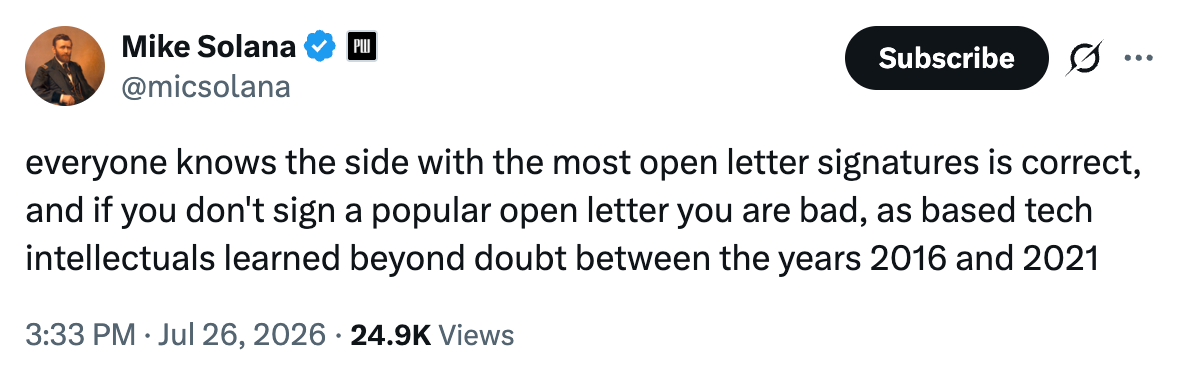
The current thing in tech and business is the open vs. closed source debate, spurred by Jensen Huang’s letter on open models.
Today’s Lineup
- ETN Hosts Luke Knight & Ronan Chambers at 11:45 AM
- VaynerMedia CEO Gary Vaynerchuk at 12:00 PM
- Enigma Co-Founder & CEO Jonathan Jacobi at 12:30 PM
- Sequoia Partner Dean Meyer at 12:40 PM
- Death Clock Founder & CEO Brent Franson at 12:50 PM
- AndrenaM Co-Founder & CEO Matej Cernosek at 1:00 PM
- NVIDIA VP Enterprise AI Justin Boitano at 1:15 PM
Run of Show
Open Source vs. Closed Source, by John Coogan
Alamy
Huge debate on the timeline this weekend over open source vs closed source AI.
Quick chain of events that got us here: April 7, 2026 Mythos / Project Glasswing showed really crazy cybersecurity capabilities. Then Fable came online from June 9–12 before going offline until July 1 onward. And just a few weeks later, Kimi K3 showed very near frontier abilities (especially good on front end benchmarks, sort of TBD on cybersecurity).
Distillation accusations flew immediately, and reports of lobbying to respond to Chinese open source quickly followed. The closed source frontier labs were pretty tight lipped on comms, but everyone sort of implicitly understands that having an open-source competitor model could potentially hurt growth and margins. There are also safety concerns, which people are deeply divided about.
A few years ago, the debate around open source centered on whether or not an open source ecosystem could actually flourish long-term. Would the capex requirements simply get too big to underwrite? Well we are certainly in that timeline now. Open source continues to deliver impressive models, so the question is around impacts both in business, geopolitics, and safety.
The market cap that has aligned behind the Nvidia open letter is huge (roughly $18T+) and that probably decides the issue. There won’t be a ban on open source AI, at least in the short term. But there are still other issues to work out.…

 点赞
点赞 收藏
收藏 点踩
点踩 分享
分享