Policy changes for international students, scholars threaten U.S. competitiveness

Lenin Nolly/NurPhoto via AP
Policy changes for international students, scholars threaten U.S. competitiveness
Garber offers assessment at D.C. event, says shifts will discourage global best, brightest from coming here for research, study
Alvin Powell
Harvard Staff Writer
July 27, 2026
3 min read
The biggest threat to research universities from recent federal policy shifts aimed at them is not that those changes chase promising American scholars abroad but that they discourage the world’s best and brightest from coming here to do their work.
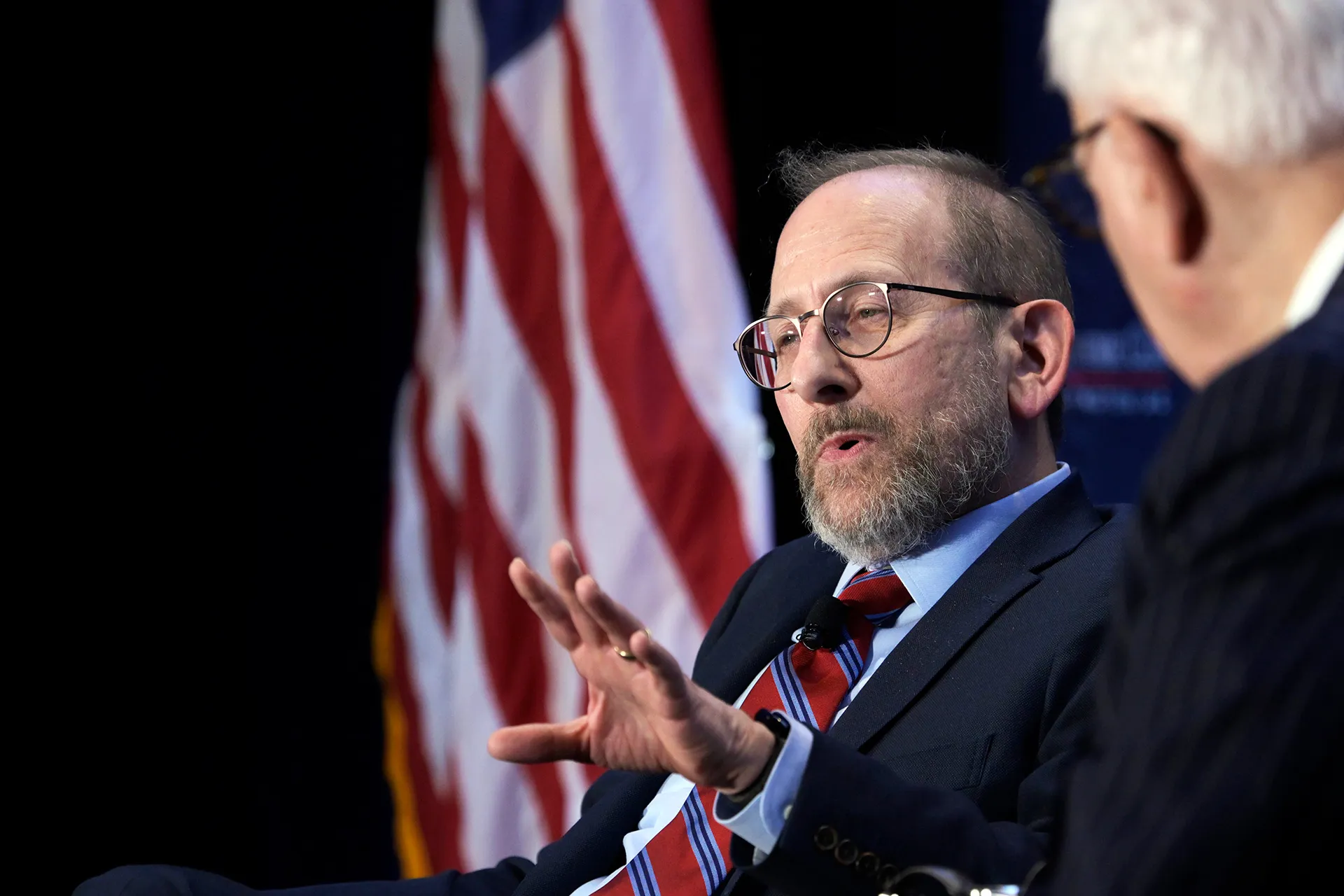
That assessment was offered by Harvard President Alan Garber on Thursday at The Economic Club of Washington D.C., a nonprofit association of Washington D.C.-area business leaders.
During the hourlong discussion with club Chairman David Rubenstein,
Garber also noted how much excitement remains in the scientific community, despite the headwinds.
“This is a time when the speed of scientific advances is simply unprecedented,” he said, adding, “We are on the cusp of major, major breakthroughs.”
He said his assessment of the state of research in America reflects the fact that the ability to attract talent from everywhere to work alongside U.S. scientists has long been a difference-maker for the nation as a global leader in research and innovation.
But now, he said, that flow is in peril from a slate of changes intended to restrict and discourage entry by international students and scholars
As an example, Garber cited a new federal rule, finalized in mid-July, that caps at four years the time students can stay in the U.S. without seeking additional government permission. Formerly, they were allowed to remain until they finished their studies.
The shift presents a particular problem for Ph.D. candidates because completing their degree takes six years on average, and some require even more time, owing to the complexity of their research.
The lack of a guarantee…