Kahlil Gibran on the Art of Becoming Yourself Across the Sweep of Life

Kahlil Gibran on the Art of Becoming Yourself Across the Sweep of Life 图片 1
Kahlil Gibran on the Art of Becoming Yourself Across the Sweep of Life 图片 2
Kahlil Gibran on the Art of Becoming Yourself Across the Sweep of Life 图片 3

A roadmap to the fulfilled belonging on the other side of “the great aloneness which knows not what is far and what is near, nor what is small nor great.”

The unfolding of life does more than fray our bodies with entropy — it softens our spirit, blunting the edge of vanity and broadening the aperture of beauty, so that we become both more ourselves and more unselved, awake to the felicitous interdependence of the world. And yet the selves we have been — young and foolish, hungry for the wrong things, hopeful for the right but winged by hope into hubris — are elemental building blocks of who we become, unsheddable like the hydrogen and helium that made the universe. Joan Didion knew this when she observed that “we are well advised to keep on nodding terms with the people we used to be, whether we find them attractive company or not.” Jane Ellen Harrison knew it when, in her superb meditation on the art of growing older, she cautioned that “you cannot unroll that snowball which is you: there is no ‘you’ except your life — lived.”

That transmutation and integration is what poet and philosopher Kahlil Gibran (January 6, 1883–April 10, 1931) takes up with uncommon soulfulness in his long poem “Youth and Age,” penned in his early forties, shortly after he completed The Prophet.

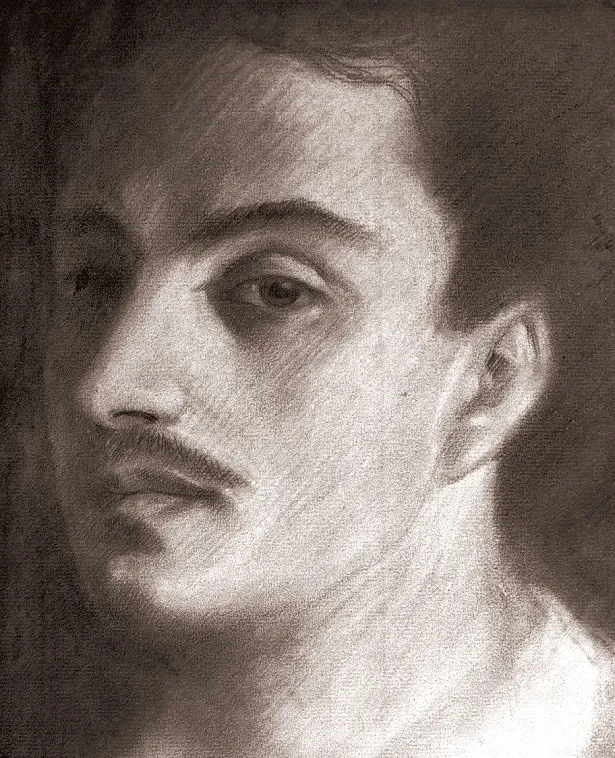
Kahlil Gibran, self-portrait

In his youth, Gibran reflects, he felt doomed to insignificance, dwarfed by a universe that seemed immense and remote. But as he matured, he learned to live with “the great aloneness which knows not what is far and what is near, nor what is small nor great” — to inhabit that elemental aloneness with a sense of boundless belonging to the universe and every other aloneness in it.

In a sentiment consonant with the aging Walt Whitman’s reckoning with what makes life worth living, he traces his path:

In my youth the heart of dawn was in my heart, and the songs of April were in my ears.

But my soul was sad unto death, and I knew not why. Even unto this day I know not…

添加评论
点赞收藏
点踩分享查看原文
评论
?
参与讨论