How Motherhood Changed Rachel Aviv’s Writing


One summer, Rachel Aviv went away to sleepaway camp in Maine while her mother rented a house some hours away for a self-imposed writing retreat. In a scene that could be a playbook for Annie Baker’s film Janet Planet, the writer recounts calling her mother a few days into her time at camp to say she “was considering jumping into the lake and drowning.” Her mother picks her up, and the two spend the summer together, doing some writing, and some not writing. Her mother’s plans to conceive groundbreaking fiction are foiled, but being together feels natural for the two of them. They were, after all, attached at the hip, in a kind of “overwhelming and exhausting fusion.”
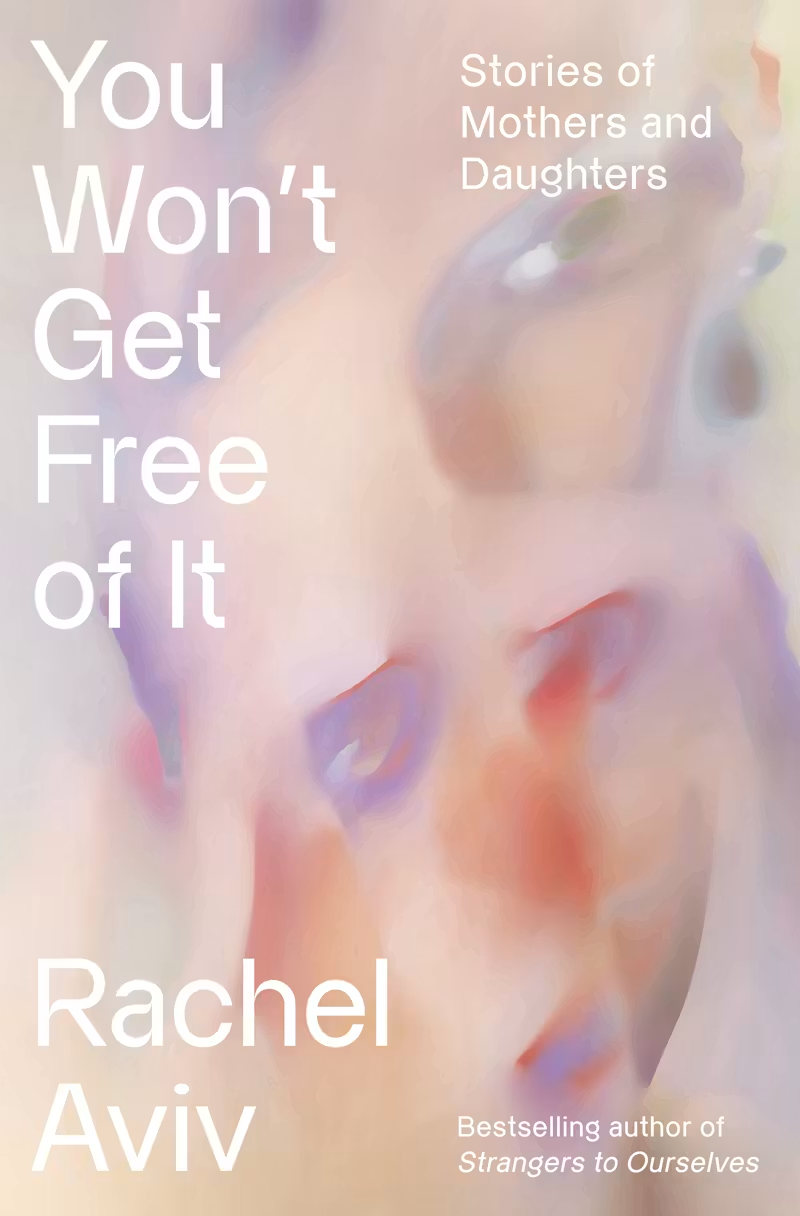
When exactly does this fusion end? Or does it simply never? These are the animating questions at the heart of Aviv’s new essay collection, You Won’t Get Free of It, which tells the stories of mothers and daughters whose relationships are complicated, yet inexorable: from a nanny who leaves her family in the Philippines only to become attached to new, surrogate children, to a young schoolteacher who goes missing for long stretches of time, her mother left searching for her for years on end. They are the kind of slippery and ambiguous stories to which only a writer like Aviv, so committed to interpreting and explaining her subjects, could give form.
There is, of course, a rich literature on mother-daughter inextricability, from Vivian Gornick’s Fierce Attachments (1987) to Alison Bechdel’s graphic memoir Are You My Mother? (2012). A slate of more recent motherhood memoirs have also taken on similar quandaries of tumult and transference, such as Lena Dunham’s Famesick (2026), which plumbs her ever-shifting relationship with her mother, the artist Laurie Simmons, after Dunham’s fame begins to lap her mother’s, and Arundhati Roy’s Mother Mary Comes to Me (2025), which explores what happens when our relationships with our mothers begin to feel barbarous and distant. “For years, Arundhati was estranged from…

 点赞
点赞 收藏
收藏 点踩
点踩 分享
分享