Simple steps for improving indoor air quality




Simple steps for improving indoor air quality
By
Karen Feldscher
July 22, 2026
Hide caption
Show caption
simplehappyart / iStock
Display content first if the jump to has with subpages style
Jump to Section
Share PostLinkedInFacebookWhatsApp
Copy link
While wildfire smoke, power plant emissions, and vehicle exhaust fumes are well-known contributors to poor outdoor air quality—and heightened risk of respiratory problems and chronic diseases—sources of poor indoor air quality are less-recognized as causes for concern, experts say. Harvard T.H. Chan School of Public Health’s Joseph Allen was among those quoted on the topic in a July 15 CNET article.
“Hundreds of thousands of lives have been saved [because of the Clean Air Act],” said Allen, professor of exposure assessment science and director of Harvard’s Healthy Buildings program. “But that is solely about outdoor air pollution. Our indoor air pollution has continued to worsen. We do not have a Clean Indoor Air Act.”
The article noted that outdoor air pollution can seep into homes. And items inside the home—gas-burning appliances, household chemicals, furnishings that off-gas—can make the air inside homes unhealthy, as can biological contaminants such as pollen and mold spores.
To improve indoor air, Allen recommended using an air purifier with a HEPA (high-efficiency particulate air) filter to remove particulates from indoor air, as well as using a MERV 13 filter for HVAC systems.
Other steps recommended by experts quoted in the article included:
Be aware of household products that contain volatile organic compounds (VOCs), such as personal care products, cleaning products, and paints. Use them sparingly and ventilate, especially when painting.
If you have a gas oven, be sure to turn on your range hood if it exhausts outdoors.
To remove particles on surfaces, vacuum regularly with a filtered vacuum cleaner and dust with a damp cloth using low-toxicity cleaners.
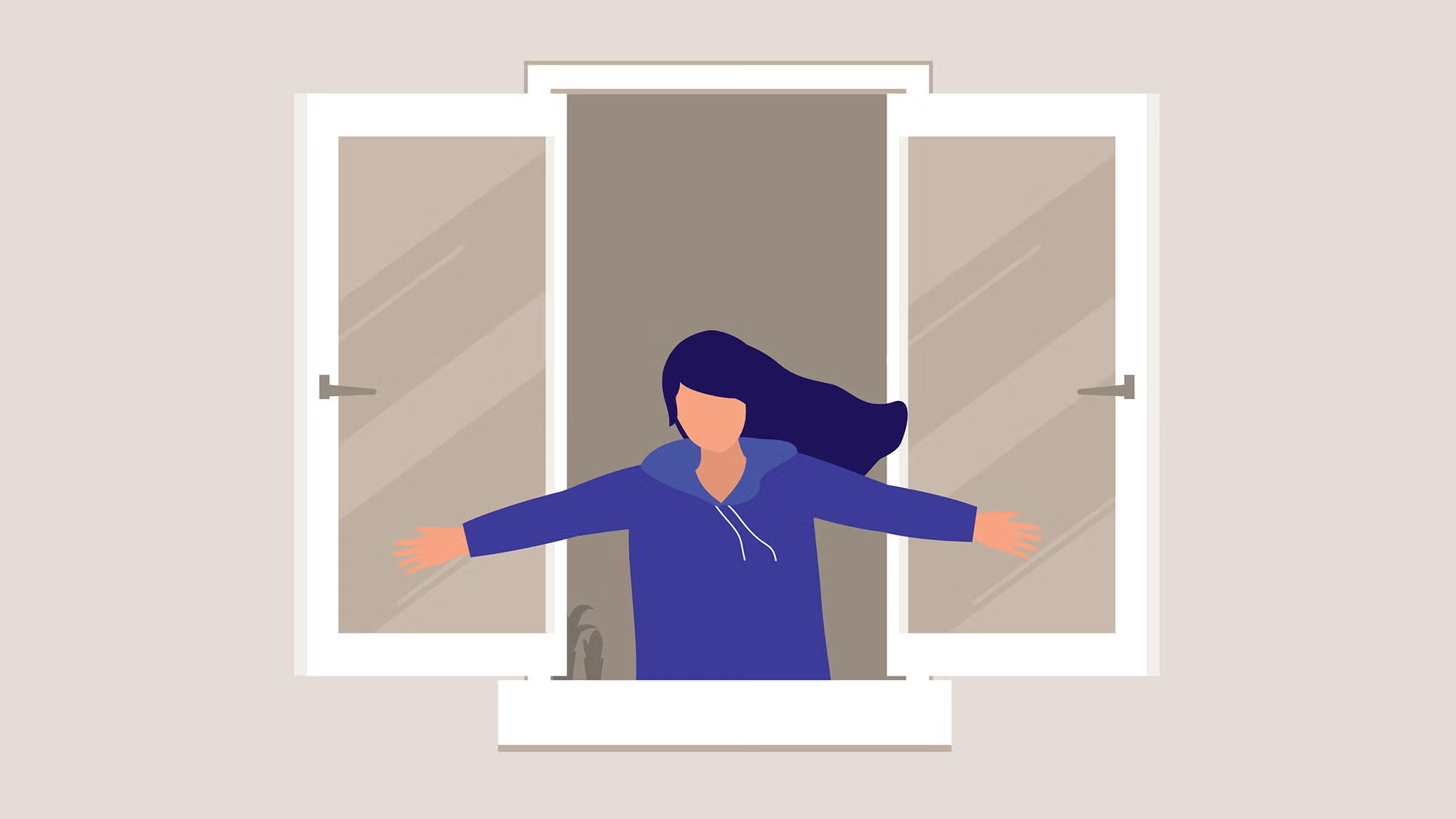
To prevent pollutants from building up inside, regularly open windows, turn on kitchen or bathroom fans that exhaust outdoors, and use window or attic fans.
Read the CNET article:We Don’t Have a Clean Indoor Air Act. Are Air Purifiers the Answer?
Learn more:Portable Air Cleaner Sizing Tool (Harvard Healthy Buildings program)Do-It-Yourself Portable Air Cleaners (Harvard Healthy Buildings program)
About The Author
Karen Feldscher
Associate Director for News in the Office of Communications
Related Topics
Last Updated
Featured in this articleJoseph G. Allen
Professor of Exposure Assessment Science
Related News
In the MediaUncovering how Epstein-Barr virus drives MSChronic Diseases July 23, 2026
In the MediaFighting extreme heat in 2026
July 23, 2026
In the MediaSuffering linked to poor well-being one year laterMental Health July 23, 2026
Get the latest public health news
Stay connected with Harvard Chan SchoolSubscribe to our newsletters
Unleash your potential at Harvard Chan School.
In addition to our degree programs, we offer highly targeted programs through our Advanced Learning Academy, directed and taught by Harvard faculty.Degree ProgramsHow to ApplyAdvanced Learning Academy

 点赞
点赞 收藏
收藏 点踩
点踩 分享
分享