The Rock That Killed The Dinosaurs Was One of The Rarest Types in The Solar System – Which Made It Even Deadlier


(Mark Garlick/Science Photo Library/Getty Images)
The dinosaurs had a good run, but when their time was up, it was very much up.
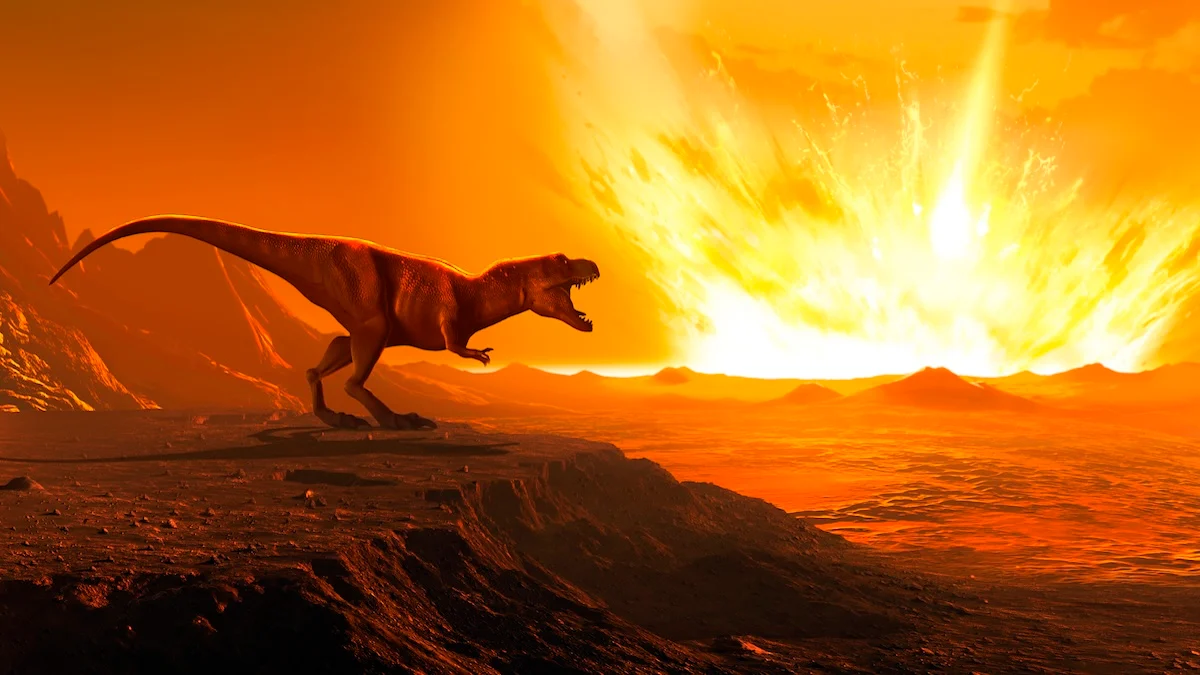
Around 66 million years ago, a massive asteroid slammed into what is now the Yucatán Peninsula, Mexico. The impact triggered worldwide wildfires, towering tsunamis, ocean acidification, volcanic eruptions, and earthquakes.Debris clouded the sky, reducing sunlight and cooling the planet, which killed plant life and set off a cascade of collapsing food chains.
That's far from what you'd call a good day, but it turns out the dinosaurs were particularly unlucky: A string of unfortunate coincidences lined up to bring them down.
It's thought that if the asteroid had hit almost anywhere else on Earth, or had struck at a different angle, the devastation probably wouldn't have been quite as severe.
Even the time of year – in the midst of spring for the Northern Hemisphere – of the impact reduced the ability for species in that half of the world to recover.
A new study, published in Science Advances, adds another bit of bad luck to the list: The impactor itself was an extremely rare type of meteorite from possibly as far away as the outer Solar System.
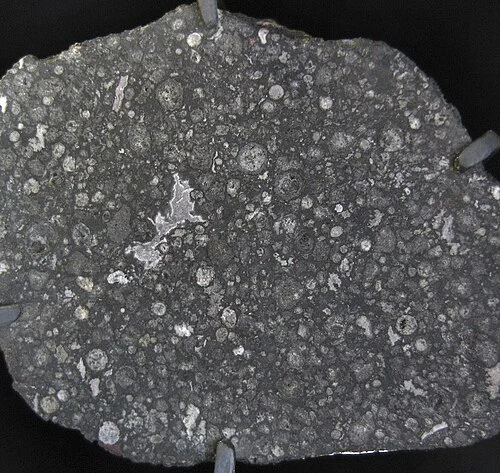
A slice of a carbonaceous chondrite meteorite. ( Shiny Things/Wikimedia Commons / CC BY 2.0 )
We already knew it was a carbonaceous chondrite, a class of meteorite that makes up less than five percent of those that fall to Earth.
But the new study has found that the dino-destroying rock belonged to a subgroup known as Carbonaceous Ornans (CO) meteorites. These make up a minuscule fraction of that fraction.Jupiter is usually an effective gravitational goalie, keeping space rocks from the outskirts of the Solar System from migrating into our neck of the woods.
Of course, some small ones will occasionally slip through its fingers – but letting a 10-kilometer (6-mile) world-ender past is a pretty embarrassing blunder.
"Carbonaceous chondrites of the Ornans class are definitely not like the…

 点赞
点赞 收藏
收藏 点踩
点踩 分享
分享