Solar without clouds

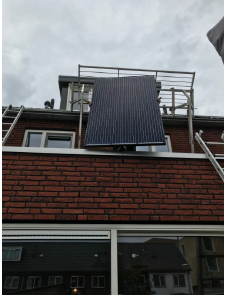
In 2019, we got solar panels. It seemed the sustainable thing to do, and it also, after an initial investment, would make live cost less. We got ten panels from SolarEdge that on average today produce about three quarters of what we need. Less in the winter, more in the summer. Whatever they deliver that isn’t immediately used by us is sent to the net, for which we get paid. When we use more than our panels create, we buy the rest from the net, for what once used to be the same amount. Effectively, we use the net as a battery.
I remember that when the panels got installed, the installer person asked me for our Wi-Fi details. Moments later, I send my laptop’s browser to the solar panel converter’s IP and was happy to tell the installer person I found a web interface that told me what each of the panels was doing.
No cloud required.
Solar panels are placed on our roof on a day in 2019 that was cloudy in more than one way"
He didn’t really respond because at that moment he must have, somewhat cynically, turned off that web interface without even telling me. I received an email with instructions to download an app and create an account at SolarEdge.
A cloud was required after all.
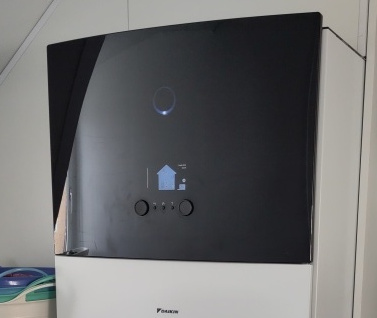
In 2022, we had an air pump installed to stop burning gas. Burning gas emits CO 2 and in 2022 Netherlands helped pay for Putin’s wars and sank houses in Groningen into the ground. This too seemed like a good idea. The air pump needs one Watt to pull five out of the air (more in the summer, less in the winter) and heats water for our cooking, showering, washing and heating. The pump consists of two units, one on the inside of the house and one on the outside. The inside unit has a control panel, so, remembering my debacle with the solar panels, I told the installer person in charge not to bother with Wi-Fi.
Our heatpump’s inside unit offers a display with actual buttons
Many households in my country are starting to produce more electricity than they use for significant portions of the year. This is a problem for net controller people. Since input fluctuates, they have a hard time balancing the net, which is crucial. To combat this situation, the amount of money we are paid for selling electricity has been lowered significantly and will even become negative next year, motivating people to invest in batteries.
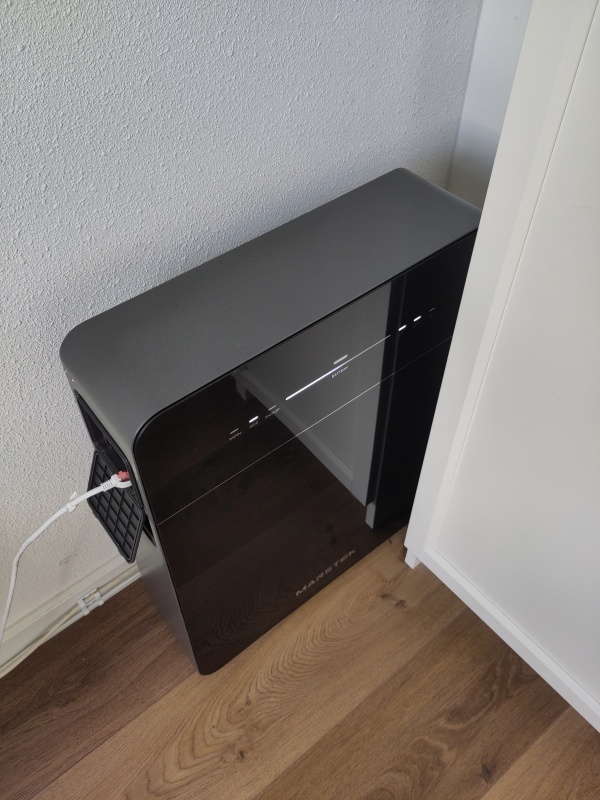
Because of this, in February, we ordered two Marstek Venus E batteries that came with a P1 meter, the latter being a little device that connects to the distribution board in our meter cabinet to tell the batteries what to do. When our solar panels produce more than we use, the unused electricity is stored until both batteries are full. When we use more than the panels produce and the batteries aren’t empty, they discharge. Now we only sell electricity on very sunny days when we’re not at home.
One of our Marstek Venus E batteries, partly tucked away behind an Ikea cupboard
The only problem was the P1 meter didn’t have a display, so now I had another cloud attached app on my phone.
My concern with these clouds is not that they cost money. They don’t, in fact. It’s partly about privacy (always an issue with free services), but also about long-term availability. Solar panels last decades. Do these services? Also, it just doesn’t feel good that for us to control devices in our home, we have to send data to servers half a world away.
This is why I installed Home Assistant. Home Assistant has plugins for both our solar panel converter and our batteries, which together can create very nice dashboards. To have our batteries send their data to Home Assistant, I just had to tell it which port to use.
For the solar panels, I needed an API key. SolarEdge used to have an admin tab on their monitoring website which supposedly provided that key, but that tab, for whatever reason, was removed. An email I send was never answered.
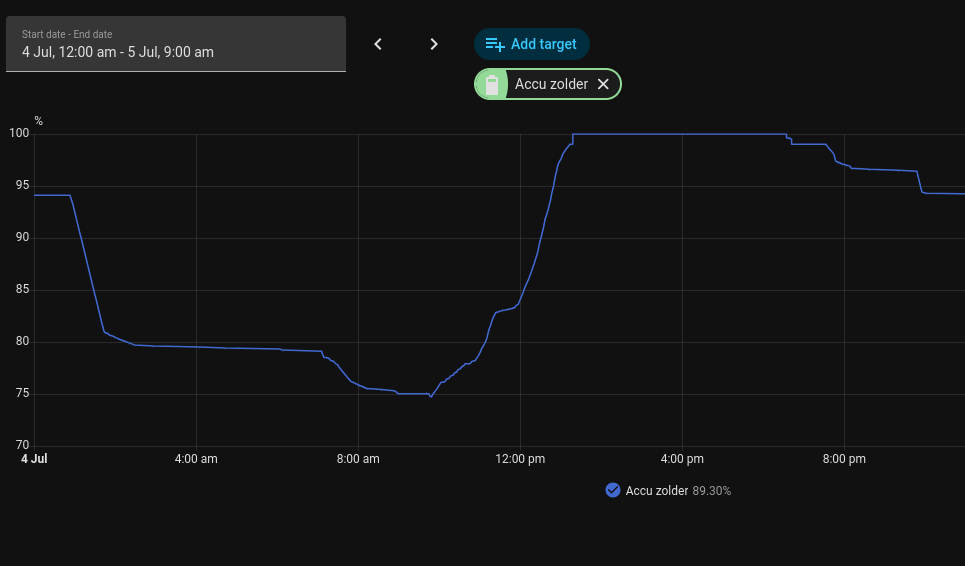
The attick (zolder) battery charging and discharging over time
One other suggested solution would be to create a self-installer account at SolarEdge. The form, however, didn’t seem to accept my converter’s serial number, so I contacted their (AI) chat support, which send helpfully sounding useless texts my way. A button to contact an actual person didn’t at first seem to do a lot, but after a few minutes, someone asked what they could do for me. They told me already configured serial numbers could not be accepted any more. I explained that I was, in fact, just looking for the API key of my converter. They looked it up and minutes later, I had my API key.
Humans are awesome.
Configuring the Home Assistant plugins was easy, which means that I could remove two apps from my phone and enjoy much nicer graphs without needing a cloud.
I can tell SolarEdge and Marstek to remove my accounts now, but that alone of course won't stop my panels and batteries to send them their data. This is where my Pi-hole comes in. A quick look in its Query log showed requests to api-eu.marstekcloud.com, monitoringapi.solaredge.com and prodssl.solaredge.net. Perhaps there are more.
One other thing is that in Home Assistant, I have to click around a lot to see all my data, so the next step is to create a proper dashboard. For that, I need to some reading.
To be continued.

 点赞
点赞 收藏
收藏 点踩
点踩 分享
分享