Taiwan’s drone ambitions play to its tech manufacturing strengths

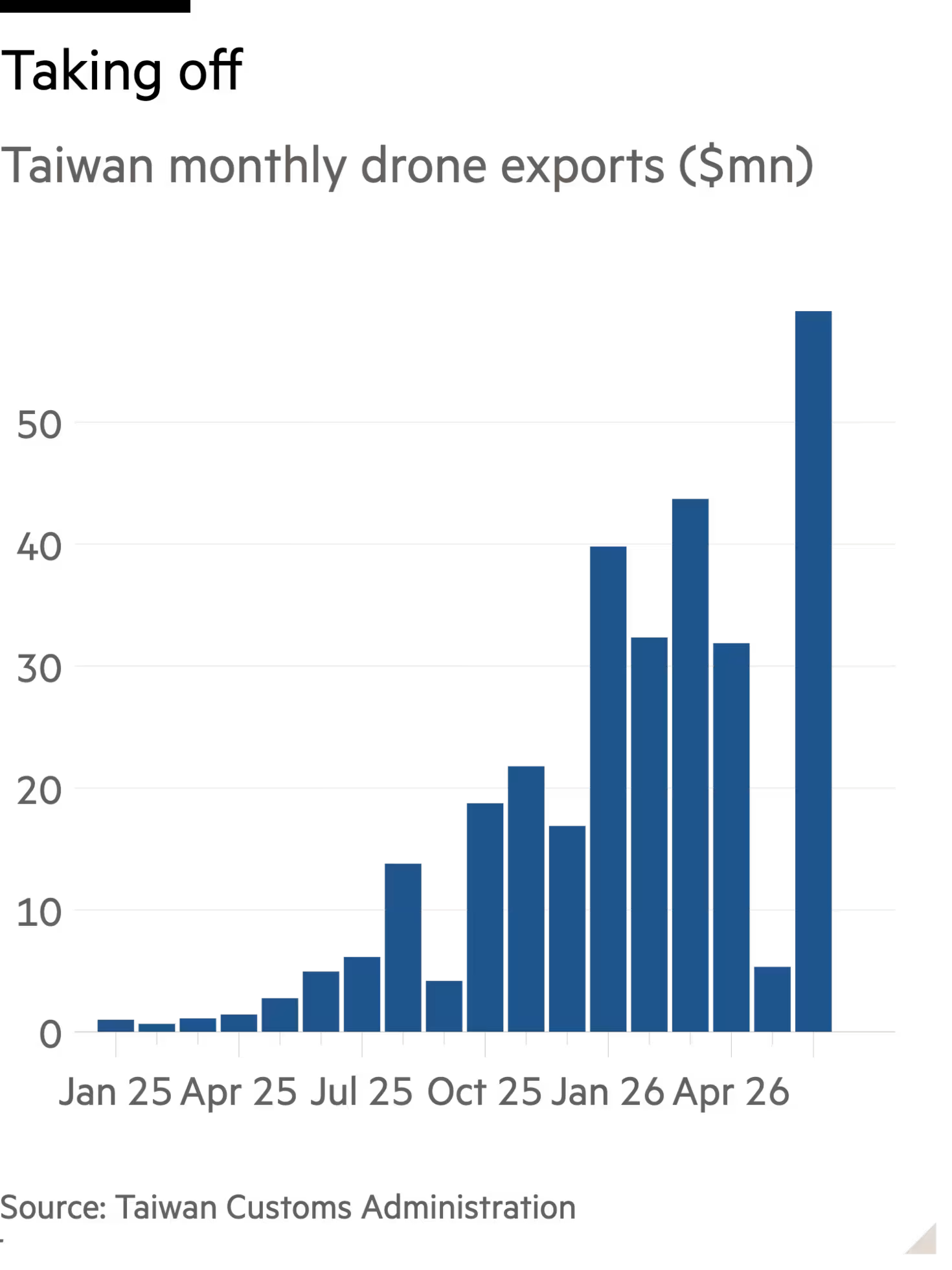
There’s a new drone maker on the block. Hot on the heels of Ukraine, which has gone from a standing start just five years ago to producing millions of unmanned aerial vehicles a year, Taiwan is staking its bid to become a drone production powerhouse.
Political will to do so, backed up with hard cash, is clear: the Taiwanese government wants to earmark $6.5bn for drones over the next six years. Establishing itself in the field is far from blue-sky thinking. It already supplies much of the world’s most advanced chips and boasts a vibrant private sector building production capability.
And there are plenty of buyers beyond its home turf: drone exports in the first quarter of this year handily trumped the entirety of the previous year. Countries from Europe to the US are husbanding funds for military drones; national industry boosterism notwithstanding, some of this will end up being spent overseas.
True, on current run rates, Taiwan is still a minnow. Particularly beside its bigger neighbour and would-be sovereign, China, which produces by far the lion’s share of all drones globally.
But it has put in place Ukraine-style leaps in terms of capacity. Monthly production of 15,000 units is expected to grow sevenfold by 2030, says the Ministry of Economic Affairs, with half of them being sold overseas. Scaling up brings economies of scale, and Taiwan is taking another leaf from China’s playbook: dual-use technology.
Offering commercial applications alongside military ones, thus broadening the market and reducing unit costs, encourages manufacturers to invest. Shenzhen-based DJI, industry leader by far, earned its stripes as maker of hobbyists’ toys.
Washington is onside, doubtless wooed in part by Taiwan’s focus on a supply chain devoid of input or parts from China; a so-called red-free chain.
To this end a government-established grouping — the snappily named Taiwan Excellence Drone Industry Business Opportunities Alliance — boasts more than 200 members across the spectrum. Co-leaders include electronics specialists such as Coretronic and Qisda Corp, which has acquired drone distributors and makers of parts like military-grade motors.
Taiwan’s push in the field has not been lost on investors. Shares in Thunder Tiger, which makes dental kit alongside midsized and large drones, have nearly doubled in the past month. Those in Evergreen Aviation Technologies, making drones for surveillance, reconnaissance and the like, are up by a third over the same period.
It is not a risk-free endeavour. Inevitably, accusations of China-linked parts will emerge; some already have. But Taiwan, which leads the world in manufacturing chips and bikes, has form in every link of the chain from research and development all the way through to selling globally. Drones have a fair chance of following suit.[email protected]

 点赞
点赞 收藏
收藏 点踩
点踩 分享
分享