Nonbank Subsidiaries and the Hidden Fragility of Internal Capital Markets Reallocation




Nicola Cetorelli and Shohini Kundu
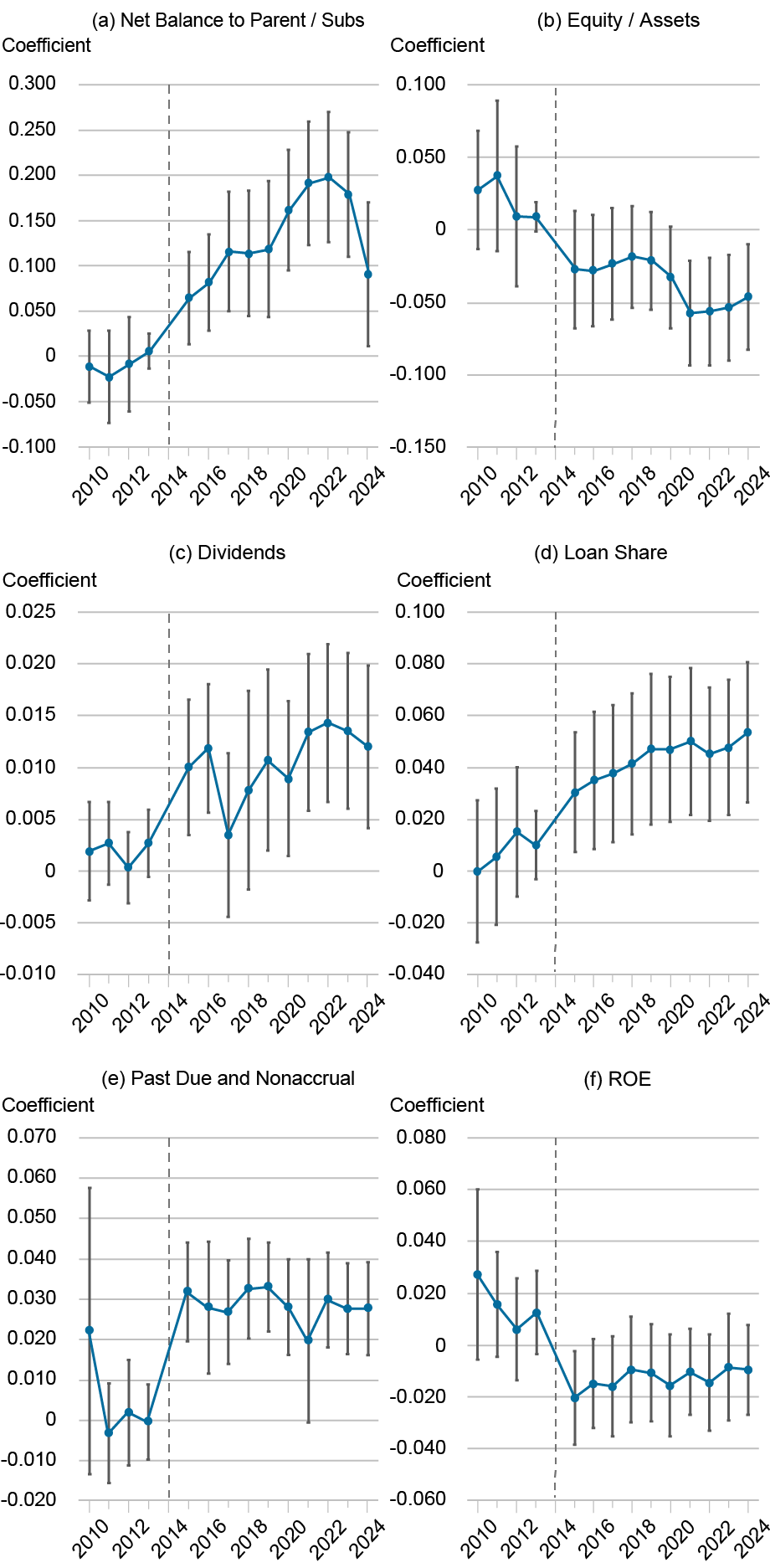
This post concludes a three-part series on how bank regulation interacts with the organizational structure of banking firms. The first post documented the equity-rich nonbank subsidiaries inside bank holding companies (BHCs); the second post showed that BHCs met Basel III by reallocating capital internally, moving equity from nonbank affiliates to bank subsidiaries rather than raising new external capital. Here we ask what that reallocation meant for financial stability. The series draws on the authors’ recent Staff Report, “ Regulatory Arbitrage Within the Firm.”
Banks became safer after Basel III. Whether it made the broader organization safer is less clear. We document that bank subsidiaries accumulated capital, improved asset quality, and reduced r…

 点赞
点赞 收藏
收藏 点踩
点踩 分享
分享