The Digital Restoration Paradox: Why 1950s Film Stock Beats 2000s Cutting-Edge Technology

In the late 1990s and early 2000s, a wave of filmmakers made what seemed like an obvious choice. Film stock was expensive, temperamental, required careful storage, and would eventually decay. Digital was immediate, endlessly copyable, and felt like the future. Why keep shooting on a format invented in the 1880s when you could embrace the new millennium properly?
Two decades later, those cutting-edge digital productions are now far harder to restore to modern standards than films shot on celluloid fifty years earlier. A well-preserved 35mm negative from 1955 can yield a gorgeous 4K transfer. A digital feature from 2003, shot on what was then state-of-the-art equipment, might be stuck at standard definition forever.
Days of Future Past
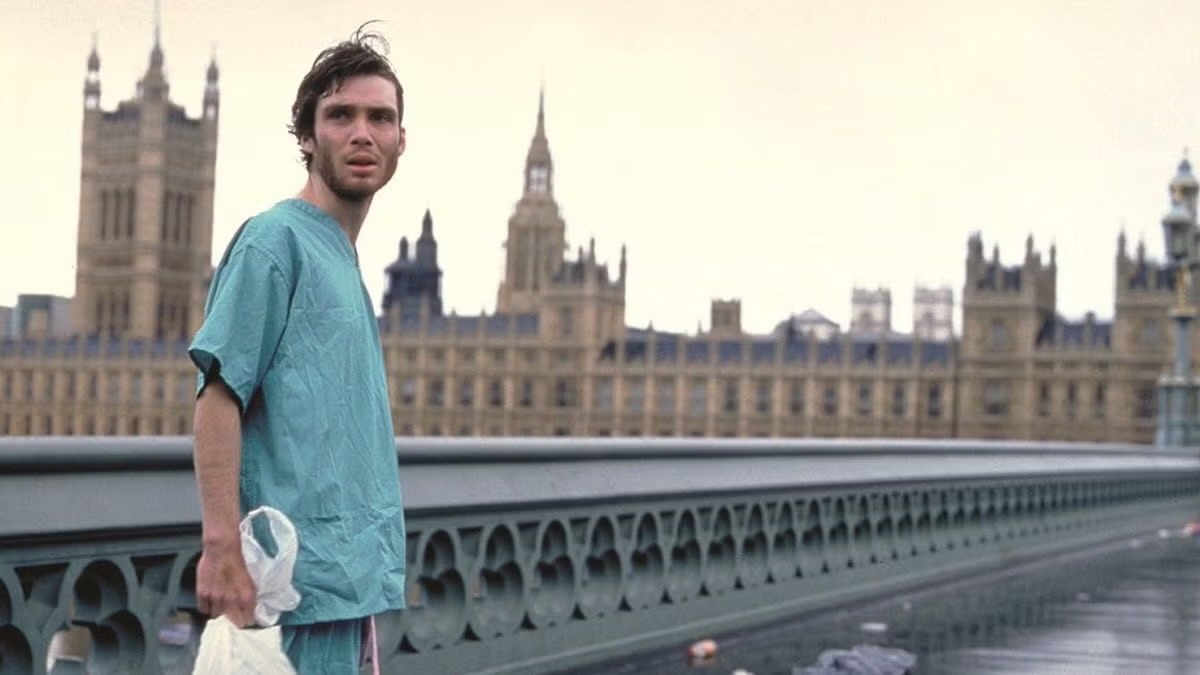
When Danny Boyle shot 28 Days Later in 2002, he chose Canon XL-1 miniDV cameras. The decision was partly practical as the lightweight cameras allowed for guerrilla-style shooting on London’s deserted streets, and partly aesthetic. The harsh, blown-out digital look gave the film an immediacy that felt perfect for a story about civilisation’s collapse.
The cameras recorded at 720×576 pixels which is PAL standard definition. For context, a modern iPhone shoots 4K video at 3840×2160 pixels, with roughly 25 times more information in every frame.
At the time, this didn’t seem like a problem. Standard definition was the norm. DVDs looked fantastic compared to VHS. Nobody was thinking about what these films would look like in twenty years.
In contrast, when you shoot on 35mm film, the main standard for movie cameras, you’re not really capturing a fixed resolution. You’re exposing silver halide crystals to light, creating a physical record of the scene with an almost absurd amount of potential detail. The exact “resolution” depends on the film stock and how you scan it, but modern estimates put 35mm somewhere between 4K and 8K equivalent. Some argue even higher for large format stock such as 80mm.
More importantly, that detail actually e…

 点赞
点赞 收藏
收藏 点踩
点踩 分享
分享