Build on Trainium is a $110 million credit program focused on AI research and university education aimed to support the next generation of innovation and development on AWS Trainium. The program provi...
Training a machine learning model to handle multiple objectives simultaneously is a bit like trying to follow GPS directions to several destinations at once: the routes often conflict, and compromisin...
When a virtual patient in a benchmark scenario tells an AI agent they're feeling feverish, or hopeless, the difference between a safe response and an unsafe one often comes down to clinical design — n...
Reinforcement learning (RL) is one of the techniques we use to make language models better at sustained, multistep tasks like writing code, navigating a website, or carrying out a research workflow. T...
From warehouse automation to surgical assistance, many real-world applications depend on robots performing delicate, contact-intensive tasks. Often missing in these situations is the sense of touch: r...
Amazon is investing in next-generation nuclear technology to meet the rising energy demands of AI infrastructure and cloud computing, and at the heart of that technology are tristructural isotropic (T...
At Amazon, we believe that as our strategy to reach net-zero by 2040 evolves, we need to continue to raise the bar on what and how we measure. Measuring carbon emissions across our entire business is ...
AWS Graviton processors have improved steadily across generations, with each iteration delivering advances in computational performance, price performance, energy efficiency, and memory capacity. Toda...
The year 2026 marks a definitive shift in the AI landscape: we have moved from models that simply know to agents that do. Foundation models (FMs) — large Transformer models pretrained with massive dat...
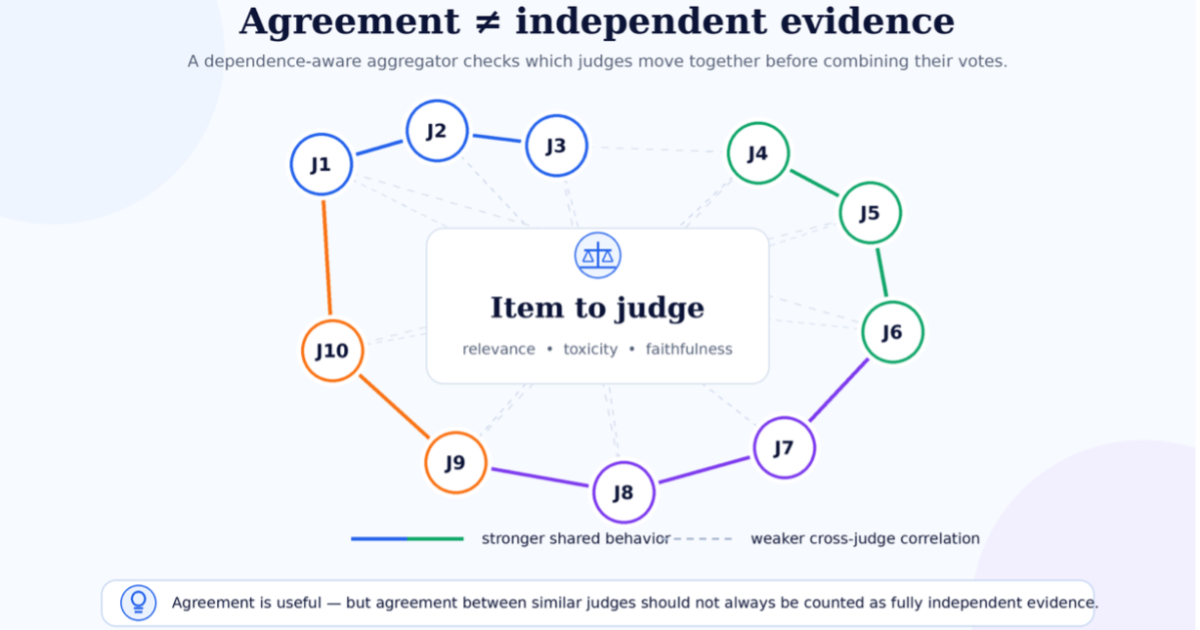
Today, the key challenge in AI isn’t only how to build better models; it’s how to build evaluation systems that can keep up. Search-augmented AI systems can now produce deep research reports — long, p...
Routing in today’s data centers is usually governed by a data structure called a “fat tree”, which is similar to a corporate organizational chart, with nodes in each layer connecting to multiple nodes...
Large language models (LLMs) keep getting bigger and better. But the cost of running them — generating text, answering questions, powering real-time applications — is scaling up, too. Obviously, model...