
On Paper, Americans Have Never Been Richer. But They're Pessimistic About Their Personal Finances


From a laid-off Big Tech software engineer to a retiree back on the job, voters in both parties describe budgets with little room for error.
By Ben Steverman and Sarah Foster
Published: 2026-11-08T21:00:00+08:00
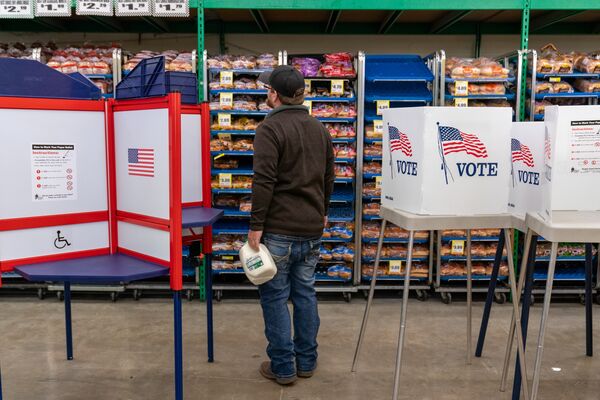
By the numbers, Americans have never been richer. The stock market has doubled in four years, the economy keeps growing, unemployment is near historic lows and home values are holding steady. But Tuesday’s election results suggest a different reality for many voters.
The disconnect between data and daily life is hard to miss in one corner of New York City. Staten Island, a borough with a reputation as a conservative, working-class stronghold, re-elected its Republican member of Congress. Yet its voters, like Americans across the political spectrum, feel deep pessimism about their personal finances.
From a laid-off Big Tech software engineer to a retiree who had to go back to work, or a hydraulics technician living with her mother-in-law, they described the same squeeze, and said they’re running out of ways to adjust. Years of rising costs have left them in a position where a car repair, a layoff or an unexpected bill stands to upend their budgets.
“I don’t have a penny in the bank,” said Paul Szostak, 69, who lost his job during the pandemic. He retired and started claiming Social Security early, only to return to work as inflation heated up in recent years. Szostak now works 48 hours a week as a security guard at the Staten Island Ferry terminal; he’d do more if he could pick up another shift. To save money on gas, he tries not to drive much.
A Split Economy
In an era of widening inequality, the economy’s good news hasn’t reached every household in the same way – or at all. Many Americans say they’re pinched in every direction, from housing and health costs to their prospects for retirement, finding a stable job and having some fun. Last month, 51% of NBC News survey respondents said they were unhappy about their personal financial situation. It was the highest measure for the poll question dating back more than 30 years, and the first time that more felt dissatisfied than satisfied.
Trump administration policies have helped some households and strained others. Tax deductions for tips, overtime and seniors coincided with strict new rules for student borrowers and cuts to health insurance subsidies.
Food price inflation has slowed under Trump, with grocery prices up less than 2% in the past year, but trips to the supermarket remain 32% more expensive than at the end of 2019, according to the Bureau of Labor Statistics’ Consumer Price Index.
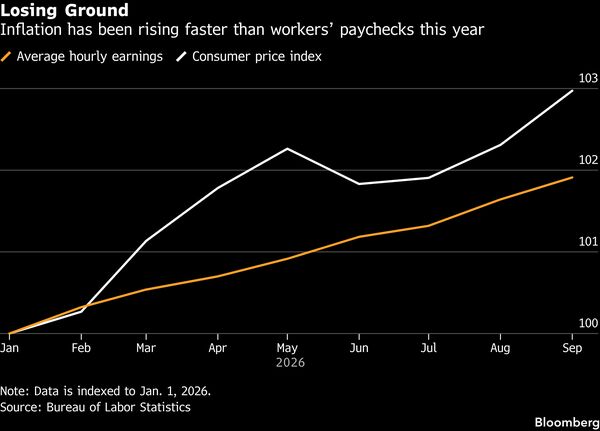
The richest 1% control 32.5% of US wealth, 2.1 percentage points more than two years ago, according to Federal Reserve estimates. Their holdings, more than $60 trillion in the second quarter, now exceed the combined net worth of the bottom 90% of Americans.
Szostak, a lifelong Republican, voted for the party in this election, citing Trump’s One Big Beautiful Bill law and its deductions for seniors and overtime pay. He said he doubts Democrats will do better.
Americans these days have a long list of money worries. Three in five registered voters said they’re concerned about affording health care in a KFF tracking poll released last month, the same share who cited gas and transportation costs as a concern. More than half said food and utility bills were a worry.
Owners and Everyone Else
“Every time I get a leg up, something gets more expensive,” said Molly Black, a 27-year-old hydraulics technician, who voted for Democrats. She lives in her partner’s childhood bedroom. With their savings depleted, unexpected expenses such as car repairs and a trip to urgent care go on credit cards. Buying a home with her partner of seven years, which she was preparing to do not long ago, now feels out of reach.
Rising home values have split the country into those who got in and those who didn’t. While wealthy homeowners have benefited from rising home values, elevated mortgage rates have made buying even harder. Monthly existing home sales have plunged 35% in five years, according to National Association of Realtors data.
“It felt like the rug got pulled out from underneath,” Black said of the last couple of years. Home prices on Staten Island jumped 24% from 2019 to 2025, almost twice the 13% increase in the city as a whole, but less than half the nationwide surge of 54%, according to NYU Furman Center and S&P Cotality Case-Shiller data.

High interest rates have made major purchases tougher, especially home buying. Above 7% for a 30-year loan, mortgage rates are roughly double their pre-pandemic levels. The one-two punch of financing costs and housing prices sent median monthly mortgagepayments to some of the highest levels ever.
Meanwhile, stock market gains largely bypass those without substantial portfolios.
Fewer than a fifth of Americans owned stocks directly last year, according to the Federal Reserve Survey of Consumer Finances. Some 55% have a retirement account, with a median 401(k) balance of $106,000. Instead, most Americans’ biggest assets are their residences, a form of wealth that is far less useful in an emergency than cash.
Retired couple Daniel and Beth Velez do hold a 401(k), juiced by years of rapid stock price growth. They can also lean on Social Security checks and a pension, allowing them to pay off the mortgage on their Staten Island home, which carried a 3.75% rate.
Still, groceries and gas prices hurt. “There’s no reason for prices to be that high,” said 65-year-old Beth Velez. In July, after often spending more than $100 a month on gas, they traded in their Chevy Equinox for a $34,000 Toyota Corolla. Daniel Velez, 66, figures the move helped cut their gas bill in half.
A Lost Optimism
Americans over time have been sunny about their prospects. In the years before the pandemic, the University of Michigan’s Index of Consumer Sentiment hit the highest levels in 14 years, as the US economy finally shook off the lingering effects of the Great Recession. Interest rates were low and working-class workers made gains.
Then Covid-19 hit, and inflation and interest-rates spiked during President Joe Biden’s four years in office, depressing sentiment. President Donald Trump won the White House in 2024 with promises to lower living costs, particularly by rolling back grocery prices.
Thanks to memories of those pre-pandemic years, “many voters were quite optimistic about a second Trump presidency,” says Joanne Hsu, the director of the University of Michigan’s Surveys of Consumers. “That set up some pretty high expectations.”
Tariffs and the war in Iran come in for major criticism, Hsu says, with Americans “drawing a pretty straight line between White House policy and those gas prices and elevated inflation and their reduced purchasing power.”
Republicans could defend themselves by pointing to the US’s low unemployment rate,which fell to 4.1% in the jobs report on Friday. Their problem was that employers also seem reluctant to add staff, at a time when artificial intelligence is promising to transform the workforce. From a recent peak in late 2021, monthly hires have dropped 22%, according to BLS data.
One of those locked out of this “low hire, low fire” job market is Mariam Khan. Hired as a software engineer at a tech company after graduating with a computer science degree from Hunter College in 2022, the 25-year-old was laid off last year. She hasn’t yet found a new job. Later this month, she’ll turn 26 and get kicked off her father’s health insurance.
“I’m not excelling in the way that I want to. Budget-wise, I’m just doing what I can to survive,” Khan said. She voted for Democrats on Tuesday. Her level of hope is low. “I’ve seen the Democratic party fail us before.”