
Democracy Needs Room for Religious Difference
 1


Directly across the street from the about-to-be-blue US Capitol, Election Day at the Supreme Court meant only another morning of oral arguments. And the day’s big case, although ostensibly about state aid to religious schools, carries echoes of the larger battle over how we envision pluralist democracy.
By Stephen L. Carter
Published: 2026-11-08T21:00:01+08:00
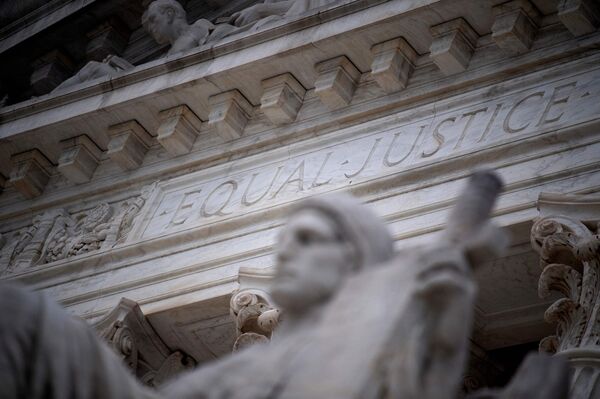
Directly across the street from the about-to-be-blue US Capitol, Election Day at the Supreme Court meant only another morning of oral arguments. And the day’s big case, although ostensibly about state aid to religious schools, carries echoes of the larger battle over how we envision pluralist democracy.
First, some background. Then we’ll get to democracy.
St. Mary Catholic Parish v. Roy is the latest in a line of cases where the justices have been called upon to balance important principles of law against the tenets of religions. Often the cases involve, as this one does, anti-discrimination law. Here, the law in question supplies funding to preschools, including religious preschools, as long as they agree to serve all comers without regard to, among other things, sexual orientation and gender identity. The Catholic preschools require all parents to agree that they will uphold the tenets of the faith, including, of course, on issues of sexuality.
The legal question is in one sense technical: whether the dispute should be resolved under “strict scrutiny,” the highest legal standard the courts impose under the Constitution, and a nearly impossible one to meet. On the other hand, the answer is fraught with the challenges of practicality.
During Tuesday’s oral argument, Justice Amy Coney Barrett suggested to Helen Norton, representing Colorado, that there is little difference between barring religious preschools from the program and “choosing to impose a condition that you know that those schools will be unable to agree to.”
Fair point.
On the other hand, if strict scrutiny is to be applied to every burden on religious belief or practice, the slippery slope awaits. “With respect to public schools alone,” warned Justice Elena Kagan, “these inquiries could go on forever.”
Also a fair point.
On the surface, the case is simple. Just five years ago, in Fulton v. City of Philadelphia, the justices ruled unanimously (although not joined in a single opinion) that the city violated the First Amendment when it barred Catholic Social Services from providing foster care services because of the group’s refusal to certify same-sex married couples as eligible. The city reserved the power to make exceptions; it just denied an exception to CSS. In St. Mary’s Parish, Colorado has also given a number of preschools exemptions from some of its rules — just not the Catholic preschools in question.
There’s another intriguing similarity. In Fulton, the court pointed out that Philadelphia had more than 20 foster agencies willing to serve same-sex couples. This notion that supply matters has a strong pedigree. In his final book, the late legal philosopher Ronald Dworkin — a stalwart supporter of anti-discrimination law — anticipated the relevance of the numbers, arguing that a state should fund a Catholic adoption agency that would not serve same-sex couples, “provided that enough of the latter are available so that neither babies nor same-sex couples seeking a baby are injured.” At oral argument in St. Mary’s Parish, Justice Brett Kavanaugh raised the same question, asking why it’s a big problem for the state if, as he put it, 34 Catholic preschools out of 2,000 total are permitted to screen applicants for their fealty to the faith.
But one needn’t agree that the numbers matter to predict the outcome in St. Mary’s Parish. Colorado made the justices’ task easier when a state official testified at trial that the program might fund preschools targeted at “gender-nonconforming children” or “children of color.” Although the state in its brief disavows that testimony, it’s part of the record, and it gives the Supreme Court a simple path. Because as reasonable as those accommodations might be, once administrative discretion appears, it’s hard to avoid strict scrutiny, so it seems likely, as court-watchers seem to think, that the state will lose. But as more than one justice pointed out during oral argument, next year, or perhaps the year after, Colorado or some other state will be back in court, defending funds for preschools under an anti-discrimination rule that allows no exceptions.
That’s the harder case, and the one most advocates on both sides should do their best to avoid. One way to avoid that battle (and lots of others that might better go unjoined) would be for those who disagree so sharply to improve their skills at talking to rather than past each other. Secularists, in conversation with religionists, might find surprising commonalities. (Or not.)
Which brings us to the bit about democracy.
Democracy is not principally about counting votes and deciding who gets to wield power for the next few years. That’s an unfortunate necessity of democratic politics, but hardly its defining characteristic. Democracy is a pact among coequal citizens, born of mutual respect across our differences — those differences, indeed, are crucial to true democracy, because it is in conflicts over issues large and small that we see democracy at work. No tolerance for our differences means no discourse; no discourse means no democracy.
Throughout the nation’s history, religion has been a principal source of those differences. Even as we see the traditional faiths losing their adherents, there are millions who struggle to preserve what, in our postmodern haste, we are condemning and stripping away. Maybe the traditionalists are wrong. But to the extent that they want to exercise that most precious right to raise children in their faith, putting obstacles in their path is the last thing a serious democracy should do.
More From Bloomberg Opinion:
- Can We Please End These Gerrymandering Wars Now?: Mary Ellen Klas
- Democrats Can Fix the Supreme Court Without Reforming It: Noah Feldman
- Weil Gotshal Implosion Shows Lawyers Are the New Bankers: Chris Bryant
Want more Bloomberg Opinion? OPIN . Or subscribe to our daily newsletter.
To contact the author of this story:
Stephen L. Carter at scarter01@bloomberg.net
To contact the editor responsible for this story:
Tracy Walsh at twalsh67@bloomberg.net