
Bankers Prepare for AI ‘in Every Conversation’ at Climate Summit in Turkey


As the AI trade shows signs of unraveling, senior bankers gathering on Turkey’s Mediterranean coast are hoping to lay the groundwork for deals that can change the technology’s long-term impact.
By Alastair Marsh
Published: 2026-11-08T22:30:00+08:00
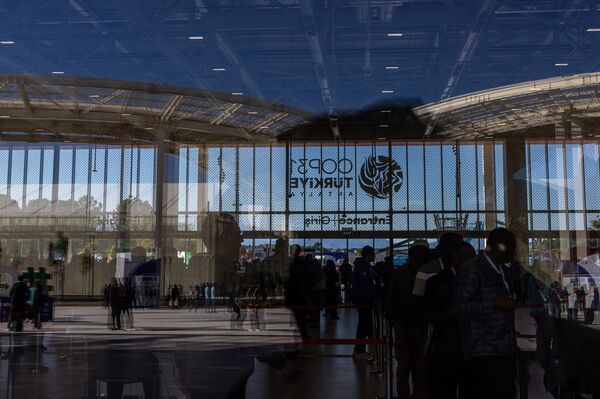
As the AI trade shows signs of unraveling, senior bankers gathering on Turkey’s Mediterranean coast are hoping to lay the groundwork for deals that can change the technology’s long-term impact.
In the Turkish city of Antalya, where the 31st United Nations Conference of the Parties starts on Monday, government leaders, finance executives, business heads and nonprofits will spend the coming two weeks discussing how to convert the pledges of previous COPs into action. The host, Turkey, has identified electrifying more of the global economy as an essential plank in that agenda.
And that’s where AI comes in.
“It will be in every conversation,” said Daniel Hanna, head of sustainable and transition finance at Barclays Plc. AI can create the “long-term commercial demand that will help accelerate clean energy and scale certain climate technologies.”
Read More: What to Watch at COP31 as Midterms, Brazil Deliver Climate Boost
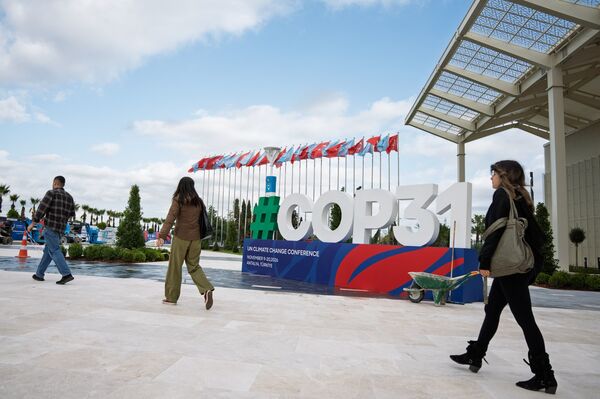
Last week’s tech-stock selloff was fueled by anticipation that the results of the US midterms will lead to more AI regulations, including tougher energy and environmental standards for data centers in the world’s biggest AI market.
Read More: Wall Street Peers Into Abyss of AI Trade as Midterms Expose Risk
“What you’re seeing playing out in the US markets right now is that the reaction is that there will be much more regulation,” said Marisa Drew, Standard Chartered Plc’s chief sustainability officer and one of the bankers headed to Antalya.
From the perspective of capital allocators, AI infrastructure “is going to be trillions of dollars of investment requirement,” she said. Regulations that add transparency will help financiers make informed choices and support the companies “that are good environmental and social stewards.”
Read More: Senate Plan to Fast-Track Energy Projects Headed for a Showdown
Treating AI as a potential solution to the climate crisis remains a controversial posture. The technology’s use of energy, water and land has galvanized a popular movement against data centers, while climate nonprofits have characterized AI’s carbon footprint as alarming.
Simon Stiell, executive secretary of the UN’s Framework Convention on Climate Change, has described AI as an “energy guzzling” technology that drives up emissions. “AI leaders are now on thin ice,” he said in September.
In a report published just before COP31, StanChart described data center growth as “neither environmentally benign nor inherently unsustainable.” Instead, the climate footprint depends on local choices, it said.
“Data centers can be very, very efficient in their operations,” Drew said in an interview. “But it’s about those design choices that you make, the technological choices that you make, and that also involves coalescence around what good looks like, which is where policy comes into play, which is critical for COP.”
Read More: Big Swath of Data Center Capacity Faces New Governor Pushback
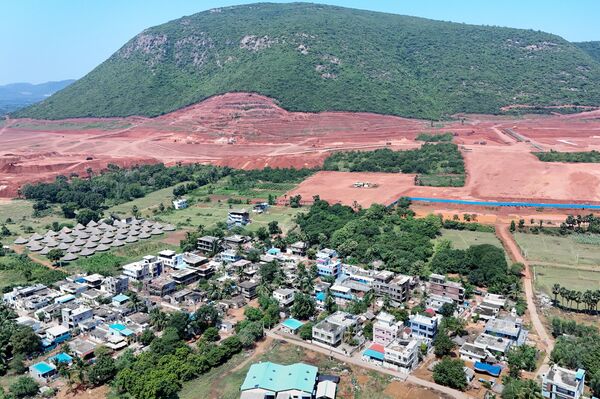
For now, there’s no definitive estimate of the climate footprint of AI. The technology’s rapidly growing need for electricity, however, is uncontested. In April, the International Energy Agency said electricity consumed by AI-focused data centers is set to triple by the end of the decade. By then, all data centers — including those that aren’t focused on AI — will account for about 3% of global electricity demand, according to the IEA.
Hanna of Barclays says he has “conviction” that AI can lead to a “cleaner, more resilient” power system, though he also acknowledges it’s “not a given that it will.”
In its role as COP31 host, Turkey has pledged to work with the technology industry to figure out how to ensure AI is used in ways that help fight global warming rather than accelerate it.
Scaling AI will require huge investments in expanding and upgrading electric grids. Turkey has made it a COP31 goal to get nations to agree to have 35% of global final energy consumption come from electricity by 2035. That compares with about 23% today, according to a September IEA estimate.
Bankers heading to Antalya said in interviews with Bloomberg that they intend to use their time there engaged in talks about how to finance that goal.
Among them is JPMorgan Chase & Co., the largest US lender, which is sending a team of investment bankers and sustainability executives to the talks. It sees the COP31 agenda as one that fits neatly into its own $1.5 trillion security and resilience initiative, unveiled last year.
“The electrification ambition gives us more to latch on to and it is exactly where we are focused anyway,” said Luke Nelson, head of international sustainability at JPMorgan’s center for energy and the environment. “You can’t electrify without a functioning grid.”
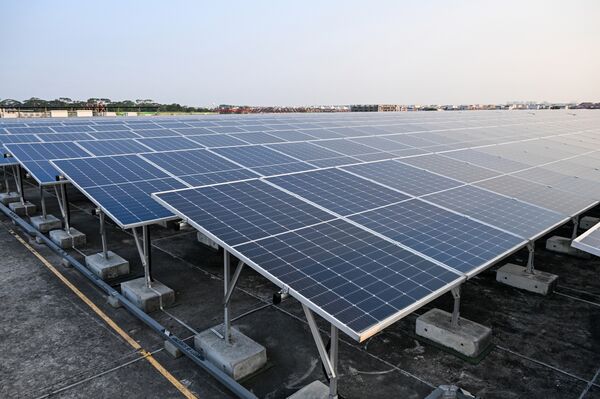
Nelson said talks will include a focus on energy security, as war continues to fuel oil and gas price volatility. JPMorgan’s intention is to actively engage with clients on these topics while in Antalya, he said.
“Energy security can be delivered though scaling renewables,” he added. “And while the primary audience in Antalya will want the regular COP conversation,” JPMorgan’s expectation is that business leaders attending the summit will have more of a “pragmatic focus on security and resiliency, looking at the grid, nuclear and renewables.”
The COP31 electrification goal could become a new catalyst for investment, said Miranda Beacham, head of UK responsible investment at Aegon Asset Management. “It is good to see the presidency focusing on technologies and infrastructure the finance industry already understands and knows how to deploy capital at scale.”
Sudip Hazra, director at First Sentier MUFG Sustainable Investment Institute, said the electrification theme makes it more likely that bankers will leave COP31 having struck deals, or at least laid the groundwork for financing agreements.
“The investment opportunity extends beyond new electricity generation to the infrastructure required to support it, including grids, storage, substations, buildings, transport and industrial infrastructure,” he said.
Financial professionals attending the summit will be able to address a “mega-trend capturing a broad opportunity set for investors,” says Will Farrell, senior stewardship analyst at Federated Hermes’ EOS unit.
As for AI’s impact on the planet, “the book hasn’t been written yet,” Drew of StanChart said. “It’s all about the choices you make.”