
No More Alle-Lulas for Brazil’s Investor Class


To get John Authers’ newsletter delivered directly to your inbox, sign up here .
The Berlin Wall was still standing when Luiz Inacio Lula da Silva ran his first campaign for Brazil’s presidency in 1989. Already the nation’s most famous union leader, he came in second. Since then, he’s run six more times — winning four of them — and spent 12 years as president as well as two in jail for corruption. But the greatest political survivor in the democratic world saved the best for his last campaign, astonishing everyone with a come-from-behind victory in last month’s election. Investors greeted that news with Brazil’s own Black Monday — a sweeping selloff of stocks, bonds and the currency. This made an odd book-end with Lula’s first victory, in 2002, when markets panicked at the prospect of a leftist in power, and then went on a sustained decade-long rally as he proved himself a pragmatist who understood the need to keep capital markets happy. Panic turned into one of history’s greatest buying opportunities, with the benchmark Bovespa index gaining an astonishing 1,500% in dollar terms over the next five years.He had luck on his side — notably the growth of China and its insatiable appetite for Brazilian raw materials. To date, Lula, now 81, has managed to avoid a major market crisis. Investors could not possibly know him better, and yet, a quarter-century after first taking office, they greeted his re-election with horror. What Happened?Lula’s run-off victory sprung a big surprise because he had been beaten into second place on the first ballot. All previous first-round leaders had gone on to prevail in the second. Prediction markets gave Flavio Bolsonaro, his opponent and the son of Jair Bolsonaro, the former president defeated by Lula in 2022, an 80% chance of victory. Yet Lula overcame him and won decisively by three percentage points. Bolsonaro, under criminal investigation that he says is politically motivated, swiftly fled the country for Miami.

Alberto Carlos Almeida, a veteran political scientist, describes the election as an “outlier” because it swung on the campaign between the two rounds. The first had been a referendum on Lula: People were unhappy, he’d been around for a long time, and many wanted a change. That turned the second round into a referendum on Bolsonaro, a deeply flawed candidate whose problems Lula’s team brilliantly exploited in a social media campaign. Even investors, who bid up Brazilian stocks on the assumption of a Bolsonaro victory, disliked the choice. One fund manager said:
Had Brazil placed both these men where they were supposed to be — which is in jail — we would have had a much better choice and this would have been a better country.
Mistakes by Bolsonaro made the Lula campaign’s job easier. Most disastrously, in a televised debate he called Lula — who lost a finger in an industrial accident at the age of 17 — “nine-fingers.” Lula responded that he could not permit a “grifter” who “never did a day’s work in his life” to make light of his injury. He won the exchange. Voting is compulsory between the ages of 18 and 70 in Brazil, while 16- and 17-year-olds and over-70s can abstain without paying a fine. Very unusually, turnout rose between the two rounds. Grandchildren dragged aged relatives to the polls, with the clear perception that the job was Bolsonaro’s for the taking and that they needed to stop him. “If Bolsonaro had come in second in the first round, he might have won,” says Almeida. “Most elections are won by the candidate who’s seen by the electorate to be the one to solve the main problem for the moment. For Brazil, that problem is violence, and that would mean a vote for Flavio.” Lula should not have been counted out. Polls showed a statistical dead heat, with the veteran campaigner gaining. But his victory was still a genuine surprise that created the conditions for a big market reaction.
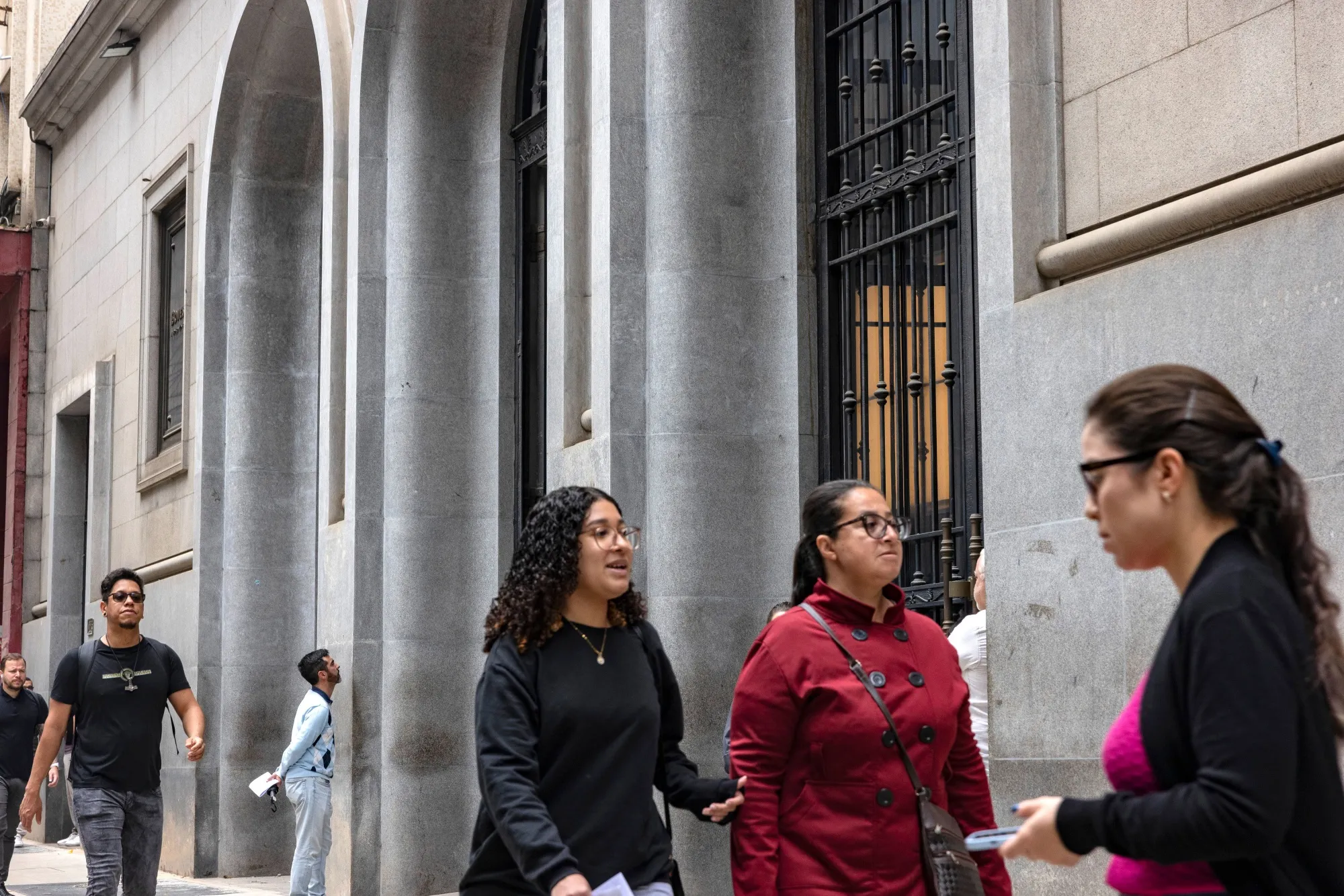
What’s Different This Time? The selloff was so brutal because the investment community in São Paulo has fallen totally out of love with the man. Even if his political luck hasn’t run out, they believe that inexorable economic trends have created conditions where Lula’s approach can no longer work and could lead to disaster. Some of this is bad luck, and some is due to his own failure to deal with deep structural problems when he had the chance.Brazil had a primary surplus in 2002, meaning that ongoing receipts exceeded expenses; it now has a deficit. Debt was 60% of gross domestic product. It’s now on course for 100% by the end of this decade, according to the International Monetary Fund. Extreme hyperinflation has been beaten, but prices remain prone to rise faster than in any similar country, with inflation currently running at 4.6%. Dependence on dollar-denominated debt has fallen as local pension funds have grown. Default is no longer an issue. But debt has accumulated to a point where there seems no way of dealing with it, other than printing money and letting loose inflation to attack its value. This is not all or indeed mostly Lula’s fault. Brazil’s issues date back to the immense 425-page constitution adopted in 1988. It enshrines rights that the country can no longer afford — but which Brazilians can scarcely be expected to surrender without a fight. Constitutionally mandated spending now accounts for about 90% of the government budget. High interest rates are particularly painful because of progress toward a consumption-driven economy with a growing middle class. That has come with a price in terms of indebtedness; some 30% of disposable income goes on interest payments.
Lula cannot be blamed, either, for a looming demographic shift. Brazil is a younger nation than Japan or the western European nations where the growing share of retirees is already generating acute problems — but that will soon change, and its own demographic reversal will happen far faster. But it’s also fair to say as these problems come to a head that Lula has not previously shown any willingness to deal with them. The Paulista business community once thought he might be the ideal politician to persuade the working classes to accept a little less. They now fear that as an old man who will never run for office again — and who may well feel invincible — he could instead move emphatically in the wrong direction.

What Next?
The fear, widely voiced in São Paulo, is that Lula has never liked dealing with capital markets, and now might truly believe he can do without them. Markets staged a second selloff this week after reports that he would meet with an economist who has argued for lowering interest rates to control inflation. That went down like a lead balloon. One investor commented:
This is a weird mix between Turkey and Argentina where unorthodox policy sounds very sexy. For people who don’t understand, of course it sounds great to cut interest rates.
If Lula really did try something that heterodox, it would swiftly lead to all-out crisis — and some investors think that a major bond vigilante showdown, taking interest rates to unsupportable levels, will be needed to force Lula to change path. But he’s been around a long time and hasn’t tried anything divergent before; it’s hard to see why he would do so and endanger his legacy.
A second, perhaps more likely scenario is that he continues to muddle through. He has before and maybe can keep doing so, even though skeptics rightly point out that each kick of the can down the road is harder as debt and interest payments mount. The economy has grown for the last 20 consecutive quarters — quite a feat. But it’s projected to contract next year, and that will compound debt payments even higher.
A final possibility, more of a stretch, is that he takes on the investors and wins — perhaps by achieving the desired fiscal retrenchment by closing loopholes to raise revenues. Cynics might suggest that such a policy contributes to the anger in a Paulista investment community that has just lost huge sums. And it can be dangerous to take on markets.
That leaves the conundrum created by the astonishing election result, which will play out over the next four years. It reminds us that Lula is a great competitor who should never be counted out — but the scale of the upset might indeed leave him so overconfident that he loses the judgment that has kept him as Brazil’s pivotal figure for four decades.
More From Bloomberg Opinion:
A Cornered Trump Is a More Volatile Trump: Tim O’BrienThe Federal Reserve’s Independence Is Assured for Now: Jonathan LevinWho Keeps Crashing China’s Stock Market? Shuli Ren
Want more Bloomberg Opinion? OPIN. Or you can subscribe to our daily newsletter.