
California Sends AI Safety Lawmaker to Congress


Scott Wiener, the California politician who led the successful effort to pass AI safety legislation in the state’s legislature last year, is headed to Washington. The state senator won Tuesday’s election to succeed long-time House Speaker Nancy Pelosi, after his opponent conceded on Wednesday.
When Wiener arrives in D.C., he will be among the few members of Congress to have authored significant AI legislation. Last year, Calif. Gov. Gavin Newsom signed Wiener’s SB 53, which requires the largest AI companies to write and comply with their own safety policies for managing severe risks from their technology.
The bill and the AI companies that supported it could indicate the kind of AI policies that a Democrat-controlled Congress will get behind.
“Scott was working on these frontier AI safety issues before it was cool,” Nathan Calvin, chief strategy officer at Encode AI, an AI policy organization that backed SB 53, told me Wednesday. Calvin said he hopes the next Congress will go further than the state bill, including by requiring AI companies to work with embedded independent evaluators and test the safety of their models.
Indeed, Wiener campaigned on a promise to build on SB 53 at the national level, including by creating a federal regulatory body for AI and expanding unemployment insurance to guard against AI job displacement—a concern Anthropic leaders frequently raise. SB 53 also provides whistleblower protections and requires AI companies to report to state officials if their models are involved in safety incidents, such as theft of a model that is then used to cause harm.
While Congressional lawmakers have proposed a slew of bills to regulate frontier AI models, none have actually reached a floor vote. The most significant AI-related bill to be signed into law was the bipartisan Take It Down Act, which criminalized the publication of non-consensual sexual deepfake images. But supervision of leading models from labs like OpenAI and Anthropic has been left to the Trump administration, including a June executive order that created a voluntary framework for evaluating frontier models before they’re released to the public.
Wiener has spent the last few years scrapping with the same big tech and venture capital firms that will try to shape future national legislation, an experience that should give the freshman Congressman a sense of where he’ll face headwinds.
In 2024, Wiener’s SB 1047, the predecessor bill to SB 53, drew significant opposition from Andreessen Horowitz, OpenAI, Google, Hugging Face, Meta and Y Combinator, which warned it would harm innovation. Anthropic opposed some elements, such as arguing its whistleblower protections were overly broad. Newsom ultimately vetoed that bill, but set up a working group whose recommendations informed SB 53.
SB 53 ultimately won an endorsement from Anthropic, as well as some safety-minded investors. In fact, Anthropic went on to donate $40 million to Public First Action, an AI safety political organization that spent $3.5 million on a super PAC supporting Wiener’s campaign.
However, none of Anthropic’s donation went toward Wiener’s election, according to a spokesperson for Public First Action. Anthropic’s donation is restricted to educational initiatives and cannot be used for political spending. (Though some employees of AI companies donated directly to the campaign, leading some of Wiener’s opponents to criticize him for receiving AI funding.)
OpenAI initially lobbied against SB 53. But in September, chief global affairs officer Chris Lehane wrote that OpenAI supported SB 53, and last month the company wrote to Newsom recommending that California strengthen the regulation.
Anthropic and OpenAI’s support for regulations has raised suspicions among tech notables such as David Sacks that the AI giants are attempting to pass policies that will favor their businesses by making compliance difficult for smaller startups. SB 53 tries to sidestep this concern by focusing on AI companies generating at least $500 million in annual revenue.
In Congress’s absence, other states beside California have filled the policy vacuum: copycat bills in New York and Illinois followed California’s SB 53 this year, and Massachusetts is considering a bill of its own.
These state laws have built on SB 53 by requiring independent compliance audits of AI companies. That’s an idea that is already catching on at the federal level, appearing in President Trump’s recent voluntary accord with AI companies, but has yet to be turned into national law.
OpenAI, Andreessen Horowitz and other AI players have argued that a “patchwork” of state-level bills could become burdensome to AI companies, but several efforts by the federal government to preempt these state bills have flopped in the absence of a national replacement. If AI advocates do accept a preemption deal in the next Congress, Wiener’s platform offers some clues as to what a federal replacement for state laws could involve.
“Exactly what is and isn't worth it on preemption is a hard question, but I do think Scott is one of the legislators that I would trust to really try to make that deal in the interest of the public,” said Nick Beckstead, co-founder and CEO of the Secure AI Project, another AI policy organization that sponsored SB 53.
To be sure, Wiener will face an uphill battle as a junior member, especially as other Democrats clamor to advance their own bills. More broadly, any legislation faces steep odds in Congress thanks to Trump’s veto power. Still, Wiener will find some natural allies on the Hill. For example, Manny Rutinel, a Democrat who authored Colorado’s 2024 law against AI discrimination, won a seat in the House of Representatives during Tuesday’s election. However, Alex Bores, the state Assemblymember behind New York’s version of SB 53, the 2025 Raise Act, lost his Congressional primary over the summer.
Here’s what else is going on…
People on the Move
Sequoia Capital, the venture capital firm that was an early investor in Google and YouTube and wrote the first check to Nvidia, is shutting down its London office, the company said on Wednesday. The firm is making a number of other structural changes and refocusing on Silicon Valley.
Cat Wu, a product lead of Anthropic’s popular Claude Code product, announced that she would be joining OpenAI to lead product management for its core products.
Overheard
Microsoft said last week that it spent about $5 billion less on capital expenditures in the third quarter than it had previously projected because data center capacity it was planning to rent wasn’t ready on time. Microsoft didn’t name the “third party” behind those delays, but one of them is Iren, a publicly traded cloud provider that is already facing pressure as borrowing costs have risen, The Information reported.
China has blocked SoftBank Group’s $5.4 billion acquisition of the robotics unit of ABB, a Swiss-Swedish electrical and automation technology company. The Office of the Working Mechanism for Foreign Investment Security Review, part of China’s powerful National Development and Reform Commission, told SoftBank that the deal will be prohibited, ABB said in a statement on Thursday. The same office earlier this year ordered the unwinding of Meta Platforms’ $2 billion acquisition of Chinese AI startup Manus.
Earnings Report
Uber plans to more than double the number of self-driving cars operating on its platform over the next year, the company said on Wednesday as it reported third quarter results, with plans to arrange financing to build self driving fleets of cars.
Stocks of neoclouds CoreWeave and Nebius dropped 9.9% and 6.7% respectively on Wednesday, even as most tech stocks rose, a sign that investors interpreted Tuesday’s votes in favor of anti-data center candidates as particularly bad for newer cloud firms.
Deals and Debuts
See The Information’s Generative AI Database for an exclusive list of private companies and their investors.
Isomorphic Labs, which uses AI to discover new medicines, is in talks to raise about $5 billion at a roughly $50 billion valuation.
AMD agreed to acquire Taalas, which designs specialized AI inference chips, in a cash-and-stock transaction valued at about $2.9 billion, including up to $1.4 billion in contingent consideration.
Palo Alto Networks is in talks to acquire Clutch Security, which tracks passwords and authentication credentials used by AI agents, for a reported $500 million.
Nooks, which uses AI agents to automate sales calls and prospecting, secured a $500 million growth-capital commitment from General Catalyst's Customer Value Fund.
Laza Medical, which makes AI-powered robotic imaging for heart procedures, raised up to $160 million in a Series B funding round led by GE HealthCare.
Sentra, which helps companies keep AI agents from misusing sensitive data, raised $150 million in a Series C funding round led by Capital One Ventures.
Pliant, which lets AI agents make business payments, raised $80 million in a Series C funding round led by Seaya Nova and Speedinvest.
Rivio, which uses AI to manage hospital billing, raised $33 million (R$180 million) at a $200 million valuation in an extension of its Series A funding round led by Valor Capital Group.
Supa, which uses AI to run UK apartment-block management firms, raised £21 million (about $28 million) in a seed funding round led by 2150 and OpenOcean.
Brava Security, which uses AI agents to simulate attacks and test security defenses, raised $15 million in a seed funding round led by Pitango and F2 Venture Capital.
Finpilot, which uses AI agents to help institutional investors with research and reporting, raised $10 million in a Series A funding round led by Lobby Capital.
Atmospheric AI, which uses AI to track raw-material supply chains, raised $10 million in a seed funding round led by DBL Partners.
Meta has acquired AI coding startup Conductor.
Apple lowered its AI budget for some engineers from $300 to $200 in an attempt to rein in its AI spending, with further cuts to as little as $100 for some teams, Bloomberg reported Wednesday.
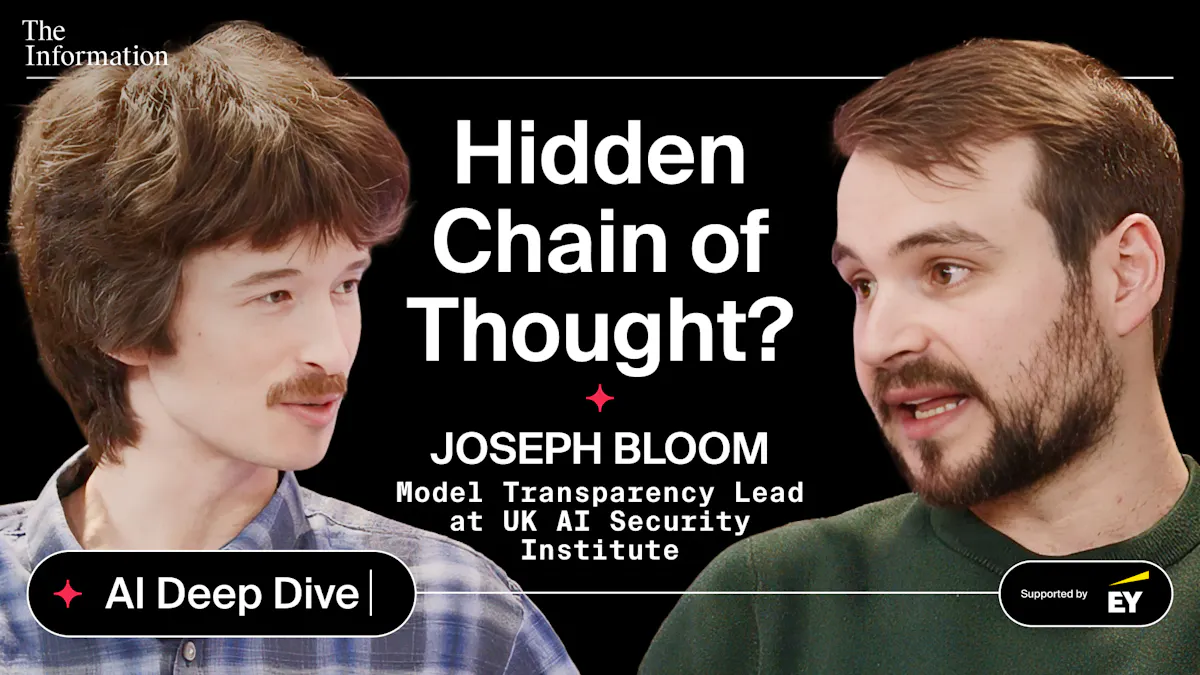
This week on AI Deep Dive
Check out the most recent episode of AI Deep Dive. An up-close look into how frontier AI actually gets built — the models, the money, and the people behind them.

Thank you for reading the AI Agenda Newsletter! I’d love your feedback, ideas and tips: [email protected].
If you think someone else might enjoy this newsletter, please pass it forward or they can sign up here.