
Two Dimensional Version Control


This summer I participated in the r/roguelikedev summer event where we write a Roguelike game, following one of the Roguelike coding tutorials. I'm not trying to learn coding, so I use this event to try learning something else. This year, one of the things I wanted to tackle was two-dimensional version control.
The tutorial we're following has 14 chapters. I wanted to use version control while writing my code. But I also wanted to use version control to match the tutorial's chapters:
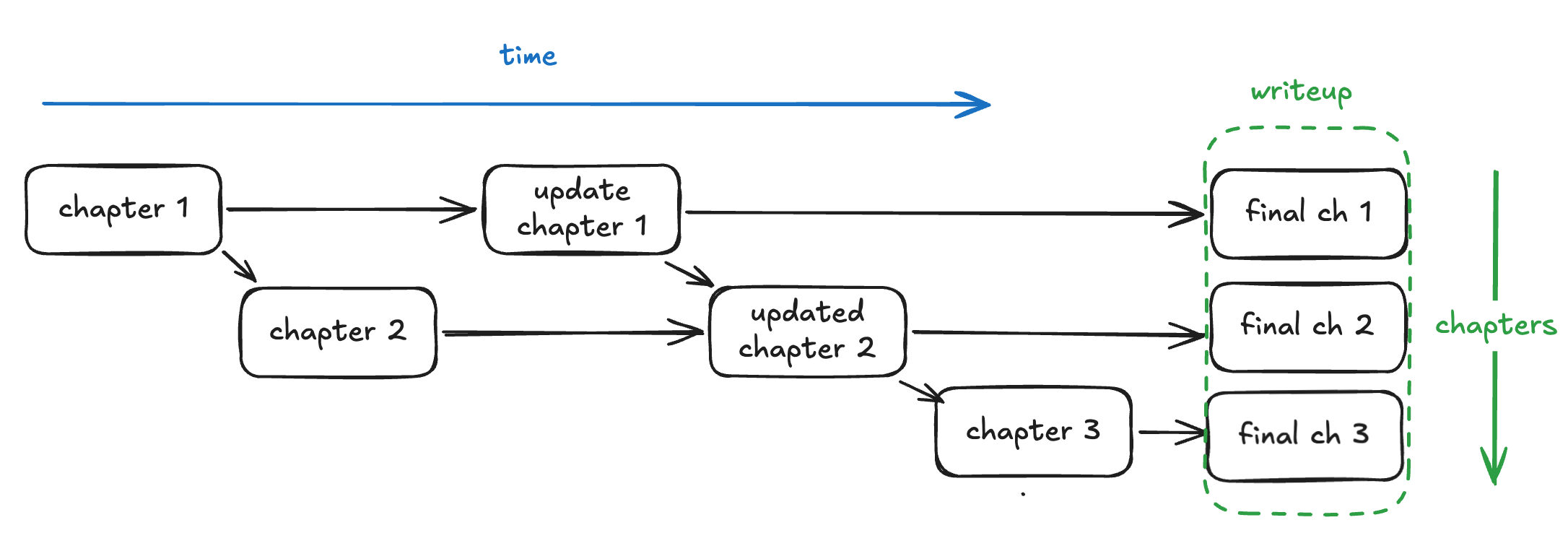
At the end of the project, I want a history of changes I made while writing the tutorial (horizontal axis) and also a history of changes the reader should make while following the tutorial (vertical axis).
I can get the structure I want by setting up one Git branch per chapter, pointing to the previous chapter as the parent. Then when I update chapter 1's code, I can push that forwards into chapter 2, 3, etc.
However, the Jujutsu version control system can do this automatically. Instead of managing all the branches and merges, I can focus on the "writeup" column of the diagram, where I can edit any of the chapters at any time. Jujutsu will roll forward the changes from one chapter to the others. I decided to try it for this project. Other people have blogged about Jujutsu's features; I'm going to focus on the two dimensional output I want.
Example: While working on the dungeon generation chapter, I realized I could've made the tile data structure better. It was easy to make those changes happen before the dungeon code. In this diagram, the horizontal axis is time and the vertical axis is chapter. I went back and forth between dungeon generation and the tile map structure. Once I was happy with both of those, I moved on to a better data structure:
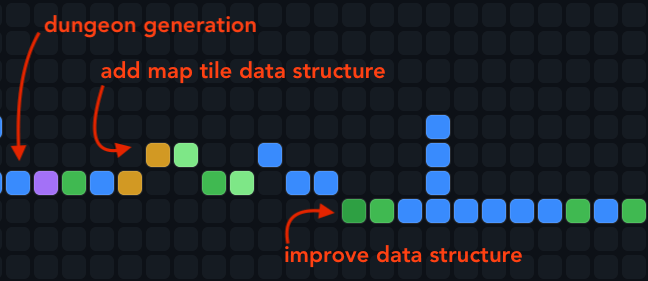
Ignore the colors; they were from a visualization tool.
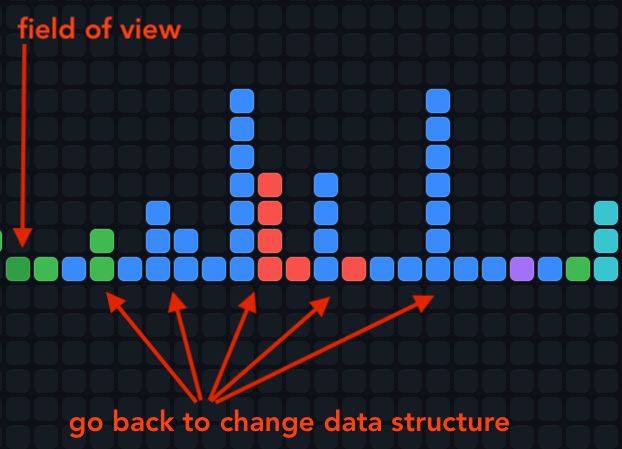
Example: While working on the field of view chapter, I found plenty of things I could've improved in earlier chapters. I had become comfortable enough with Jujutsu that my brain stopped thinking of commits as "set in stone" but instead as "I can fix that!" And I did.
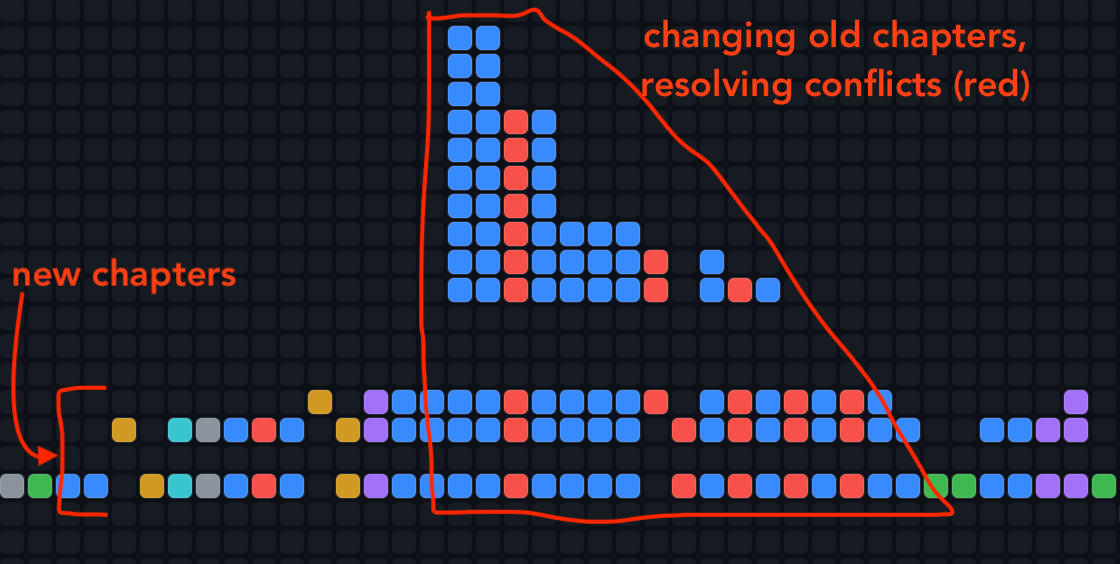
Example: Most of the changes are to the most recent chapters (bottom of this diagram). But occasionally I went back to earlier chapters (top of this diagram). The red shows that I had merge conflicts that I had to resolve before I went back to working on the recent chapters.
Example: As I became even more comfortable with making changes across commits, I came up with better names to use throughout the project. I wanted to make these changes from the beginning, so I used a combination of regular jj edit, which propagates changes forwards to later chapters, and the jj absorb command, which propagates changes backwards to earlier chapters.
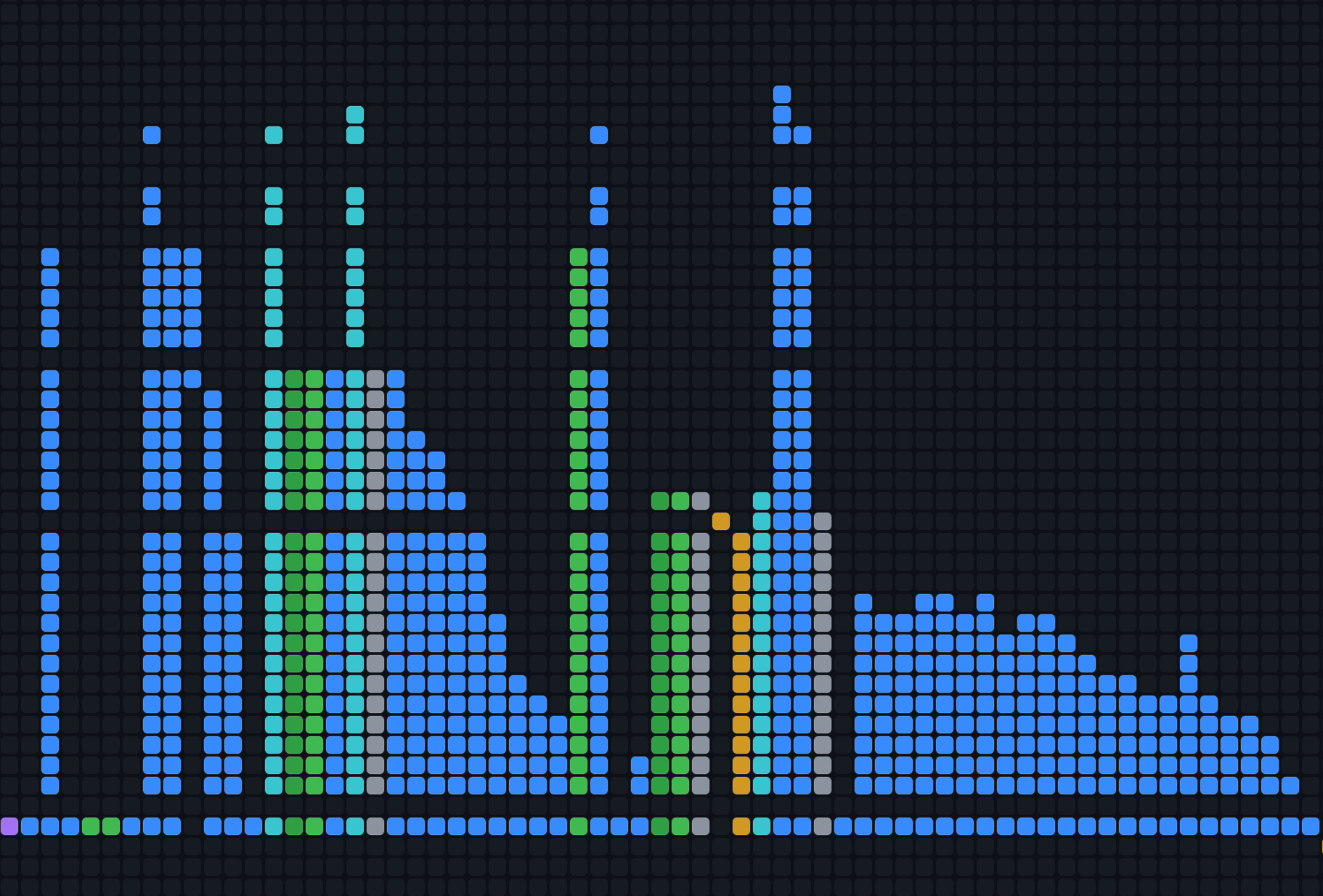
This required a lot of cleanup. The changes didn't have merge conflicts, but the resulting code didn't always compile. If I changed apple to zebra in chapter 1, and I had used apple in chapter 2, Jujutsu wouldn't know to change that name too. So I had to make those changes and test every chapter.
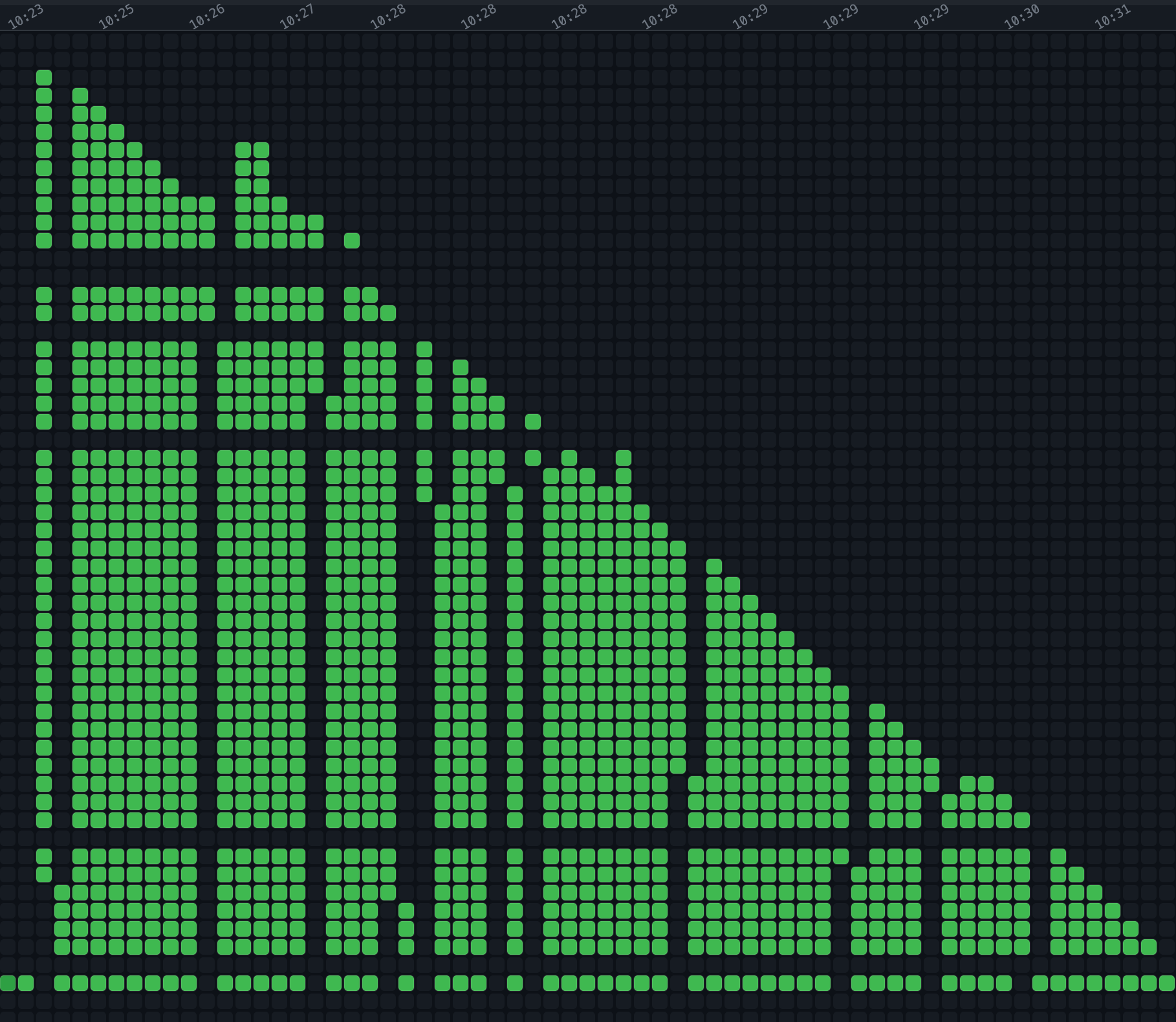
Example: I loved that I can improve the version control change descriptions retroactively. Here's me going back through all the change descriptions to format them consistently:
Thoughts: It's hard to learn by just reading about something. For this project I wanted to try doing lots of things to see what worked well and what didn't. This project is a bit unusual in that I'm trying to not only produce a final version of the game, but also produce 50 intermediate versions that all run, and have clean code that I can present in a tutorial series.

I think Jujutsu was a reasonable tool for this project. I can use it for developing, and also export to Git so that other people don't have to use Jujutsu. The GitHub repository has 54 git commits, not the ~5000 internal Jujutsu commits.
The main downside for me so far is that a lot of things happen automatically and I couldn't keep track of them all. I need to get better at understanding what it's doing behind the scenes so that I can use it with more confidence while avoiding some of the pitfalls.
The resulting game is playable on the web. I wrote notes but didn't write a tutorial this time.