
Democrats’ Big Win Marks Turning Point in US Politics
 4


I’m Jonathan Tamari, senior Washington reporter for Bloomberg Government, and each weekday I’ll be coming to you with inside-the-room reporting and insights that reveal what’s really happening in Washington—and how it impacts you. Email me with feedback and comments here. If this newsletter was forwarded to you sign up here.
Today: What Dems’ sweep means, the seven Senate flips, and investor concern over Elon Musk’s holdings.
Seeing Blue
This was a reckoning.
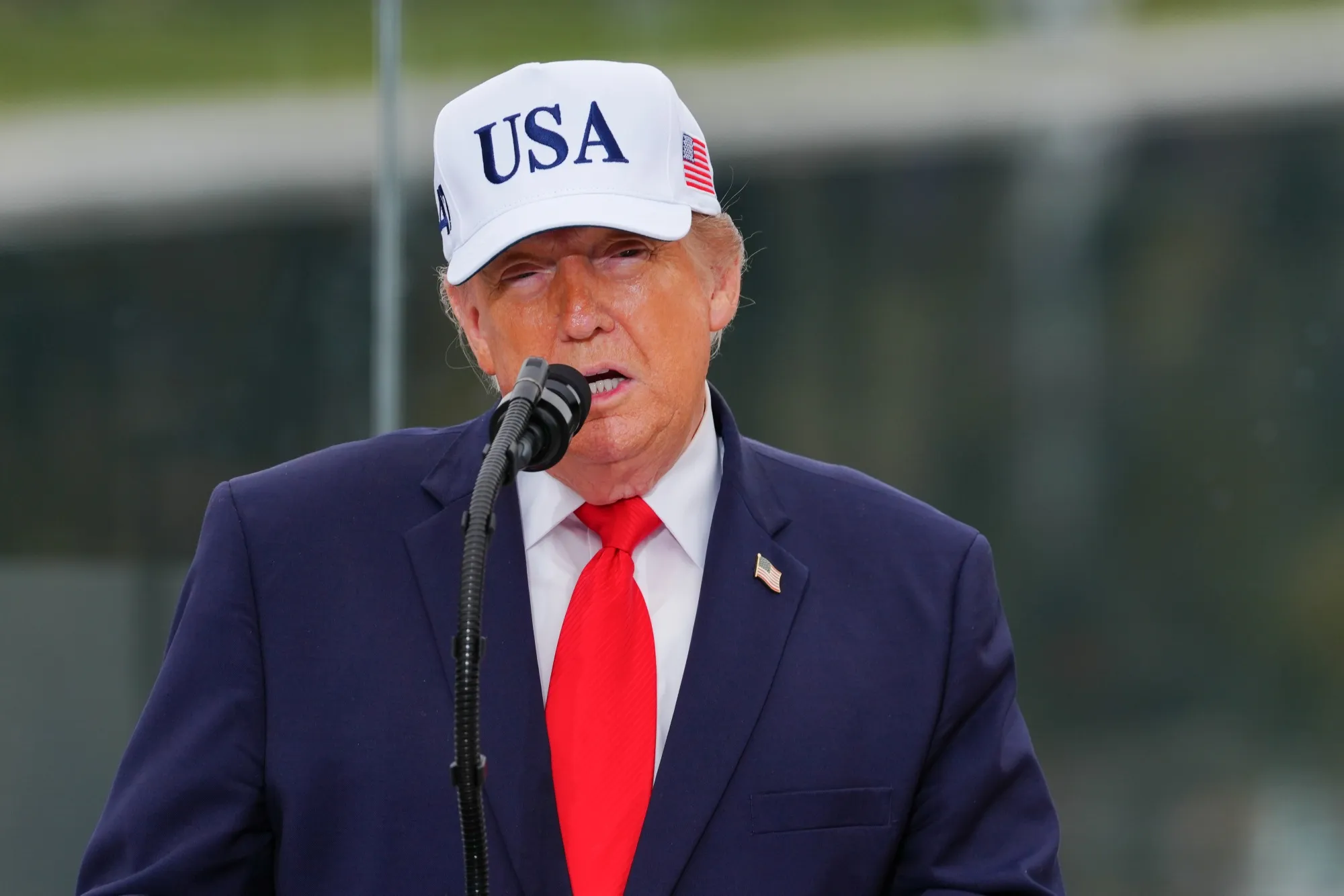
Donald Trump’s aggressive presidency brought a historic midterm backlash, with a repudiation so drastic it’ll shape the political landscape for years to come.
While the president has two more years in power, Tuesday’s public rejection was so emphatic it suggests the country has reached a turning point in his era of political dominance — leaving both parties now to look for new approaches.
Democrats easily won the House and turned what looked like an uphill Senate fight into a rout. They flipped at least seven Senate seats, including five in states Trump won by double digits in 2024, giving the party footholds in deep red territory for the next six years and potentially opening new battlegrounds.
How historic are we talking? Texas will have a Democratic senator and governor for the first time in three decades. South Carolina last elected a Democratic senator in 1998; Kansas: 1932.
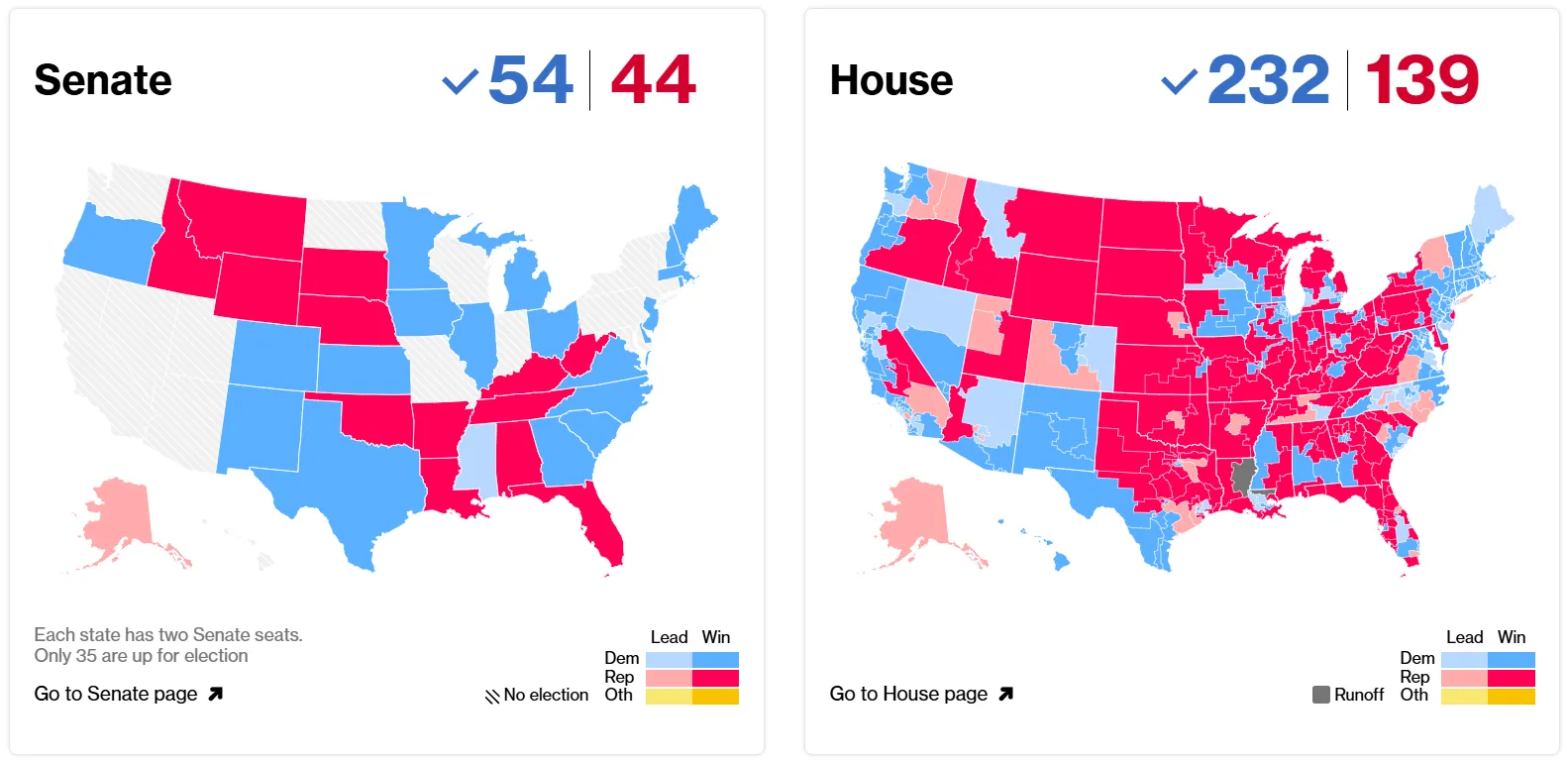
They swept virtually every competitive race (with Alaska’s Senate result still pending), winning even House seats Republicans drew to be uncompetitive.
Trump, who has come back from numerous scandals, finally hit his limit with voters upset over the economy while he focused on Iran, tariffs, and personal building projects.
“This is a disaster almost entirely of Trump’s making,” Democratic strategist David Axelrod told Bloomberg.
Roughly three-quarters of voters felt “angry” or “dissatisfied” with the country’s direction, according to an AP Voter Poll.
“We have five words for the American people: relief is on the way,” top Senate Democrat Chuck Schumer told reporters. “Americans voted for change, and now Democrats must deliver.”
The president remained defiant as the blue wave swept in, saying he “would have won IN A LANDSLIDE” if he were on the ballot.
“I don’t view it as a hit on me,” he told Fox News. “We’ve had the greatest two years in the history of the presidency.”
The White House blamed GOP candidates — even as many of Trump’s personal picks lost in places such as South Carolina and Texas.
Trump will soon face a combative Congress — the first time both chambers will be held by Democrats while he’s in office — that will aim to block or slow his ideas, investigate his administration, and impeach some of his Cabinet.
Businesses (and big law firms) that bowed to Trump or actively supported his projects are likely to be significant targets, too.
“LAWYER UP,” wrote Representative Robert Garcia, a Democrat poised to take over leadership of the House Oversight panel.
The president, who has asserted broad authority (and now has little to lose), is likely to fight inquiries at every turn. That could set up a constitutional clash testing his remaining might and Congress’ power.
He still has control over what comes next in Iran, foreign policy, the power to steer federal investigations, and to pardon friends. And he’s made no secret the Sharpies he’s wielded to unilaterally enact orders can cut both ways.
“I have the ultimate power — it’s called ‘veto,’” Trump told CBS, later posting an image of his signature red hat emblazoned with the word.
As the election dust settles, both parties will pick through the results for clues about what voters want in their next presidential nominees.
This was the second consecutive election in which voters’ economic frustration sparked a resounding rejection of the party in power — a warning sign that Democratic elation could be short-lived if they, too, overreach or fail to deliver.
They also have a long internal fight ahead over what alternatives they have to offer and their vision for 2028.
For Democrats: Hakeem Jeffries is now in line to become the first Black Speaker of the House and one of Trump’s main foils. He’ll be the first Democrat to lead the full House other than Nancy Pelosi since 1995.
“This is a change election,” Jeffries said Tuesday night, pointing to a push for affordability, “and we need to deliver dramatic change.”
He’ll have to unify a caucus that’s adding fire-breathing progressives. Some of their biggest questions: Do Democrats impeach Trump for a third time? (They won’t rule it out.) How far can they go in trying to end the Iran war? Can they offer ideas voters want?
A Schumer-led Senate will make life difficult for any major Trump nominees — and block anyone who might be appointed to the Supreme Court if a vacancy arises after January. (An urgent question for fretting Republicans: would Justices Samuel Alito or Clarence Thomas resign early to give the GOP Senate a chance to replace them?)
Florida Governor Ron DeSantis said Republicans’ chances of confirming another justice in a hypothetical next GOP administration are “probably zero” given the Senate map in 2028.
For Republicans: A decade of largely caving to Trump brought them to this point. Now they’ll have to show if they have distinct ideas, are ready to break free, or if they still stay close to Trump.
JD Vance’s 2028 aspirations suddenly look more complicated, given his ties to a president the public just roundly rejected.
(Just before Election Day, DeSantis publicly criticized the Iran war, suggesting at least one ambitious Republican is looking to carve out a fresh lane as he blamed the conflict for high gas prices.)
Congressional Republicans have two more months of power. But the party is now trying pick itself up from a political storm.
More Results
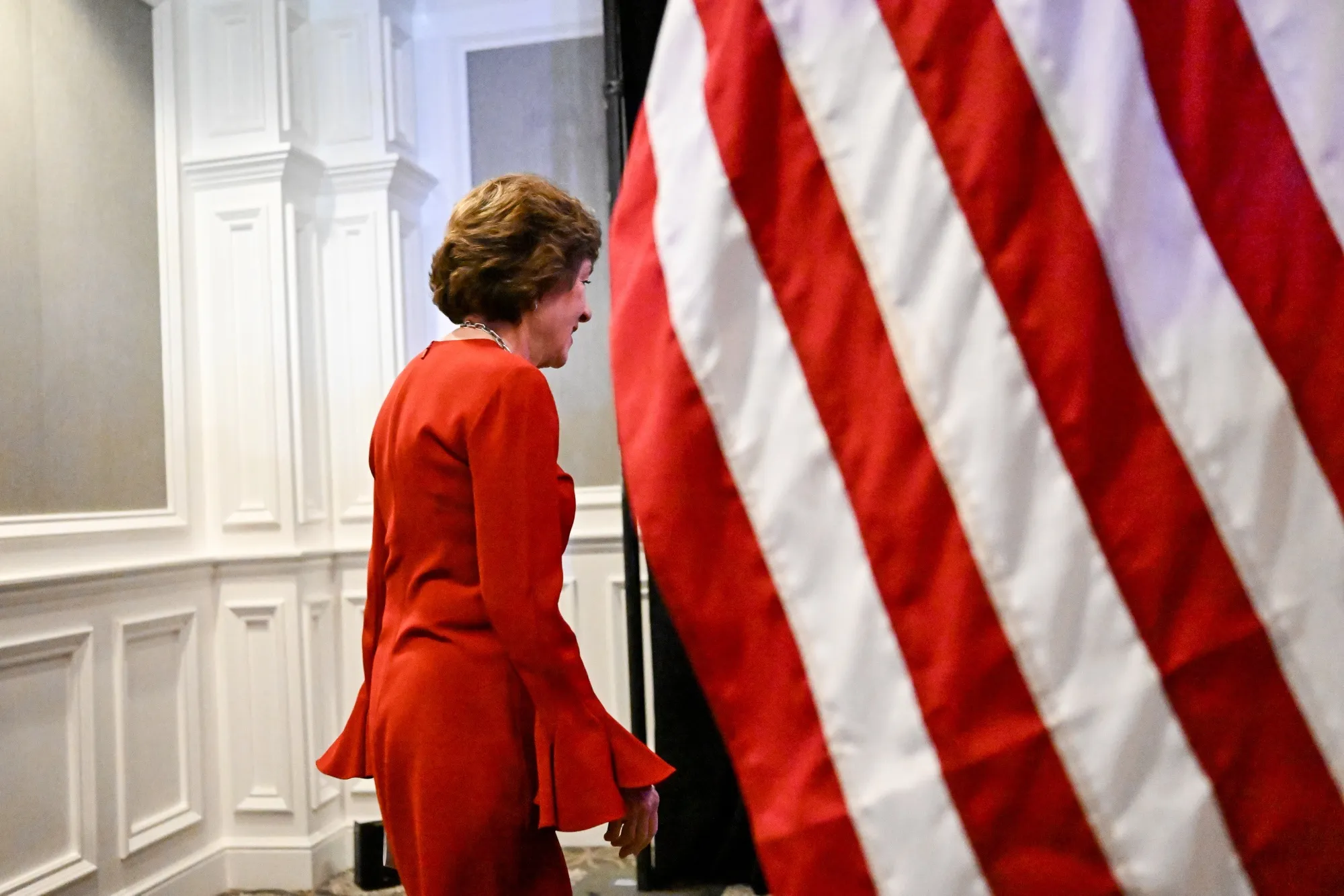
Some top Republicans who oversee federal spending lost, most notably Senator Susan Collins, shuffling powerful committees for the next Congress.
For the first time in 36 years Democrats won a seat on the powerful panel overseeing the $200 billion Texas oil industry.
Tuesday brought several firsts: Georgia’s Keisha Lance Bottoms became the first Black woman elected governor anywhere, Gina Hinojosa became first Latina woman elected governor of Texas, Abdul El-Sayed is poised to become the first Muslim senator, Xavier Becerra became California’s first Latino elected governor, and Chris Pappas will become the first openly gay male senator.
Bolstering voter ID requirements and bans on non-citizens voting saw mixed results in ballot measures in nearly a dozen states.
Democratic victories in Texas and elsewhere suggest AI data centers will now face tougher scrutiny and pushback. They’ll also be a target of Democrats’ new oversight authority.
Voters in Arizona and Nebraska approved bans on transgender girls and women from participating in female sports events. Results on similar questions were still pending in two other states.
Go Deeper With BGOV
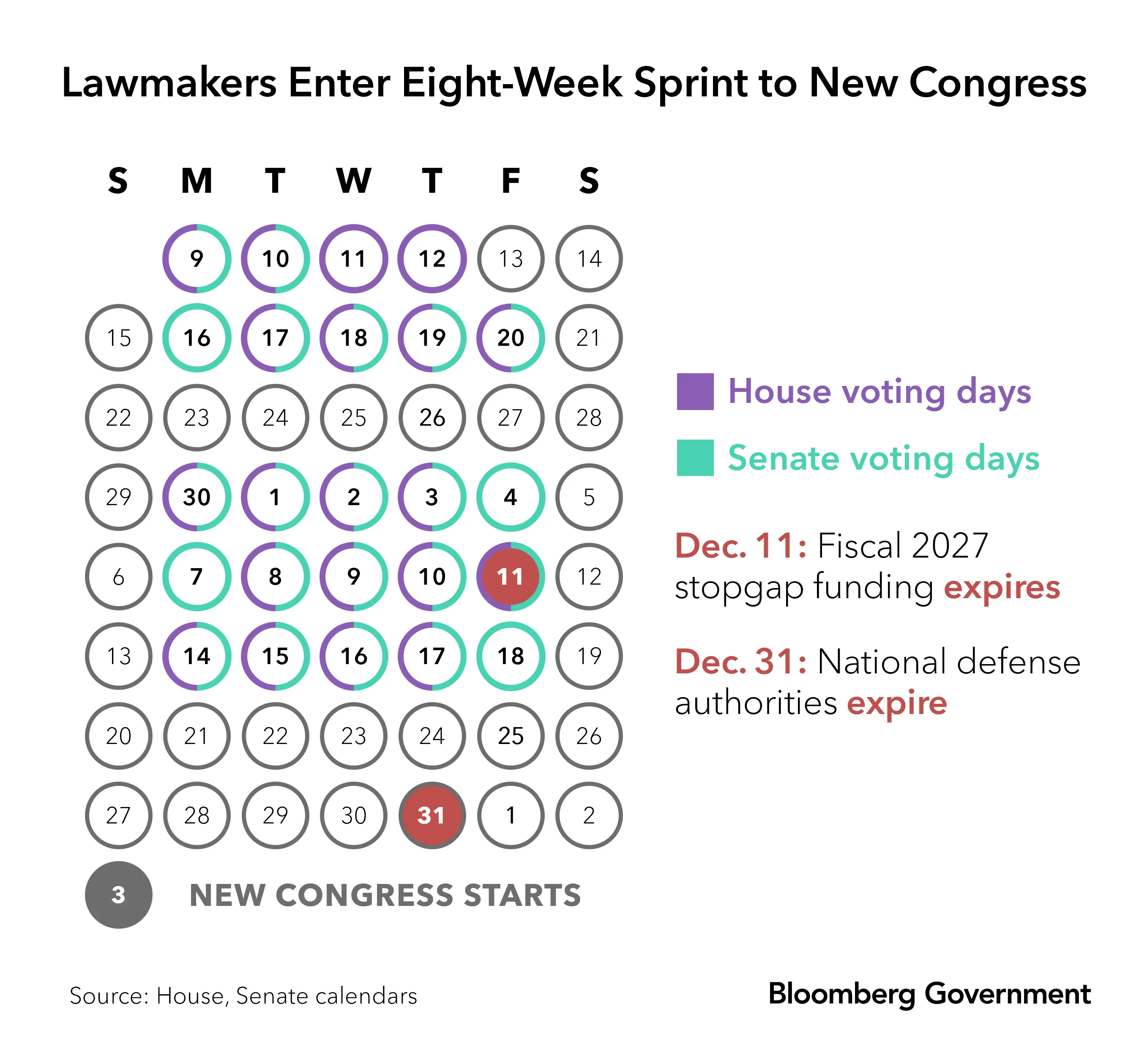
Congressional Republicans have a packed agenda and only eight weeks before Democrats take over in January, BGOV’s John Woolley writes.
Just 20 voting days are currently planned for the House’s lame-duck stretch, when lawmakers will face deadlines to avert a government shutdown by Dec. 11 and renew national defense authorities before Jan. 1.
But fiscal 2027 appropriations will have to compete with a crowded list of Republican priorities, including supplemental funding for the Iran war, renewing expiring farm and surface transportation programs, plus a bipartisan permitting deal truck by senators in September.
Watch This
Other News
Trump said he had no immediate plans to launch strikes on Iran following the elections, telling the Financial Times about the war “we seem to be getting everything we want.”
World leaders welcomed the election results as a sign Trump faces new limits on his power, especially on Iran, but foreign officials cautioned about even more disruptions ahead.
Shares of Elon Musk’s Tesla and SpaceX fell ahead of Wednesday’s stock-market opening as Democrats retook Congress, sharpening investor concern over the future of the GOP megadonor’s key holdings.
More From Bloomberg
Like Washington Edition? Check out these newsletters:
Balance of Power for the latest political news and analysisFault Lines from Bloomberg Economics for daily research on how geoeconomics is reshaping business and marketsCongress Tracker for BGOV clients to stay on top of the action on the HillFOIA Files for Jason Leopold’s weekly newsletter uncovering government documents never seen beforeMorning Briefing Americas for catching up on everything you need to know
Explore all newsletters at Bloomberg.com.