
Knot Says ECB Will Need to Stick With a Hawkish Stance on Policy


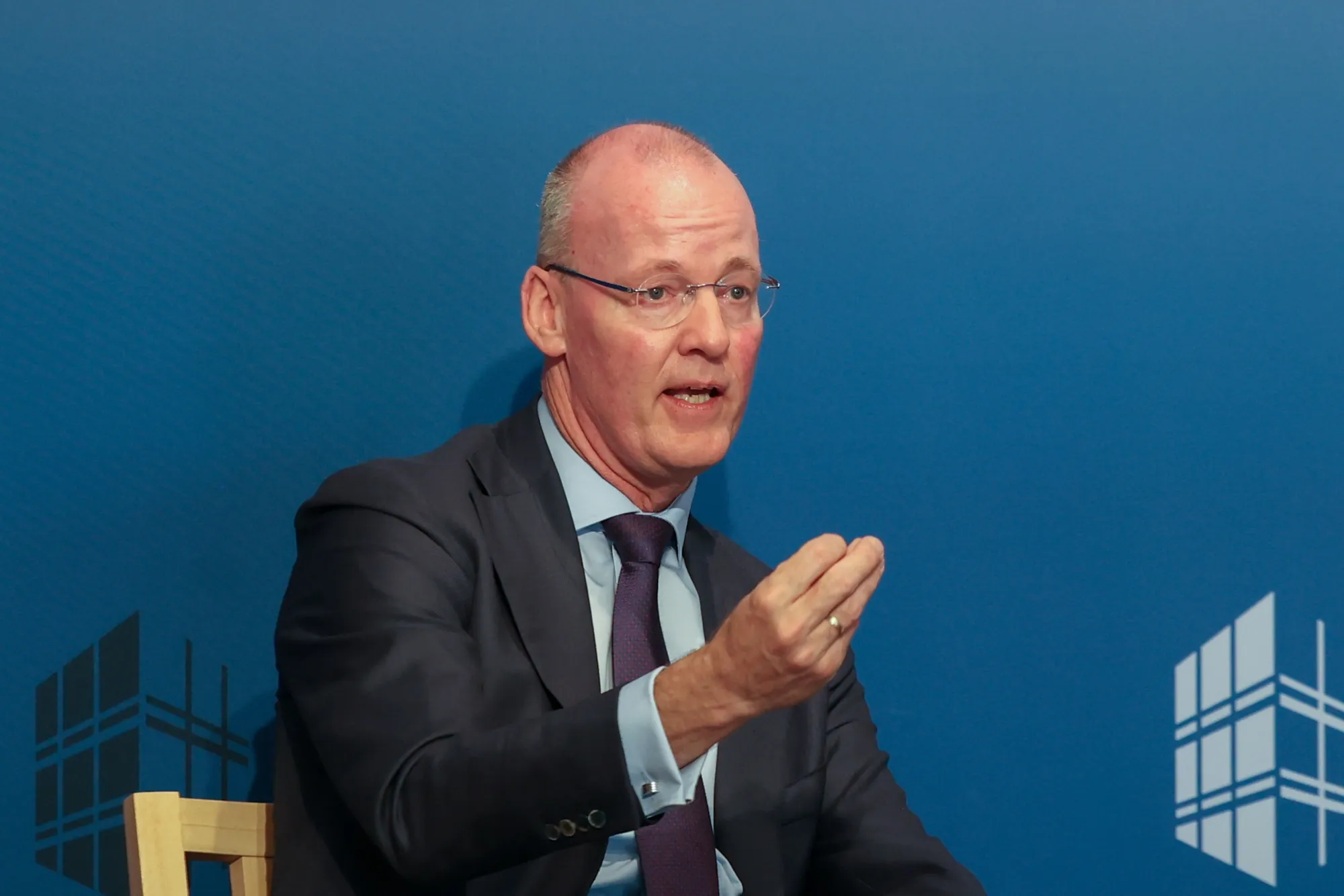
The European Central Bank will likely have to continue with a hawkish stance and be wary of inflation shocks, according to Klaas Knot, who is one of the frontrunners to succeed President Christine Lagarde.
“Unfortunately, core inflation, so second-round effect via services and goods in the consumption basket, will probably also pick up, and is going to be a problem then also for the ECB,” Knot said. “We will continue to see small shocks that will lift inflation, which the ECB then will have to counter with a somewhat hawkish monetary policy posture.”
The ECB has hiked interest rates twice and is widely expected to do so again in December. Inflation in the euro area surged to a three-year high of 4% in October, according to data released earlier on Wednesday.
Against this backdrop, Lagarde announced last week that she’ll be leaving her post in early February, almost nine months before the official end of her term. The Netherlands confirmed on Wednesday that it will nominate Knot, who was the Dutch central bank chief until last year, to succeed her. He’s up against Spain’s Pablo Hernandez de Cos.
Euro-zone countries face a Friday deadline to propose candidates. Euro-zone finance ministers will “take stock” of the nominees on Nov. 9, but with no decision foreseen yet, Finance Minister Eelco Heinen said in a letter to parliament.
Asked about what motivated him to seek the top ECB job, Knot — speaking in The Hague — cited his experience with crises, observing that he doesn’t like them, but that they present opportunities.
“Things become fluid,” he said. “Analytically these are the times where you really do some innovative thinking, where you can really push the envelope much further.”
Knot also said:
“The ECB will probably have to approach its 2% inflation target more often from above than from below.”“Now, in a world of geo-economic fragmentation, that is also a world that produces more negative supply shocks, and negative supply shocks are very difficult to navigate for central bankers because they both create inflation, but unfortunately they also create a slowdown in economic activity because these higher fossil fuel prices they weigh on consumer purchasing power, they weigh on corporate profitability.”“One of these shocks is obviously the war in the Middle East. It is important, when you think about the reaction function of the ECB, these energy price increases are water under the bridge, unfortunately. When the ECB activates its instrument to combat inflation, it takes a year and a half, or two or so, before these instruments can become effective. So today’s inflation, unfortunately, is too late — we can’t react to that anymore.”“I mean, the world has changed, and the world has changed fundamentally. And I think the driver of that is primarily the US. That, by the way, is primarily motivated by its relationship with China and of the rivalry between the two, let’s say, big areas in the world, and Europe is on the receiving end of that. But it means that our relationship has fundamentally changed, and that means that we have to rethink. We have to rethink the dependencies that, for decades, we took for granted and we thought were more or less okay. And these dependencies are they go beyond security and defense.”
Euro-Zone Inflation Accelerates to Double the ECB’s TargetEurogroup Calls for ECB Presidency Nominations by Nov. 6Euro-Zone Inflation Accelerates to Double the ECB’s Target