
Buyout Firms Lean On Outside Talent To Juice Returns
 7



Welcome to Going Private, I’m Sinead Cruise and this is Bloomberg’s twice-weekly newsletter about private markets and the forces moving capital away from the public eye. Today, we explore why one ultra low-profile hedge fund is turning away from loyal clients, the allure of India’s maturing private credit sector and more evidence of datapoint disparity in direct lending. But first we look at private equity’s increasing dependence on outsiders to eke out returns. If you’re not already on our list, sign up here. Have feedback? Email us at goingprivate@bloomberg.net
Under pressure
Private equity firms are leaning more on external operating talent to ramp up asset value, adding layers of project fees and retainers to costs they pass back to portfolio companies and end-investors, according to McKinsey & Co.
Findings from a survey of 122 global buyout shops — reported first by Going Private — show the roles played by operating groups have evolved significantly since 2024, against a backdrop of depressed dealmaking and squeezed payouts to clients.
No longer simply responsible for devising an investment thesis, these teams are increasingly involved in the first 100 days of ownership through to the mid-cycle and even the pre-exit stages of an investment, to maximize return prospects.Two years ago just 54% of operating groups were engaged at these points, compared with 76% in 2026, the survey showed.“It would be difficult for any firm to maintain every relevant functional or sector capability internally at all times,” Robin Ligon, a partner at McKinsey said. “What we see instead is an operating model developing around a relatively lean, senior internal core that can draw on a much broader external bench.”
Operating groups that typically act in advisory capacity are now becoming accountable co-investors with greater skin in the game, according to Ligon.These teams are tasked with delivering performance improvements on 61% of all deals, up from 51% in 2024, the survey showed.Some 91% of respondents said they used external advisors in operating groups, up from 83% in 2024. The smallest now comprise 54% of external headcount versus 40% two years ago.The increased outsider influence is hitting end-investors in the pocket, with 85% of private equity firms billing portfolio companies for the costs of externally-staffed operating groups.“The seniority of that external bench is telling: depending on operating-group size, 71% to 80% of external members in our survey are former C-suite executives or functional leaders,” he said.Some 43% of PE firms polled also expect portfolio companies to cover costs of groups comprising in-house staff. Ligon described the bill-back findings as “striking” but declined to speculate on limited partner attitudes to the charges.
And in the event of outperformance, some 89% of private equity firms have pledged to pay some form of carry to operating groups.
Just over a third of respondents said they pay carry at the fund level, while 11% pay at the deal level only. Some 31% use multiple forms and 13% structure plans that mimic traditional carried interest without awarding an actual share.The wide variation suggests that PE firms are still working through how best to incentivize these teams, even as they become crucial drivers of value creation.According to Ligon, the study also raises questions about which capabilities should sit centrally or reside within portfolio companies, when specialists should be hired in and how stakeholders should work together to achieve the end-goal.
“The firms that solve those questions well can make value creation much more systematic rather than episodic,” he said.
Just for us
With $125 billion in assets and a track record to envy, the leaders of ultra low profile quant shop-turned-multi-strategy hedge fund D.E. Shaw are tweaking the way they do business.
“The stakes are higher, the pace has accelerated,” according to Eddie Fishman, one of seven executive committee members steering the secretive firm through the unchartered AI era.
From January, D.E. Shaw is powering up a new employee-only fund that clients will not be able to access — the first time it has turned its back on customers who already wish the firm would let them invest more.
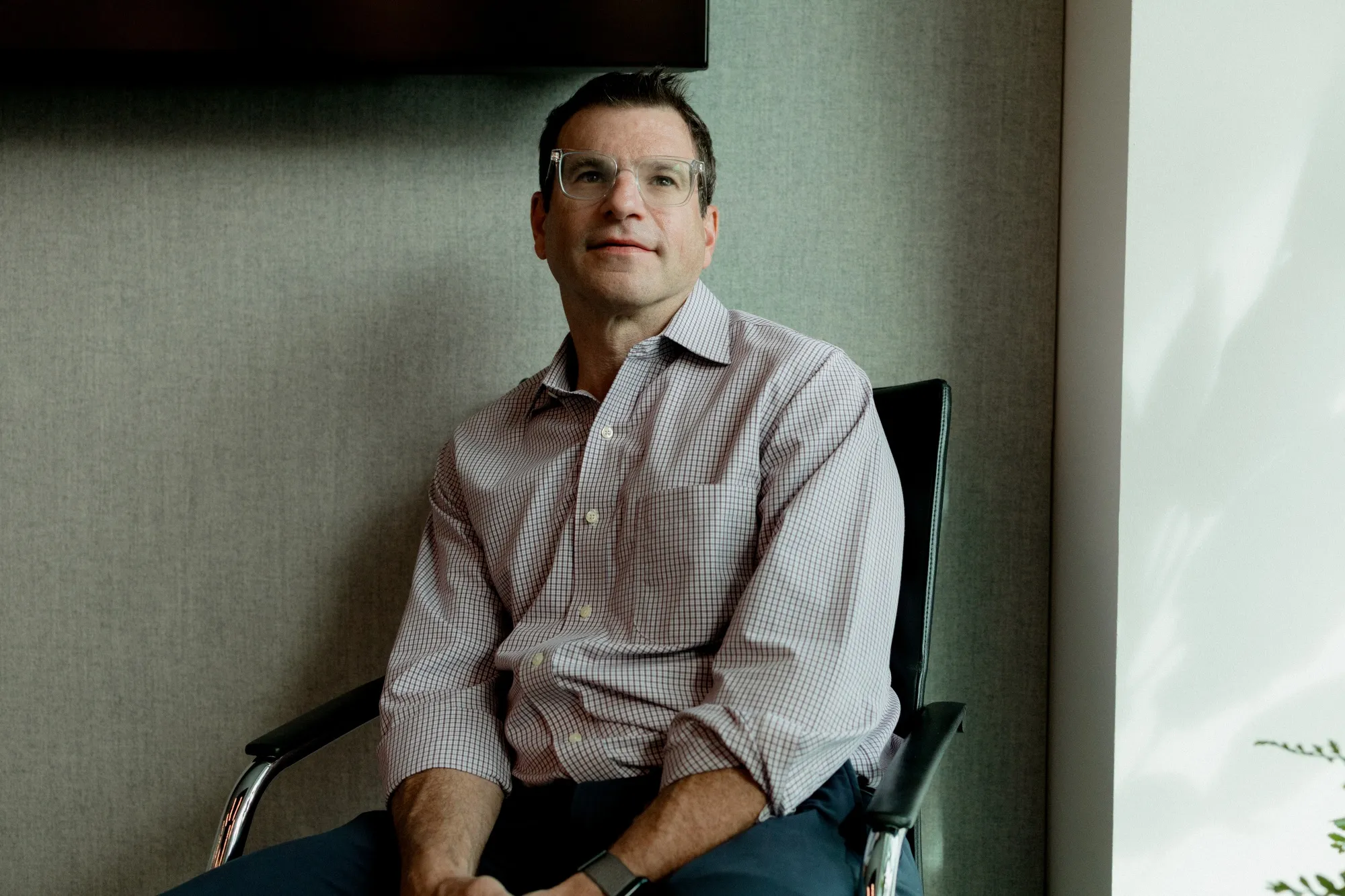
The strategy echoes similar moves by Renaissance Technologies and Two Sigma Investments, which was co-founded by two D.E. Shaw alums. In an interview with my colleague Nishant Kumar, Shaw’s leaders say they have to replicate rivals, or watch them harvest the best people and smartest trades.
In 2024, at least one hedge-fund consultant downgraded D.E. Shaw’s management from the best in the industry to above average. A revamped committee is now thriving, delivering a range of initiatives spanning venture capital, credit and the Cogence fund it has pitched at the world’s super-rich.
Adam Deaton, a math and computer expert who runs systematic futures and options; Anoop Prasad, a theoretical physicist in charge of systematic equities; and Edwin Jager, who heads fundamental equities and credit, all joined in the past three years.
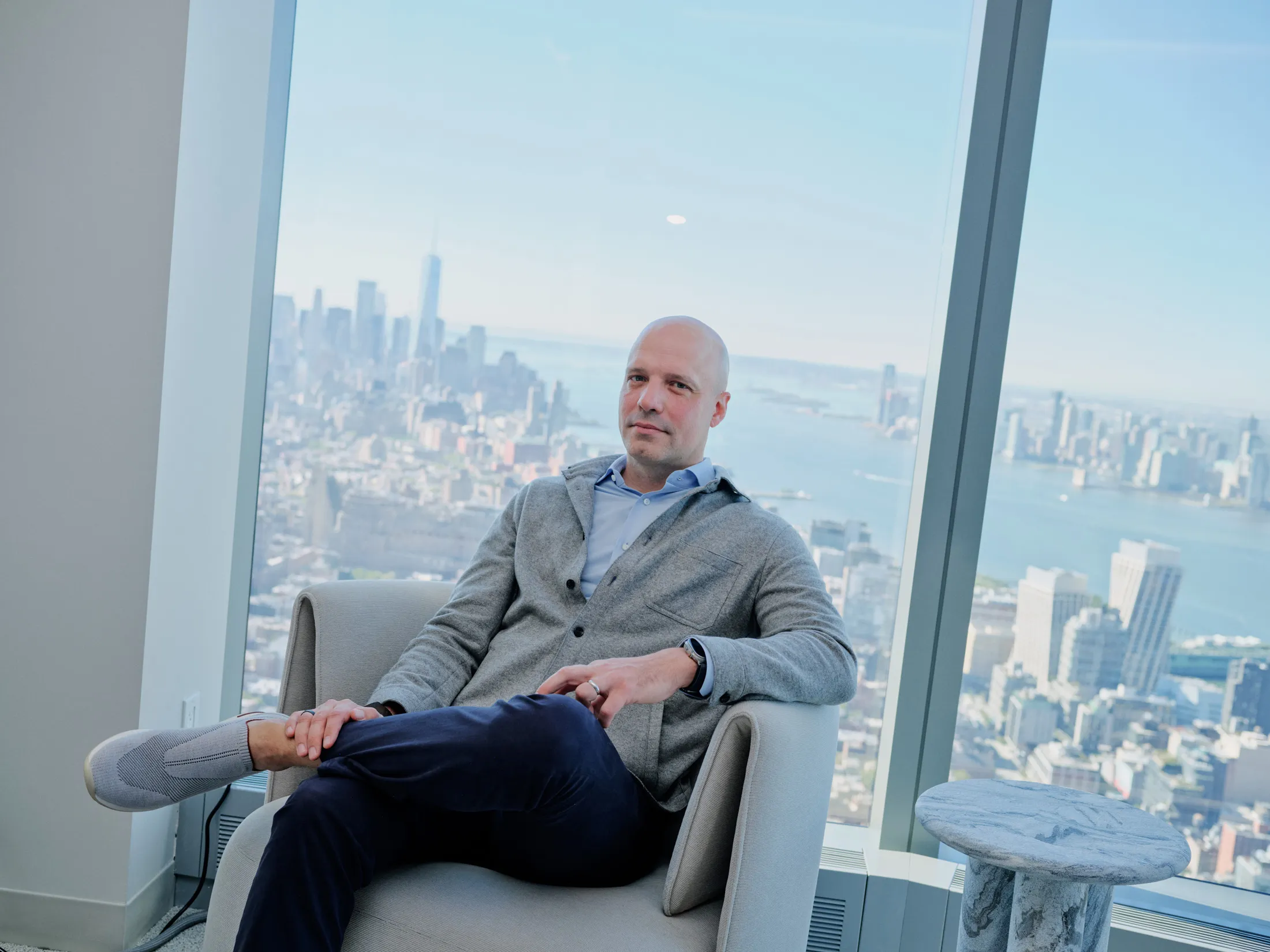
The firm’s flagship Composite Fund, which splices computer and human-guided trading, has returned 13% annually since its inception in 2001. It was up 15.3% this year through September, and the smaller Oculus fund was up 30%.Lately, the panel has discussed using AI to replicate the multi-strategy “pod shop” approach, where capital is parceled out to teams pursuing their own trades. Staff and partner money invested across D.E. Shaw strategies has ballooned to more than $15 billion and counting.
It has also been talking about AI’s escalating cost. This year the firm told its Composite fund clients it would add a 0.12% technology surcharge atop a 0.23% fee introduced last year to cover other expenses. The firm already charges a 3% management fee and takes a 35% cut of Composite’s profits.
Times may be good now but the firm’s past existential crises are etched deep in the collective memory.
“We continuously obsess about the risk of liquidation in markets because the interconnectedness of the levered hedge fund world right now is so significant,” Jager said. “This is the one thing that can bankrupt a firm.”
Credit superpower-in-waiting
Private credit lenders weary of intense competition and tighter spreads in developed economies are taking a fresh look at India, where signs of market maturity are emerging.Bubble fears stoked by double-digit yields and outsized transactions like the $3.4 billion Shapoorji Pallonji issuance are making way for more disciplined lending supported by regulatory reform, according to Rishi Aswani, managing director in Houlihan Lokey’s financial and valuation advisory business.Deployment in the subcontinent reached $4.6 billion across 144 deals in the first half of 2026, down 54% year-on-year after a record-breaking $15.6 billion was lent across 256 deals in 2025, HL said.Firms critical to India’s economic ambitions remain hungry for capital. Adani Group, controlled by India’s richest man Gautam Adani, is seeking to borrow about $1.5 billion to help finance its expansion into data centers, my colleague Saikat Das reports.
“Less than 1% of borrowing in India is in the form of private credit, compared with nearly 4% for developed economies like the US, so there’s a long runway for entrenchment,” Aswani said.In the meantime, lender-friendly regulation is broadening the pool of capital available and allowing for more market-based pricing to emerge.
Innovations include the liberalization of External Commercial Borrowings and a new acquisition finance framework that is paving the way for sophisticated corporate capital structures where bank debt and private credit co-exist.
While the days of sourcing 18%-plus yields on straightforward senior debt are largely over, India appeals to money managers keen to diversify their holdings away from US markets rocked by liquidity crunches and rising underwriting risk.“Contrast that with India’s more conservative framework,” Aswani said. “It’s dominated by closed-end funds that are prohibited from using fund-level leverage, with capital that’s locked in for the life of the fund.”Direct lenders face similar challenges to value private credit assets in India as they do in the west. With almost all Indian private credit deals priced well above investment grade, valuation exercises are more “purely focused on the idiosyncratic, asset-level credit risk,” he said.“In India, I wouldn’t claim that standards are lowered in any sense, but it is a very do-it-yourself approach to monitoring and information exchange.”
Data discrepancy
S&P Global Ratings is expanding into the business of US credit estimates, offering perspectives on unrated entities or instruments that now occupy a much larger portion of investor portfolios and mid-market CLOs.
In its inaugural credit estimate default forecast, the firm said it expects the baseline default rate to reach 4.75% by September 2027, 145 basis-points higher than the current rate.
“In our downside scenario, the Middle East and Russia-Ukraine conflicts could escalate, pushing energy prices even higher and potentially forcing the Fed to raise rates more aggressively than markets currently expect,” S&P said, putting its pessimistic forecast 125 basis-points higher at 6%.While greater default forecasting could help some investors navigate turbulent markets, the vast differences in how ratings firms value loans or measure defaults remain a source of confusion for others.
The share of borrowers held by two or more managers whose marks differ by five points or more increased to 12.3% as of June 30, compared to 9.3% a year earlier, according to the analysis this week by the Frankfurt School of Finance & Management.
Overall around one in 10 private credit loans held by BDCs are marked at lower than 90% of face value, the study showed, an increase from 7.7% last year.
Private credit defaults can be difficult to track because borrowers and lenders disclose less than public-market peers but there is also very little consensus as to what constitutes distress in the asset class.Fitch Ratings put the default rate at a record 6.3% in September, but other assessments that weigh the market by loan size peg the default rate under 1% because the largest borrowers are continuing to perform.
Anant Kumar, global investment strategist at Benefit Street Partners, Franklin Templeton’s private credit manager, agreed headline numbers can be misleading.
“In September, the same index of direct loans produced a default rate of 2.2% when measured by loan value, but 6.4% when including non-accruals and counting borrowers rather than loan value,” he said.
And while defaults may be rising, losses remain relatively low. Realized losses across the Cliffwater Direct Lending Index came in at 0.47% over the year to June 2026, compared with a long-term annual average of 0.98%.
In Their Words
“The more that they lend their credit to others, the more fragile the system becomes.” Jody Jonsson Vice Chair, Capital Group Large volumes of finance fueling the AI boom are sitting off-balance sheet in unconsolidated vehicles held by a handful of companies doing business with each other, adding to fears about the scale of capital raising in the sector
The Number
27%This proportion of private equity firms say they have the necessary infrastructure, processes and capabilities in place to participate in a shift towards retail and semi-liquid investment vehicles, according to a global survey of 455 professionals by Vistra Fund Solutions
Movers and Shakers
Lazard has unveiled Lazard CL following its April acquisition of Campbell Lutyens. The launch marks a milestone in the Lazard 2030 strategy to expand the firm’s private capital advisory offering and diversify its revenue sources. Lazard anticipates that Lazard CL will generate around $500 million of estimated combined revenue and be accretive to earnings in 2027.
Apollo has recruited veteran investment banker Christian Meissner to chair its €10 billion ($11.2 billion) private-credit arm for Europe.
The Abu Dhabi Investment Council-backed European Credit Co., is seeded with capital from Apollo vehicles and sources such as Athora, Norinchukin Bank, Standard Chartered Plc and Aranda Principal Strategies.Alexander Simoes is joining Carlyle Group Inc.’s credit business to serve as a managing director on its direct lending origination team. He previously worked at Apollo, Oaktree Capital Management and Goldman Sachs.
What’s Keeping Us Busy
Millennium Management is redeeming more than $1.5 billion of leveraged cash from two external hedge funds that the multi-strategy investment firm backed last yearUS real estate giant Hines is launching a new vehicle targeting individual investors in Europe, joining a host of private capital managers looking to tap the continent’s wealthyBlackstone has raised around €13 billion ($14.6 billion) for its European direct lending strategyAntonio Gracias’ Valor Equity Partners, a venture capital firm that’s long-been allied with Elon Musk, has already raised about $3.3 billion to invest in startups, according to new securities filings
Thank you for reading Going Private, Bloomberg’s twice-weekly newsletter on private markets. Contact us for feedback and tips at goingprivate@bloomberg.net.
More From Bloomberg
Like Going Private? Check out these newsletters:
The Brink for exclusive coverage of corporate distress, bankruptcies and turnaround storiesThe Women, Money & Power Report for elevating the perspectives of women leaders and experts shaping global financeCFO Briefing for what finance leaders need to knowMoney Stuff for Bloomberg Opinion’s Matt Levine’s newsletter on all things Wall Street and financeDeals for the latest news and analysis, from IPOs to startup investing
Explore all newsletters at Bloomberg.com.