
Good news! The world won't end on Nov. 13, 2026.
 2


Hello from Bologna, where I'm attending the Visualising Climate conference! I'm keeping the mortadella for myself, but paid subscribers will get a special dispatch about the conference once it wraps. Speaking of paid subscribers ... we've almost hit our goal! Just four more to go!
Starting next week, some Not-Ship content will go behind a paywall. Members get everything, and if you join by tomorrow (Nov. 5), you'll get 20% off an annual membership. Thanks to everyone who has already done so. It means the world.
💙 Amanda
According to a paper published in one of the world's top scientific journals exactly 66 years ago today — the world will end on Friday, Nov. 13, 2026. "At this date human population will approach infinity if it grows as it has grown in the last two millennia,” wrote Heinz von Foerster and his coauthors in Science.
But don't cancel your plans! The end may be nigh, but it won’t be next week.
Von Foerster was worried about too many people. So, he fit a curve to 24 historical population estimates and found that population growth wasn't just rising, it was accelerating. That was 1960, when the population was doubling about every 30 years. By his math, it would double every five years by 2016, and every six months by the end of 2025. And by Nov. 13, 2026, the global population would be doubling so fast that it would shoot off toward infinity.
Here's what actually happened.
The doomsday formula was right — but only until the 1990s
Von Foerster's population predictions compared with real global population numbers.
Global population growth peaked in the 1960s, just as the paper came out, and birth rates began to fall. The global birth rate today is roughly half what it was in 1960.
The authors didn't really expect infinite people. But their worry was real nonetheless: that kind of growth couldn't last. "Our great-great-grandchildren will not starve to death," they wrote. "They will be squeezed to death."
Today, "squeezed to death" isn't the doomsday most of us fear, but it mirrored worries of the time. Runaway population was a defining anxiety of the decade, one that would peak in 1968 with The Population Bomb — an alarmist, bestselling book predicting mass famine.
Still, von Foerster's prediction belongs to a very old tradition: Doomsday dates are poor guides to the future, but great records of the moments that produced them.
I compiled a dataset of about 280 dated doomsday predictions from Wikipedia and the Doomsday Scoreboard. There's no way to know how complete this list is. I'm going to go with "not very." But we can learn from it nonetheless.
The earliest is 66–70 CE, when a Jewish sect saw the revolt against Rome as the final battle. Before then, doomsday predictions lacked fixed dates. Precision arrived thanks to linear timelines, standardized calendars, and Jewish and early Christian apocalyptic literature.
The end is always near
Dated predictions of the end of the world, by decade.
It seems to me that doomsday dates are a bit like monster movies. They're never really about the monsters, but about our shared anxieties.
For most doomsday dates, God is the destroyer. But signs that the end was near, and often the details of how it would happen, came from the world around them. When the Black Death devastated Europe in the 1340s, some took it as proof that the end times had begun. The Christians who braced for the end in 1666 were unnerved by the 666 in the date, the number of the beast. In 1856, as British colonists took Xhosa land in southern Africa, the prophet Nongqawuse foretold a day when the dead would rise and the Europeans would be swept into the sea — not the end of the world, but of colonial rule.
“Concern about the end of the world has always been with us,” said Matthew Gabriele, a medieval studies scholar and apocalypse expert, in an interview with Nautilus. “But the change from belief that something theological would drive it, to the possibility of human-made destruction, is absolutely new.”
In 1945, we got the atom bomb. And the ability to bring about our own demise. Predictions continued to mirror our anxieties: nuclear war, of course (at least 19 predictions), then aliens at the dawn of the space age (though first as messengers; only later as destroyers). There was Y2K in 2000, and in 2008, a black hole from the Large Hadron Collider.
Today, our most prominent warnings rarely come with dates. Instead, they come wrapped in the language of risk and probability. The Doomsday Clock, which the Bulletin of the Atomic Scientists adjusts each year to show how close it thinks humanity is to destroying itself, now stands at 85 seconds to midnight, the closest it has ever been. And in the AI world — where "end is nigh" headlines appear almost weekly — people speak of p(doom), or the "probability of doom." (I've ranted about p(doom) before. Tl;dr, it's a load of bunk.)
Von Foerster's doomsday date tells us what worried people in 1960: too many people and not enough room. Our warnings today say just as much about now. We look to scientific or industry authorities, not prophets, to tell us how close the end is. And the threats they track — nuclear weapons, a warming climate, artificial intelligence — are all of our own making.
LAST CHANCE!
Doomsday is cancelled, so there's no reason to put off that Not-Ship membership any longer.
Starting next week, some Not-Ship content goes behind a paywall. Until the end of day tomorrow (Nov. 5), you can get an annual membership for 20% off: $72 instead of $90.
Note: You'll only receive the offer by using the buttons or links in this email.
FROM ELSEWHERE
Here's what I found interesting, important or delightful this week:
It's Attenborough's world. Soph Warnes marked David Attenborough's 100th birthday by making nearly 5,000 of his episodes searchable. Search by animal or habitat, or hit "surprise me."
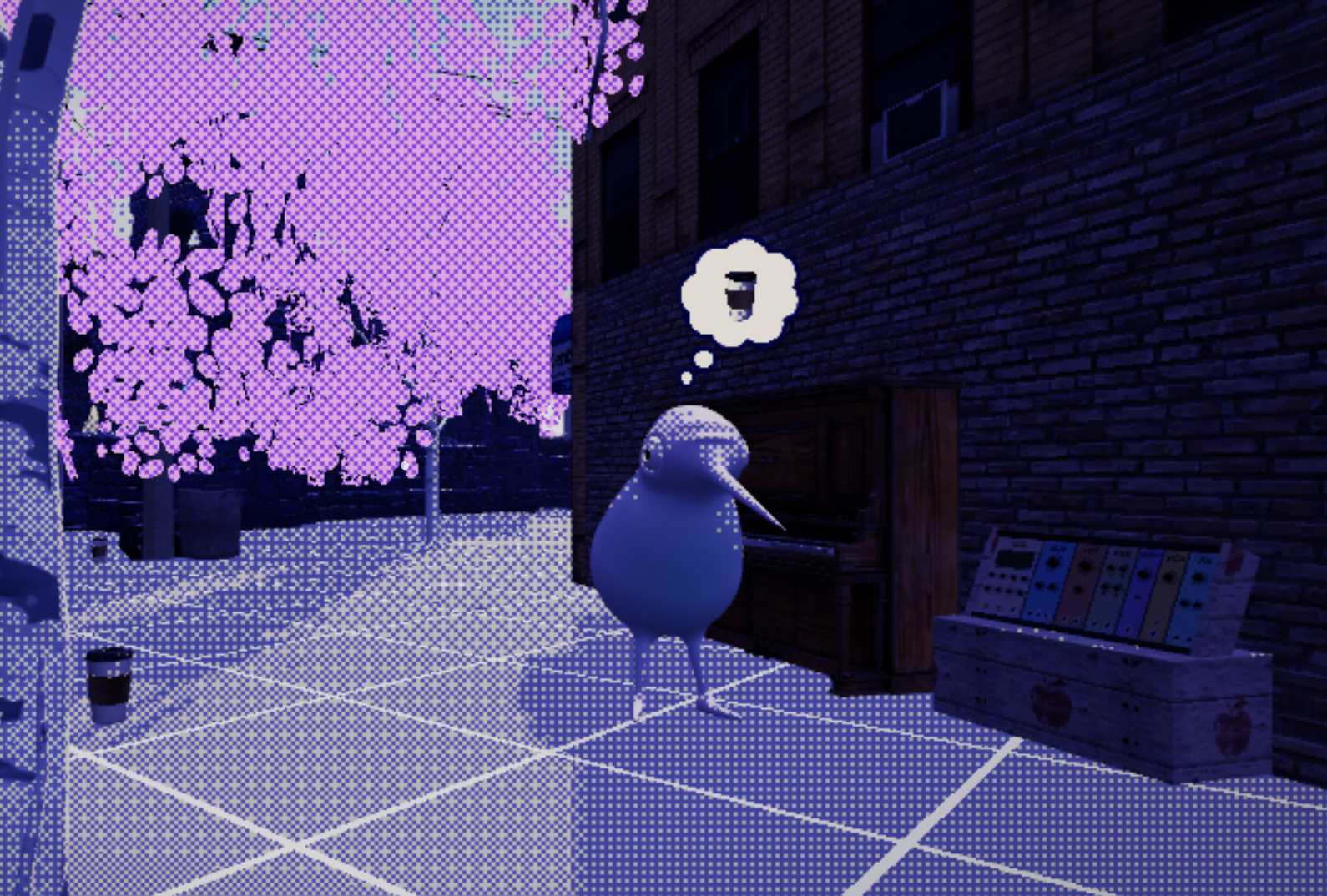
Bird brain. Pino is an AI kiwi who lives in a small 3D town on the internet, unprompted and unscripted. He keeps a diary, remembers his visitors and spends his days drawing cats and dreaming of trains. I love it and it terrifies me.
Force, by the book. Reuters journalists illustrated the rules for how Indian police may break up protests, and how far practice strays from those rules. In August, police intervened in more demonstrations than in any month in a decade.