
Arab Election Gains Put Israel’s Identity Divide in Spotlight
 10


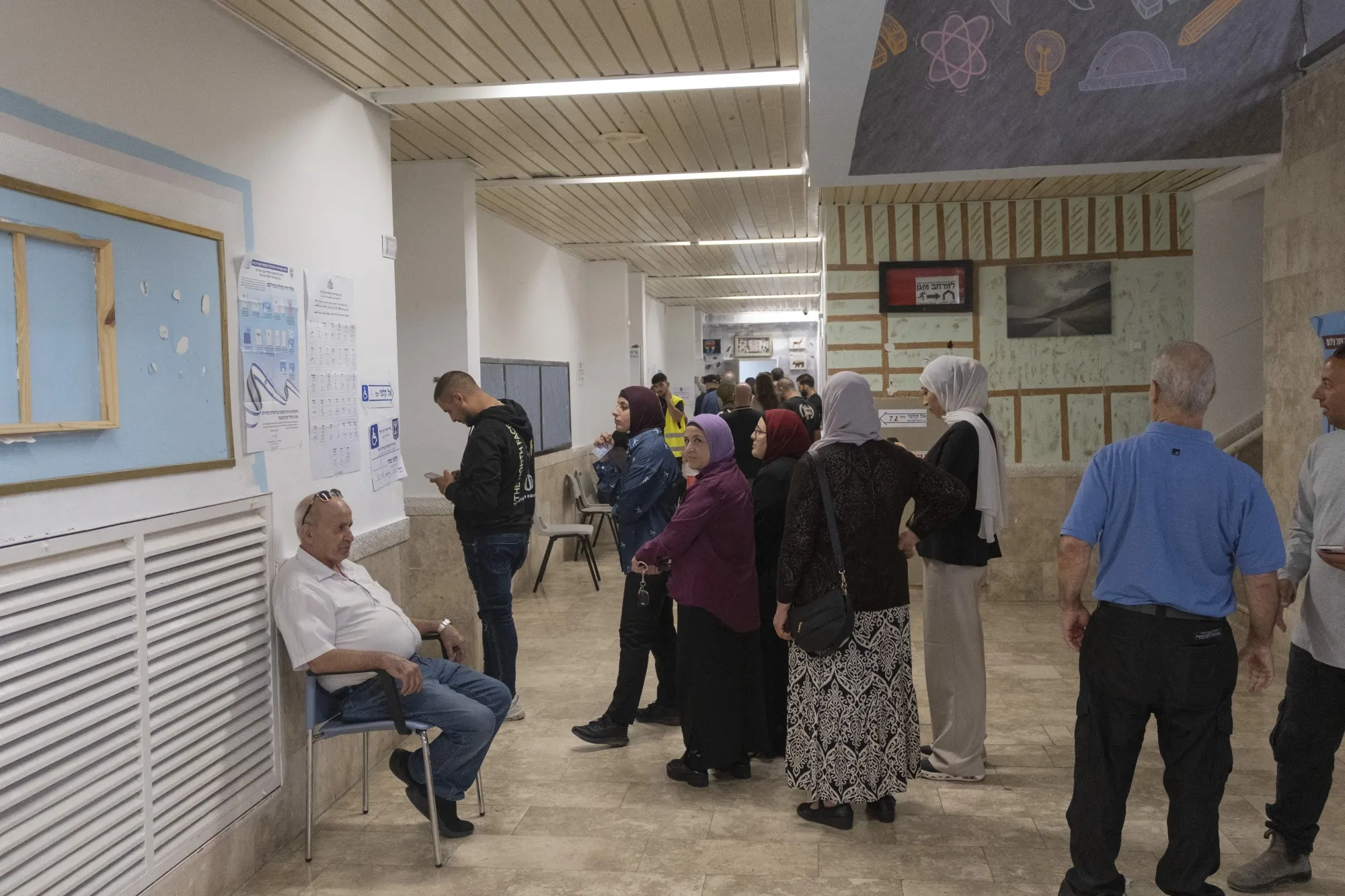
Israel’s election has brought a longstanding clash over the country’s identity to the forefront, forcing a reckoning over whether the Jewish state can embrace its 2 million Arab citizens amid their lawmakers’ emergence as a powerful political force.
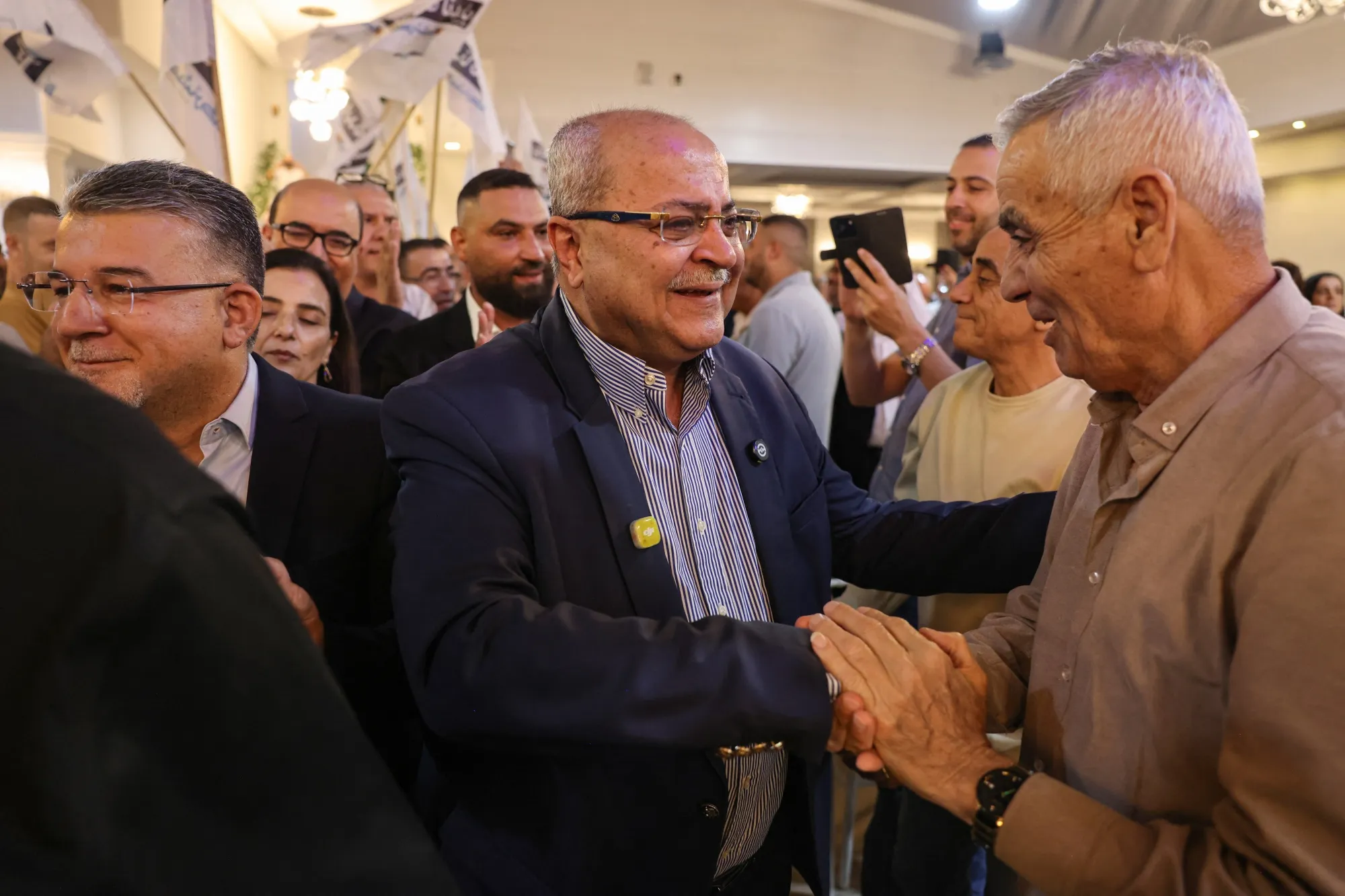
Two Arab parties — the Palestinian-nationalist Joint List and Ra’am, an Islamist faction — together won a record 19 seats in the 120-member parliament, giving them unprecedented influence over who might form Israel’s next government after decades of political marginalization.
Turnout surged among Arabs, who make up a fifth of the population, amid widespread opposition to Prime Minister Benjamin Netanyahu’s far-right government. Arabs accuse his ruling coalition and police of neglect, with crime rates in their communities rising. Many are also against the war in Gaza and decry surging violence by Jewish settlers in the occupied West Bank against Palestinians.
On paper, the math is simple: Gadi Eisenkot’s opposition bloc and the two Arab parties hold a 67–53 majority over Netanyahu’s group. In reality, that majority collapses under mutual red lines. Most Jewish leaders reject partnering with Arab factions, while many Arab lawmakers refuse to recognize Israel as a Jewish state or classify Hamas as a terrorist group.
“The vote has brought up this tragic paradox: Arab citizens are deeply embedded in the country’s life but as much as they try to integrate into its governance using the democratic process, so too grows the rejection on the part of the Jewish majority,” said Arik Rudnitzky, a researcher at the Israel Democracy Institute.
The deadlock could result in months of coalition talks and possibly another election.
Some backers of Eisenkot’s so-called “change bloc” say the Arab parties are critical to replacing Netanyahu and preserving the country’s democracy.
“Arab citizens of Israel are not an enemy — they are a part of us,” said Dan Meridor, a Jewish former lawmaker from Netanyahu’s Likud party who signed an open letter urging opposition leaders to team up with the Arab parties. “It would be a moral and political mistake to push all Arabs into the position of enemies when they proved their Israeli citizenship over three years of war,” he said in a TV interview on the Knesset Channel, on Monday. Meridor’s son, Shaul, holds a top position at Eisenkot’s party.
Other Israelis, including coalition and opposition supporters, remain uneasy.
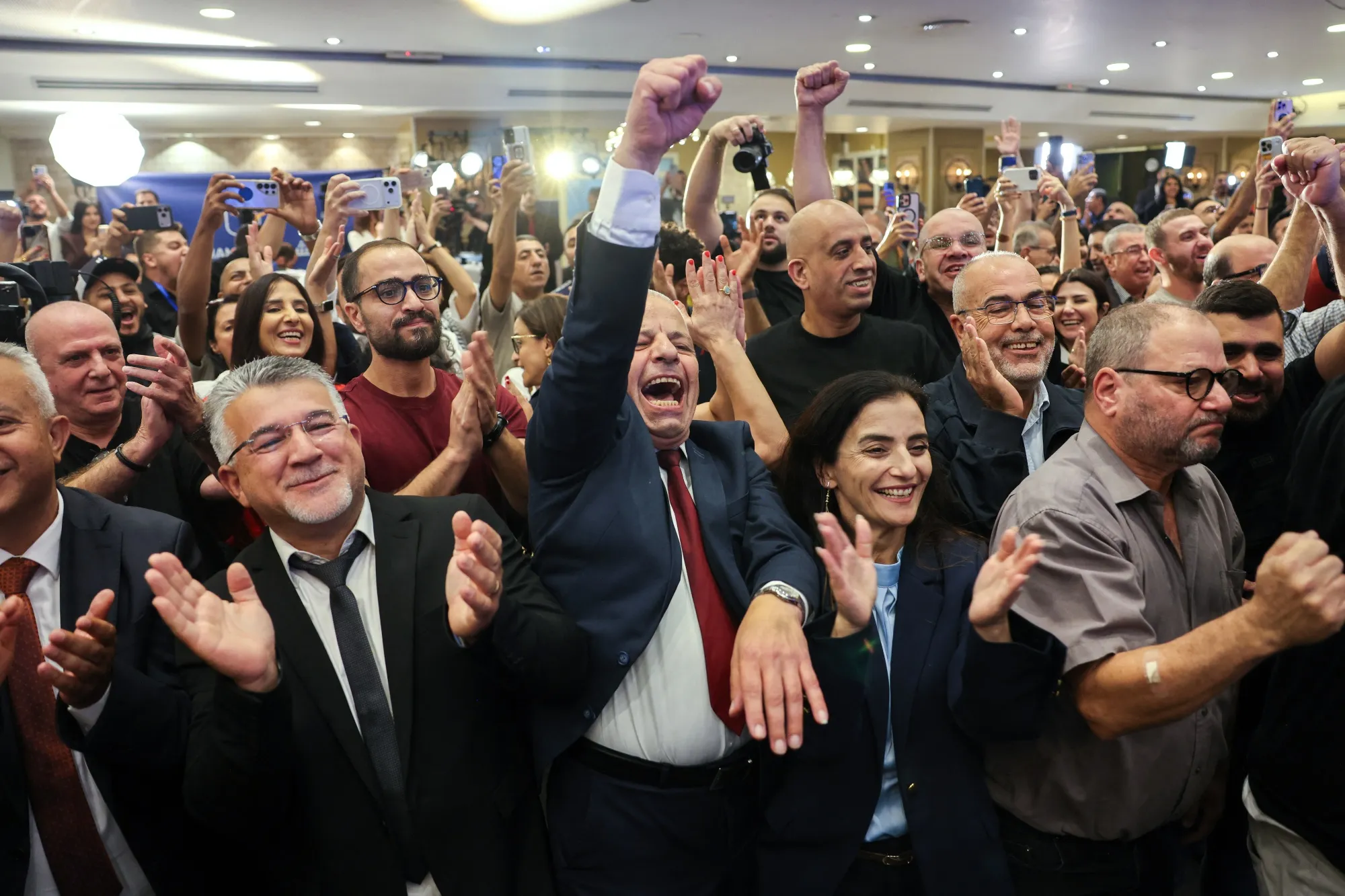
On election night last week, crowds at a Joint List event cheered as a speaker dedicated the party’s victory to Palestinians in Gaza, the West Bank and East Jerusalem. Netanyahu responded by equating the celebration with support for Palestinian terrorists, a message that resonated beyond his right-wing base.
Israel’s Election Deadlock Opens Up Four Possible ScenariosNetanyahu Builds Strong Position If Israel Has to Vote AgainIsraeli Arabs Mobilize to Oust Netanyahu in Tightly Fought Vote
Netanyahu had made Arab political influence a central campaign theme, repeatedly invoking the slogan “Bibi or Tibi,” referring to Ahmed Tibi, a veteran Arab lawmaker from the Joint List. On election day, he published a barrage of posts on X warning of heavy Arab turnout and urging supporters to vote.
Since the Oct. 27 election, Netanyahu and his Likud party have flooded the airwaves with unproven claims that Arab parties stole votes through bribery and other irregularities. A Shin Bet probe into alleged foreign election funding led Likud to threaten challenging the certified results, while Netanyahu opponents condemned the threat as a tactic to delegitimize the outcome and block potential cooperation between Eisenkot and Arab parties.
On Sunday, Central Elections Committee Chairman Justice Noam Sohlberg, appearing alongside the head of the Shin Bet and the attorney general, to clarify that the allegations under investigation are not expected to undermine the overall election results, even if substantiated.
Israel has long prided itself on being the Middle East’s only democracy yet the reluctance to embrace political representation for its millions of Arab citizens has raised questions about just how inclusive it actually is. As the opposition hesitates to include Arab parties — possibly it’s only shot at achieving its stated goal of removing Netanyahu — Israeli Arabs are again reckoning with their place in their country.
Lama Yassin, an Arab voter from the city of Arraba who backed the Joint List, said the bitter controversy over her community’s political involvement has proved that “it doesn’t matter where you stand on the scale of ‘good Arab’ or ‘bad Arab’.”
“For most Israelis,” she said, “just being Arab is enough to disqualify your vote.”
Read more: Israeli Arab Parties Claim Kingmaker Status in Tight Vote
Arab voter turnout surged to a 30-year high of 77% — a dramatic leap from 53% in 2022, according to Israel Democracy Institute (IDI) data. The record turnout follows four years of escalating violence, during which 194 Arabs were murdered this year alone, driving widespread anxiety over personal safety.
On Wednesday, Israeli President Isaac Herzog will begin consultations with elected parties to determine whether Netanyahu or Eisenkot will be given the first chance to form the next government. Arab leaders are likely to back Eisenkot, yet he will struggle to bring them into his government or rely on their support.
Fellow opposition leader Avigdor Liberman, who controls seven of the opposition’s 48 seats, has vowed to boycott any Arab-backed government. Eisenkot himself has ruled out including the Arab parties, citing their current positions on Israel’s status as a Jewish state and Hamas.
“Israelis are in a panic about Arab citizens, it’s not rational,” said Shira Vizel, a Tel Aviv musician whose vote for the Joint List drew accusations of betrayal from her own left-wing family and friends. To her family, the 2023 Hamas attacks had rendered the idea of joining with Arabs obsolete.
Yet the divide predates the conflict. The only time an independent Arab party formally joined an Israeli governing coalition was in 2021, when Ra’am became part of a broad alliance that briefly ended Netanyahu’s rule.
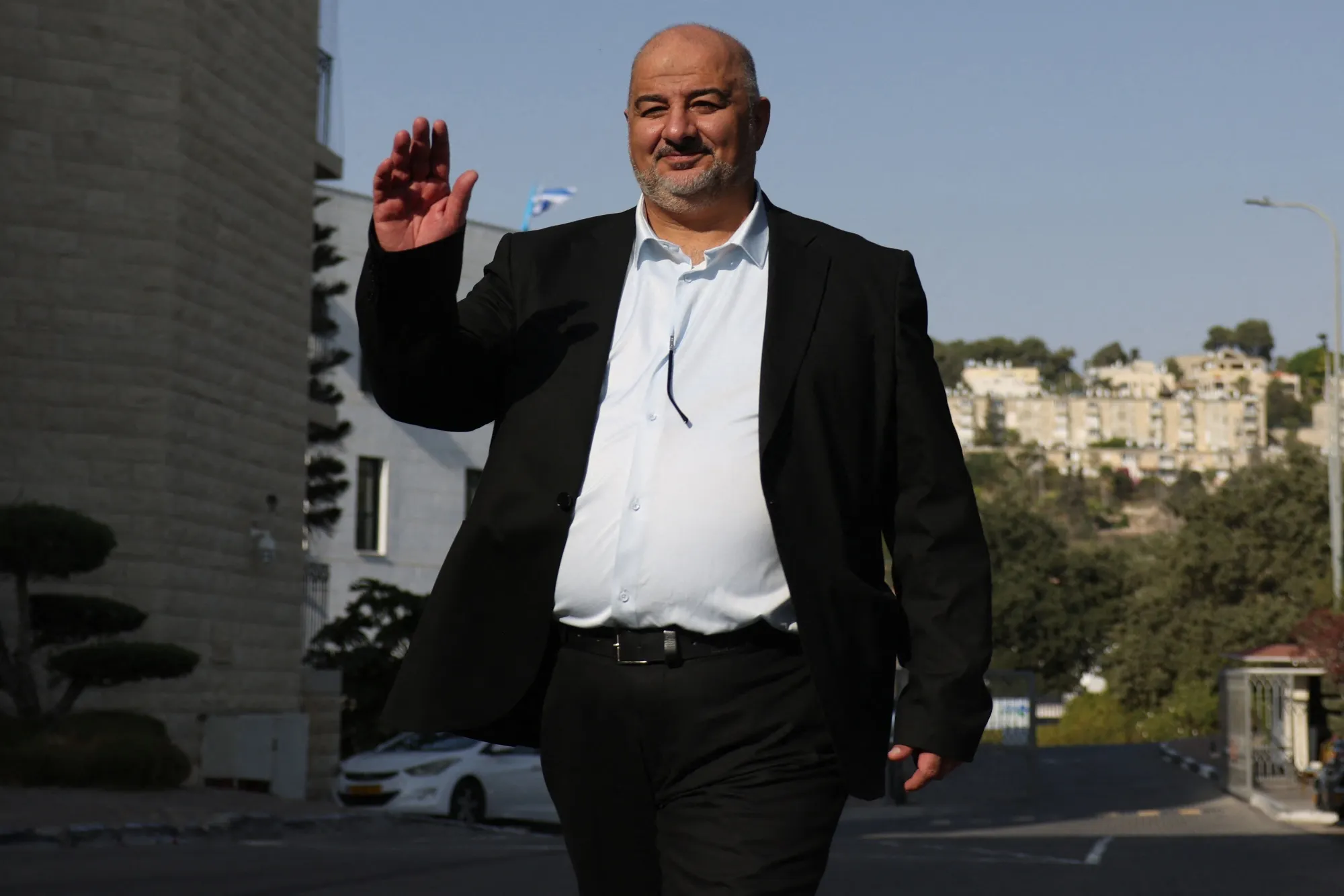
Still, Mansour Abbas, head of Ra’am, vowed to leverage the stunning Israeli Arab turnout to deliver “genuine political power.”
“Our objective is to replace this government,” he said in an interview Sunday with Nas, an Israeli Arab radio station.