
Inside Apple’s Slog to Create Its First Robot


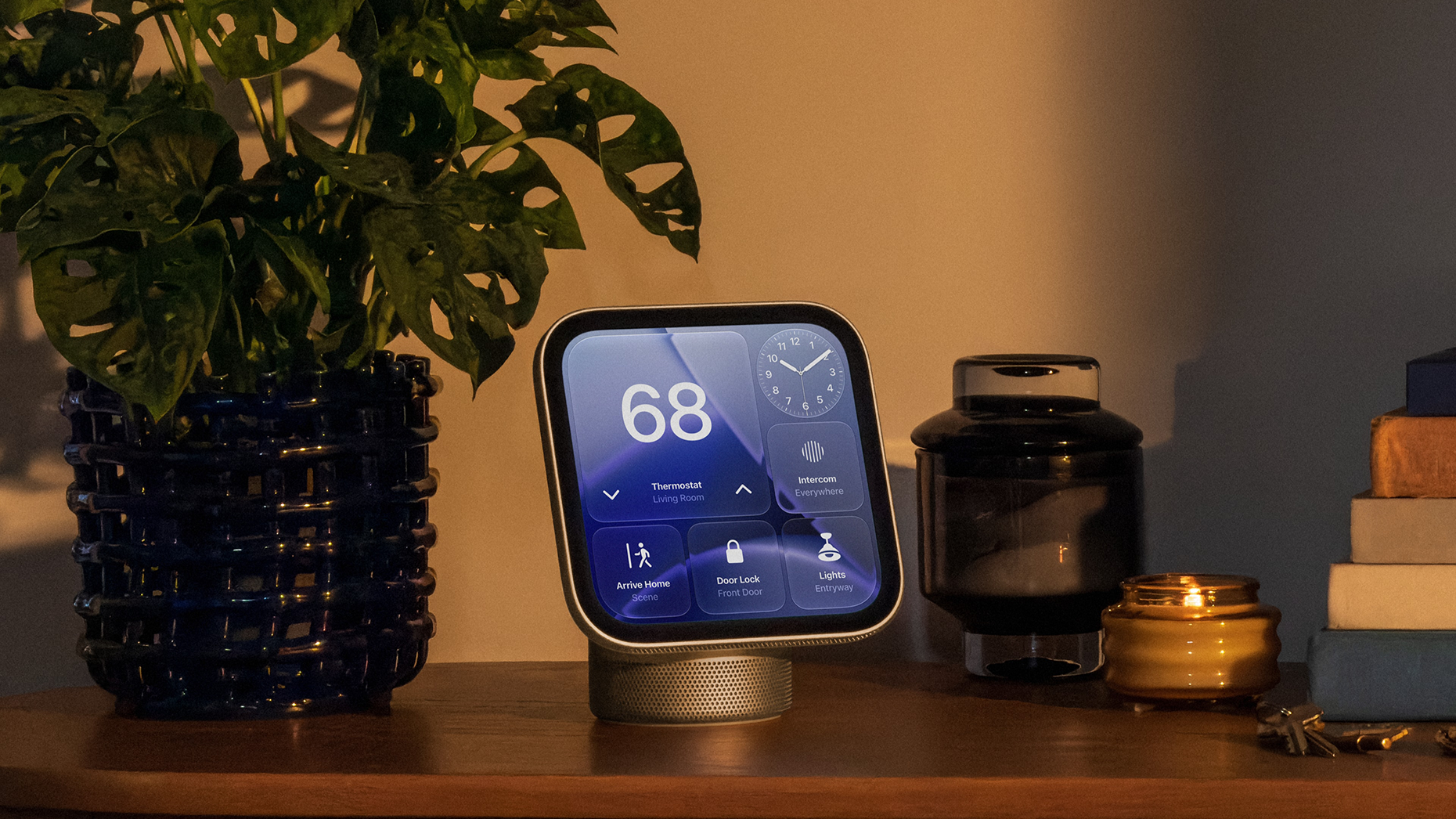
Apple’s new CEO John Ternus wants the company to get serious about robots, but judging by Apple’s plodding progress on the first one it hopes to sell—a device with a nine-inch screen that swivels around on an arm and resembles the Pixar lamp—he could face an uphill battle.
Apple initially began working on the robot in 2019—code-naming it J595—and had modest ambitions for it, envisioning it mostly as a device for video calls. Its robotic arm was intended to allow it to follow someone wherever they were in a room. But hopes for the robot ballooned once Apple executives began wanting to add AI capabilities to it.
The current design for the robot envisions it using a camera and sensors to be fully aware of its environment and act autonomously, allowing it to turn on the lights when someone walks into a room—or perhaps even try to tell a cat to get off a table. It is meant to be smart enough to avoid accidentally hitting objects around it.
Much of the hardware needed for the robot has been finished for around two years, but the software team has found it difficult to keep pace, people who have worked on the project said. The hardware team responsible for J595 has pushed to hurry up and release the product. Meanwhile, the software team has advocated for delaying its release, and for the past year, it has attempted to strip back some proposed features and focus the product on a few capabilities related to FaceTime and automating home tasks, like switching on a light.
Apple hopes to sell the robot for around $1,000. It could cost even more—depending on the market prices for the robot’s components. Several former employees said they expect Apple may call the device HomeView Ultra, borrowing the name from HomeView, the stationary tabletop device that Apple unveiled last month. Right now, Apple hopes to launch the robot next year. It could push the launch out to 2028 though. (The hardware team behind the robot had initially planned to release it this year.)
Apple’s struggles to get the robot ready highlight the challenges the company faces as Ternus’ reign begins. While Apple is a finely tuned machine at cranking out new, incremental updates to iPhones and Macs every year, it is less adept at developing entirely new products, and the company has a long-standing tendency to move at a placid pace. For instance, it took around eight years for Apple to complete work on its Vision Pro headset, which it released two years ago to muted fanfare. (If the J595 robot does come out next year, it will have taken roughly the same amount of time.)
Apple has appeared particularly sluggish in the AI era. Its overhaul of Siri took years to complete, and even with new AI features rolled out earlier this year, the assistant is still seen as a laggard behind what AI agents like Meta’s Muse and OpenAI’s Dots can do.
As a gesture to Ternus, Tim Cook, his predecessor, delayed the release of some new products so that their debuts coincided with Ternus’s start in September. Since then, Apple has unveiled HomeView, the foldable iPhone Duo and a touchscreen MacBook. But those products have received a mixed reaction from consumers. The $2,899 MacBook is seen as expensive. The Duo has genuine buzz around it but has also attracted complaints about cracked screens. And HomeView has been critiqued as just a giant repurposed Apple Watch, one that relies heavily on a still disappointing Siri.
Ternus arrives in the top job at a moment when many other fierce competitors are working on AI-powered devices and robots. A year ago, OpenAI acquired a hardware startup co-founded by Jony Ive, the former Apple design chief. Since then, Ive has been devoted to creating a line of AI devices for OpenAI, which has hired more than 400 ex-Apple engineers to work on those devices. Next year, OpenAI hopes to release a doughnut-shaped smart speaker that will have moving parts and a camera that allows it to gather information about its user and environment.
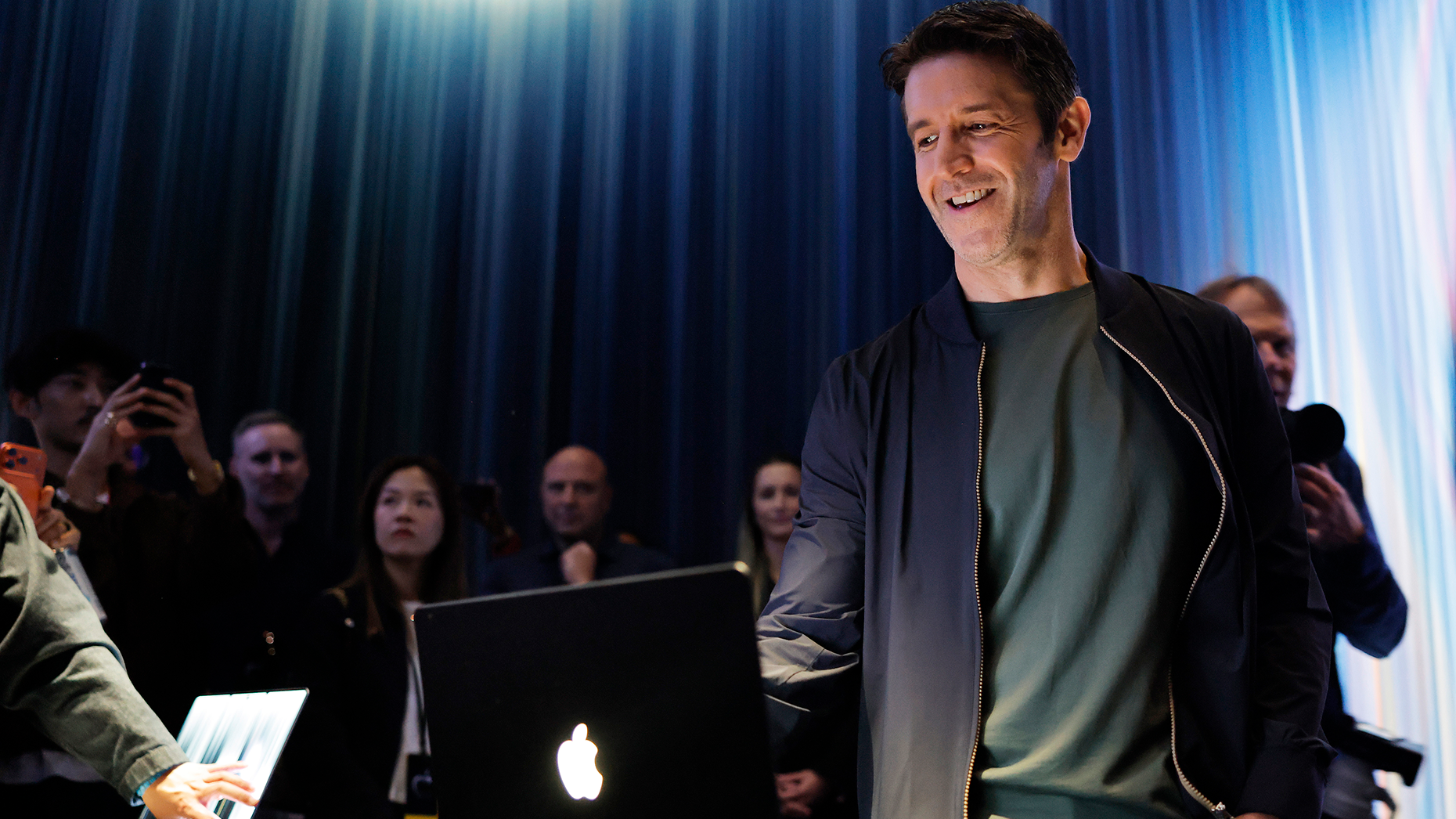
Meta has been rolling out a slew of its own devices, including AI glasses and virtual reality headsets. Compared with Apple, Meta has been able in some cases to move rapidly from concept to product: It has said it took less than a year to develop Charm, a pocket-sized AI device that it plans to ship in December.
Tesla is working on a humanoid robot, Optimus, that CEO Elon Musk has said will help with household tasks. And then there are a slew of startups trying to compete with the established tech giants, including robotics startup 1X, which had hoped to have its humanoid robot in homes this year. 1X’s robot, Neo, caught a moment of virality when it was first unveiled last year in videos showing it washing dishes and folding clothes.
In addition to the J595 robot, Apple’s robotics team, which is led by Kevin Lynch, a longtime company executive, has explored other types of robots, such as one that follows a user around the home on wheels and another that flies inside the home.
There is also an Apple project focused on robots that can complete specific everyday tasks, such as folding clothes. Robots devoted only to a few specific chores are, theoretically, much easier to develop than humanoid robots made to do many different things. Ternus has been particularly enthusiastic about discussions around robots that focused on household tasks, people familiar with the meetings said.
As one former engineer who worked on the J595 robot put it, Apple “is tearing itself apart at the seams trying to get on this AI bandwagon.”
An ‘iPad on a Stick’
The creation of the J595 robot has unfolded over nearly a decade, with responsibilities for the robot falling to a slew of Apple executives, some of whom were working on multiple projects at once and never had an opportunity to focus solely on the device. (Bloomberg has previously reported some details about the robot.)
Early prototypes of the robot were done in 2018. A year later, Cook received a demo of a prototype and gave the green light to continue working on it. The prototypes were bigger than the one currently being envisioned, and the initial designs drew jokes from some Apple engineers, who remarked that it looked like “an iPad on a stick.”
The robot’s hardware was developed by a team led by Matthew Costello, who’d previously worked on Beats, the headphones brand acquired by Apple in 2014. Software development fell to employees within Apple’s Special Projects Group, which was then primarily working on Project Titan, Apple’s autonomous car initiative. For a time, Brian Lynch, a veteran Apple engineer whose time stretched back to the iPod, was working on both the car’s interior and the J595 robot: He envisioned the robot being able to sit not only inside people’s homes but on the front console of the Apple car too.
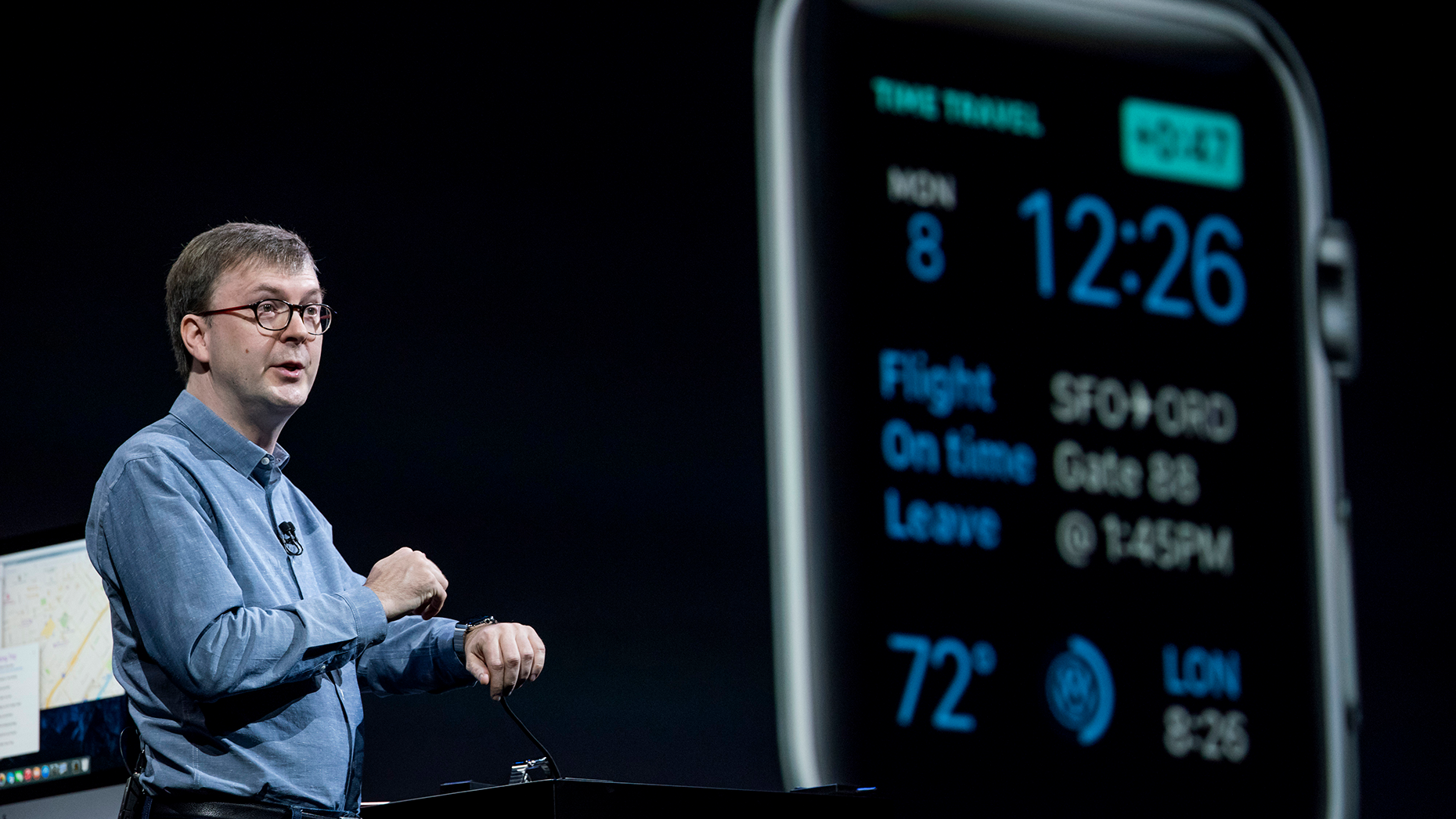
In 2021, leadership of the Special Projects Group shifted from Doug Field, who departed for Ford, to Kevin Lynch, who got credit for saving the Apple Watch by developing its health-tracking features. But most of Lynch’s attention was on the car, and much of the robotics effort fell to Chris Saari, who had led efforts to develop the Apple Watch’s software.
Even at these early stages, the people working on the J595 robot knew it had to be more than a fancy way to make FaceTime calls if Apple wanted to justify a high price tag on it. After the ChatGPT’s launch in 2022 ignited the AI boom, they began to develop AI features to make it more sophisticated. Employees working on the robot began pushing for a wide range of proactive agentic AI capabilities, envisioning a device that could accomplish a variety of tasks. There was even an agentic AI research arm opened up inside the robotics group, led by Vladlen Koltun, who joined Apple in 2021 after leading AI at Intel.
But Apple’s in-house AI technology was meager compared with what competitors were creating. As a result, the robotics team was given permission to use any available AI models, including open-source models and licensed models from Google. They hoped to eventually integrate the J595 robot with Siri, but during the robot’s early development, the Siri team was kept separate from the robotics squad and was overwhelmed in its own work in trying to improve Siri itself.
When Apple shuttered its work on its autonomous car in 2024, Lynch moved all of his focus to robots that would be used within a home, redeploying many of the people who’d been working on the car with him to work on robots. Some of the Apple employees who had been working on robots before Lynch shifted his attention were disappointed with his leadership and felt he rarely talked to or consulted with them, three people involved in the project said.
Lynch tried to pull back on some expectations for what a debut version of the J595 robot would be able to do. He wanted to slowly add features to it after it launched—a similar approach to what had been done with the Apple Watch. While the initial Apple Watch came out in 2015, Apple later added the sensors for tracking someone’s health and fitness that made the wearable more popular.
Ternus Takes Command
Prior to becoming CEO, Ternus, then the company’s hardware chief, was skeptical of many new products, like the failed autonomous car project and the Vision Pro headset. But he has been more enthusiastic about Apple’s potential robots, three people familiar with the company’s robot projects said.
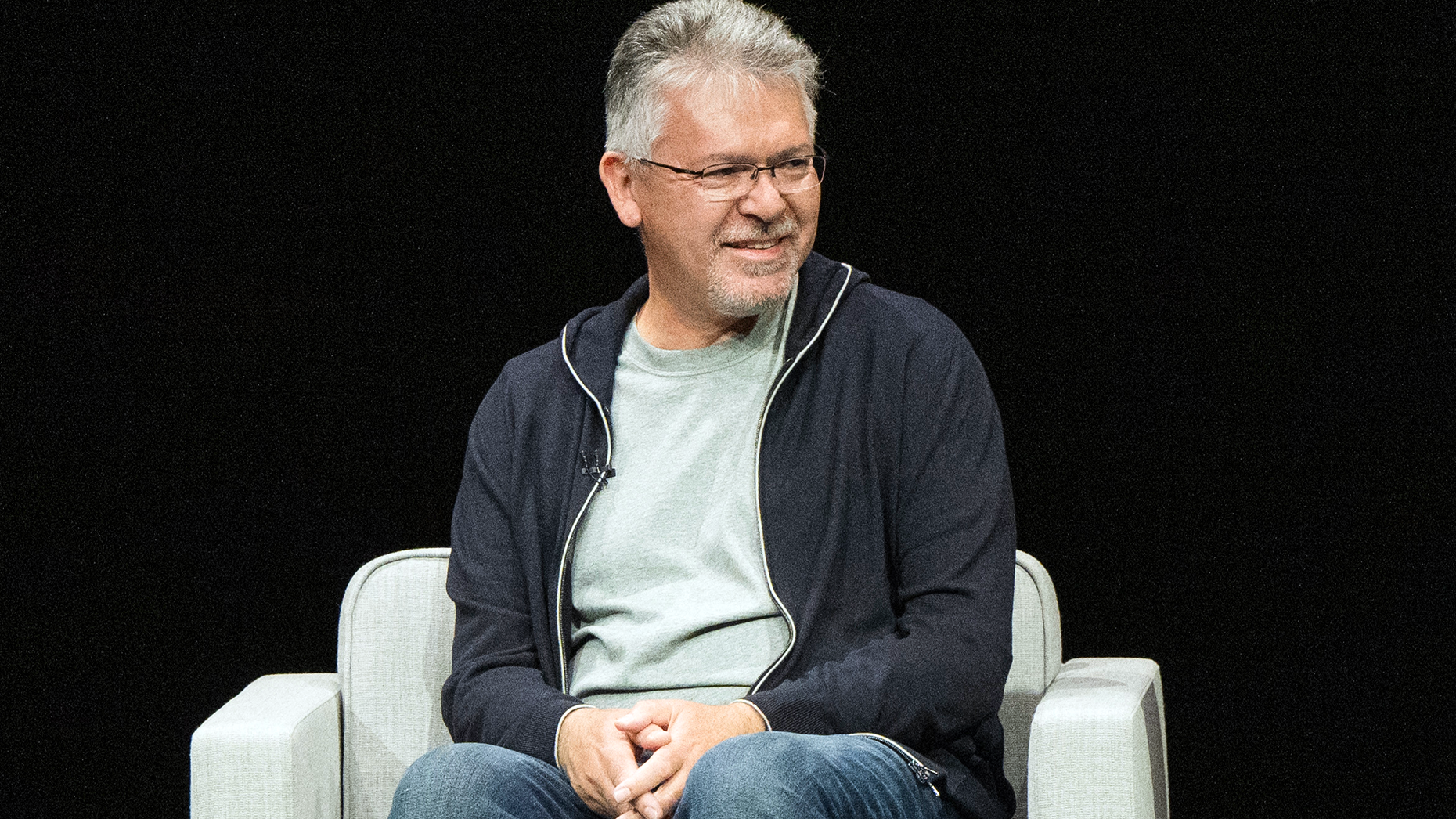
Last year, oversight of Lynch and the Special Projects Group was taken away from Senior Vice President John Giannandrea and put under Ternus. (Giannandrea, who’d been responsible for Apple’s AI efforts, left Apple earlier this year.)
In April, Apple announced it would promote Ternus to CEO later in the year. But even as he was preparing to take the job, Ternus made an effort to be at every demonstration and product planning meeting for J595 and Apple’s other robots, people involved in those projects said.
Across the company, Ternus has been advocating for Apple to run faster with leaner teams, people familiar with his strategy said. And the team working on the robots remains relatively small. Apple has very few employees with deep backgrounds devoted to robotics; one person estimated the company has only 10 or so “true roboticists.” Under Lynch, the team working on software is around 300—with around 30 of them focused on research, said people familiar with the team.
The employees dedicated to the J595 robot have already been talking about a second-generation version of the robot that would have some of the proposed features they’ve discarded. Meanwhile, many of the engineers who initially worked on the robot have since departed, including hardware leader Brian Lynch, who joined fitness device maker Oura, and robotics research head Jian Zhang, who joined Meta.
While many J595 employees want the robot to come out as soon as possible, some employees worry it could face the same lack of enthusiasm that has greeted HomeView. But they fear the longer Apple waits to release the robot, the higher expectations will be for it as AI capabilities grow more sophisticated across the industry.