
It’s Contract Renewal Season, But Some Customers Aren’t Biting


My colleagues and I have been hearing a lot of stories about big enterprise customers renegotiating their annual contracts with model developers.
Traditionally, software sellers use this time as an opportunity to convince customers to increase their annual commit by, for instance, reminding them how they exceeded their usage limits this year or highlighting new features they’ve released. In the past, model developers have had success using that playbook.
This year has been a different story, though, some customers tell me. For instance, one executive at a major financial services firm said their company was hesitant to increase their spending commitment with Anthropic, OpenAI or any other model provider for a couple reasons.
First, this executive said, the rapid pace of model releases means enterprises want flexibility to quickly switch to whatever the best new model is, something that can change week to week.
Switching the models that power a company’s application is much easier now than it used to be. We previously reported that AI coding startup Replit took just mere hours to make the code changes to switch their product from primarily using Anthropic’s models to OpenAI’s.
The second reason is that these model providers keep releasing cheaper, “good-enough” AI, such as OpenAI’s Terra and Luna versions or Anthropic’s Haiku, the exec said. When the model providers do so, companies move as many workloads to these cheaper models as they can, which can sometimes quickly cut their bills to a fraction of what they used to be, the exec said. (Over time, though, their overall spending could increase because they might use more AI.)
In doing so, the model providers are essentially cannibalizing their more expensive models with cheaper ones.
We’re not trying to argue that revenue growth at Anthropic and OpenAI will fall off a cliff. The potential market is enormous, and both are growing pretty well right now. It’s also not lost on us that Anthropic says that in the third quarter, its net retention rate was 900%, meaning existing customers spent many more times what they were spending a year earlier. And Anthropic’s inference margins were crazy good in the first half of the year.
Still, anecdotes like the one involving the major financial services firm raise the perennial question of whether models will eventually be commoditized. Such a scenario would crush trillions of dollars in market caps, and we aren’t ready to buy into the idea.
A more realistic framework to hold is that the rapid improvement in models, and their capabilities frequently leapfrogging each other, has caused some decision paralysis among some enterprise customers. That could explain why, instead, they are turning to model routers like OpenRouter—where they can access nearly any model from a single application programming interface—or platforms that offer multiple models, such as Snowflake.
That puts the model providers in an awkward position. Anthropic said in its prospectus that it wants more enterprise customers to sign non-cancelable, multiyear contracts with minimum spending commitments, just as some of those customers are trying to avoid getting locked in.
Meanwhile, both Anthropic and OpenAI have committed to spending hundreds of billions of dollars on computing over the next decade. If big customers keep their options open, the model providers could end up being the only ones locked into long-term commitments.
You can expect that subject to come up during Anthropic's first quarterly earnings call early next year.
Here’s what else is going on…
Big Number
OpenAI had been targeting $30 billion at a $1.4 trillion valuation in its new funding round, but has secured only about $11 billion in committed capital so far amid a broader AI-stock selloff and investors trimming their allocations. The company has since cut its target to roughly $20 billion at a reduced $1.25 trillion valuation, the FT reported Friday.
Overheard
Blackstone, the anchor investor in a recent $63 billion deal to finance Anthropic’s chips, recently told investors that the Claude maker is expected to receive a high “junk” rating from credit rating agencies following its initial public offering, according to a report from the Financial Times.
Court Watch
The Trump administration declined to produce key documents related to its voluntary AI testing framework, despite an agreement struck in September with the nonprofit Protect Democracy Project after a Freedom of Information Act lawsuit.
Deals and Debuts
See The Information’s Generative AI Database for an exclusive list of private companies and their investors.
Cohere, which builds AI models for enterprises, announced the initial close of a Series E funding round targeting up to CAD 7 billion (about USD $5 billion) in a funding round led by Schwarz Group.
Saudi Aramco closed its previously agreed transaction to acquire a 49% stake in Humain, the Saudi state-backed AI company, contributing about SAR 9.9 billion (about $2.6 billion) in cash during 2026 along with AI, compute and digital assets; Saudi Arabia's Public Investment Fund retains the other 51%.
Baseten, which provides infrastructure to run AI models for companies, is in talks to raise about $2 billion in two tranches that would value it at $26 billion and then $30 billion, in a funding round led by Sands Capital.
Cyera, a five-year-old cybersecurity startup focused on protecting corporate data against AI-powered attacks, has spoken to investors about raising capital in a round that would nearly double its valuation to $20 billion, the Information reported Thursday.
Salesforce signed a definitive agreement to acquire Rune Technologies, which builds AI-powered logistics software for the U.S. military and allied forces, for a reported $375 million in cash and stock.
Serval, which builds AI coding agents that automate IT, HR, finance and other back-office workflows, raised $150 million in a Series C funding round at a $3 billion valuation led by Sequoia.
Dulo, a startup co-founded by Google AI pioneer Sebastian Thrun that builds AI models to automate engineering design, raised $130 million in seed funding from investors including former Google CEO Eric Schmidt, John Doerr, and DST Global.
Wabi, a personal AI assistant app founded by Replika creator Eugenia Kuyda, raised $55 million at a $1.25 billion valuation in a funding round led by IVP.
&Truth, which is building mathematical proof technology to verify that AI-generated code is safe and correct, raised $70 million in seed funding from a group of AI safety and venture capital leaders who were not individually named.
Bites, an Israeli startup whose AI platform turns manuals and procedures into short training videos for frontline workers, raised $40 million in a Series A funding round led by PeakSpan Capital.
Opentrons Labworks, which makes AI-native laboratory robots, raised $40 million in a Series E funding round led by Avego.
GoodMood Holdings, a Beijing-based AI-powered mental healthcare company, raised nearly $45 million (RMB 300 million) in a financing round from investors including Imeik Technology, CSC Financial Capital, and Wuxi Binhu Industrial Group.
Collective, whose AI platform provides back-office services for one-person businesses, raised $100 million in combined funding: a $40 million Series B led by General Catalyst, QED Investors and Gradient Ventures, plus a $60 million growth facility from General Catalyst's Customer Value Fund.
Solink, which uses AI to pull insights from security camera footage, raised more than $100 million in a funding round led by Vertu Capital.
Powerlattice, which makes power-delivery chips that cut the electricity AI processors need, raised $86 million, according to an SEC filing that did not name the investors or round type.
NexGen Cloud, which provides AI cloud infrastructure across Europe, closed a $106 million senior secured term loan facility to finance GPU capacity in Finland, led by USD.AI through its GPU Loan Exchange.
Midstream Health, whose AI tools help hospitals recover revenue from underpayments, raised $20 million in a Series A funding round led by Valtruis.
SuperMe, which builds AI chat profiles of industry experts that other people can ask for advice, raised $20 million in a Series A funding round led by Forerunner.
Phonic, which makes a speech-to-speech AI model for voice agents, raised $27.5 million in a Series A funding round led by First Round.
Dream, founded by former Palantir executives to build AI models that design and engineer buildings, raised $17 million in seed funding from investors including Andreessen Horowitz, SV Angel, and XYZ.
Ravical, an AI platform that accounting and tax firms use to scale their expertise across clients, raised $17 million in a seed funding round led by MMC Ventures, with participation from Lakestar, Pitchdrive and Shapers.
TrashLab, whose AI agent answers calls and dispatches routes for waste haulers, raised $12 million in a Series A funding round led by Ventana.
Speech-to-text software company Deepgram acquired Daily, the maker of the popular open-source voice AI framework Pipecat, for an undisclosed amount; Deepgram said it will keep Pipecat open source.
Harvey, the legal AI startup, acquired Aida, which builds AI sales assistants that flag deals at risk of falling through, for an undisclosed amount — Harvey's fifth acquisition this year, following AI security startup Guardrails AI in September and Benchmark in July.
Coveo, which provides an AI-powered search platform, acquired Anglera, a Y Combinator-backed startup whose agentic AI cleans up and structures e-commerce product data so AI shopping agents can read it, for an undisclosed amount.
Digital Science, which provides AI-powered tools for research, acquired Jenni AI, an AI research-writing platform used by more than 8 million students and researchers across 189 countries, for an undisclosed amount; Jenni AI will connect to Digital Science's Dimensions research database.
OpenAI released its updated Model Spec, the document outlining the company’s approach to shaping desired model behavior, organized around faithfulness to human intent, harm minimization, honesty and transparency, human agency, and care.
DeepSeek has unveiled a prototype of a new autonomous coding agent, as the Chinese AI lab steps up its efforts to compete with Anthropic’s Claude Code, OpenAI’s Codex and other popular coding tools. The DeepSeek Harness team open-sourced what it described as a “super agent” over the weekend. The team noted that the research prototype, which is “not an official DeepSeek product,” is part of its ongoing effort to build a more autonomous agent that requires minimal human intervention.
S&P Global Ratings lowered its credit rating outlook on Meta Platforms to negative from stable, saying the company’s ability to monetize its fast-rising AI investments is “more limited than that of its peers.”
Mistral, the French AI company, released the weights for its most recent and powerful AI model, Mistral Large 4 on Thursday.
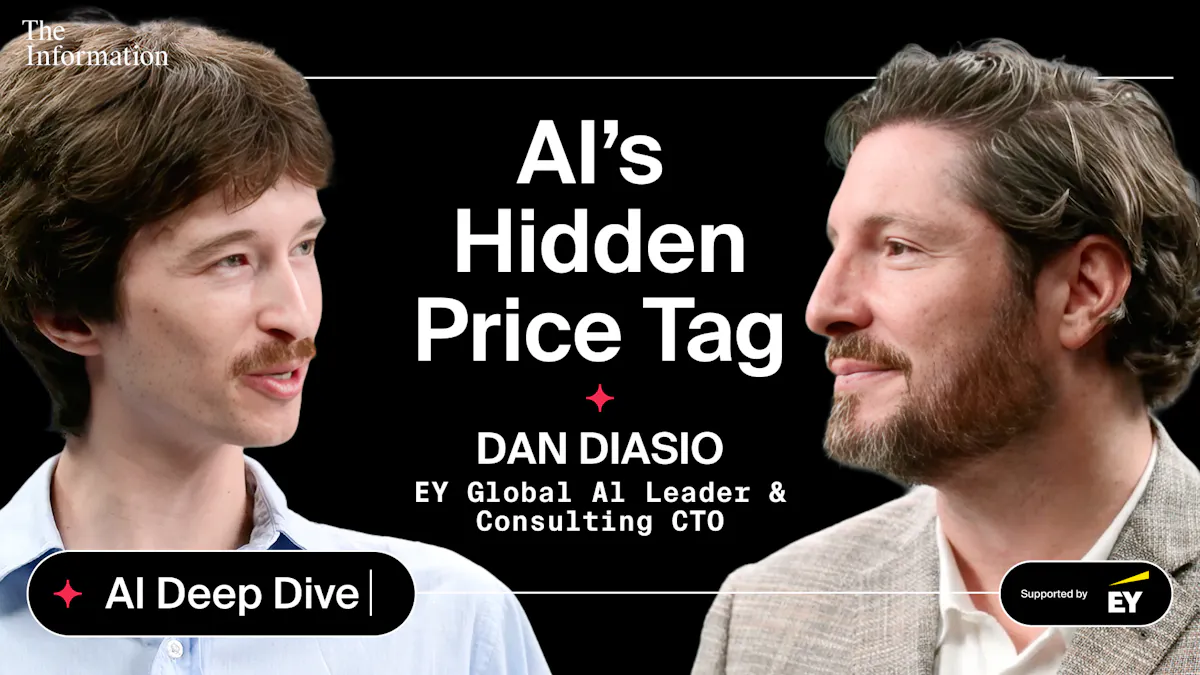
This week on AI Deep Dive
Check out the most recent episode of AI Deep Dive. An up-close look into how frontier AI actually gets built — the models, the money, and the people behind them.
Thank you for reading the AI Agenda Newsletter! I’d love your feedback, ideas and tips: [email protected].
If you think someone else might enjoy this newsletter, please pass it forward or they can sign up here.