
EU and Canada Seek to Cement Alliance at Montreal Summit
 10


Welcome to the Brussels Edition. I’m Suzanne Lynch, Bloomberg’s Brussels bureau chief, bringing you the latest from the EU each weekday. Make sure you’re signed up.
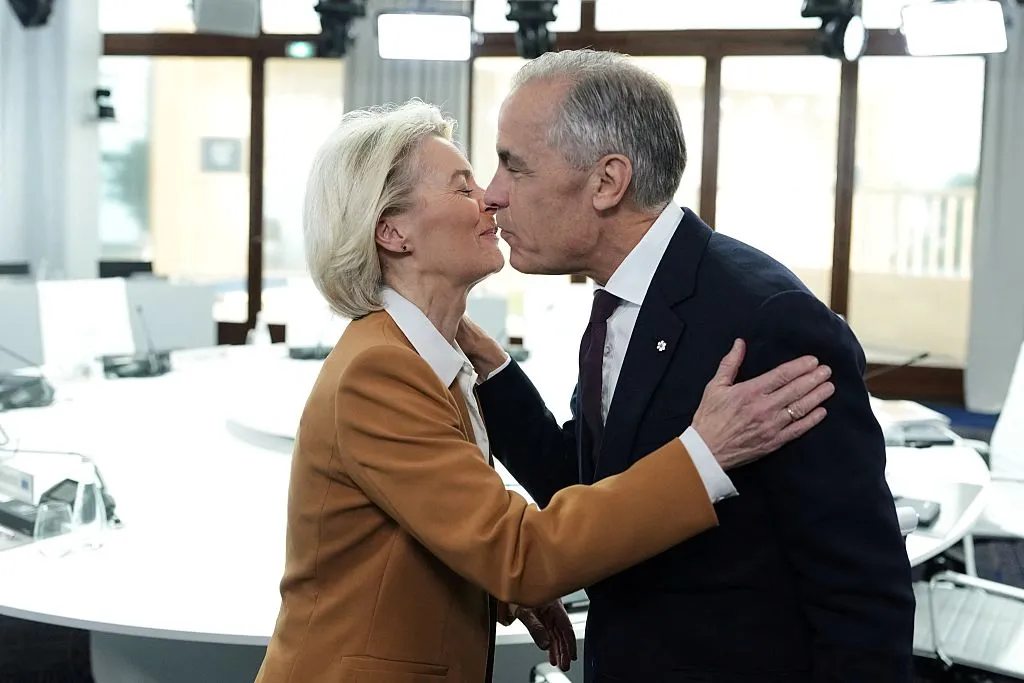
Attention is shifting to Montreal today where the EU-Canada summit is taking place. European Commission President Ursula von der Leyen, European Council President Antonio Costa and a small army of EU commissioners have made the trip across the Atlantic for the gathering, which aims to cement ties between Canada and the bloc.
The final communique to be signed at the summit omits the phrase “associate membership” following push-back from Germany about the term. Instead, the EU and Canada will work toward an “even closer association,” according to the latest version, with both sides committing to define what the concept means by the 2027 EU-Canada summit.
“This new alliance is not a marketing exercise. The name doesn’t matter,” Mark Carney on Thursday
The two sides are expected to reach a series of agreements today on topics ranging from technology and artificial intelligence to financial services, with a stock-take scheduled in six months.
Among the key priority areas for the EU are critical minerals and energy. Both sides will commit to a long-term feasibility study on the export of LNG from Canada to the EU, though the central question is whether Canada, which lacks infrastructure on the east coast, will be willing and able to ramp-up shipments.
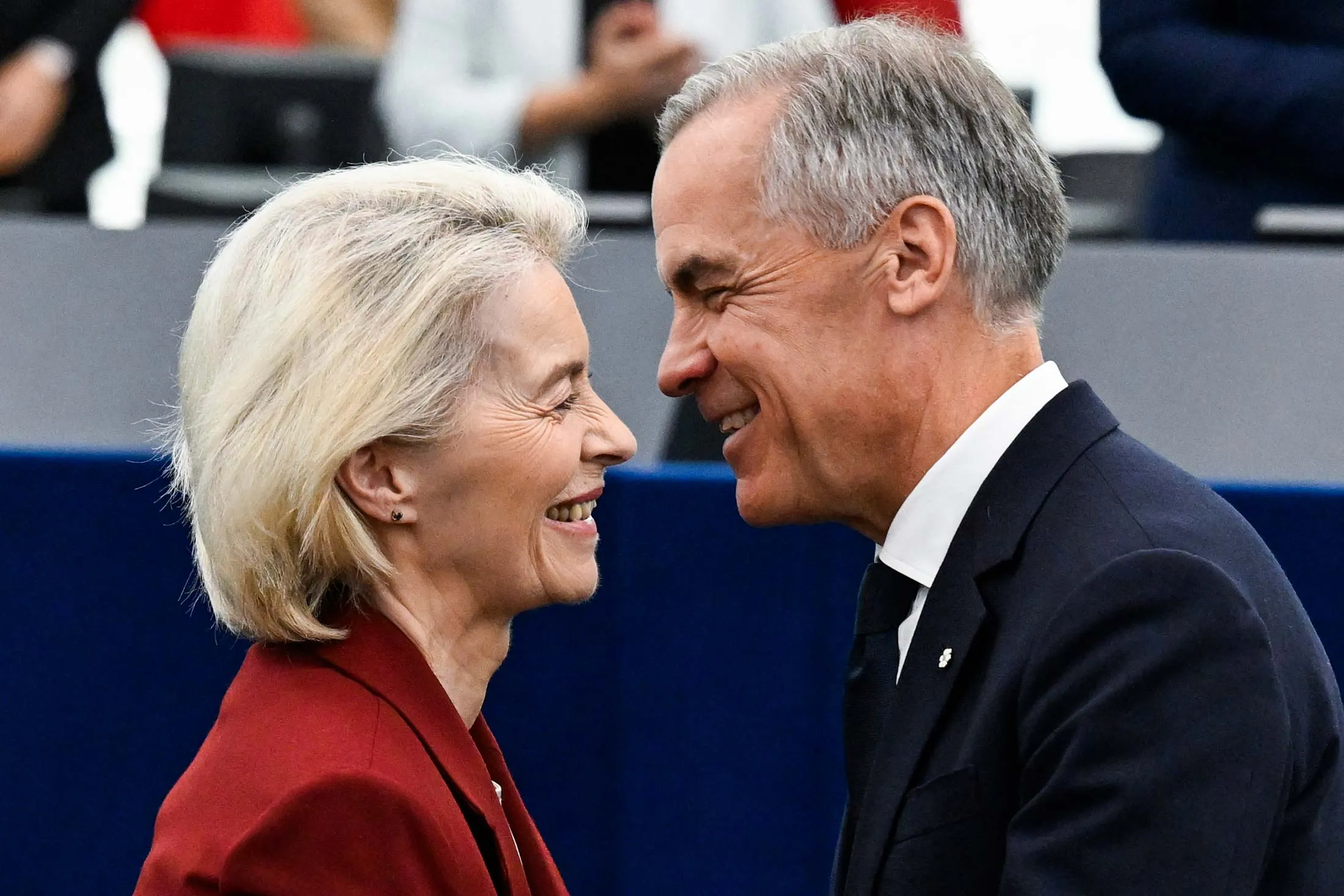
The move towards deeper ties reflects the shifting geopolitical priorities as the EU and Canada confront the reality of a more protectionist Washington.
Today’s meeting is taking place just days before the US midterm elections. Several US states bordering Canada, including Ohio and Michigan, are at the heart of the battle for control of Congress, with consumers and businesses feeling the brunt of tariffs unleashed by the US-Canada trade war.
Still, there are signs that the two nations are moving towards some kind of detente. Trade negotiations between the two have stepped up in recent days.
Though Carney has insisted that he’ll only do a deal that’s good for Canadians, the resumption of US-Canada trade talks is a reminder of how integrated the Canadian economy is with its neighbor, regardless of what the country agrees with the EU.
The Latest
Thousands of people are expected to take to the streets in France, Germany and Italy on Friday and Saturday to protest high living costs, as frustration with governments expands across Europe.Czech arms billionaire Michal Strnad has made a €30 billion ($33.5 billion) offer to buy the family holding company behind eyewear firm EssilorLuxottica, in a bold attempt to muscle into the heart of Italy’s business and finance establishment. Eleven years after Europe floated plans for common deposit insurance across its member states, its successor is taking shape.The European Central Bank asked the region’s leaders to start choosing a successor to Chief Economist Philip Lane, opening the race for yet another vacancy on its Executive Board.Lenders looking to offload credit risk to investors via deals backed by insurers may face a longer wait for approval as the ECB steps up scrutiny of the opaque trades.
Seen and Heard on Bloomberg
Clotilde L’Angevin, deputy general manager at Credit Agricole, warned the recent turmoil in France could hurt business there in coming months, as the bank reported higher profit for the third quarter. “Going forward, we want to remain very cautious because it is possible that the macroeconomic environment will have an impact on loan demand,” she told Bloomberg TV.
Chart of the Day
The euro-area economy grew at twice the pace analysts predicted, despite an unexpected slump in France and headwinds including elevated inflation and the selloff in bond markets. Gross Domestic Product across the 21-member currency bloc rose 0.4% in the third quarter, Eurostat said Friday. Performances were mixed among its biggest members as Germany and Spain grew, Italy stagnated and France shrank by 0.1%.
Coming up
Press conference following EU-Canada summit later todayEU Kaja Kallas participates in G20 foreign ministers meeting this weekend in AtlantaBulgaria holds run-off vote in presidential election on Sunday
Final Thought
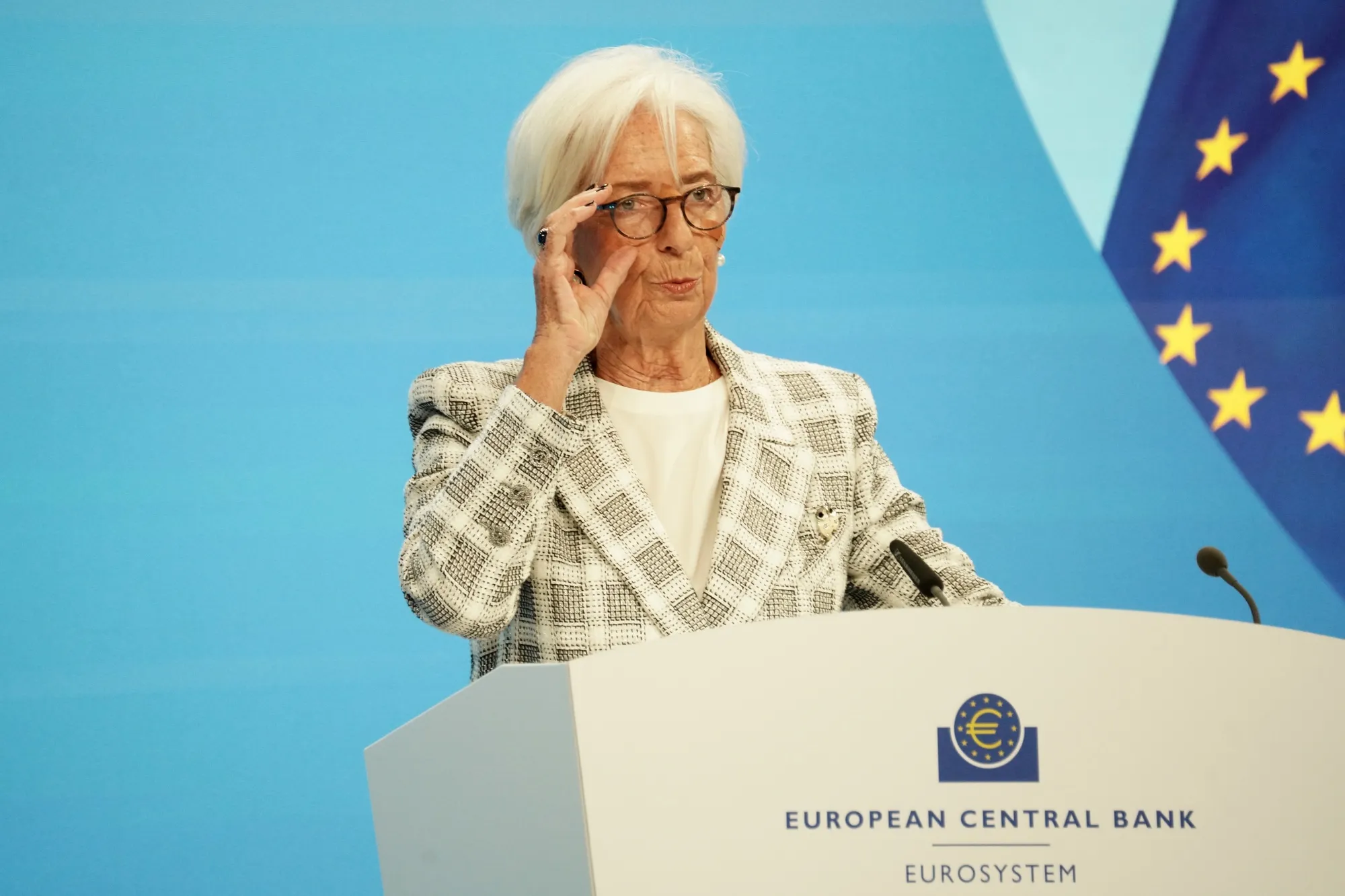
Christine Lagarde will leave the European Central Bank with one victory notched up over inflation, camaraderie restored among policymakers and the euro on track to join the digital age. But her presidency featured stumbles too, from a bond-market debacle during the pandemic to a tardy start to tightening in 2022. Her drawn-out exit also irked colleagues. Lagarde will now bequeath challenges no less daunting than those she faced, including taming a new bout of inflation, the headache of how to drive growth in an economy long overshadowed by the US, and the worry of bond-market turmoil erupting in her home country.