
London’s Stock Market Among Those Feeling Left Out of UK Budget
 7


The UK budget failed to deliver measures needed to revitalize London’s three-century-old bourse, market participants said, despite its reassuring praise for the country’s capital markets.
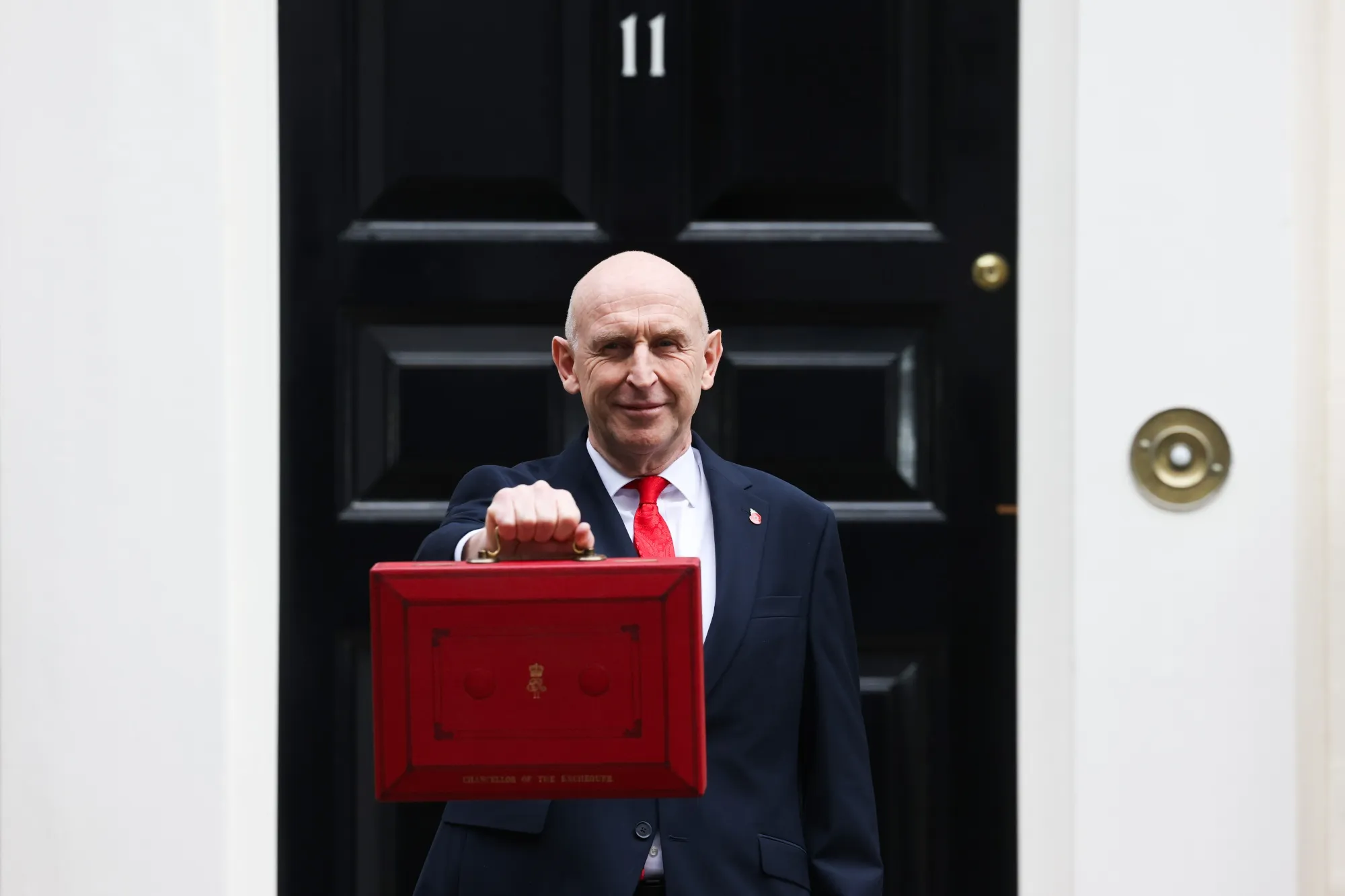
The fiscal statement presented by Chancellor of the Exchequer John Healey on Wednesday included plans to increase funding for public investment vehicles and develop policies to incentivize first-time investors. But it lacked the sort of concrete measures that City of London figures had urged to make the stock market more competitive, such as removing a 0.5% levy on shares.
The budget offered “nice words for public markets, but no understanding of the urgency,” said Charles Hall, head of research at investment bank Peel Hunt Ltd., who had previously met Healey to discuss ways to reinvigorate capital markets.
Disappointment from equity investors comes as part of a mixed scorecard from the British business community for the first budget under Prime Minister Andy Burnham. While gilt and pound traders welcomed Healey’s affirmation of the government’s fiscal rules and the financial industry appeared to accept a less-than-expected increase in bank levies, leading business groups panned a lack of action to reduce their tax and regulatory burdens.
The weakness of Britain’s capital markets has been widely blamed for stifling investment needed to jumpstart growth and rebuild critical industries. London Stock Exchange Chief Executive Officer Julia Hoggett described companies leaving the City as a national security issue in an editorial last week. London is contending with a deluge of takeovers of listed companies by overseas buyers and the pace of public offerings hasn’t been fast enough to make up for the companies leaving.
The problem stems at least in part from a decline in investment in UK equities by local pension funds and retail investors, leaving London stocks undervalued and attractive to foreign takeovers. Healey appeared to acknowledge the problem while highlighting the country’s “vibrant start-ups and deep capital markets” in his hour-long speech.
“The biggest barrier to fast-growth firms here in Britain is investment here in Britain,” the chancellor told the House of Commons. “I will work with pension providers, asset managers and the wider industry to accelerate more private investment into Britain’s innovative, fast-growth firms.”
Parting with his predecessor, Rachel Reeves, Healey reversed a plan by the previous government to slash the tax-free allowance on cash in individual savings accounts aimed at encouraging investments. Instead, the government will work with industry to explore new incentives for people investing in a stock and shares ISA for the first time.
The budget included measures to increase the firepower of the state-backed British Business Bank to invest in local businesses and offer tax relief to entrepreneurs, in an attempt to foster and retain homegrown startups.
“The budget cleared some of the uncertainty overhanging the UK equity market, but offered little by way of a new catalyst,” said Rebecca Maclean, investment director for developed market equities at fund manager Aberdeen Group Plc. “The pick-up in M&A activity this year highlights the value buyers are finding in UK-listed businesses, but also underscores the importance of building a deep and vibrant domestic equity market.”
Although the exchange, regulators and the UK governments have already undertaken measures to make London more attractive for companies, they have so far struggled to stem the flow of de-listings or return IPO volumes to historical levels. The value of takeovers of UK-listed companies by acquirers from overseas has more than tripled this year to around $90 billion, according to data compiled by Bloomberg.
Advocates for capital markets reform had hoped the budget might include a cut to the 0.5% “stamp duty” on stock purchases, which is expected to raise £5.1 billion ($6.8 billion) in the current fiscal year. Reeves introduced a three-year relief on the levy for newly listed stocks and the current government said it would keep the possibility of further reductions under review.
“It’s disappointing that the chancellor has not acted on stamp duty,” Richard Stone, chief executive of the Association of Investment Companies, said in a statement. “With the UK stock market under pressure, a lack of action continues to leave the door open to overseas bargain hunters.”
Read More: Healey’s Tax Break for Startups Branded a Turkey That Will Fail
Inigo Esteve, capital markets partner at White & Case, said the budget would have relatively little impact on the outlook for UK capital markets.
“More significant have been the series of reforms introduced by the FCA and LSE over the last few years, which have improved the efficiency and competitiveness of London’s public markets,” he said, adding that there was a growing pipeline of companies eyeing listings on the bourse.
Companies including Armenian lender Ardshinbank OJSC, British book retailer Waterstones Booksellers Ltd. and financial technology group SumUp Payments Ltd. have been considering UK IPOs, Bloomberg News has reported. Dangote Cement Plc is gearing up for a secondary listing in London as soon as next month.
Despite the absence of headline-grabbing policies, the budget signaled a willingness to bolster the country’s capital markets, said Mark Austin, a partner at law firm Latham & Watkins.
“It was a steady-as-she-goes budget in all respects, but one that had encouraging signs buried in it,” said Austin, a member of the Capital Markets Industry Taskforce lobbying the government on policy changes. “This administration understands and is paying attention to the reform agenda for the UK public markets.”