
Encryption Under Siege? OpenAI, Anthropic Disprove Key Cryptography Theorem


Cryptographers who develop encryption technologies may not be sleeping very well these days.
OpenAI and Anthropic both said Monday that their internal AI models had disproven the Exponential Time Hypothesis, a longstanding computer science theorem that predicts the minimum difficulty of solving a certain category of problems. Cryptographers had long assumed the hypothesis was true, and built other findings on the basis of that assumption.
Disproving the Exponential Time Hypothesis won’t endanger any current encryption methods, said Matthew Green, professor of computer science at Johns Hopkins University and founder of encryption startup Zeutro. But the finding is a big theoretical step, showing that some problems are easier to solve than cryptographers had thought.
That means cryptographers could also be wrong about other assumptions underlying core encryption methods such as elliptic curve encryption, a method underlying the majority of internet traffic, which would create a scramble to find new ways to keep information on the internet secure.
“Our intuition about what‘s hard is very human, and what human beings think is hard doesn’t matter anymore,” Green said.
OpenAI and Anthropic have contacted outside experts to review their results on the Exponential Time Hypothesis. The experts include academics working on complexity theory, a field of research that measures the complexity of certain math or science problems, and thus how difficult they are to solve.
Ryan Williams, a professor at the Massachusetts Institute of Technology who is one of the outside experts reviewing OpenAI’s research, said the company told him it “didn’t necessarily find anything” that would impact existing encryption systems.
But OpenAI’s Exponential Time Hypothesis result is “the kind of finding that would make one wonder about those things,” he said.
The fact that a spokesperson for OpenAI did not have a comment to us about whether it’s tried to use its models to solve practical cryptography problems won’t make such researchers wonder any less!
Yael Kalai, a professor of electrical engineering and computer science at MIT, said it was possible the finding could prompt the National Institute of Standards and Technology, a U.S. agency governing innovation and tech, to increase its recommended security strength for encryption. That would increase the costs of memory and computation needed for any organization that uses encryption processes, Kalai said.
If OpenAI or Anthropic do end up finding flaws in existing encryption algorithms, we would imagine they would probably inform the National Security Agency first, long before disclosing it publicly.
In other news…
Harvey Acquires AI Sales Startup Aida
Legal AI startup Harvey has acquired Aida, which develops AI assistants for sales reps to help them catch deals that may be falling through the cracks, the company told The Information exclusively. The deal, whose terms weren’t disclosed, marks Harvey’s fifth acquisition this year, following its most recent acquisitions of AI security startup Guardrails AI in September and Benchmark, which develops AI for investment firms, in July.
With Aida’s tech, Harvey hopes to help its customers better organize their proprietary data, so its legal tools can make use of that data, which may be siloed in different organizations right now. Aida’s leaders have experience in this field, otherwise known as AI for enterprise search; its CEO, Piyush Prahladka, for example, hails from AI search startup Glean. It’s a sign of how AI application startups are hoping to differentiate themselves from model developers that are also releasing vertical-specific products by leveraging hard-to-access data from their customers.—Stephanie Palazzolo
Moonshot’s Influencer Backlash
Moonshot AI’s release of a new model last week was supposed to be a much-needed breakout moment for a Chinese firm aiming to go public soon. Instead, it was quickly overshadowed by allegations that the company asked influencers to promote the model without disclosing that it was paying them.
Moonshot unveiled Kimi K3.1 Pro last Friday as an upgrade to its popular predecessor, Kimi K3. Hours later, an X user with the account name of Elshayib, a software developer in Jordan who often comments on AI products, said he had boycotted Moonshot’s paid campaign for the new model because the company told him and other influencers not to label their posts as a paid sponsorship. Elshayib argued that doing so would violate X’s terms of service.
Elshayib had the receipts: he posted screenshots that he said showed Moonshot’s instructions for influencers participating in the campaign.
The instructions in his screenshots suggested that influencers had to use certain talking points, such as “Kimi K3.1 is literally Opus 5.5 open-source, but 5x cheaper” or “China just made Opus 5.5 free to use for everyone,” referring to Anthropic’s flagship Opus 5.5 closed-source model. Some of the recommended talking points put K3.1 Pro in the context of the U.S.-China tech rivalry. One of them said: “The U.S. cut China off from advanced chips, Kimi trained new [state of the art] model without the compute American labs take for granted.”
Moonshot hasn’t addressed the allegations publicly, and a Moonshot spokesperson declined to comment.
The PR crisis is the last thing the company, valued at $50 billion in a recent private funding round, needs as it moves toward a public listing in Hong Kong. The exact timeframe for its IPO is unclear, and the market sentiment for publicly traded Chinese AI firms, such as MiniMax and Z.ai, has soured in recent months.
The controversy comes as closed-source developers such as Anthropic and OpenAI appear to have maintained their lead against open-source rivals when it comes to capabilities, despite recent rumblings that the gap was closing.—Juro Osawa
Government Checks In on Anthropic’s Evaluators
The White House has checked in with Anthropic about the company’s work with embedded evaluators, Anthropic head of public policy Sarah Heck said at The Information’s Women in Tech and Finance summit on Wednesday.
Current evaluators include employees from AI research nonprofit METR and consulting company Accenture, who work inside the company with “employee-like” access to assess safety risks and practices.
“We‘re frankly only a couple weeks into it, and I think we’re all learning,” Heck said at the conference. “I‘ve had many conversations with folks in the administration that want to know how it’s going. They want to know what they're seeing.”
Here’s what else is going on…
Overheard
Areas of weakness are emerging within the broader AI market as the cost of capital is set to continue rising, Kim Posnett, Goldman Sachs’ global co-head of investment banking, said at The Information’s WTF Summit on Tuesday. Posnett noted that while she’s “hugely bullish” on AI overall, investors are growing more discerning.
Anthropic’s highly anticipated megalisting has been looming over the broader initial public offering market, holding back other companies gearing up for debuts, Lynn Martin, president of the New York Stock Exchange Group, said at The Information’s WTF Summit on Wednesday.
Earnings Report
Oracle shares rose more than 10% Wednesday after the company sketched out a timeline for when it would begin to slow its capital spending for data centers and start generating cash again.
Microsoft revenue rose 19% to $92.3 billion in the September quarter, 1 percentage point faster than the growth it reported in the second quarter. Accelerating sales in its Azure cloud unit, driven in part by server rental revenue from OpenAI, offset the slight revenue decreases in its Xbox and devices units.
Google’s cloud sales surged in the latest quarter but overall revenue at parent Alphabet grew a slower-than-expected 25% to $127.6 billion, disappointing investors.
ServiceNow shares dropped 19% after its third-quarter earnings. ServiceNow says adoption of its AI products is continuing to grow, but investors seem to remain wary of the potential threat AI could pose to its business.
Deals and Debuts
See The Information’s Generative AI Database for an exclusive list of private companies and their investors.
Chipmaker Marvell Technologies has been in talks to buy data center optics maker Lumentum, The Information and others reported. A deal for Lumentum would rank as one of the largest semiconductor deals, as Lumentum has a market capitalization of more than $80 billion. The status of the deal couldn’t be learned, but Bloomberg reported that a transaction could be announced as soon as next week.
Cognition, the AI coding startup behind Devin, is weighing a new funding round before year's end after receiving offers valuing it at $70 billion to $80 billion — up sharply from the $48 billion valuation it announced just weeks earlier, Business Insider reported.
FuriosaAI, a South Korean company that designs AI chips for data-center inference, raised $620 million (KRW 820 billion) in a Series D funding round at a $2.9 billion valuation led by South Korea's National Growth Fund.
Upwind Security, which provides security around cloud infrastructure and AI agents, raised $400 million in a Series C funding round at a $3.8 billion valuation led by Bessemer Venture Partners.
BioGeometry, a Beijing-based AI-native biopharmaceutical company, raised more than $100 million across its Series A financing rounds, led by China Life Capital.
Lumaril, which develops AI software for optimizing industrial production, raised $66 million in Series A funding led by Elad Gil.
Casap, an AI agent platform for financial services, raised $56 million in a Series B funding round led by Base10 Partners.
Fragment, which builds autonomous AI agents for purchasing and payment services, launched with $56 million in total funding: a Series A led by 8VC and an earlier seed round led by General Catalyst and A*.
Broccoli AI, which sells AI agents that answer calls and book jobs for plumbing, HVAC and electrical contractors, disclosed $52 million in combined funding: a previously unannounced $22 million Series A and a new $30 million Series B, both led by Khosla Ventures.
Easol, an AI platform for businesses like festivals and wellness retreats, raised $30 million in a Series A extension funding round with investors including Y Combinator.
Circuit Mind, which uses agentic AI to design circuit boards, raised $25 million in new funding: an $18.5 million Series A led by Norwest and a previously unannounced seed round led by Third Prime.
Plato, which builds simulated workplaces where AI models can practice real jobs, raised $16 million in a Series A funding round led by Nava Ventures.
Sava, which builds agentic software infrastructure for the US trust and estate industry, raised $10 million in funding led by Gradient Ventures.
AvalonX, an AI-powered security startup, emerged from 18 months in stealth with up to $10 million in funding from Ridown Capital.
Google unveiled Gemini 4 Carbon, which it said is significantly more capable than the model it released less than a month ago, as the company steps up efforts to contend with the leading frontier labs.
Shopify said it has added agentic payment technology created by Visa, Mastercard and American Express for its checkout feature, Shop Pay, a move that runs counter to how Stripe mainly handles agentic shopping and credit cards.
Amazon has significantly expanded its Shop Direct program to list more than 250 million products from rivals, up from around 100 million in March, as rival AI agents make it easier to buy across retailers.
Anthropic released new reporting tools on Wednesday to show customers a breakdown of the value they’re getting from their token spend.
This week on AI Deep Dive
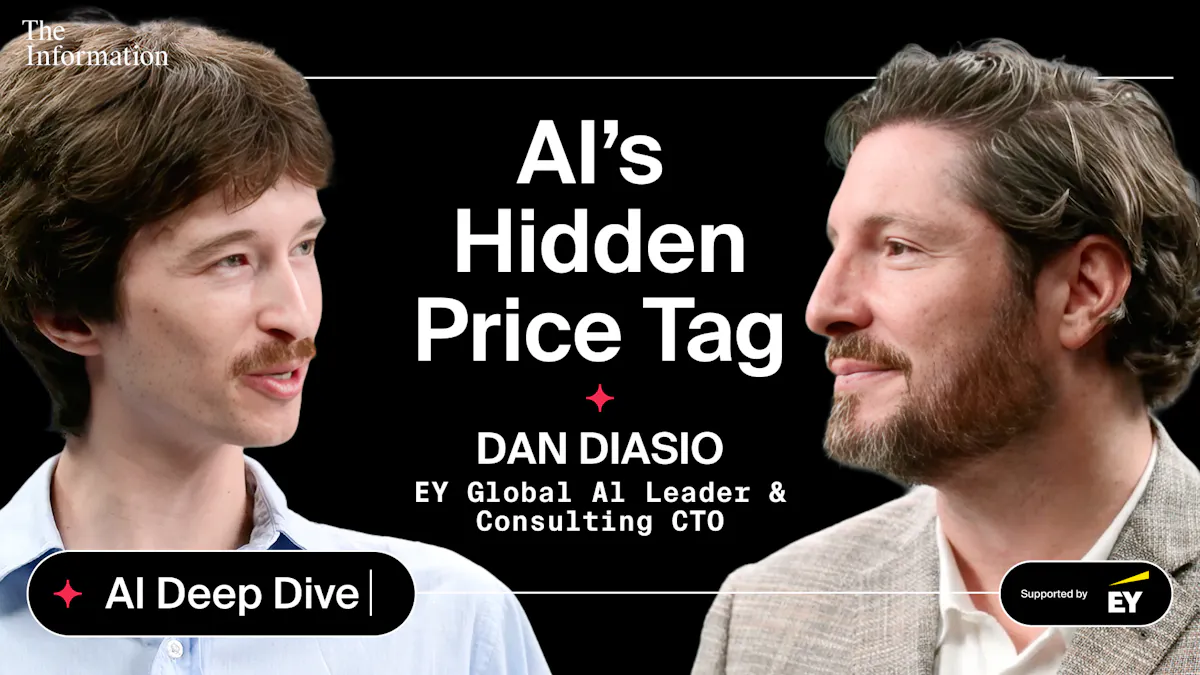
Check out the most recent episode of AI Deep Dive. An up-close look into how frontier AI actually gets built — the models, the money, and the people behind them.
Thank you for reading the AI Agenda Newsletter! I’d love your feedback, ideas and tips: [email protected].
If you think someone else might enjoy this newsletter, please pass it forward or they can sign up here.