
Haiti Hostage Crisis Triggers Surge of 2,000 El Salvador Troops


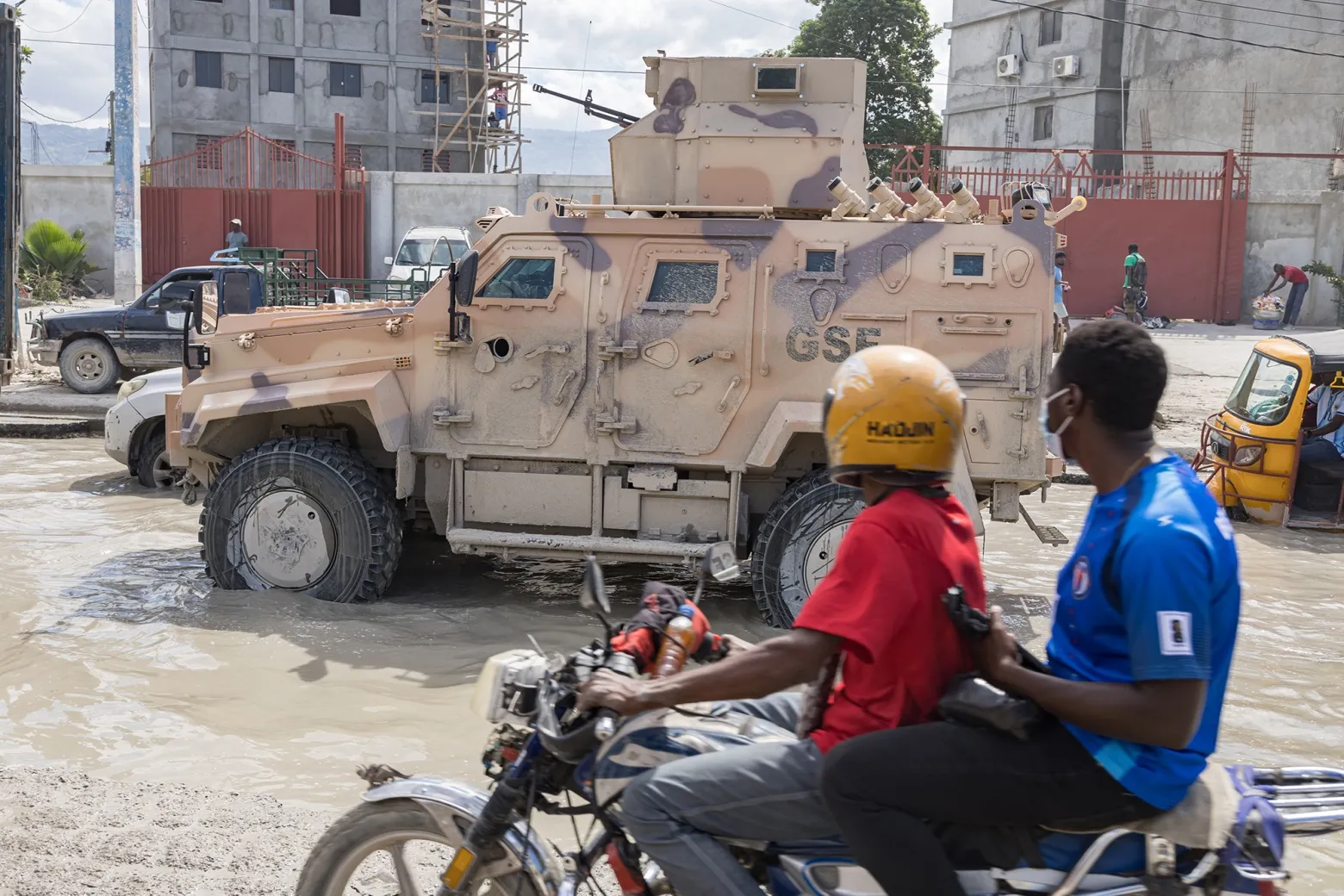
El Salvador has now sent more than 2,000 troops to Haiti — its largest foreign deployment in decades — as it rushes to locate and rescue four soldiers who are believed to be hostages of powerful gangs.
The leaders of both countries held a phone call about the “large scale operation” and El Salvador’s willingness to continue “supporting anti-gang security efforts” beyond the rescue operation, the Central American nation’s foreign ministry said late Wednesday in a statement posted to X.
El Salvador has been shuttling troops and equipment to the troubled Caribbean nation almost daily since four of its military personnel were presumably kidnapped on Oct. 18. Flight tracking websites show at least three flights from San Salvador landed Wednesday.
The office of Haiti’s prime minister acknowledged the call and said the two leaders were committed to strengthening “bilateral coordination and operational cooperation within the framework” of the UN-backed Gang Suppression Force.
The search for the missing soldiers, who were part that UN-backed contingent, has led to intense gunfights in crowded urban areas. Doctors Without Borders, which runs hospitals in Haiti, said it had received 30 patients, including women and children, injured by gunfire or drone explosions between Oct. 18 and Oct. 26.
“We fear that this armed conflict will claim even more victims and displace even more people in the coming days, particularly with the arrival of additional international security forces,” Davina Hayles, the organization’s head of mission in Haiti, said in a statement. “It is imperative that civilians be protected and spared.”
The mobilization — thought to be El Salvador’s largest foreign deployment since its brief invasion of Honduras during the 1969 “Football War” — is a new test for President Nayib Bukele, who became immensely popular — and globally renowned — for being tough on crime.
According to a CID Gallup poll published earlier this week, 82% of El Salvador’s population “is worried about the risks to personnel” in Haiti but 86% agree with the rescue operation. A full 94% of those surveyed approve of Bukele’s performance.
Haiti has been caught in a morass of gang violence and hunger that’s only been exacerbated since the 2021 assassination of President Jovenel Moise. Among the casualties of the crisis are general elections, which haven’t taken place in more than a decade.
On Wednesday, Haiti’s electoral council published a new calendar, which pushed back the planned first round of the presidential vote to July 18, 2027.