
detour #001: Squirrel Cage Jail


Location Council Bluffs, IA · map Admission $10 adults, $8 seniors/students, $5 youth (as of 2026-10) Hours Thu–Sat 10am–5pm, Sun 1pm–4pm; check theofficial site Visited 2026-07 Worth the drive ★★★☆☆ (3/5)
Part of detour, a series on places worth leaving the highway for.
1. Overview
Just across the Missouri River from Omaha, in downtown Council Bluffs, sits the Pottawattamie County Squirrel Cage Jail. It was built in 1885, held prisoners until 1969, and is the only three-story rotary jail ever made. Only three rotary jails survive today: this one, a one-story jail in Gallatin, Missouri, and a two-story jail in Crawfordsville, Indiana. The Historical Society of Pottawattamie County now runs the Council Bluffs jail as a museum.
If you've never heard of a rotary jail, the idea is simple and a little absurd. William H. Brown and Benjamin F. Haugh patented the design in 1881: instead of lining cells up along a corridor, you put the inmates in pie-shaped cells inside a large iron drum and spin it. Each floor has a single opening, and the jailer turns a hand crank until the cell he wants lines up with it. That way, one guard can control every prisoner in the building without ever stepping into the cellblock. The drum in Council Bluffs holds three tiers of ten cells each and weighs about forty-five tons.
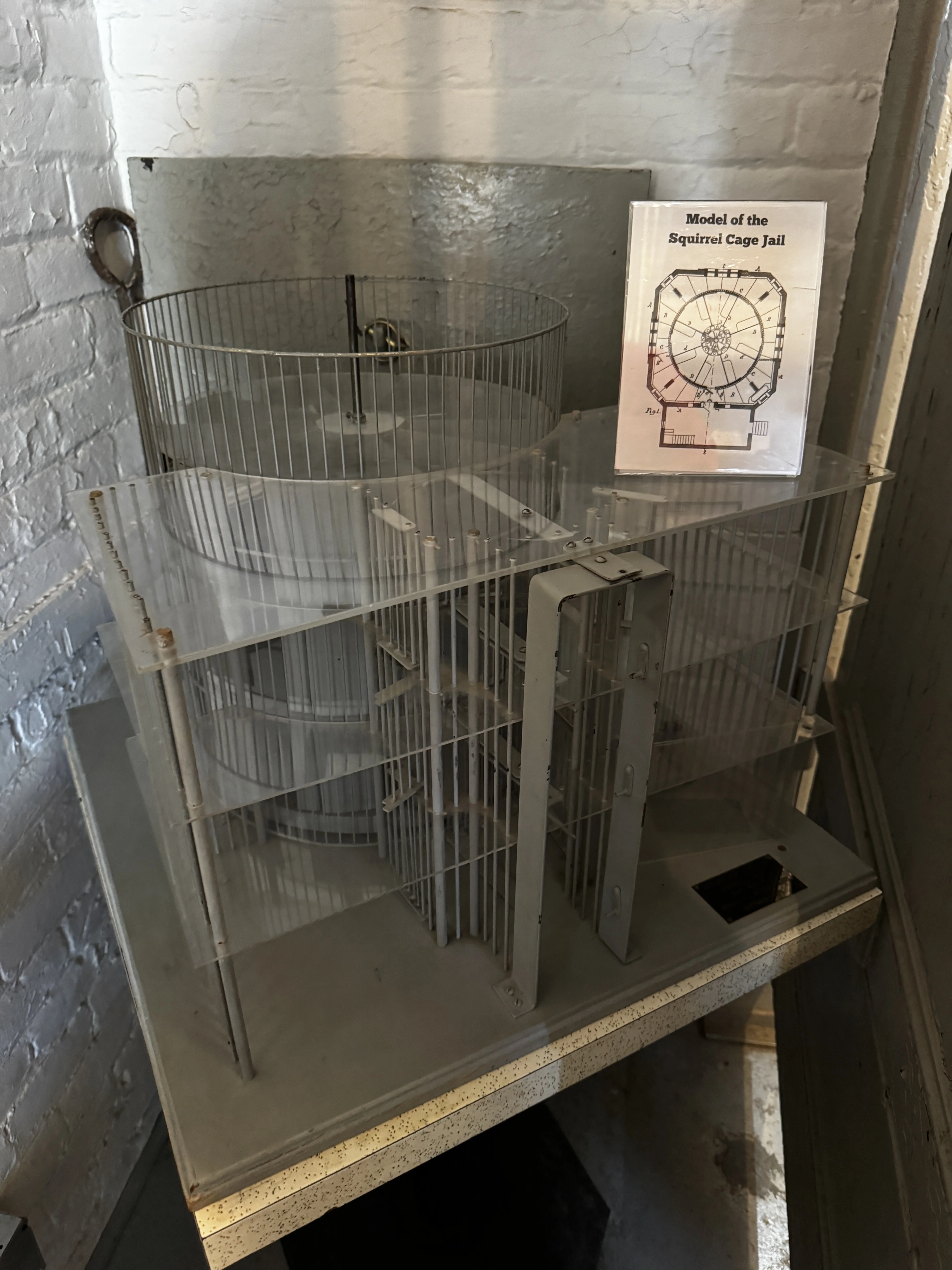
It didn't take long for the problems to show up. Any inmate with an arm or leg through the bars while the drum turned would have it crushed against the outer cage, and some inmates started doing it on purpose. A broken arm got you moved to the infirmary, and the infirmary only had a wooden ceiling between you and the outside, so a few of them broke through it and shimmied down the drainpipes to escape.
Over the years, the weight of the drum caused the central bearings and shafts to sag until the crank was nearly impossible to turn. Fire was an even bigger worry, since the only way to get everyone out was to rotate the drum one cell at a time past the single exit.
2. The Experience
From the outside, 226 Pearl Street looks like any other Victorian brick building downtown. You walk in through the booking room, and right away you're standing next to the jail's only solitary cell. It isn't really a room at all - it's the gap between two steel doors that separate the booking room from a narrow hallway. Once both doors were shut, the inmate had a solid steel door at their back and a barred one in front of them, with barely enough space for a modern adult to fit. You can't sit down in there, and you can hardly bend your knees.
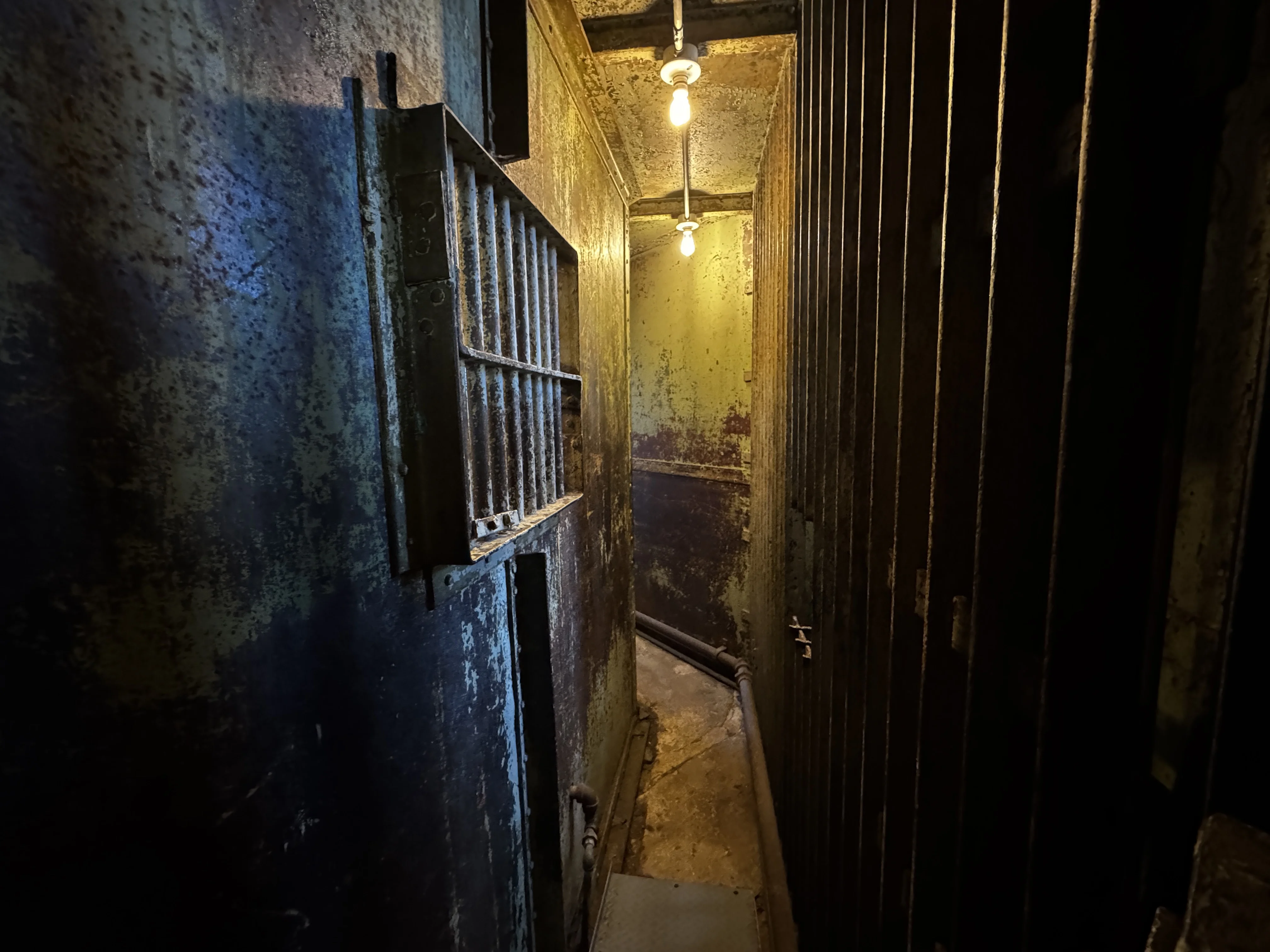
The hallway on the other side runs straight into the first-floor cell area. It was a shortcut, letting jailers get a rowdy inmate locked up quickly without going through all the normal cell doors.
Once you're in the cell room, the drum takes up most of the space. The hand crank and gears that turned it are still on the first floor, and it's hard to picture one person moving all of that iron by hand. The cells are narrow wedges that shrink toward the center, and standing in one, there isn't a single parallel wall or a window in sight.
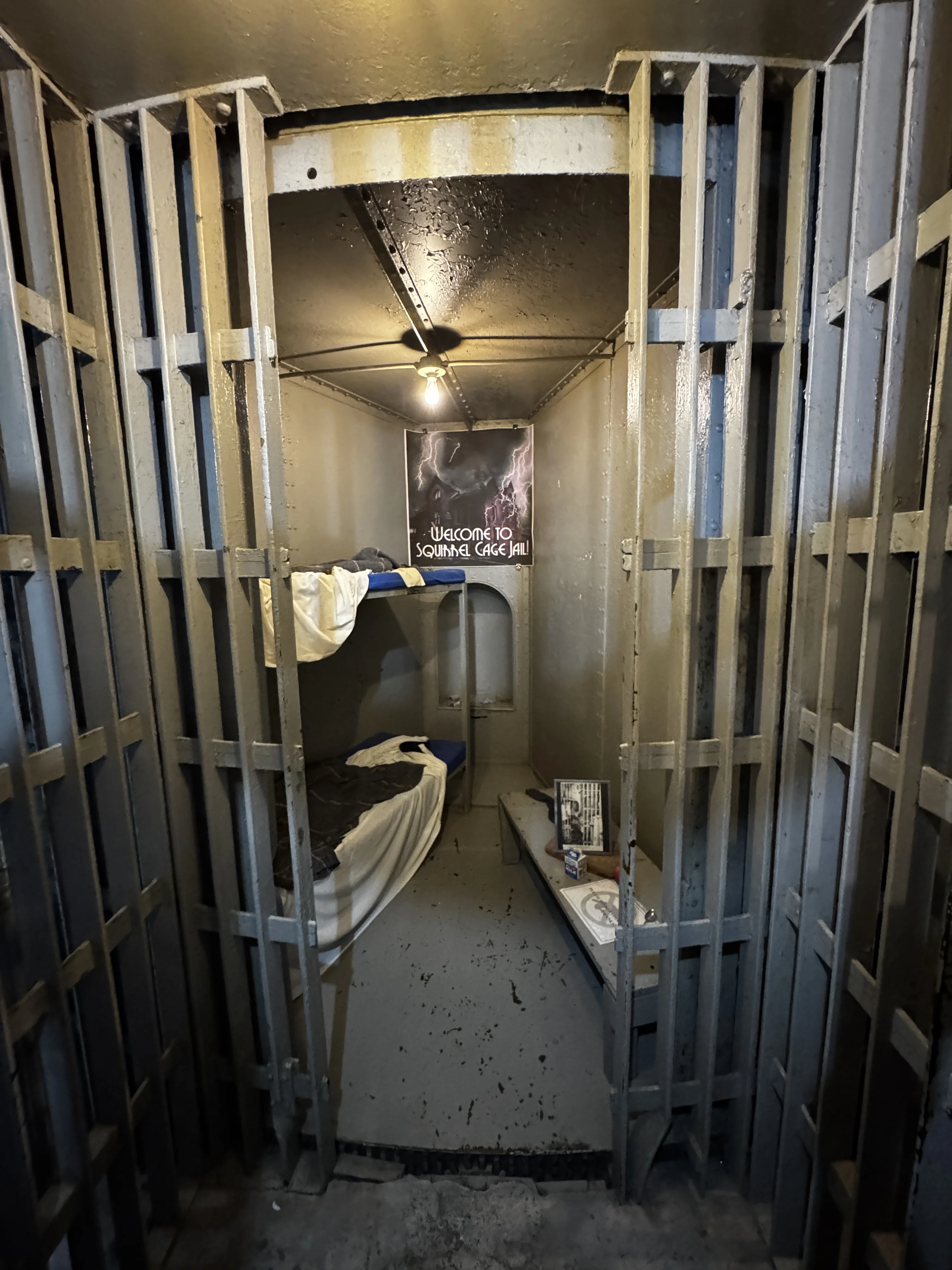
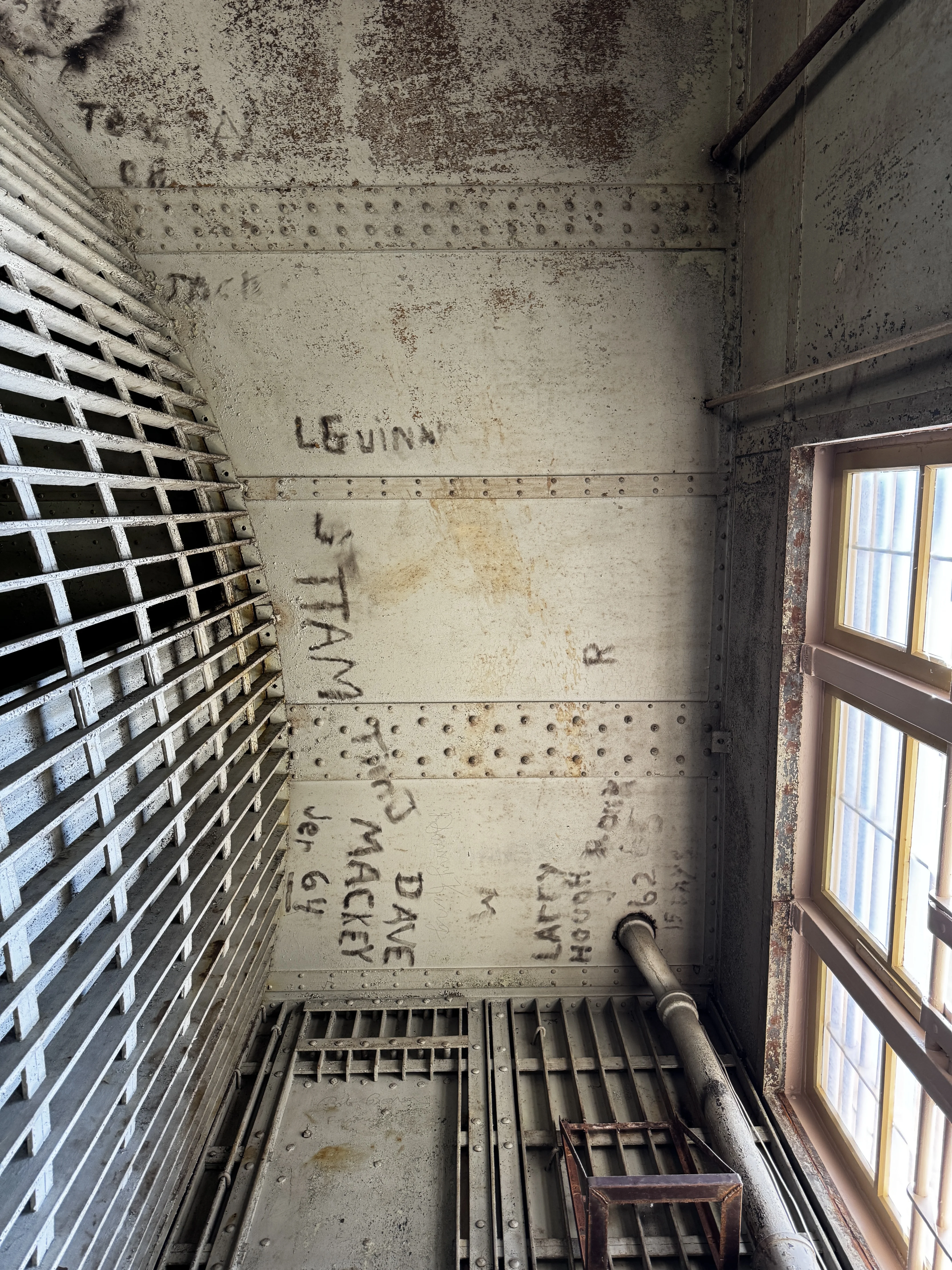
Make sure to look up while you're in there. The steel ceiling is covered in names and dates that inmates scratched and painted over the decades, and it's all still there.
The first floor is also where inmates showered, if you can call it that. The shower was a bare pipe sticking out of the wall in a wide open space, with no privacy at all.
Upstairs on the second floor, there's a drop hatch in the floor. Getting down to the first floor the proper way meant unlocking and relocking door after door, which took far too long when a fight broke out below. Instead, guards would unlock the hatch and jump straight down.
At the top of the building, you can look straight down onto the top of the drum.
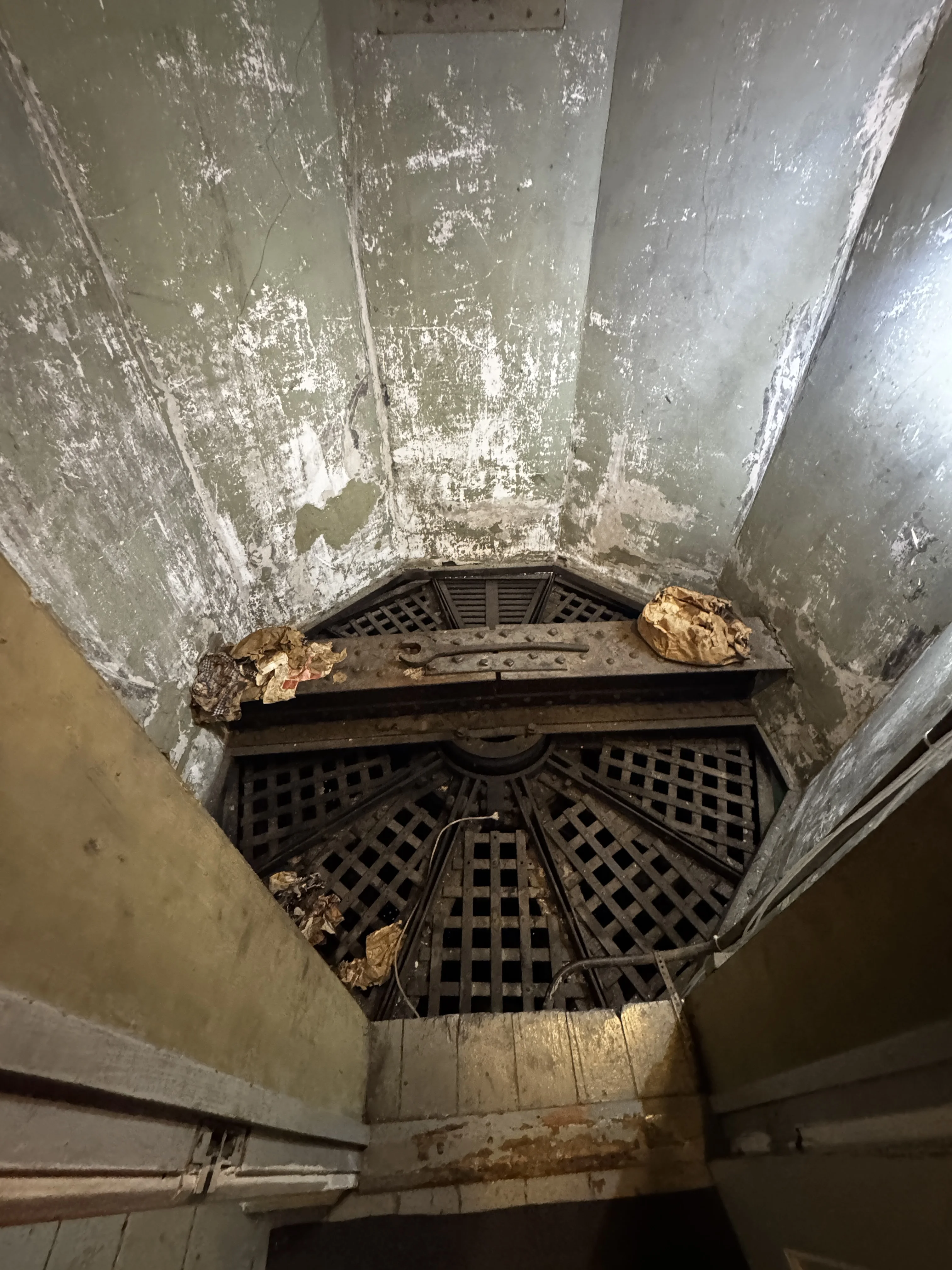
This view explains one of the jail's worst problems. Each cell's toilet sat at the center of the cylinder, where there was almost no ventilation, so the smell drifted straight up the drum and into the apartment where the jailer lived with his family.
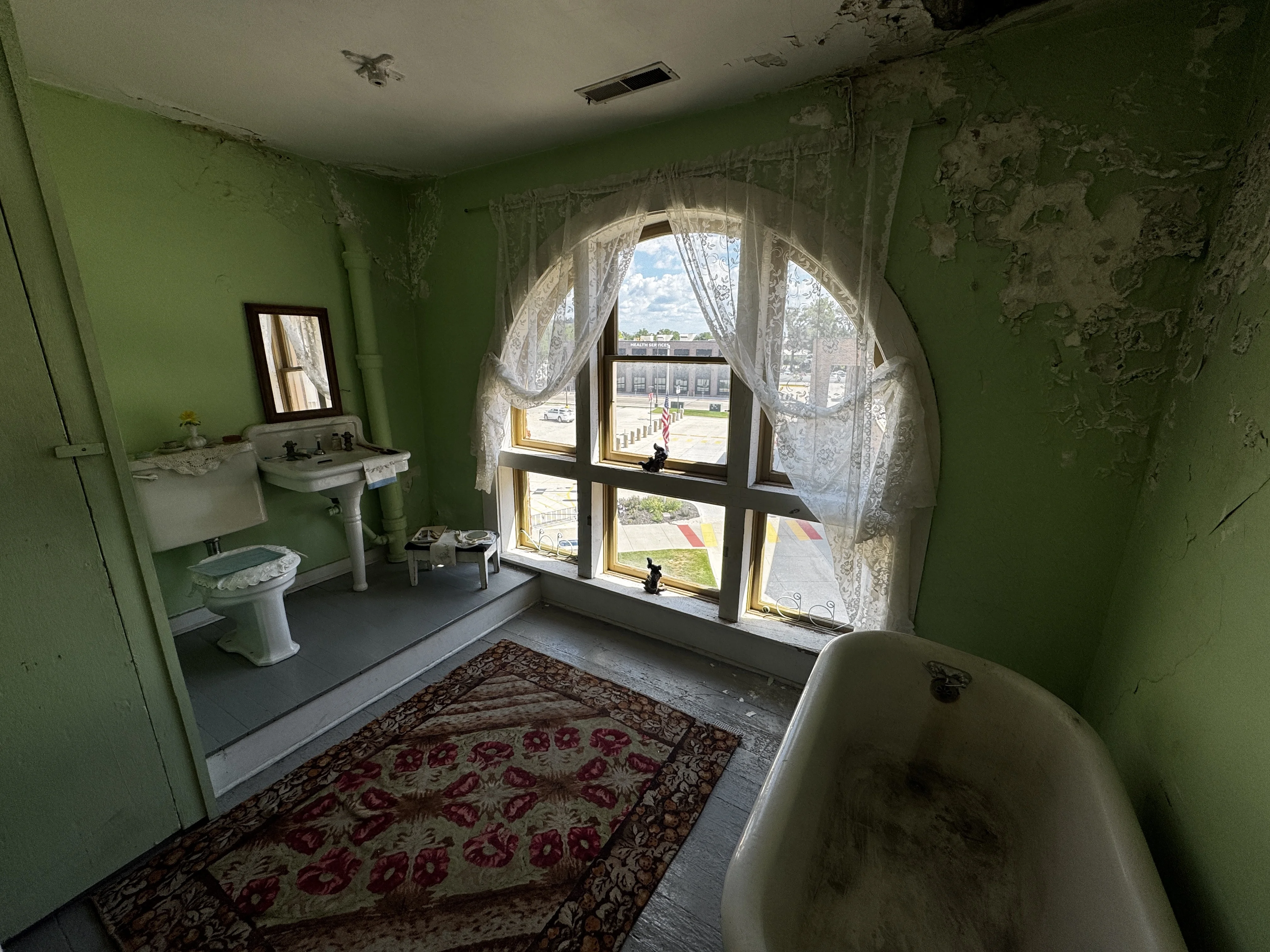
The apartment itself is a strange contrast to everything below it. It has a clawfoot tub, lace curtains, and arched windows looking out over downtown, all one flight of stairs away from the cells and their smell.
Throughout the building, there are reminders of who was actually held here.
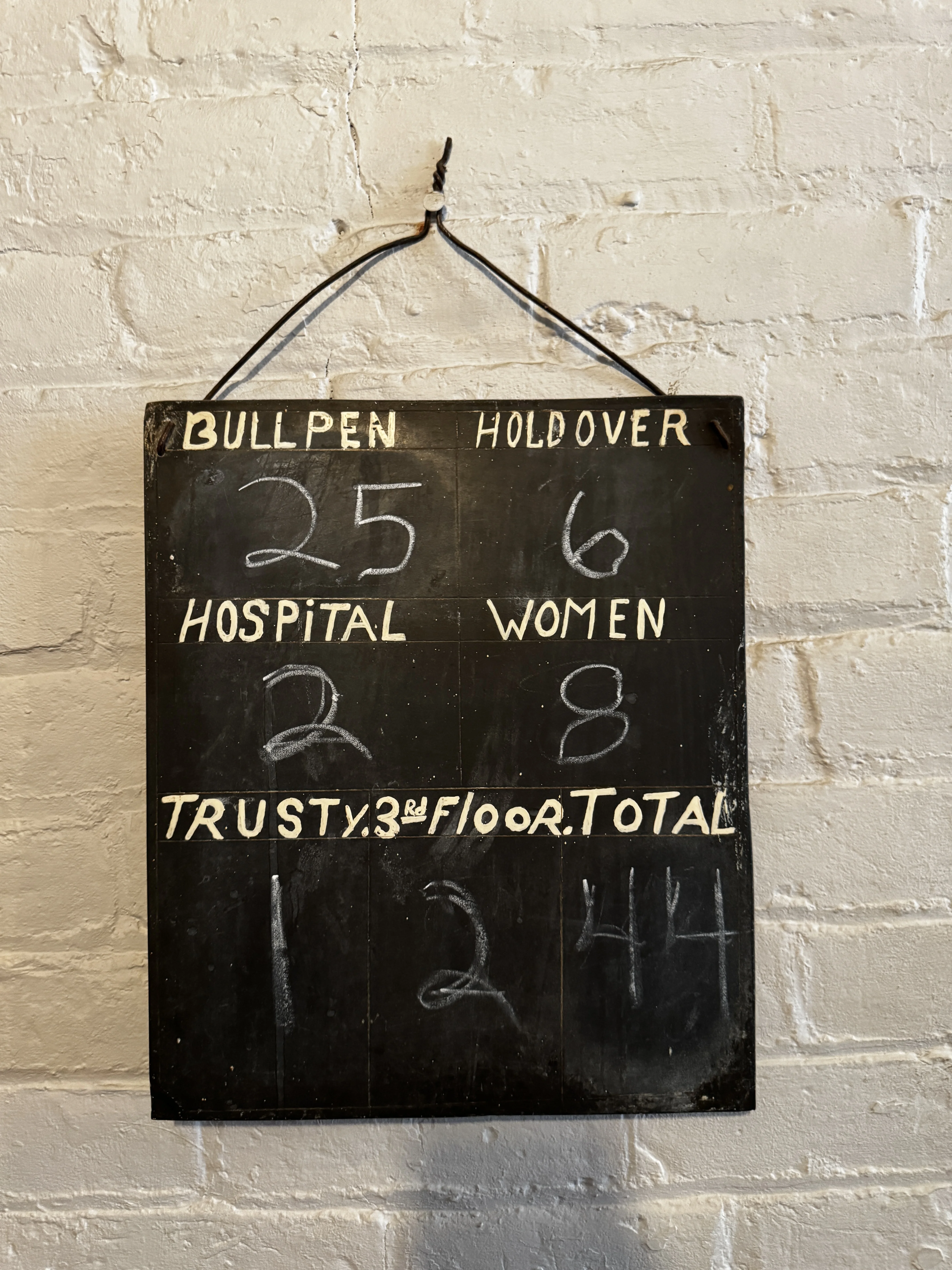
A chalk slate tallies the day's count by where each inmate was held: bullpen, holdover, hospital, women, and trusties. The jail also had a children's wing, which held children as young as infants. Most of them were there because the jail doubled as child services at the time, but some were held as genuine "criminals." One display case even holds real rope from the nooses used to hang some of the jail's prisoners.
Local tourism leans heavily on ghost stories and paranormal tours, but you don't need any of that here. The building is strange enough on its own.
3. Going
The jail is in downtown Council Bluffs, a couple of minutes off the I-80 / I-29 interchange and about ten minutes from downtown Omaha. You can park on Pearl Street right out front or in the small lot next door.
Tours are self-guided, but there are docents throughout the building who can explain the drum, the infirmary, and the family quarters. Plan on 45 minutes to an hour. If you're driving through Omaha or Council Bluffs, or anywhere along I-80, it's worth the stop.