
Global Bond Sales Shatter Record, Fueled by AI Borrowing Binge
 6


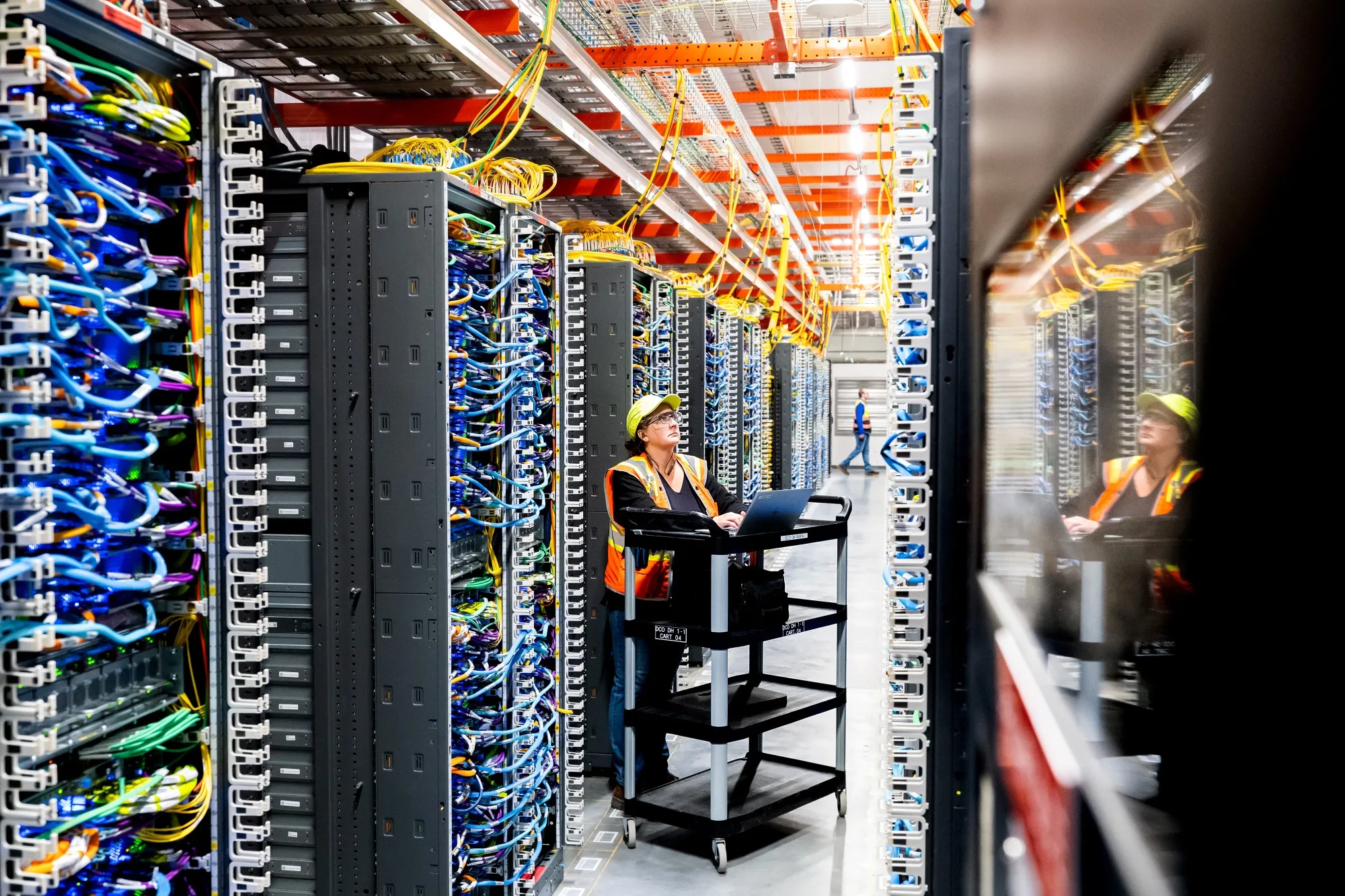
Global bond sales have soared to an all-time high, catapulted by breakneck borrowing from the tech juggernauts at the forefront of the AI boom.
Financial firms, companies and governments have raised a combined $6.61 trillion through investment-grade and junk-bond sales so far this year, up 15% from the same period a year earlier and eclipsing 2025’s record with two months still to go, according to data compiled by Bloomberg.
Cloud-computing giants and data-center developers alone sold almost $368 billion in debt, more than six times as much as a year ago, the data show. The group has accounted for about a third of the increase in borrowing so far this year, outpacing every other non-financial sector and adding twice as much incremental debt as governments.
The figure illustrates the increasingly central role the buildout in artificial intelligence is playing in global debt markets, intensifying competition for capital as yields rise globally and governments seek to fund widening budget deficits.
In the AI era, US hyperscalers have emerged as dominant borrowers. Amazon.com Inc. vaulted into fourth place among the world’s largest issuers so far this year, trailing only Germany, the European Union and Italy — with the German and Italian totals including government-backed borrowers — and ranking ahead of France and the UK. The e-commerce giant has also become the largest corporate borrower, followed by Alphabet Inc.
Read More: Hyperscaler Debt Binge Risks Curbing Access for Emerging Nations
In the US, five of the 10 largest corporate issuers this year are technology firms, while financial institutions — which typically dominate borrowing among the group — have seen their share of volume fall to the lowest level in at least a decade.
Click here for Bloomberg News’ AI Debt Tracker
‘Fundamental Reordering’
“In one year, we’ve had a fundamental reordering at the top of the biggest global market, John Servidea, global co-head of Investment Grade Finance at JPMorgan Chase & Co., said in an interview. “You’ve got a new secular theme around AI.”
The scale of spending on the AI infrastructure is unprecedented. A group of hyperscalers and so-called neocloud firms tracked by Bloomberg Intelligence is expected to invest almost $4.5 trillion over the next three years.
The borrowing spree hasn’t been without hiccups. Investors, who initially rushed to snap up debt tied to AI infrastructure, have at times pulled back and demanded greater compensation as they digest a glut of jumbo offerings and grow increasingly worried about excessive spending and the timeline for profit payoffs from the technology. In the US, data-center developers have offered investors yields as high as 7.2% on investment-grade bonds and 10% on junk debt to finance their projects.
Read More: Wall Street’s AI Debt Machine Is Starting to Choke on Supply
Bonds issued by CoreWeave Inc. — a speculative-grade firm that provides computing capacity for the likes of Meta — sold off sharply earlier this month due to woes about its mounting debt load, with the company’s credit risk surging and rattling investors across credit markets. The cost of protecting against a default even by blue-chip hyperscalers including Meta Platforms Inc. and Oracle Corp. has also surged.
The overall credit backdrop has also deteriorated, with high oil prices, escalating geopolitical tensions in the Middle East and a selloff in French sovereign bonds all weighing on market sentiment. Some Treasury yields climbed to their highest levels since 2002 recently, raising borrowing costs for firms seeking to fund investments or refinance debt.
What’s more, global central banks are likely to head into 2027 with even tighter monetary-policy settings to keep inflation at bay. Against a backdrop of persistent pricing pressures, International Monetary Fund chief Kristalina Georgieva urged central banks this month to keep a “prudently hawkish bias.”
Read More: World Faces Risk Cocktail From AI, Oil and Debt, Says IMF Chief
“Central banks are realizing there’s really a kind of step-up in demand for capital on this AI cycle, and that’s putting upward pressure on R-star,” Johanna Chua, head of Emerging Markets Economics, said last week on a Citi podcast. The so-called R-star is the “neutral” interest rate that neither spurs nor restricts growth.
November Surge?
While hyperscalers’ funding pressure has created some short-term “supply indigestion issues,” the outlook for AI capital spending remains robust, laying the groundwork for continued heavy borrowing, according to Neil Sun, a portfolio manager at RBC Global Asset Management Inc.
“Fundamentally, they’re doing just fine,” Sun said in an interview, adding demand for computing capacity “remains very strong.” He said he expects the AI investment to continue into 2027, despite the higher-rate environment.
Offerings still have room to grow this year, with Morgan Stanley calling for heavy borrowing in November, particularly after choppy activity over the past two months.
“November is actually one of the busiest months for corporate issuance in the year,” Matteo Benedetto, EMEA co-head of investment-grade syndicate at Morgan Stanley said. “This is still an opportunity for prefunding, especially for corporates that are doing M&A or capex and don’t have the benefit of being able to wait.”