
Anthropic’s Tensions With Trump Laid Bare Ahead of Landmark IPO


Anthropic PBC is cautioning investors that its outspoken advocacy for artificial intelligence safety could make the company the target of government retaliation, highlighting the unusual degree of government-related risk to its future business after a year of skirmishes with the Trump administration.
Ahead of its landmark initial public offering, Anthropic said in a filing that its positions on AI oversight and the views expressed by its executives could expose it to significant levels of government pressure, alluding to the company’s feuds with Trump officials over how to safely develop the technology.
“We have experienced, and may continue to experience, increased visibility and may continue to be subject to heightened scrutiny or the risk of being disproportionately or selectively targeted by particular governmental bodies, even where similarly situated companies are not,” Anthropic said in a prospectus setting the stage for its expected public listing next month.
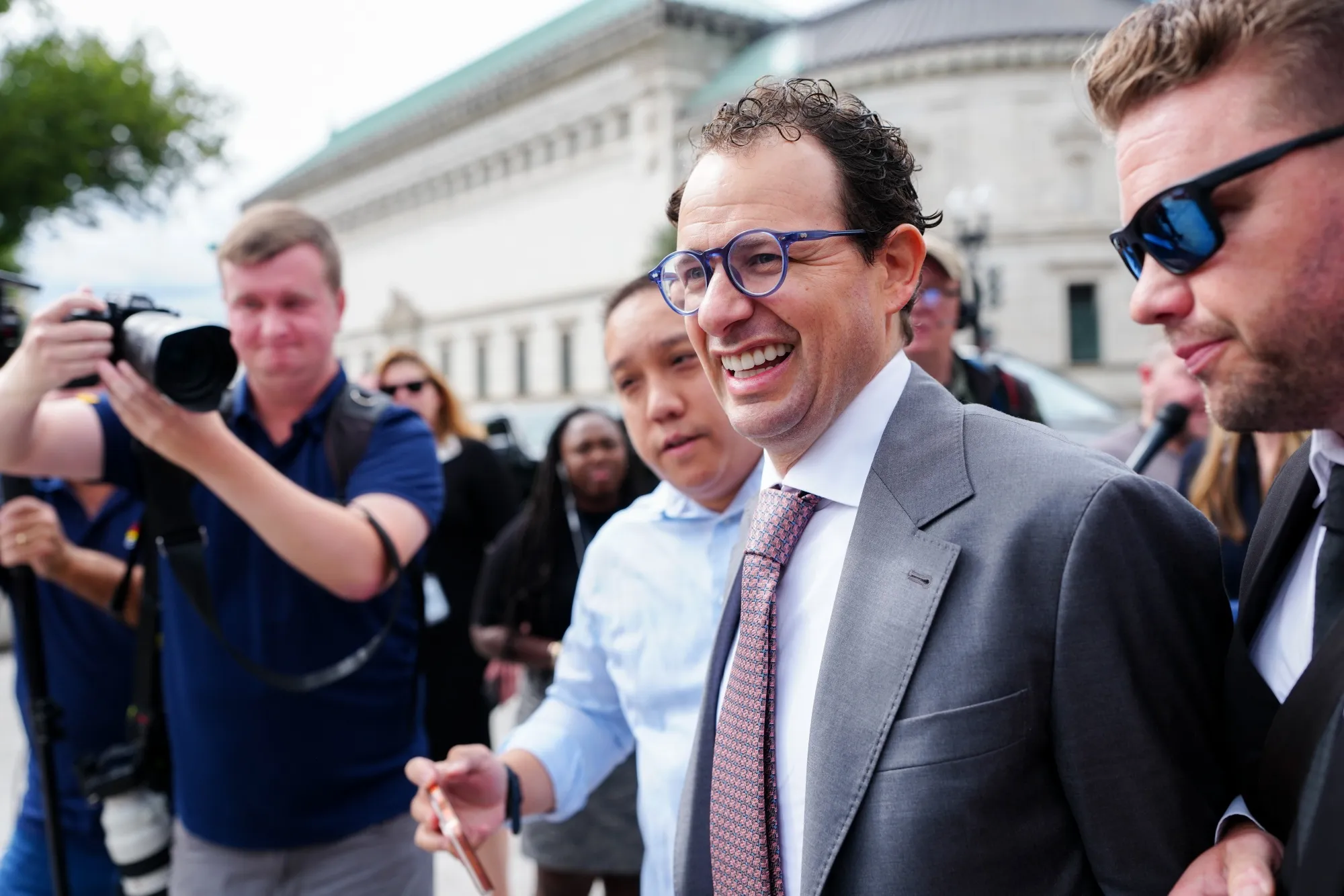
The comments, buried deep in Monday’s filing, pointed to tensions with the administration that took root in a dispute early this year over guardrails on Pentagon use of the firm’s technology. More recently, Anthropic has clashed with officials over whether its cutting-edge Mythos model was safe enough for public release, and its Chief Executive Officer Dario Amodei continues to run afoul of President Donald Trump with his support for a coordinated AI slowdown to give safety teams time to catch up with the technology.
Investors must now decide how to weigh the regulatory risks facing a firm whose technology is accessible enough to be pitched as a product for daily consumer use yet powerful enough to be considered a cyber weapon and a potential catalyst of biological warfare that warrants closer scrutiny. For Anthropic, that history of dust-ups with the administration adds to the uncertainty looming over the entire AI industry.
Read More: Anthropic Raises More Questions Than It Answers About Risk
“With AI, the boundaries of government authority are still being ironed out, sometimes through direct confrontations with individual companies,” said Sarah Kreps, director of the Tech Policy Institute at Cornell University. “It’s hard for investors to price in that kind of uncertainty.”
In its prospectus, Anthropic disclosed various potential government-related setbacks, citing proposed federal legislation ranging from mandatory model shutdowns to nationalization of AI businesses. Earlier this year, some officials including Vice President JD Vance, floated the idea of using the Cold War-era Defense Production Act to compel companies to disclose information and work with national security agencies, Bloomberg has previously reported.
Anthropic spelled out other risks stemming from the government intervening in ways that could affect its work on AI development, including the possibility of trade controls that cut off foreign customers and legal consequences from incidents where its models misbehave. The company said it may not be able to “fully understand or explain” the actions of the systems it’s developing and will continue to press for regulation that could impede its own business.
“Regulatory or other measures of the kind we advocate, if adopted, would apply to us and could increase our compliance burdens, limit our product development or deployment flexibility, affect how and when we develop or release new models, or otherwise slow our growth,” the company said.
Anthropic also warned that the technology it’s developing could eventually pose a threat to humanity, acknowledging doomsday fears shared by many AI researchers in Silicon Valley but dismissed as a “hoax” by Trump and his allies. “Advanced AI systems could, if not developed, deployed, and operated with appropriate safeguards, oversight, and security measures, pose catastrophic or existential risks,” the firm said.
Recent moves by Anthropic to connect its AI models to scientific research could trigger restrictions aimed at preventing the creation of deadly bioweapons, the firm said. It added that misuse of its models for a cyber-attack could expose the company to liability and reputational damage.
As highlighted by the Pentagon dispute, the government is not just a regulator but a significant customer of the firm’s products, further exposing it to the administration’s whims. The company said that direct government agency contracts represented about 1% of its revenue in each of the periods presented in the filing, which dates back to 2023.
“Anthropic is a bit of a special case because in the Trump administration, a lot of actions are taken by whim, and Anthropic is not being treated the same as everybody else,” said William Reinsch, a former Under Secretary of the Bureau of Industry and Security, which handles export controls.
Read More: Anthropic’s IPO Sets Up Defining Moment for Wall Street, AI Boom
The Pentagon fight, sparked by Anthropic’s insistence on extra safeguards on its technology, culminated in the company being declared a supply-chain risk in March by Defense Secretary Pete Hegseth and barred from military work. While Anthropic has sued to overturn the designation, an appeals court in Washington has upheld the Pentagon’s plans to remove Claude from its systems and require defense contractors to follow suit. Civilian agencies elsewhere in government aren’t bound by Hegseth’s decision.
“We cannot be certain that the resolution of these lawsuits will not adversely affect our ability to sell to government agencies and other customers that sell products and services to the US government, and in turn adversely affect our business, financial condition, and results of operations,” Anthropic said in its filing.
Anthropic has drawn additional scrutiny from the Trump administration over its cutting-edge Mythos model, which the company warned in April was so adept at finding computer vulnerabilities that it could only be shared with a handful of trusted partners. The breakthrough prompted Treasury Secretary Scott Bessent to brief Wall Street firms about potential hacking risks and ultimately led Trump to sign a June 2 order spelling out a voluntary assessment system for new frontier models.
Within weeks, following a disagreement with the government over securing the new system, the Commerce Department briefly imposed export controls on Mythos 5 and a related consumer-facing offering known as Fable 5, forcing the company to temporarily disable all access to the products.
The export restrictions were lifted two weeks later, after the company resolved a concern about a jailbreak that might allow Fable users to access Mythos capabilities, but Anthropic warned in its prospectus that future export controls may not be lifted on a similar timeline — and that its future growth will “need” international expansion.
Since then, the administration has intensified its focus on AI safety. Trump summoned last month more than two dozen Silicon Valley leaders to the White House where he cajoled AI developers including Amodei into signing a voluntary accord calling for companies to revise their board structures, add dedicated safety teams and conduct independent audits of models.
Read More: Anthropic Warns of Existential Risk, Liability and Slowing Sales
Trump administration officials days later teed up legal threats through the Federal Trade Commission, suggesting that companies seen violating the accord could face repercussions. The move raised the specter of government intervention but did not eliminate uncertainty in the way that formal regulations might.
The growing appetite among US officials, especially those in the Trump administration, to do more to rein in AI companies is already unprecedented. It’s even more unusual for the company that has been at the center of most of those debates to go public in the midst of a jumbled US attempt at regulating an industry that’s still in its infancy.
“We don’t know what kind of institutions Anthropic and other leading AI companies will ultimately become,” said Matt Pearl, a former White House National Security Council director who now leads a strategic technologies program at the Center for Strategic and International Studies. “I’ve never seen a situation where the ultimate form of a large company and its fundamental relationship to the government was so up-for-grabs.”