
Just How Much Is AI Contributing to the US Economy?


Artificial intelligence is contributing to a US economic expansion that has shown signs of picking up steam in recent months. Economists forecast that third-quarter figures due Oct. 29 will show the fastest pace of growth in gross domestic product in a year. AI doesn’t have its own item line in the report, but its reach spans across many categories.
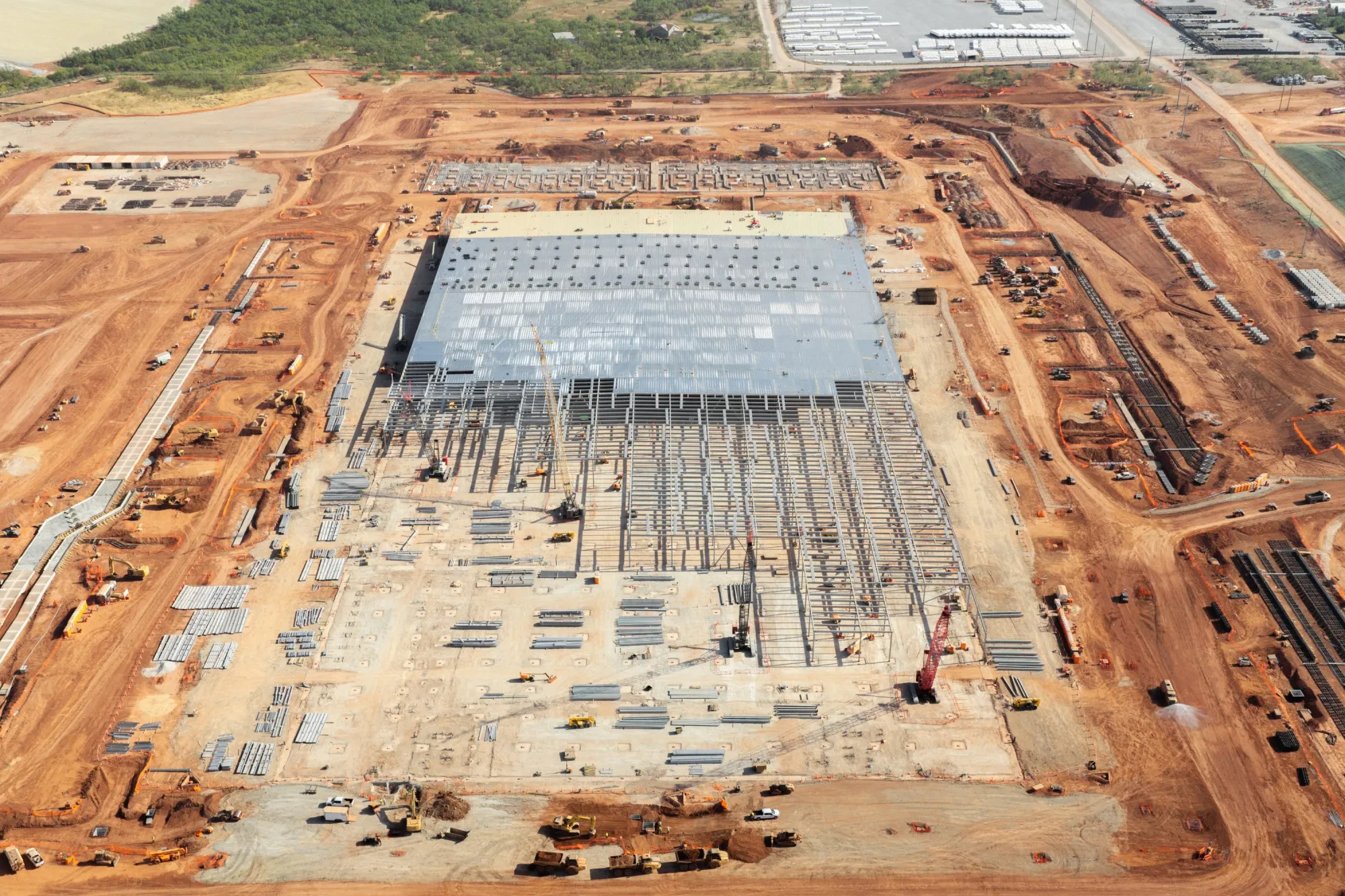
AI contributes to GDP through various channels, including the billions of dollars in direct investments tech companies are pouring into the technology, the accompanying boom in the construction of data centers, and a boost in consumer spending thanks to the AI-fueled stock-market rally.
So how much is AI contributing to GDP?
That’s a matter of debate. Some economists see a modest impact, while others calculate a significant one.
Goldman Sachs Group Inc. has one of the more conservative estimates. Its economists say that AI’s effect is limited by a range of factors, including AI-related imports and inflation, and the way AI crowds out investment in other areas of the economy. Goldman’s estimate: AI added 0.1 percentage point to GDP over the last year. From the second quarter of 2025 to the second quarter of 2026, the US economy grew 2.2%.
A Federal Reserve working paper published in July looking at business investment in software, data centers, power facilities, and computer and peripheral equipment concluded that AI-related gains are uneven quarter to quarter but work out to about one-fifth of overall GDP growth over a year’s time.
Nationwide Mutual’s economic team estimates that over the past year direct AI investment alongside spillover effects — such as employment gains related to construction of data centers and the wealth created from an AI-led stock-market boom — added 0.6 percentage point to GDP, or about one quarter of total growth. “It’s pretty meaningful,” said chief economist Kathy Bostjancic.
ING Groep NV expects US economic growth to register around 2.4% in 2026 and for AI’s direct and indirect effects to account for around 0.8 percentage point, or a third, of that total.
Taking the view that official accounts understate AI’s contribution to GDP, Bloomberg Economics estimates that US growth would have registered a more robust 3.1% in 2025, rather than the recorded 2.3% pace, if government statisticians better captured the impact of the technology.
What’s the scale of US investment in AI?
AI is poised to become the biggest investment in US history. Stijn Van Nieuwerburgh, a finance and real estate professor at Columbia Business School, projects that AI-related investment in data centers, power infrastructure, chips and computer equipment will total $10.3 trillion from 2025 to 2032, or roughly 3.6% of US GDP per year. That would exceed the share committed in the past to the expansion of canals, railroads, electrification, highways or the infrastructure for the internet. The biggest of those projects, the 1870-1890 railroad buildout, accounted for about 2.2% of GDP.
Where does AI have the most quantifiable impact on GDP?
Spending on software, data centers, chips, computers and power infrastructure appears most obviously in the GDP report under the line items for equipment and intellectual property.
However, a significant share of spending in support of the AI boom is on components — such as chips, computers and computer equipment — that are manufactured outside the US, in places including South Korea and Taiwan. Government statisticians capture the billions spent on AI goods and services, then remove the portion that is produced overseas from calculations of GDP, which is meant to measure domestic production only. As a result, AI-related imports lower the top-line measure of economic growth.
How is AI affecting consumer spending?
In what’s known as the wealth effect, Americans spend more when their wealth is growing, even if much of it is only on paper. Since 2024, the stock market has hit a series of fresh records, driven in part by investor bets on AI. The result: US household wealth rose to a record high in the second quarter of this year.
To be sure, not all the stock market gains are from AI, and not everyone benefits from rising equity prices. The wealthiest 10% of people hold about two-thirds of household wealth in the US, while the bottom half account for a little more than 2% of the total.
But those better-off Americans tend to own stocks and are fueling consumer spending, a key driver of economic growth. By some estimates, about half of AI’s contribution to economic growth comes from the wealth effect.
“We are seeing high-income households continuing to spend strongly. They have the income and hold the wealth. Middle and lower income households are feeling more financial pressure from weak wage growth and the rising cost of living,” said James Knightley, chief international economist at ING.
How would a pullback in AI investment affect the economy?
“It’s flattering GDP growth. It’s not everything,” said Thomas Ryan, senior North American economist at Capital Economics.
Other pillars of the economy include the healthcare sector, which made up about three-quarters of all job creation over the past year. Surveys show that US factories have been adding workers in recent months as they increase production. And US companies across an array of sectors are reporting strong profits.
Even so, an AI slowdown could have an outsize impact on the economy.
Business investment would slow. If stock values stop growing or shrink, the wealth effect would go into reverse. There could be effects on the labor market. For example, AI is propping up the construction industry. Residential builders have shed 97,500 jobs since the fall of 2024. But the data-center buildout has helped push nonresidential construction to a record high, more than offsetting the decline among homebuilders.
What does AI mean for the economy long term?
That is a great unknown.
In its public filing in advance of a planned initial public offering, Anthropic PBC said AI could both pose “existential risks to humanity” and “accelerate global growth and dramatically improve quality of life for people around the world.”
So far, AI’s impact on productivity has been hard to see. But the technology appears to be affecting corners of the labor market already, with some research showing it is reducing hiring for early-career workers in fields such as software development and customer support. A study by consulting firm McKinsey & Co. projected that AI could force about 11 million American workers to find a new job over the next decade.
“Even under the best circumstances, the transition to this new AI era will be one of the most turbulent times in human history,” Microsoft Corp. co-founder Bill Gates wrote in an August essay. “There will be some new jobs,” he wrote, “but without the right policies there will be far fewer than exist today.”
Many economists and policymakers are projecting a long-term payoff despite medium-term disruptions. “In the long term, I am optimistic that AI-fueled productivity growth can raise living standards for all Americans,” Lisa Cook, a member of the Federal Reserve’s board of governors, said in a September speech.