
How Is Anthropic So Efficient?


When Anthropic on Monday dropped its long-awaited initial public offering prospectus filing, a lot of the details—see our top takeaways here—weren’t exactly new, given how much my colleagues and others had previously reported about it.
Two items stood out to me, though: how Anthropic is running its models more efficiently than before, and changes it made to its already-unusual governance structure.
Anthropic’s ability to generate $3.5 billion in free cash flow in the first half of 2026, from $16.3 billion in revenue, shows just how much it has improved the way it runs AI in the cloud, compared to the same period a year earlier, when it burned $1.6 billion. Specifically, Anthropic said it is generating an 85% gross profit margin from powering existing models, which doesn’t include the cost of developing new models. (If that figure rings a bell, it’s the same gross margin estimate my colleague Ann described in this column about Anthropic’s data center grab, which elicited sharp questions from some AI skeptics at the time.)
Anthropic is doing so even as it relies almost entirely on computing it rents from cloud providers, which themselves need to generate a profit. So its IPO filing is a reality check on the AI skeptics’ longtime view that a business model founded on selling models on a pay-as-you-go, consumption basis wouldn’t be profitable.
Even Anthropic’s less efficient cousin, OpenAI, recently figured out a way to more than halve the cost of running models, thanks to newly-discovered optimizations, we reported this summer. (OpenAI is less efficient and still burns plenty of cash in part because of a compute-burning albatross: ChatGPT, which services hundreds of millions of nonpaying users.)
Anthropic’s compute efficiency improvements are likely related to the optimizations its engineers keep making, known as “compute multipliers.”
Another likely significant factor, though, is Anthropic’s ability to use different server chips, not just Nvidia’s. Unlike OpenAI, Anthropic from the beginning focused on using a variety of providers such as Amazon, Google and AMD. (OpenAI more recently adopted the same approach.)
It can be very difficult to develop software that engineers need to use all these different chips efficiently and switch workloads between them. But once they have such software, they can take advantage of each chip’s strengths and run certain types of workloads on the chips that can best handle them, AI researchers say. In developing such “abstractions,” both Anthropic and OpenAI appear to have taken inspiration from Google’s Borg compute management system, which allowed that company’s software engineers to run workloads without thinking about the servers on which they are running.
In addition, Anthropic worked closely with Amazon in ways that probably gave it a strong say in the evolution of Amazon’s Trainium chip to make it compatible with Anthropic workloads.
The other detail from the prospectus that stood out related to Anthropic’s unusual corporate governance structure.
While the prospectus confirmed what our team previously reported on Anthropic’s co-founders getting a perpetual voting power over other shareholders, it also showed notable changes to the Long-Term Benefit Trust, a group of four non-shareholders who advise the company on safety and social issues and has the power to elect and remove a majority of Anthropic’s board of directors. The point of the trust, whose members include former Fed Chair Ben Bernanke, is to give a group of people that don’t have a financial interest in the company the power to help the for-profit company make decisions that may go against its commercial interests.
But Anthropic on Monday disclosed several ways in which the trust’s power can be eliminated—whether or not the trust agrees to it.
To be sure, the company previously suggested in its original blog post announcing the trust that the current structure might not be ideal forever. In that blog post, Anthropic says that the trust is an “experiment,” and even said there is a series of “failsafe” provisions—which it didn’t disclose at the time—that allow changes to the trust and its powers without the consent of the trustees if sufficiently large supermajorities of the stockholders agree.
Such provisions appear to be in the prospectus, which also stipulates that a significant majority of co-founders, employees and public shareholders would need to approve the elimination of the trust members’ power.
This check on their power could appeal to some shareholders, but it likely won’t please advocates who are pushing Anthropic to slow down due to safety and security-related risks.
Here’s what else is going on…
Big Number
Meta Platforms announced plans to seek as much as $95 billion of capital through equity sales, adding to already huge fundraising plans by AI companies to fuel the data center boom. Nvidia will invest $3 billion in the equity offering, as the two companies expand their technological collaboration to maximize the performance of Meta’s Muse personal agent app and foundation models
SpaceX has agreed to pay $40 billion to lease artificial intelligence chips from an entity affiliated with Apollo Global Management. The arrangement will see Apollo sell debt to buy the chips, and then lease them to SpaceX.
People on the Move
Microsoft said Monday it is offering voluntary buyouts to about 27% of its staff, as the company aims to reduce expenses amid its investments in developing and running AI. The buyout offers represent one of the largest potential staff reductions among large tech firms in recent history.
Deals and Debuts
See The Information’s Generative AI Database for an exclusive list of private companies and their investors.
Goldman Sachs has officially won the lead left role on Anthropic’s IPO, while Morgan Stanley is named stabilization agent for the IPO. In its S-1, Anthropic said its expenses in payment processing fees increased by $222 million in the first half of this year from the same period a year ago, highlighting the surging costs of processing AI-related payments as the company grew. Anthropic also said it would keep its Claude models free of advertising.
Francisco Partners completed its approximately $650 million all-cash acquisition of Weave Communications, an AI-powered patient-engagement platform for healthcare practices.
Bedrock Robotics, which builds autonomous excavators for construction sites, raised $600 million in a Series C funding round at a $4.1 billion post-money valuation led by CapitalG and Emergence Capital.
Brazil’s largest banking institution, Itaú Unibanco, agreed to acquire 100% of NeoSpace AI, which builds AI foundation models, for R$2.925 billion (about $589 million).
General Compute, a non-Nvidia neocloud, raised $100 million in Series A funding at a $800 million post-money valuation led by Blackbird Ventures and Abstract Ventures.
Nevis, which builds AI software for wealth managers, raised $70 million in a Series B funding round led by EQT Ventures.
Hyphenate, a New York City-based provider of AI-powered finance automation software, raised $45 million in Series A funding led by Nexus Venture Partners.
Nous, which builds an AI agent for managing household bills, raised $17 million in a funding round led by Heartcore Capital and Mosaic Ventures.
Overwatch, which uses AI to fight digital fraud and cybercrime, raised $15 million in a Series A funding round led by Mouro Capital.
Simplismart, which builds software to help companies run AI models more efficiently, raised $14 million in funding at a $100 million valuation led by Dallas Venture Capital.
adsilico, which uses generative AI to test medical devices on virtual patients, raised £10 million (about $13 million) in a Series A funding round led by PXN Ventures.
Omnichat, an AI-native marketing and customer-service platform, raised $10 million in a Series A funding round led by Openspace Capital.
Unconventional AI, an AI-chip startup valued at $4.5 billion after a $475 million seed round, agreed to acquire NeuReality, which builds AI inference chips, in a cash-and-stock transaction with undisclosed terms.
Clio, an AI-powered legal software company, acquired Page, which uses AI to track legislation and regulatory change, to fold its “horizon scanning” technology into Vincent, Clio's legal AI platform.
OpenAI on Monday unveiled GPT-6.1 Terra, the latest iteration of its GPT-6.1 model, a mid-priced version that the company said is significantly cheaper and more efficient than the version of this tier it released three months ago. OpenAI also announced three new AI-driven breakthroughs in computer science, math, and physics.
This week on AI Deep Dive
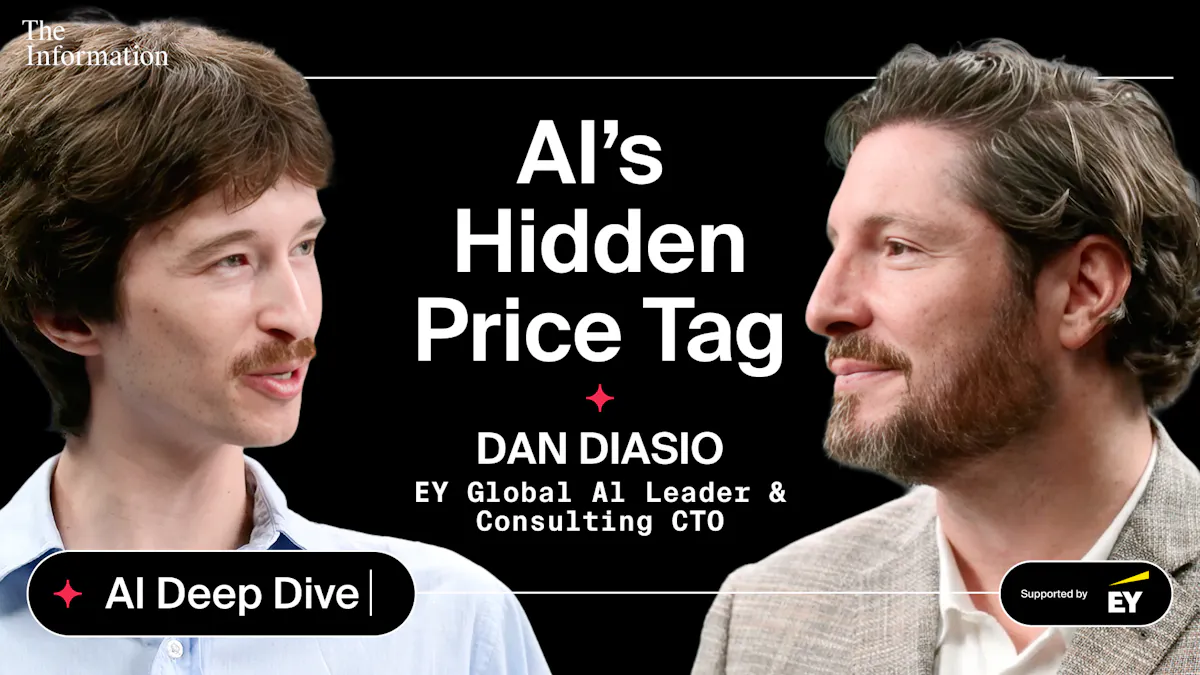
Check out the most recent episode of AI Deep Dive. An up-close look into how frontier AI actually gets built — the models, the money, and the people behind them.
Thank you for reading the AI Agenda Newsletter! I’d love your feedback, ideas and tips: [email protected].
If you think someone else might enjoy this newsletter, please pass it forward or they can sign up here.