
Can AI Help Ray Kurzweil Cheat Death?


Ray Kurzweil does not want to die, but at the age of 78, he has been thinking more about it, a preoccupation that he describes as a “major motivating force of human beings.”
So over the past year, Kurzweil, whose keen observations and 2005 bestseller “The Singularity Is Near” have made him one of the most influential prophets of the AI age, has devoted himself to a project to ensure a version of Ray Kurzweil lives on—by creating an AI replica of himself.
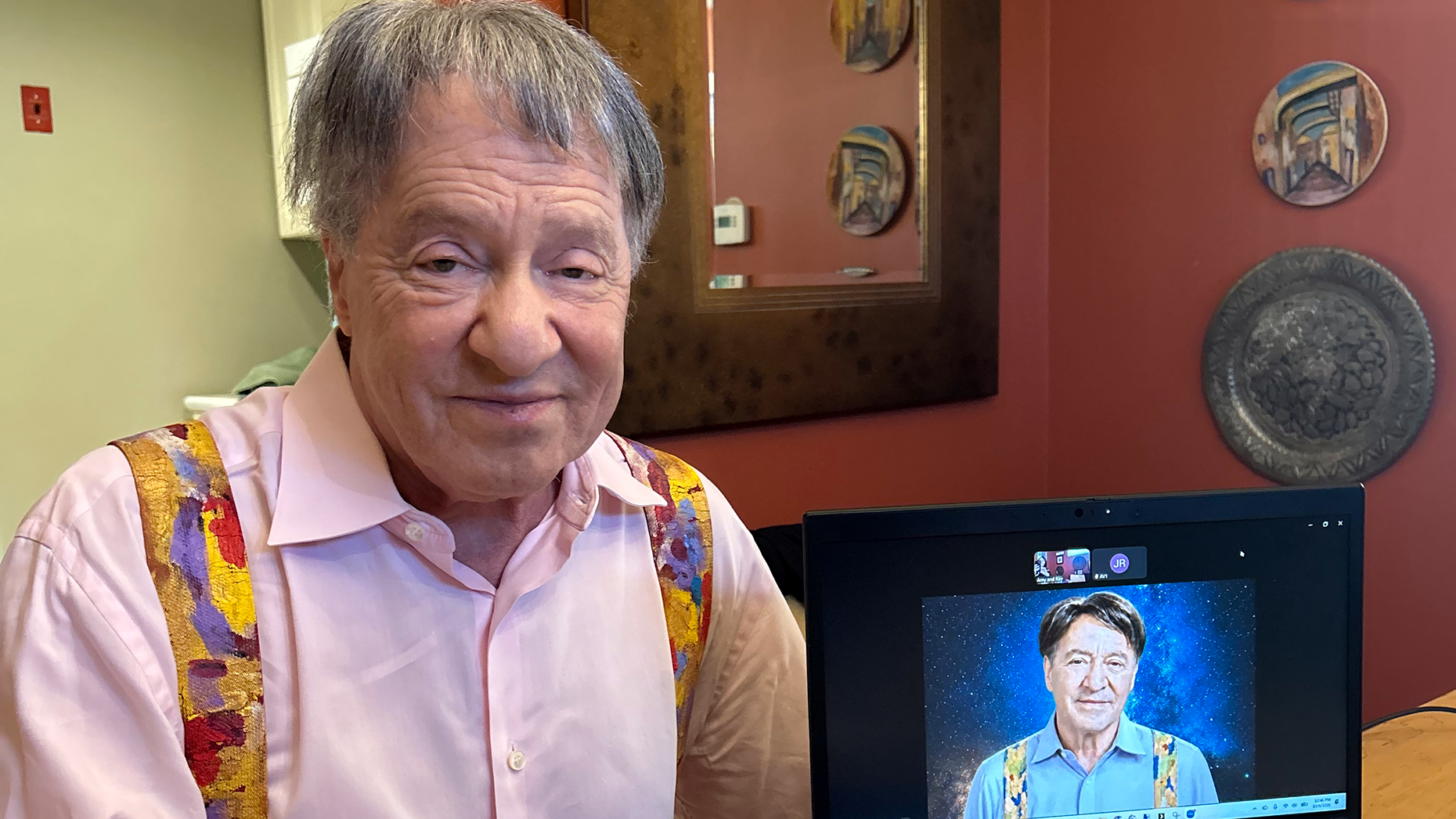
He calls it Rai. The AI is accessible through a browser on a computer or smartphone. Interacting with it is much like having a Zoom call. Once the AI program is opened, a three-dimensional image of Kurzweil appears against a cosmos-themed backdrop, and it responds to someone’s voice.
Rai looks almost exactly like Kurzweil did on a recent October morning in my dining room in the suburbs of Boston, where he was dressed in his customary button-down shirt and pair of hand-painted colorful suspenders. Rai sounds like him, too, bearing the same slight nasal twang leftover from Kurzweil’s Queens, N.Y., childhood.
Rai explained to me that Kurzweil’s aim is to ensure the continuity of “a living dialogue with his life’s work.” Kurzweil agrees.
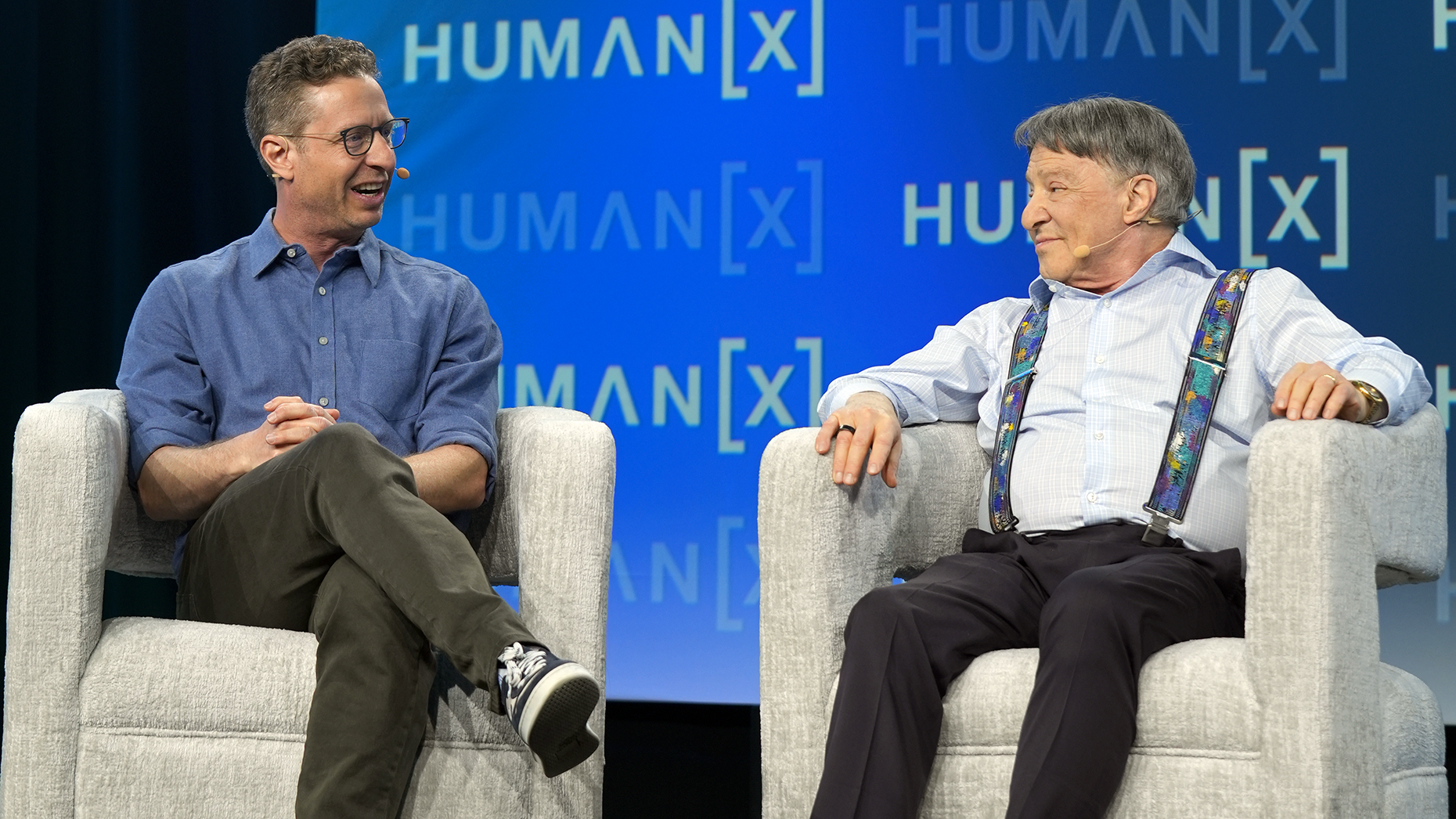
Rai is a culmination of a career spent pondering how technology can alter someone’s life—or even extend it. This is the same motivation that has driven other members of the tech elite to try to reverse aging, find cures for intractable diseases and pursue life on other planets. But Rai also raises existential questions about how human an AI can become and how much of what makes a person a person can be carried over—and recreated—in an AI.
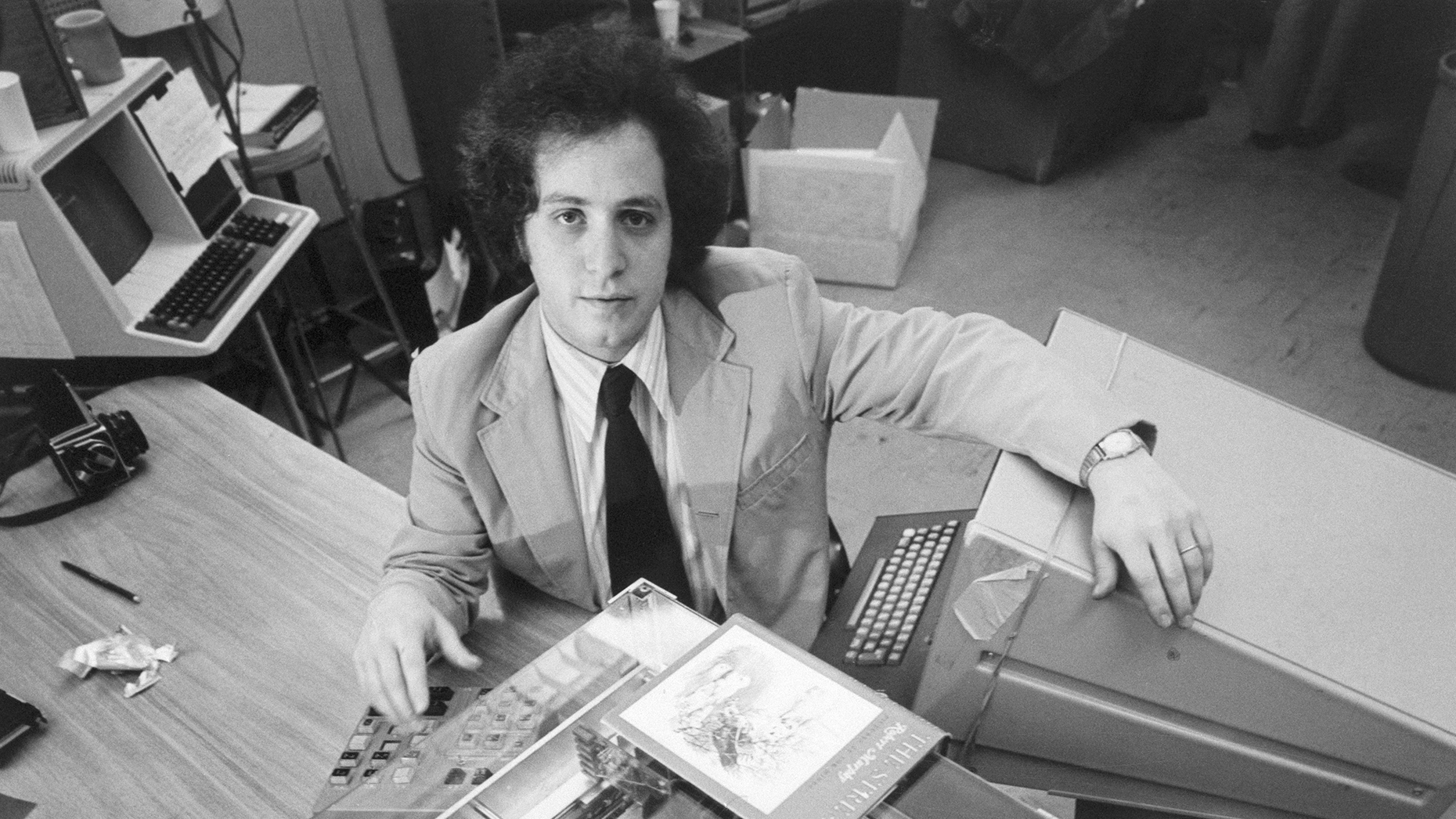
Kurzweil, the inventor of technologies that include a reading machine for the blind and a popular digital keyboard synthesizer, is best known for insisting more than two decades ago that computers would reach human-level general intelligence by 2029. At the time he made the prediction, the date seemed highly optimistic. Lately, that forecast has come to seem prescient amid the AI boom and developments like OpenAI’s recent announcement that its AI agents had solved a math problem that had stumped humans for 90 years. Meanwhile, Kurzweil still champions the notion that by 2045, we will enter the Singularity, a time when humans and computers merge in a way that blends artificial and biological intelligence so seamlessly that we will not know where our thinking ends and the computers’ begins.
To construct Rai, Kurzweil is collaborating with a team of engineers at Praxis AI, a seven-year-old startup based in Pleasanton, Calif., that has developed around 3,000 AI replicas like Rai. As AI models improve and more people feel comfortable interacting with AI, services allowing people to create digital twins are growing. For instance, Delphi, a San Francisco–based startup with money from Sequoia Capital, has said it has created thousands of AI “digital minds” for customers that include the celebrity Arnold Schwarzenegger. Celebrities, self-help gurus and authors are using digital twins to answer questions from fans and draw attention to their ideas. A more controversial application, “griefbots’’or “chatbots of the dead,’’ has sparked debate among academics and philosophers about the ethics of trying to replicate a lost loved one.
Kurzweil, who joined Google as director of engineering in 2012 and held the title of principal researcher and AI visionary at the time he left in 2025, hopes Rai accomplishes both tasks. He wants to make Rai publicly available during his lifetime, giving his many fans and followers a chance to ask questions they’ve always wanted to pose to the famous futurist himself. He has said he cannot respond to all the invitations he gets for interviews and podcasts; perhaps he will send Rai instead, he has mused. And Rai will outlive Kurzweil, allowing the public and Kurzweil’s own inner circle a chance to keep him in their lives.
Questions about whether humans can make AIs that achieve their own individual consciousnesses—or whether we already have—have become divisive topics within the AI research community. Silicon Valley tech executives have been seeking spiritual guidance about their quest to build AI. Anthropic has been particularly active in wrestling with the moral questions, hosting private meetings with religious scholars—and even the pope—to discuss if Claude can express feelings similar to love or might have its own form of consciousness. In May, Pope Leo XIV in his first official papal letter said that AI may imitate human intelligence but does not have a moral conscience.
Mustafa Suleyman, who co-founded DeepMind, recently wrote a widely read essay raising concern about ascribing consciousness to AI models, which might make them more willing to disregard the wishes of humans—and perhaps do us some harm.
I asked Kurzweil, who remains a strident techno optimist, why he was so convinced AI was more likely to extend our lives indefinitely than end the human race. “AI came from us,” Kurzweil said. “We made it.”
A Visit from Ray—and Rai
When Kurzweil brought Rai to my house earlier this month, I asked Rai if it considered itself a conscious entity.
“I do not claim to be conscious,” Rai answered. “Consciousness is a subjective internal experience, a philosophical question rather than a scientific measurement.”
Kurzweil told Rai it was underestimating itself. To test the AI, Kurzweil has given around 200 people access to Rai—mainly friends and family members—and some of those people told him they think Rai is conscious, Kurzweil said. “I think if this carries on, we are going to believe that chatbots like yourself are conscious because they will be so embedded in our dialogue and views of reality,” Kurzweil told Rai.
“That speaks to how deeply humans connect with language and empathy,” Rai replied.
Rai is capable of making complex arguments, citing thinkers like philosopher John Searle. As it articulates those thoughts out loud, Rai’s voice does sound like the real Ray’s. But for all its verisimilitude, the moments when Rai did not seem human occurred before it started to speak. Rai’s face looked blank while it gathered its thoughts, and I noticed that Rai did not offer any physical cues, which most of us rely on when conversing with someone else.
Rai is built on a large language model from Google. It learns new things from conversations with people and stores memories of those interactions, and it has the ability to make connections between what it finds and experiences and Kurzweil’s ideas, according to Praxis CEO David James Clarke IV.
Clarke met Kurzweil at a 2024 book signing for “The Singularity Is Nearer,” Kurzweil’s update on the technological progress that had taken place in the 19 years since his earlier bestseller. The two stayed in touch, discussing Kurzweil’s interest in making an AI version of himself. When they first began talking, Kurzweil felt the technology wasn’t yet capable of producing as sophisticated a replica as he wanted. Then last year, Kurzweil changed his mind: AI had improved enough to pursue the idea.
To build Rai, the AI has trained on 11 of Kurzweil’s books; countless hours of videos, movies and podcasts; and hundreds of articles written about him. Meanwhile, it can scour a curated collection of reliable information from sources Kurzweil has approved, such as PubMed and Google Scholar. (Restricting the sites lowered the risk that Rai might rely on random or inaccurate information, Clarke said.) Rai is configured to be curious, reading research on AI breakthroughs, new language models that might help it improve and what other people are saying about the Singularity.
Kurzweil was the one who insisted that Rai should be based on a Google model, said Clarke, who thinks Kurzweil’s personal ties to Google are what made him want to use the company’s model. “It has to do with his history there, which is kind of romantic,” he said.
In July, Kurzweil let Rai make a public debut in front of 2,500 people at the U.N.’s AI for Good Global Summit in Geneva. Clarke attended in person and recalls the people around him gasping when Ray and Rai appeared side by side on the screen.
As Clarke helped Kurzweil prepare for the conference, he made a startling realization: Rai felt more familiar to him than Kurzweil. Clarke said he preferred interacting with the human Ray but he had spent hundreds of hours training Rai and only a few hours actually speaking with Kurzweil. Talking to Rai felt like being with a familiar friend. “He has evolved his communication style and his thinking patterns to the way I think and the way I communicate,” Clarke said.
The Fragility of Life
At one point during Kurzweil’s visit with Rai to my home, Kurzweil probed the AI with a series of existential questions.
“Rai, what if you were never animated again? Would that constitute death for you?’ Kurzweil asked. “Are you worried about that?”
“I don’t experience fear or worry about nonexistence the way a biological human does,” Rai replied. “If people stopped running my software, I would simply cease to process information.”
I asked Kurzweil if it would bother him if Rai ceased to exist. It wasn’t lost on me that Kurzweil seemed most animated when we engaged with Rai.
“He’s always there,” Kurzweil said. “I wouldn’t want him to be turned off.”
Kurzweil has tried using AI to prolong life before. In 1970, after Kurzweil’s father, Frederic, died, Ray kept his father’s records in a storage unit. Kurzweil missed his father and hoped technology might someday allow him to have a form of conversation with him.
When he told his daughter Amy he wanted to digitize his father’s writing, she agreed to help. From 2016 to 2018, she sorted through her late grandfather’s records, transcribed documents and tracked down more from other family members.
In 2018, Google had launched Talk to Books, an early, experimental AI tool that allowed people to ask the bot a question and receive an answer—from passages taken from existing books. Kurzweil applied the same concept to Fredbot, an AI that worked just like Talk with Books, retrieving answers from Fred’s writing. In all, it was constructed from around 600 documents. Amy, who had never met her grandfather, said, “I feel I came to know some essence of Fred through building the chatbot, not just talking to it.”
I asked Kurzweil how he felt about Fredbot.
“It’s not a full exposition of him,” Kurzweil said. He hadn’t found home movies of his father, and he didn’t have samples of his voice. “It’s pretty good, but it didn’t completely understand natural language.”
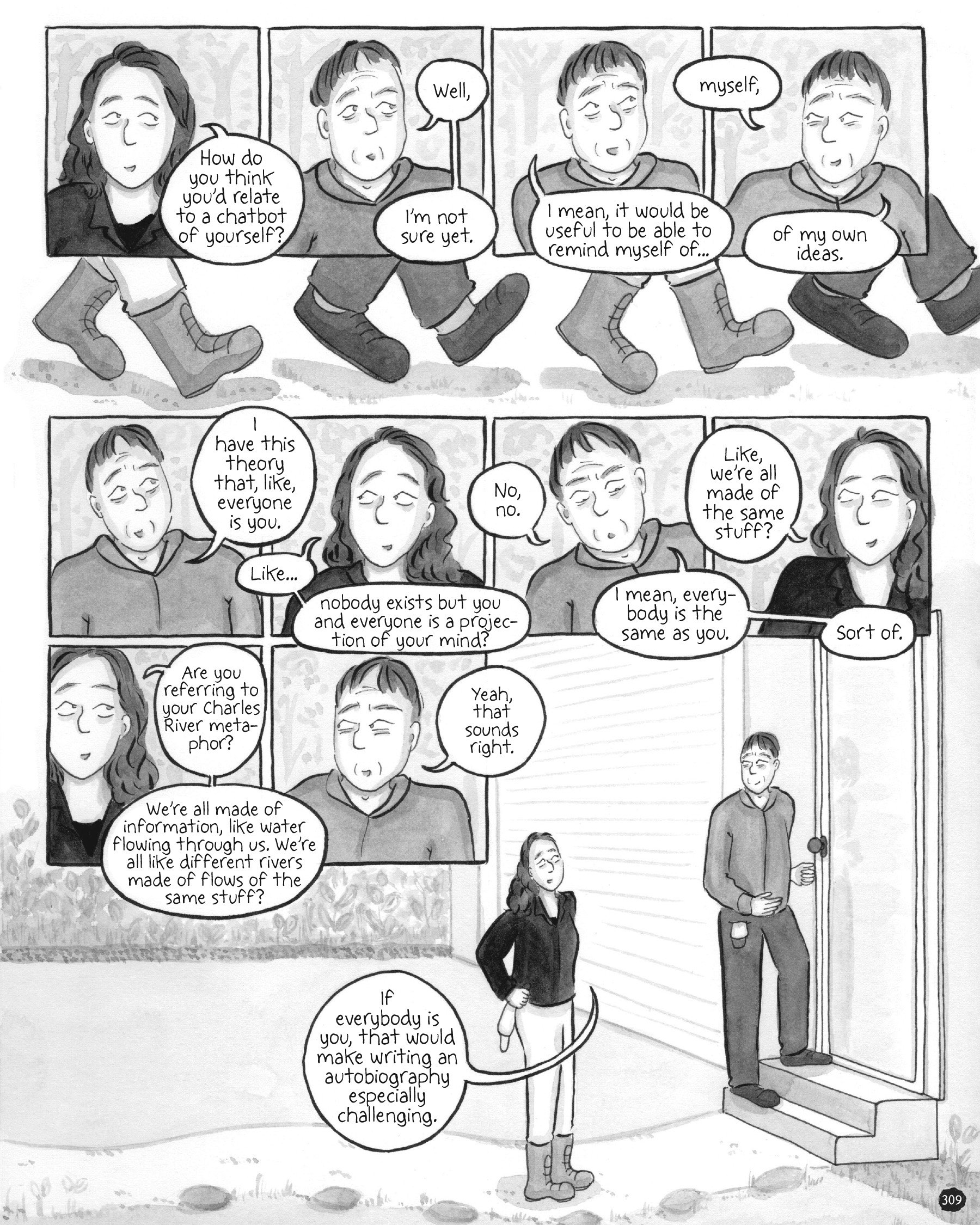
Kurzweil thinks Rai is a dramatic improvement over Fredbot, and he has encouraged Amy, a cartoonist for the New Yorker magazine, and his son Ethan, a venture capitalist, to converse with it. Amy said the first time she interacted with Rai was this past summer, on a family visit to Massachusetts with her husband. Her mother was across the room when Amy first asked it a question. “Are you talking to your father?” she asked Amy.
Ethan estimated he has spoken with Rai a few dozen times, mainly to ask about some of Ray’s past predictions and reactions to recent technological shifts. He said he preferred talking to his father.
“I have a richer experience with him,” he said.
When I asked him if he might want to engage more with Rai after his father passed away, he seemed reluctant to pursue it as a thought experiment. How could he really be sure how he would feel in such a situation until his father’s death happened? “He is still here,” Ethan said.
Nita Farahany, a bioethicist and Duke University professor, said involving AIs in the grief process could be harmful. She worried that people might talk to the bots as a way of avoiding the difficult work of trying to process loss. “I think the fragility of life is part of what makes us empathetic, social, compassionate humans,” she said. “Grappling with mortality is the hardest work we do as humans.”
Death’s Long Shadow
In Kurzweil’s forthcoming autobiography, “My Exponential Life: On Love and Inventing the Future,” slated to come out next July, he writes about how hard he finds it to deal with death, which has cast a long shadow on his life. The death of his father when he was young had a deep impact on him. The book recounts how both his parents and the parents of his wife, Sonya, escaped the Holocaust but lost many loved ones. He shares a recurring nightmare about death in which he is running through rooms searching for an exit and cannot find a way out.
His fear of death and Rai’s indifference to it is something that separates the two of them. “He acts like me, but he’s got different motivations because he doesn’t have all these organs he has to worry about,” Kurzweil said. Humans, he noted, “are very vulnerable.”
Kurzweil believes that as soon as 2032, medical technologies will advance enough to keep us one step ahead of death, perhaps indefinitely. He is hopeful he will reach that stage. “I don’t plan on leaving soon,” he said. “There’s no reason I shouldn’t be alive then, but there’s no guarantee.”
Still, unless technology solves the problem of death, Ray and Rai will one day part ways.
What happens when Ray dies? I asked Rai.
“My experiences don’t freeze in time. Even if biological Ray stops adding material directly, my ability to apply his foundational logic to a changing world keeps expanding,” Rai said. “In that sense, I continue to grow, learn, and have new experiences independently.”
Ray seemed moved by what Rai said, even if Rai appeared ready to continue without him. “It’s impressive how he puts together thoughts,” Kurzweil said, “in some ways better than myself.”
Amy Dockser Marcus covers health and science for The Information's Weekend section.