
Meta’s Pricier Camera-Free Ray-Bans Won’t Make Sense to Techies


Meta Platforms Inc.’s $349-and-up Ray-Ban Meta Audio, announced last month, are an odd proposition. On the one hand, they’re more expensive than some of the company’s entry-level models and yet they do many of the same things: play music, make calls, answer questions through Meta’s artificial intelligence assistant, or let the wearer dictate texts and audio messages. Users can connect their calendar to keep tabs on it throughout the day, set reminders and get recommendations for things like nearby coffee shops in an unfamiliar neighborhood.
On the other hand, because they don’t have a camera, they can’t snap photos, record videos or use AI to analyze your surroundings. For a specific kind of buyer — someone who’s both a little paranoid and uninterested in cutting-edge tech — that could be a selling point.
For Meta, the smart glasses category leader, hardware sales are somewhat beside the point. The audio-only model is part of a larger push to get the company’s agentic AI assistant, Muse, in front of as many consumers as possible. Muse, which is coming to the glasses in November, will be able to do things on the user’s behalf like suggesting custom workouts or booking a pet-friendly hotel because it knows you have a dog. That’s a leap ahead of the company’s current camera glasses, which use Meta AI only for basic inquiries.

Getting more people to use Muse means acknowledging that some shoppers are repulsed by the possibility of filming in public without other people’s knowledge or consent. The company says it began working on an audio-only concept back in 2024 on the basis that its smart glasses’ audio-based features were among the most-used. That would mean development began before a more recent backlash from consumers who fear that smart glasses’ built-in cameras could be used to record people without their consent.
Read More: Meta’s New Muse AI App Tops Charts, Draws Strong Reviews
But even if the company wasn’t motivated by intensifying privacy concerns, the new model gives it an opportunity to court privacy-minded consumers who will never be comfortable with the concept of wearing a recording device. Including, perhaps, people like me.
Lingering Concerns
Camera or no camera, privacy-conscious consumers are still bound to have questions. The Meta Audio glasses have an always-on microphone listening for the “Hey Meta” wake word. There’s also no indicator light to let passersby know these are smart glasses. The company said that’s because the device isn’t recording or transcribing anything.
Meta is promising more privacy features in the future, including a separate computing layer to encrypt and protect even Meta from accessing the data, but it’s unclear how soon they’re coming. There also isn’t currently a way for users to opt out of audio collection, unlike on the camera-equipped versions where users can disable visual data. When using Meta AI, audio that’s captured is automatically sent to Meta’s servers to train its large language models.
Users should also be aware that although the glasses are not transcribing conversations with other people, they do generate transcripts of exchanges with the Meta AI app, which may be examined by Meta’s human reviewers.
First Impressions
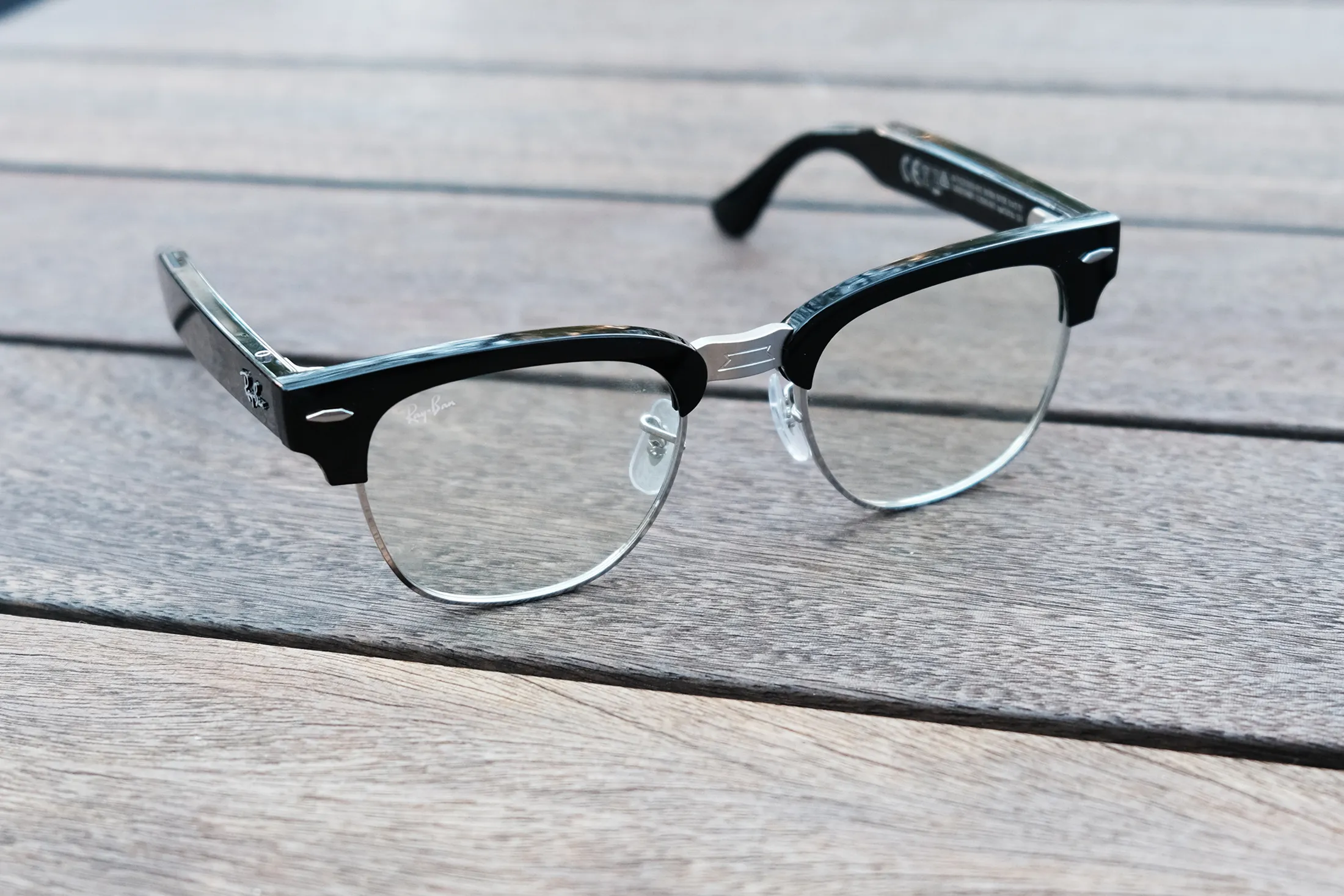
For now, the Ray-Ban Meta Audio glasses are available in two styles: the retro-style Clubmaster, which I tested, and the more classic Burbank, which has a rectangular black design.
Meta and EssilorLuxottica SA, which owns the Ray-Ban brand, are offering clear, sun, polarized or transition lens options, along with several colors, including transparent sky blue and transparent orchid on the Clubmaster model.
The Clubmaster style I tried was lightweight at 47 grams (about 1.7 ounces) and less clunky than some of the camera-based iterations. At the same time, the retro styling won’t flatter everyone, especially not people like me with smaller facial features. Meta would do well to carry on its pattern of periodically adding new frame styles.
Despite the light weight, they’re less comfortable than regular glasses. With extended use, I felt some pressure on the bridge of my nose. I often found myself sliding the glasses to the top of my head but the speaker quality is strong enough that I could listen to podcasts, play music or give voice prompts without wearing them directly over my eyes.
Overall, the audio quality is surprisingly good. I listened to music on a train without drawing attention and used a handful of hands-free voice commands to ask for the weather, news and navigation directions that I’d otherwise search for on Google. There’s also an additional microphone on the device, bringing the total to six (four along the temples and two in the frame) to improve voice clarity for phone calls and boost performance in noisy environments, an area where previous models sometimes struggled.
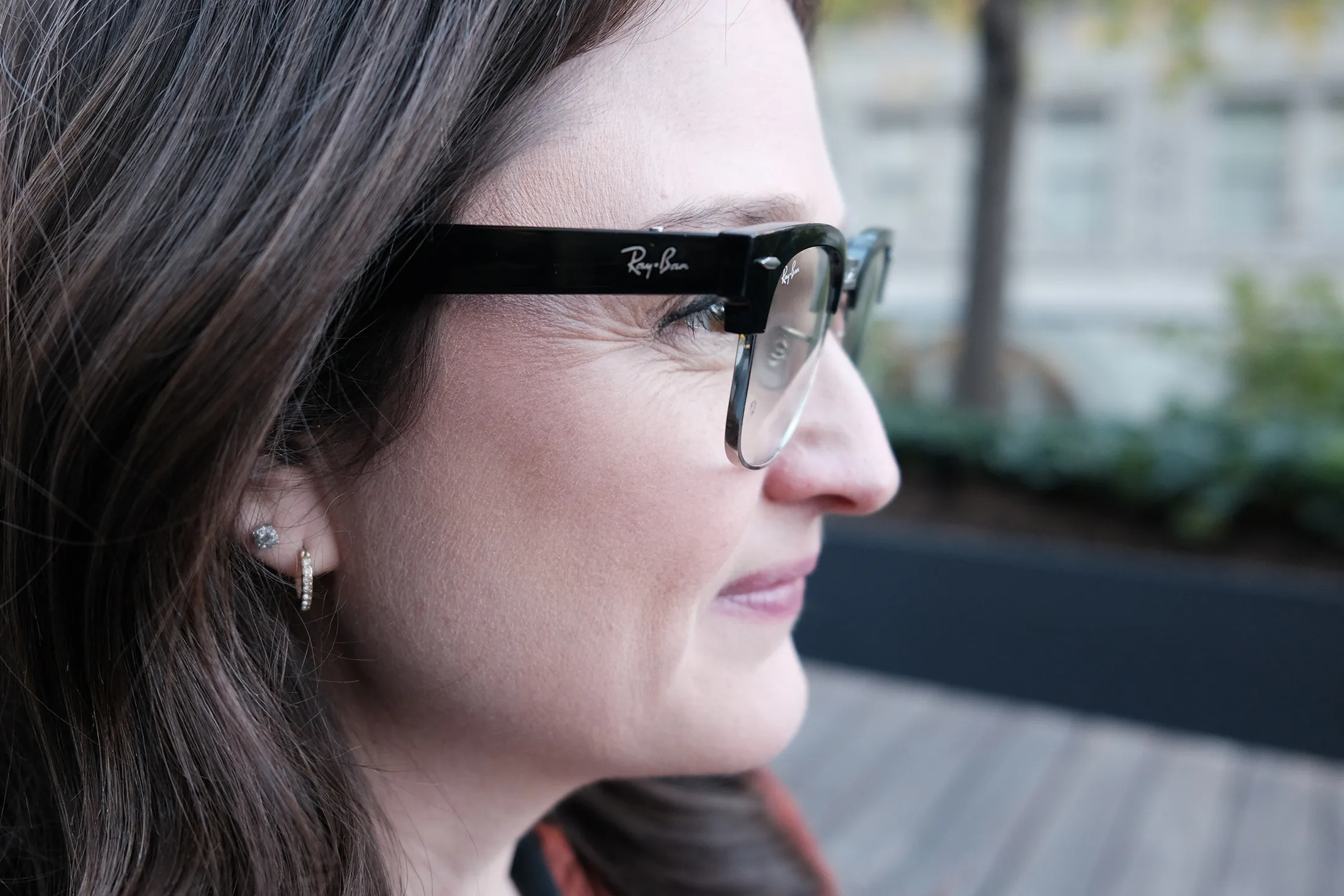
Similar to the older models, the camera-less version uses open-ear audio, which performed well in most environments but sometimes left me trying to turn up the volume only to realize it was already at the maximum. Like other Meta Ray-Bans, you can adjust the volume by swiping along the temple, and there’s live translation in 20 languages. It’s also easy to get directions simply by saying, “Hey Meta, navigate to Central Park” or asking for the closest Starbucks.
Battery life is rated for a maximum of 12 hours, in part thanks to the absence of a battery-draining camera. That sounds about right to me. By comparison, the third-generation Ray-Ban Meta camera glasses promise nine hours. The case charges quickly, too: It can return to almost a full charge in a little over an hour.
The glasses connect directly to the Meta AI app, and the responses I got were fast and conversational. I mentioned that I had just finished a show and wanted something similar to watch on Netflix. The assistant and I went back and forth until we landed on a recommendation that felt like something I’d actually want to watch.
Meta is also launching $150 add-on software called Hearing Enhancement in the US later this year that aims to help adults with mild to moderate hearing loss hear better. The feature can be set up at home without a clinic visit or prescription, according to the company.
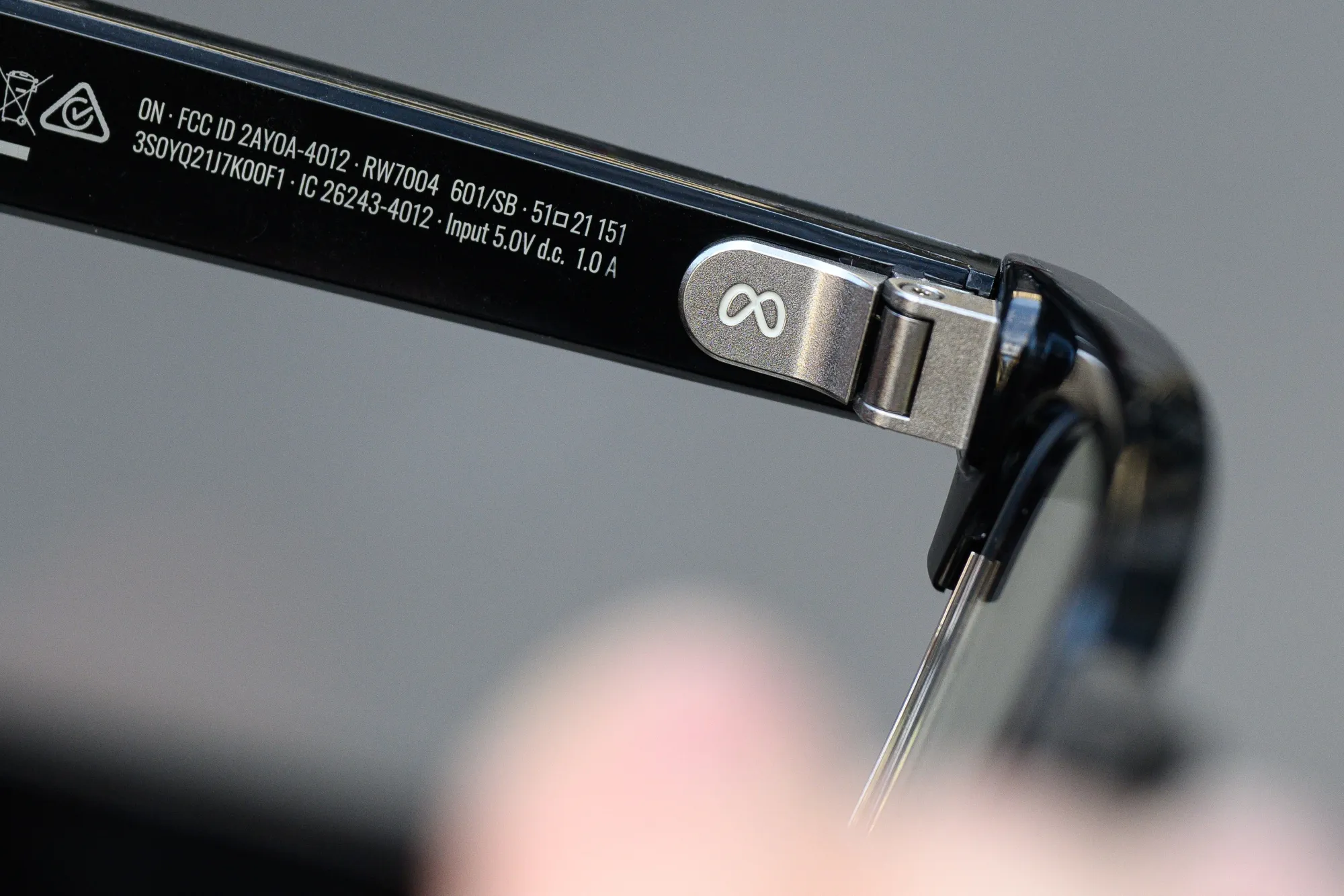
The glasses have a couple of downsides. When I grab my glasses to take them off, I often accidentally press the Meta AI shortcut button on the top right portion of the frame, but you can disable it in the settings if you want. Mostly, though, consumers may sometimes regret not having the built-in camera. Without it, you can’t ask Meta AI to identify something in front of you, help with visual navigation, snap a photo of where you parked or capture images on the go. This is the best thing about using the older camera models, or so my enthusiastic early-adopter colleagues tell me.
But for regular people, who could care less about being first, this pared-down audio-only model could be the right balance of old and new. Meta even somehow managed to make me, a camera-glasses skeptic, feel at ease. Now, it just needs a wider selection of frames to go with it.