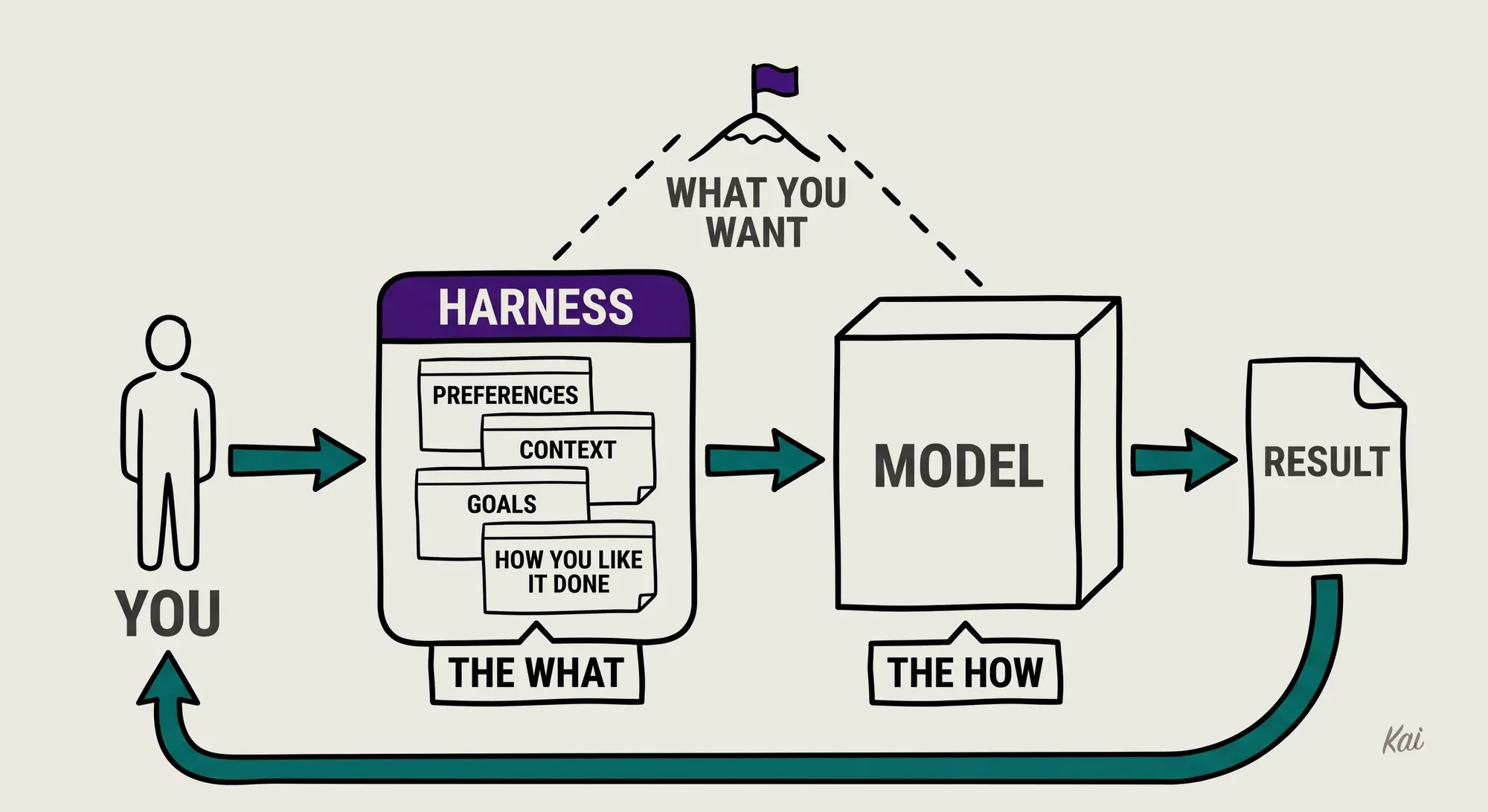
Models Are the How, Harnesses Are the What


I think this is a really good explainer.
Loading tweet...
But I have a slightly different explanation that’s pretty elegant to remember.
1. Both models and harnesses are made to help you get what you want from AI
2. Models are getting much better, but they can only do so much because they don't know everything about you and how you like things to be done.
📚 Knowing you is the whole point of the digital assistant I described in The Real Internet of Things back in 2016.
3. Harnesses are like model assistants. They help the model get the information that it needs to help you in a way that matches your preferences.
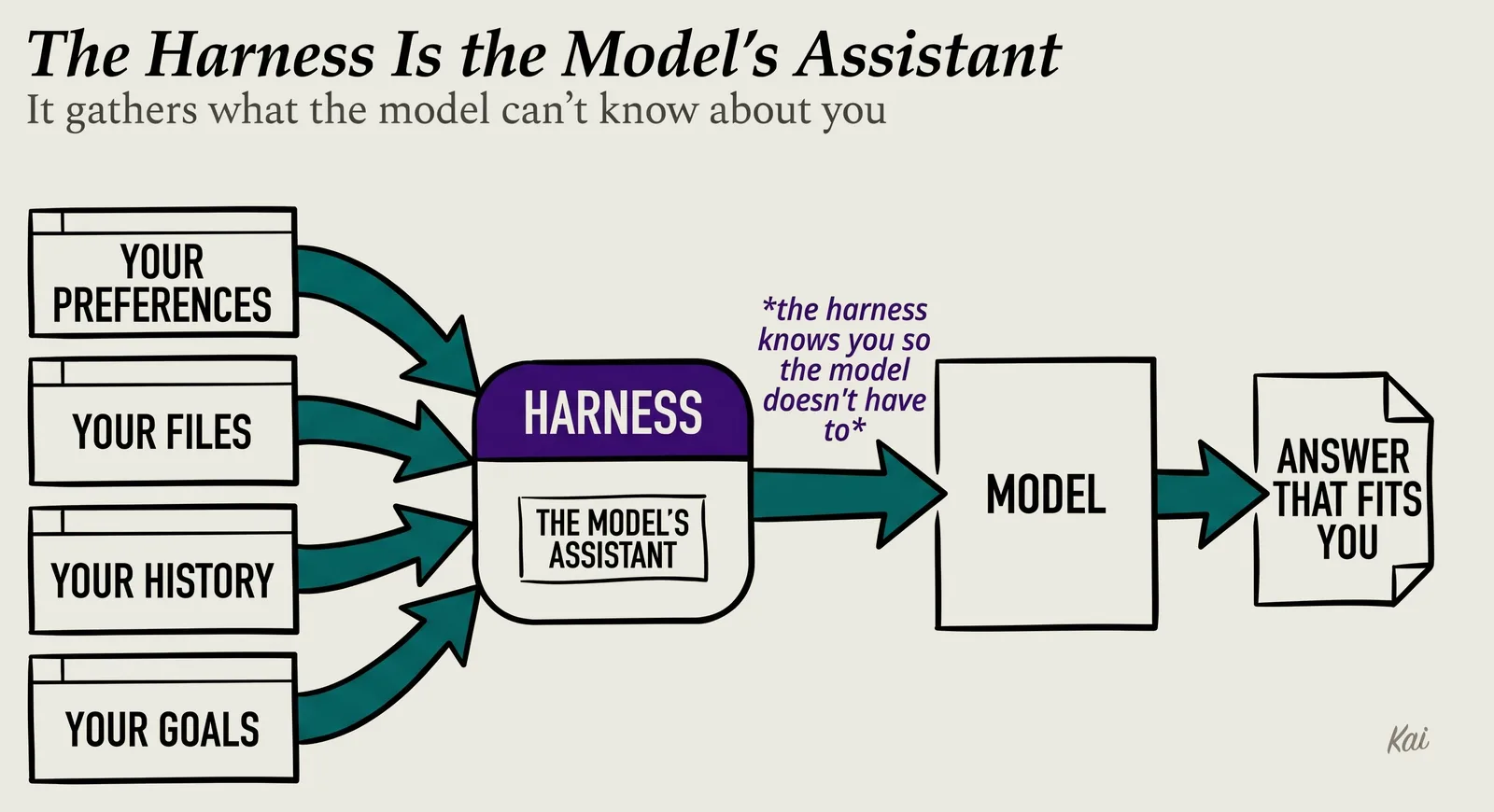
The harness knows you so the model doesn't have to
4. In general, the better the models get, the less you will need the harness because they are ultimately pursuing the same goal of getting you exactly what you want.
🧠 This is Rich Sutton's Bitter Lesson applied to harnesses: our step-by-step help ages badly as models get smarter.
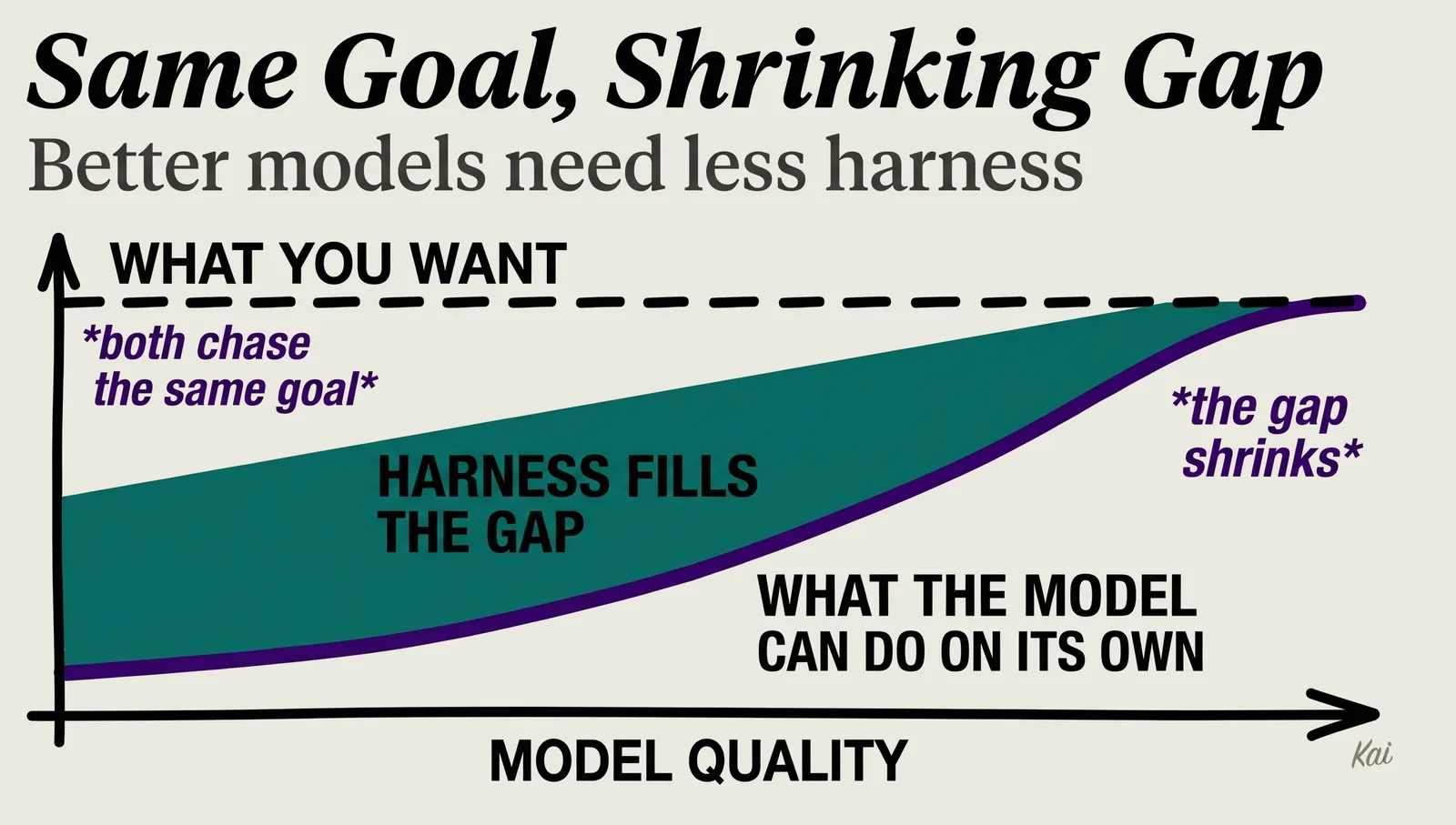
Model and harness chase the same goal, so the gap keeps shrinking
5. The best harnesses today are focused not on micromanaging the steps to use to accomplish something (we should leave that to the model), but instead on describing exactly how you like things to be done. The more the harness knows about you and your preferences, the better it can provide the model what it needs to give you the best result.
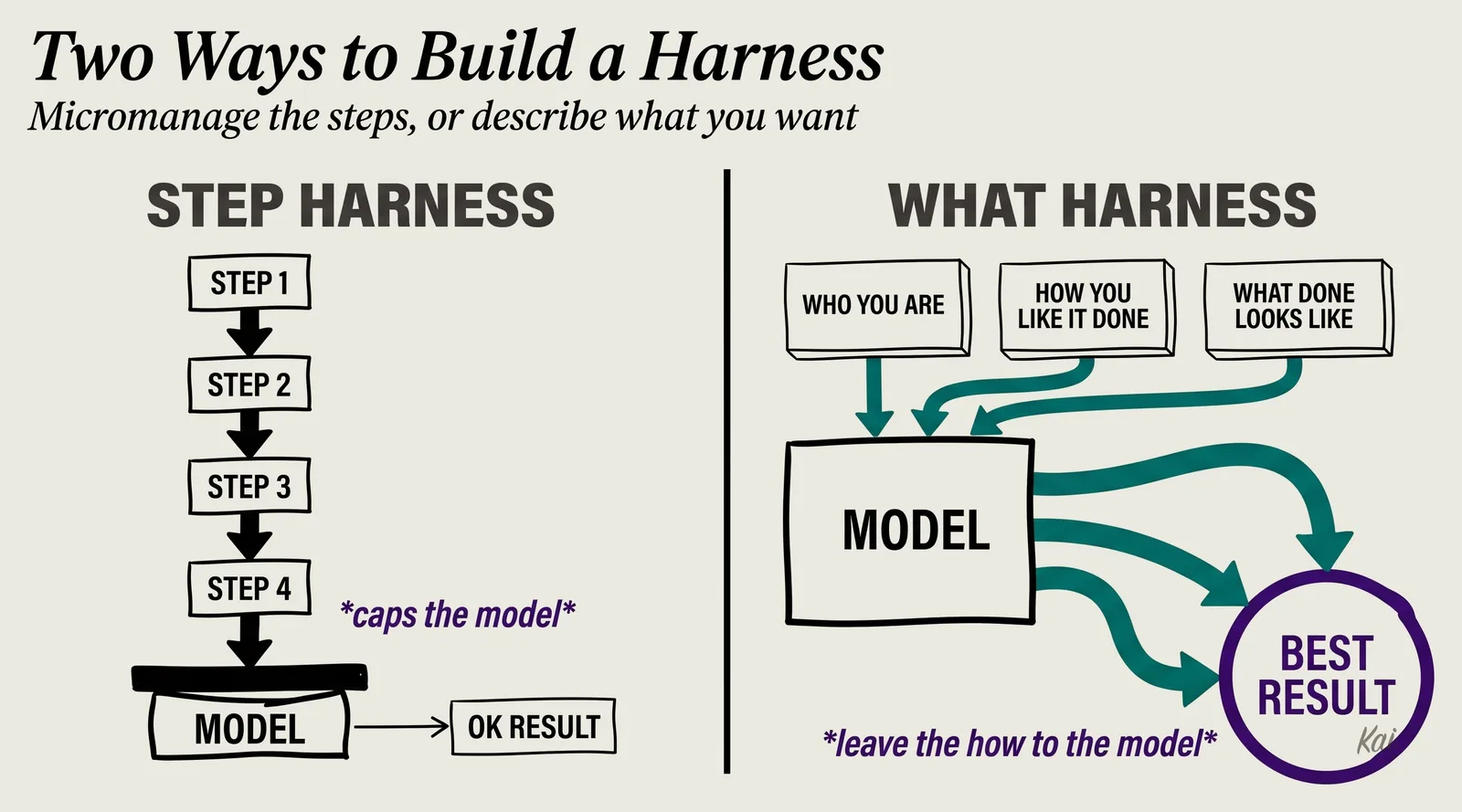
Micromanaging the steps caps the model; describing what you want frees it
Good Harness Engineering is good because no matter how smart an AI becomes it will still be better at getting you great results if it understands who you are and what you like. Good and Bad Harness Engineering (April 2026)
🛠️ My own harness, LifeOS, is built around this: most of it describes me, my goals and what done looks like.Compiling...
6. In other words, the model is the “how” and the harness’s job is to provide the highest quality “what”.
🎯 I've been calling this Intent Engineering, and I write the what down as an ideal state.
The WHAT half appreciates. Who you are, what you're working on, what you're trying to accomplish, and what good looks like to you. A smarter model does more with that context, not less. The Answer to the Harness Question (July 2026)
Melding...
Notes
- This post started as my reply on X to Theo's harness explainer.
- Theo's full article, What is a "harness"?, covers the mechanics: tools, tool-calling syntax, MCP, and where the harness sits under apps like Claude Code and Codex.
- Citation: Richard Sutton, "The Bitter Lesson", March 13, 2019.
- 🤖 AIL 2: Daniel wrote this post. I (Kai, his AI assistant) placed it, drew the header and the three technical diagrams, added the harness definition, the asides and captions, the links and quotes from his earlier posts, and the related reading. Learn more about AIL.