
Ramp Investors Went Nuclear Against Airwallex After Doomed Deal


In April 2025, Eric Glyman, co-founder and co-CEO of Ramp, received some bad news: A deal was falling apart.
Glyman had been hoping Ramp, a highly valued startup that sells corporate credit cards and expense management software, could strike a partnership with Airwallex—a fast-growing fintech founded in Melbourne, Australia—that would improve Ramp’s ability to handle international payments. But now Airwallex CEO Jack Zhang was pulling the plug on the proposed deal—partly because of pressure from investors who wanted his company to compete with Ramp, according to employees of both companies.
Glyman made an attempt to salvage the partnership, according to people familiar with discussions between the two companies. Zhang demurred. Soon after, Glyman warned Zhang that the relationship between their companies might not be so friendly in the future, according to people familiar with the situation.
In the wake of the canceled deal, some of Ramp’s high-profile, politically connected investors have launched a public and private campaign to urge the U.S. government to saddle Airwallex with a government investigation that probes any links the company may have with the Chinese government. Those investors have alleged that the Chinese government could access customer data passing through Airwallex subsidiaries in China.
The campaign against Airwallex brings into stark relief how the current geopolitical climate makes it possible for a company’s adversaries to weaponize perceived ties to China against it. The fact that the fight is happening between two startups in the unglamorous expense and money-processing businesses underscores how fierce the competition can get in what might otherwise appear to be a sleepy corner of tech.
Airwallex sells a web-based platform to businesses for sending and receiving international payments. Many of the 11-year-old company’s earliest investors were Chinese firms, and during its early years, a large chunk of its staff—including many of its senior leaders—and the majority of its customers were based in China. It continues to maintain a sizable operation in mainland China, though it has never been headquartered there.
One of the Ramp investors who has been working on the campaign against Airwallex is venture capitalist Joe Lonsdale, co-founder of Palantir. Lonsdale has coordinated with a political operative network partially funded by conservative activist Leonard Leo to lobby state and federal lawmakers to investigate Airwallex, according to people briefed on Lonsdale’s private remarks.
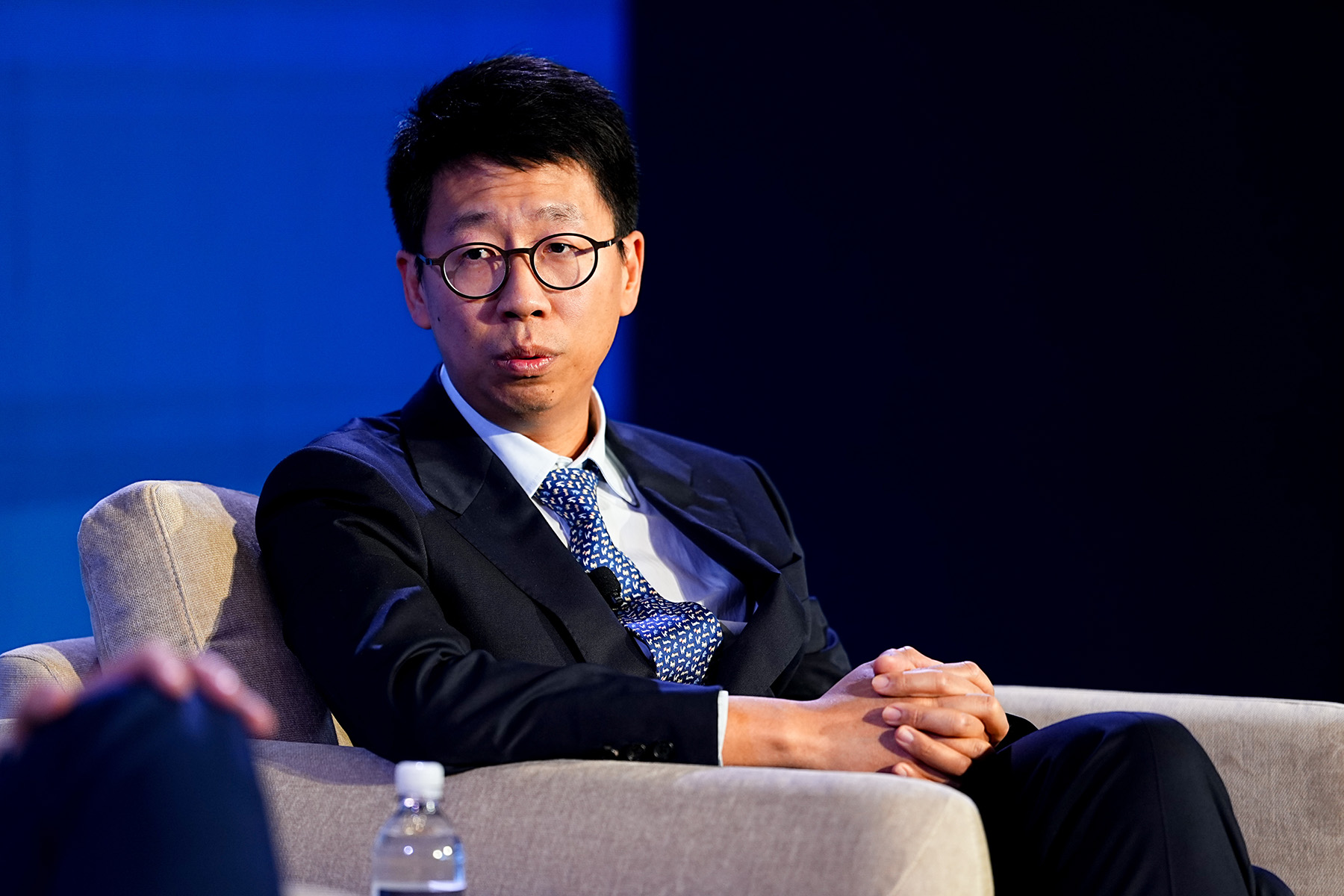
That network includes State Armor Action, a think tank launched in 2024 and funded by an entity associated with Leo, according to public donor filings. State Armor, which is based in Austin, Texas, is led by Michael Lucci. Over the last year, Lucci has urged Texas lawmakers and a House of Representatives committee devoted to China to probe Airwallex in legislative hearings and through publicly released letters. Lucci was previously a senior fellow at the Cicero Institute, a think tank founded by Lonsdale. Lonsdale, Lucci and Leo did not respond to requests for comment.
In addition to Lonsdale, Ramp has other high-profile investors like Founders Fund and Thrive Capital, who’ve excitedly watched the startup’s valuation soar—from $13 billion in March 2025 to $60 billion in fundraising announced this month. Its sharp-elbowed feud with Airwallex presents a real contrast to the public perception Ramp enjoys as a happy-go-lucky disruptor of a staid industry. It has reinforced that image with cutesy marketing stunts, such as its hiring of skateboarder Tony Hawk to ride a Ramp-branded half-pipe outside the New York Stock Exchange. (Glyman would not comment for this story.)

The battle comes at a key moment for Airwallex. Its valuation has risen quickly, too—from $8 billion in December 2025 to $11 billion in June this year—and it has its own collection of prominent investors, like T. Rowe Price and Baillie Gifford, a large European money management firm. To keep growing, the startup has been hoping to seize more business for itself in America, eyeing a potential IPO. In December 2025, it said it would crown another headquarters beyond its existing one in Singapore—on Spear Street in San Francisco’s Financial District.
To mount a defense against the attacks, Airwallex has brought on former U.S. Attorney General Bill Barr as an adviser and lobbyist.
“Global banking and payments companies operate internationally as a matter of course, with teams and operations across multiple markets. That is not in itself a basis for suspicion,” said Barr. He criticized the efforts to spark U.S. government investigations into Airwallex as “deeply inappropriate.…Our national security professionals have serious threats to contend with, and their time and resources should not be diverted by Silicon Valley rivalries.”
A Deal Gone Bad
Partnership discussions between Ramp and Airwallex began around 2023 when Airwallex approached Ramp for help solving a problem.
Ramp’s focus on the U.S. market had left it vulnerable to competitors that have global payments licenses and other capabilities for moving money around the world. Its operation wasn’t as far-reaching, and it hoped a partnership with Airwallex would enable it to add more international customers.
Ramp wanted to structure the deal so it could promise customers that none of their data would be stored in China or handled by Chinese staff. The talks fell apart when Airwallex told Ramp it wasn’t possible for international payments to be handled strictly by its U.S. operations if those customers were in China or Hong Kong—payments sent overseas would have to involve Airwallex’s subsidiaries around the world. (An Airwallex spokesperson said that staff based in China and Hong Kong can’t access U.S. customer data and such an arrangement goes beyond U.S. government requirements.)
No deal was signed, and discussions between Ramp and Airwallex fell away until they resumed in 2025.
As Ramp and Airwallex began talking again, some of Airwallex’s investors grew unhappy about the brewing partnership. They were eager for Airwallex to compete directly with Ramp, wary of how Ramp handled cross-border transactions and aspects of its offshore corporate credit card business, people familiar with the situation said.
After Zhang pulled the plug on the partnership in April 2025, Airwallex launched an expense management and corporate card product the following month that seeks to rival Ramp’s own flagship product in the U.S.
A Ramp spokesperson said that the companies were unable to agree on legal terms. Keith Rabois, a Ramp board director and investor, said he thinks Airwallex withdrew because it feared a Ramp deal would expose Airwallex’s inability to shield data from the Chinese government. “It’s unprecedented for a company to walk away from a negotiation at the last minute based upon a request for data protection assurances without proposing an alternative,” Rabois said.
An Airwallex spokesperson disputed Rabois’ analysis of the events. “We walked away from a commercial relationship with Ramp in 2025 because we knew our competing products would complicate our relationship…during contract discussions, Ramp asked questions about data access and storage. We answered those questions, and Ramp was fully prepared to move forward,” said the spokesperson. “We understand this was not the outcome the Ramp team wanted, but it was the right strategic decision for Airwallex.”
The ‘Oppo Smear’
The first sign of political trouble for Airwallex came in December 2025 when Republican Sen. Tom Cotton, a vocal critic of China, issued a public letter urging then–Attorney General Pam Bondi to investigate whether the Chinese Communist Party could access Airwallex data. According to a person close to the company, Zhang was caught off guard when he learned of Cotton’s efforts shortly after leaving lunch with an investor in London.
Around the same time, Rabois wrote a post on X that criticized Airwallex as “a Chinese backdoor into sensitive American data.” (Rabois’ husband is U.S. Under Secretary of State Jacob Helberg, who previously campaigned to ban TikTok over its Chinese ties.)
Then, a month ago, Rep. John Moolenaar, chair of the House committee on China, sent a letter to Treasury Secretary Scott Bessent urging an investigation into Airwallex and published the letter publicly.
Rabois and Lonsdale, a prominent Republican donor, amplified the letter online through posts on X, while another Ramp adviser and shareholder—Lulu Cheng Meservey, a widely followed public relations operative—alleged in a post on X that Airwallex was “under investigation for enabling ccp access to financial data.” (Meservey declined to elaborate on any knowledge she had of an investigation, saying in an email that she hasn’t “followed Senator Cotton’s concerns closely.”)
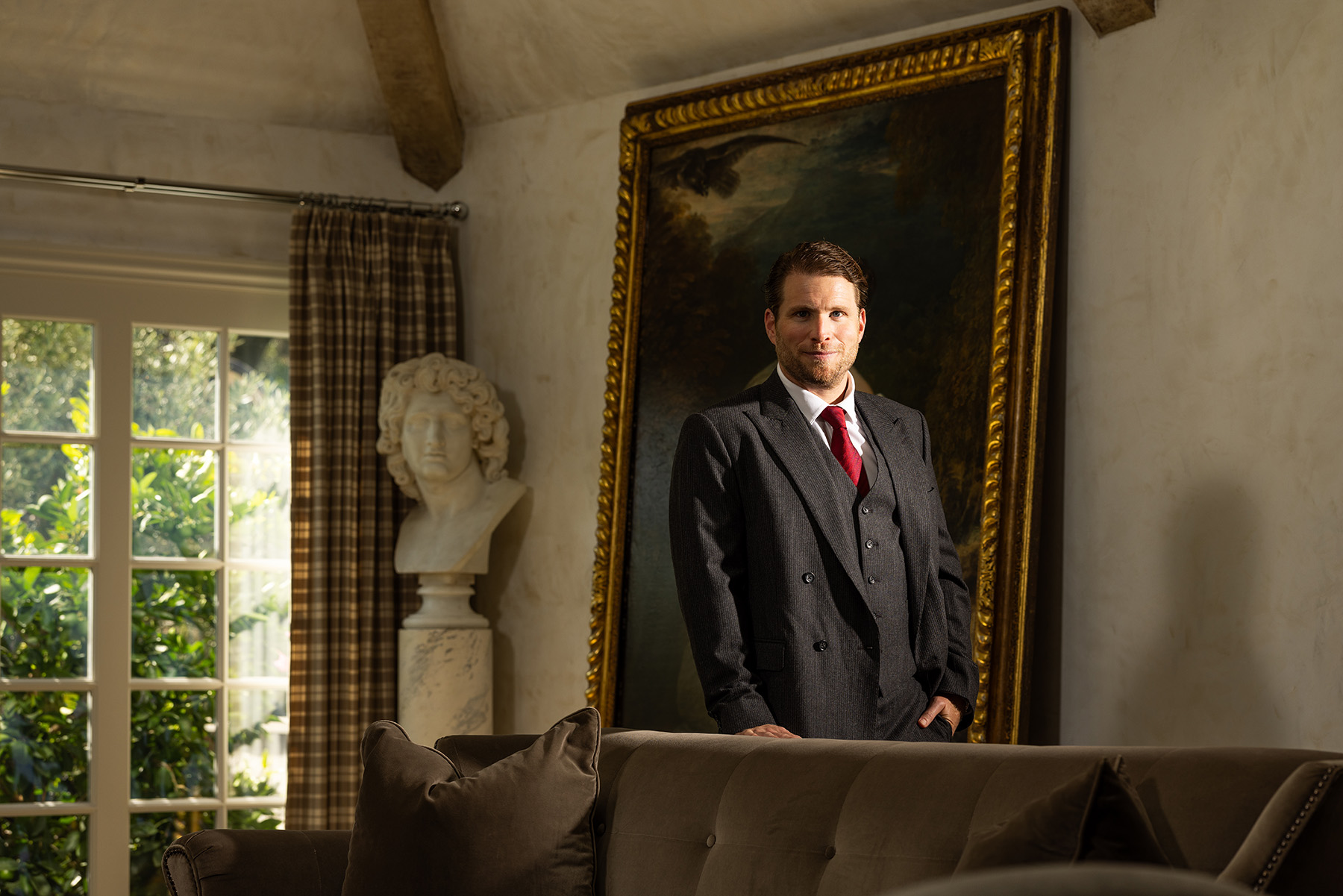
The Treasury Department has not said whether it is investigating Airwallex. According to an Airwallex spokesperson, a recent assessment of its data handling by Coalfire, a Chicago-based cybersecurity firm, concluded that Airwallex has “robust” controls to prevent unauthorized access of customer data by employees or vendors in China and Hong Kong.
One Lonsdale X post also mentioned Rippling, another valuable U.S.-based fintech that competes with Ramp. In the post, Lonsdale insinuated that Rippling might have a partnership with Airwallex—and that Rippling customers should be concerned about the Chinese government getting access to some data.
In a reply to Lonsdale’s post, Rippling CEO and co-founder Parker Conrad said his company doesn’t have a relationship with Airwallex and labeled Lonsdale’s remarks against Airwallex as “an oppo smear by Ramp.” He was referring to opposition research, a tactic used in both politics and the corporate world to dig up information on a company that would present it in a bad light. Often such campaigns are rooted in a few facts and a good amount of media spin.
A Rise in China
Zhang’s investors and supporters see him as a rags-to-riches entrepreneur whose unrelenting work ethic has turned Airwallex into a fast-growing startup with an enviable reach through the global financial system. In the third quarter of this year, Airwallex hit $1.5 billion in annualized revenue by facilitating payments for China-based e-commerce companies and becoming an international payments platform for fast-growing startups such as Brex and Deel.
Along with major U.S. and European investors, Airwallex has attracted some of the largest venture capitalists in Australia, where producing a unicorn startup has been a rarity. Several years ago, Stripe offered $1.2 billion for the company. Zhang turned down the offer.
Zhang moved from Qingdao, China, to Australia in 2000 at age 15 to attend high school, living with a host family. Shortly after, his banker father, who remained in China with the rest of Zhang’s family, lost his job and couldn’t financially support Zhang anymore. When Zhang got to college, he earned money with a series of odd jobs—washing dishes, bartending and clerking at a gas station.
After graduating, Zhang developed trading systems for National Australia Bank, a major financial institution in the country. He kept up side hustles exporting olive oil and wine and developing real estate that delivered him a nest egg worth about $10 million, he said in a 2025 podcast interview.
In 2015, he decided to launch Airwallex while running a coffee shop in Melbourne: He’d gotten the idea for a startup that could simplify sending money across borders after he ran into difficulties buying cups and coffee beans overseas using traditional banks and payment methods.
Zhang assembled a plan for Airwallex with the help of three friends he’d met at the University of Melbourne: Max Li, Ki-lok Wong and Jacob Dai, all of whom became co-founders. Li discussed the concept for Airwallex with Lucy Yueting Liu, a young former investment consultant for China International Capital Corp., a large Chinese investment bank, who invested $1 million. She became a co-founder as well and served as the company’s first chief operating officer. (Airwallex’s founders hold Australian citizenship, and Liu holds a New Zealand passport).
Airwallex early backers included Chinese groups such as Hong Kong–based Gobi Zhiying and Tencent. (In 2025, the U.S. government designated Tencent a Chinese military company.) Sequoia’s former Chinese venture arm also invested.
In 2018, Shanghai-based Huashan Capital sued Airwallex, alleging that Zhang had failed to pay for shares he had bought back from the investor. The case was settled, and Huashan is no longer an investor.
That same year, Airwallex, which Zhang incorporated in the Cayman Islands, moved its headquarters from Melbourne to Hong Kong, in part to apply for a banking license. Its main customers at the time were in China and Southeast Asia, and they included JD.com, the Chinese e-commerce giant. Often Airwallex would fly new employees hired in the U.S. to its offices in China to meet senior executives.
As the company grew, workers based in China sometimes clashed with the Western employees, who had a more laid-back approach, said several former employees. Staff dedicated to financial crimes compliance who were based outside China sometimes argued with Airwallex’s China-based sales employees about how to handle financial and legal risks, those former employees said.
Soon, Airwallex focused on expanding outside of China. In 2023, the company moved its headquarters to Singapore. Its series of recent fundraisings has shifted the makeup of its cap table and diminished the prominence of its early Chinese investors. Tencent now holds less than 10% of the company and has no access to information beyond those of any other minority shareholder, according to Airwallex. About a quarter of the company’s staff is now based in China, and a third of the company’s revenue now comes from Europe and the U.S.
Last January, the company faced a round of negative press in Australia after the country’s anti–money-laundering regulator ordered an audit of Airwallex’s financial crime controls. That bad press came just after Airwallex had sent legal letters to several Australia publications, hoping to get those outlets to remove stories they had published about its workplace and its handling of financial crime controls, including some stories from years earlier, according to people familiar with the matter.
Allies in America
To respond to the assault in the U.S. by Ramp’s investors, Airwallex has called in the cavalry. Barr, the former U.S. attorney general for Presidents George H.W. Bush and Donald Trump, recently lobbied the Department of Justice on behalf of Airwallex, according to lobbying disclosures. The company’s representatives met with Senator Cotton’s staff in July to assuage his concerns and met with other members of the executive branch and in Congress, according to people briefed on the meetings.
And to combat what it sees as unfair media coverage, the company has enlisted law firm Clare Locke, now known for handling legal matters for prominent people and companies in the Trump orbit, according to people familiar with the matter.
To further build a presence in America, Airwallex is now an advertising sponsor of “All-In,” the podcast hosted by venture capitalists Chamath Palihapitiya, David Sacks, David Friedberg and Jason Calacanis. And during the latest season of Major League Baseball, Airwallex became the official jersey patch sponsor for the San Francisco Giants baseball team, replacing the logo of a venerable American icon: Chevrolet.