
India Pre-IPO Bets Sour as Companies Cut Valuations, Delay Offerings



Welcome to India Edition, Bloomberg’s daily dive into what’s moving the worlds of business, markets and politics in this dynamic, fast-paced economy. I’m Advait Palepu, Bloomberg’s Asia Wealth Reporter in Mumbai, filling in for Menaka. If you didn’t receive this directly in your inbox, you can subscribe here, and share feedback with us here.
Today, I look at contradictory signals in the economy and why some wealthy individuals and family offices have been left disappointed by their pre-IPO bets.
India’s economy is sending some mixed signals as the festive season gets underway. Business activity picked up modestly in October, according to the flash PMI data, though growth remained below the pace seen earlier in the year. Robust GST collections, strong bank credit and solid factory output suggest the economy is still holding up well. That said, other indicators are less convincing, with auto sales uneven and fuel demand softer, my colleague, Bloomberg’s South Asia Economy Editor Ruchi Bhatia tells me.
Consumers, too, seem a little more cautious. A LocalCircles survey suggests urban households plan to spend about 20,000 rupees on average this festive season, 6% less than last year.
And there are bigger clouds gathering. Oil above $100 a barrel and a weaker rupee are pushing up costs just as the Reserve Bank of India has started raising interest rates. With more hikes expected, pricier loans could squeeze household budgets further, Bhatia says. India’s economy is still growing strongly, but the next few months will show how well that holds up.
Before we dive into the next topic, here are the stories from us worth reading, watching or listening to today.
Best of Bloomberg
Concerns about AI technology have pushed the gap between corporate and government borrowing costs to its widest in 17 months.
The parent of travel platform OYO, is facing investor pushback over the valuation for its planned initial public offering.
Big Take: India is building wider freeways to move trucks at faster speeds, but many drivers prefer slower, busier roads.
India’s retail investors and high-frequency traders are turning to commodity derivatives, lured by lower costs and minimal regulatory intervention.
Swiggy shares fell to a record low after intense competition led to wider-than-expected loss, raising questions about its long-term earnings potential.
Don’t Miss
AI Data Center Anger Threatens Australia’s $70 Billion DreamHedge Funds Log Widest Daily Drawdown Since Covid in Stock RoutHow a Cold War Architect Broke Through the Iron CurtainMigrants Die Crossing Borders. Their Families Are Left Searching

Jumping the IPO Queue
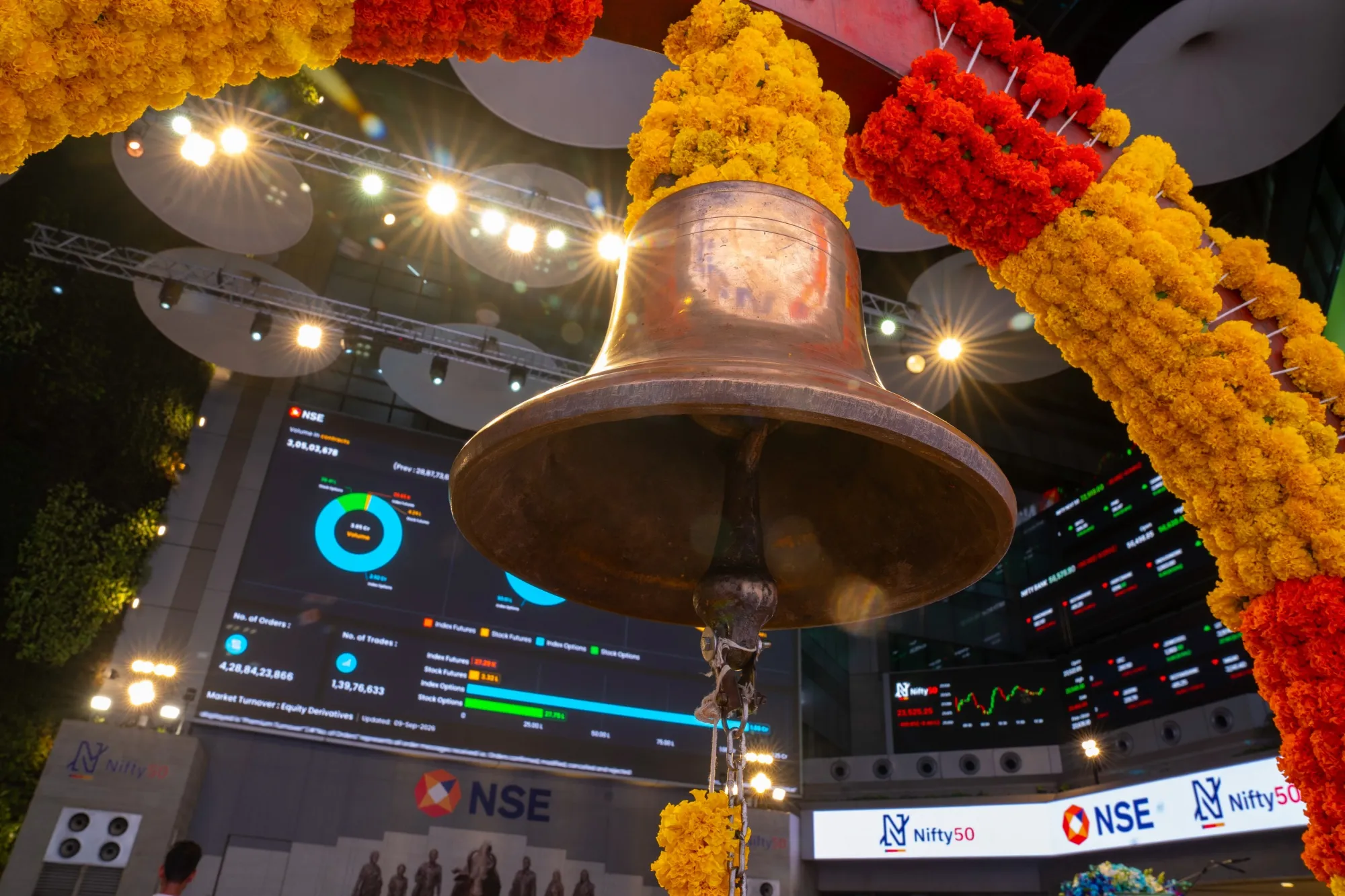
India’s IPO market is now one of the world’s biggest. More than 1,500 companies have listed since 2021, raising about $94 billion. After a slow start this year, activity has picked up sharply, led by the $2.4 billion NSE listing and Jio Platforms’ ongoing $3.2 billion offering.
The investor base has also swelled, with around 100 million new retail investors and ownership through equities and mutual funds at a record high. That has only made the scramble for popular IPOs tougher, with many issues drawing bids for several times the number of shares on offer.
To sidestep the rush for hot IPO stocks, several smaller family offices and retail investors turned to the unlisted market, buying shares through stockbrokers, wealth managers and unregulated online platforms. Some were putting anywhere from 1 million rupees ($10,533) to 100 million rupees into a single trade.
These investors neither took a long-term view of a company nor spent much time on financial or market analysis, said a senior private banker who asked not to be named.
Instead, they went with the crowd, chased names they knew, took concentrated positions and believed they could make a killing by buying shares weeks or months before a stock debuted.
But things haven’t quite gone to plan. Weakness in the secondary market and the growing bargaining power of cash-rich domestic fund managers have forced several companies to scale back their IPO sizes and valuation expectations. Even marquee names such as Jio and NSE had to temper their ambitions, while others, including Zepto and Sify Infinit, postponed their listing plans.
NSE is a . It listed at 1,785 rupees a share last month, but in the year before its debut, shares were changing hands in the unlisted market for anywhere between 2,100 and 2,300 rupees. Many of the buyers were family offices and retail investors who had paid up in the hope of a much stronger listing.
I analyzed 20 of the largest IPOs since 2021 whose shares traded in the unlisted market before listing. Some of the hottest pre-IPO trades included food-delivery app Swiggy, lenders HDB Financial Services and Tata Capital, electric-mobility company Ola Electric, fintech firm One 97 Communications, or Paytm, and children’s and maternity retailer Brainbees Solutions, or FirstCry. All are now trading below their listing prices.
Serious investors and family offices typically invest in a startup or company early or at the growth stage and take a long-term view. They don’t usually punt on shares just weeks before a listing. Much of the euphoria in the unlisted market, the banker said, was instead driven by novice investors and smaller, relatively inexperienced family offices.
Wealth advisers say the conventional wisdom is to avoid pre-IPO trades because investors can end up paying well above the eventual IPO price, while the opaque and illiquid unlisted market often gives sellers the upper hand.
That doesn’t mean every pre-IPO bet ends badly. NSE itself shows how patience can pay off. Some of India’s best-known family offices, including Premji Invest and Catamaran Ventures, as well as billionaire business owners such as Radhakishan Damani and Sunil Kant Munjal, are sitting on multimillion-dollar gains.
One family office I spoke to said it bought NSE shares for around 200 to 300 rupees apiece before 2010 and is still holding them, betting there are more gains to come.
With NSE finally listed last month, trading in the unlisted market has dropped sharply and some of the earlier euphoria has faded. But wealth managers expect demand to pick up again if India’s equity markets regain momentum.
Chai Time: Tablet War

The Alexa Tablet 12 Pro is Amazon’s most capable tablet yet, with an anti-glare display, a more refined design and an improved operating system, while costing less than many premium tablets priced above $1,000, my colleague Chris Welch writes.
Thanks for reading India Edition.
AlphadotsThe word puzzle with a plot twistToday's clue is: Something to keep tabs on?Play Alphadots
Enjoying India Edition? You might also like:
AI Today for a chronicle of the disruptions and threats of AI on businesses, workers, governments and economies with analysis from Bloomberg’s global newsroom Markets Daily India for key news and movers before the trading day startsHong Kong Edition for what you need to know from the Asian finance hubSingapore Edition for insights into one of Asia’s most dynamic economiesNext China for dispatches from within the world’s second-largest economy on where China stands now — and where it’s going nextNext Japan for an inside view of the forces reshaping Japan, and what’s next for its businesses, markets and consumersGet weekly updates on these industries with our new Retail Monitor, Auto Monitor, Defense Monitor, Real Estate Monitor, and Banking Monitor Explore all newsletters at Bloomberg.com