SAP Cloud Growth Beats Forecast in Sign of Software’s Resilience

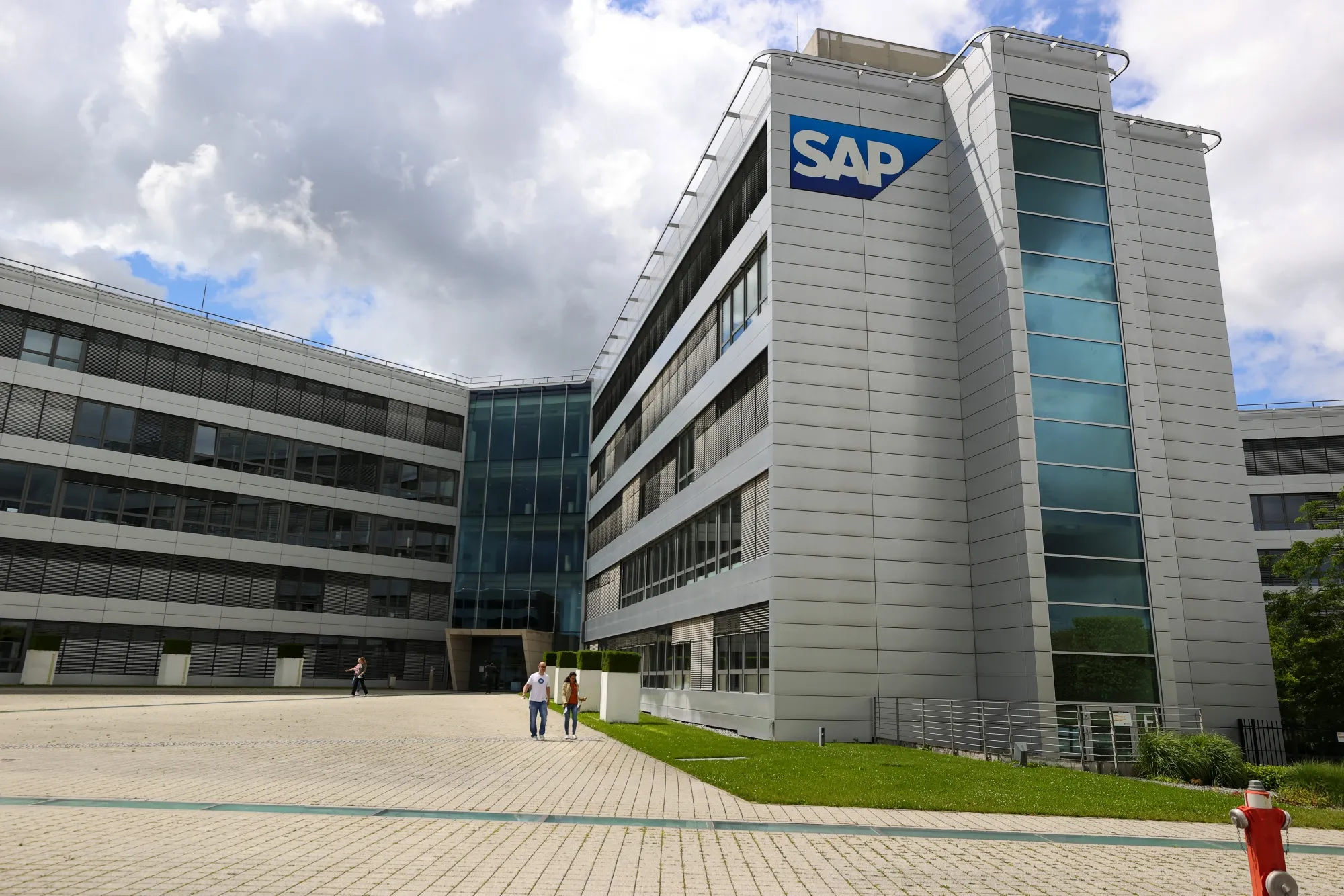
SAP SE reported higher growth for its cloud products than anticipated in a sign that the boom in artificial intelligence hasn’t undermined demand for the German software maker’s offerings.
Cloud revenue grew 25% in constant currencies to €6.67 billion ($7.49 billion) in the third quarter, Europe’s biggest software company said in a statement Wednesday. That compares with the average analyst forecast of €6.57 billion, according to data compiled by Bloomberg.
SAP shares have bounced back after the so-called SaaSpocalypse, a major software stock selloff earlier this year driven by fears that powerful new AI tools would supersede traditional applications. Chief Executive Officer Christian Klein has pushed the Walldorf, Germany-based company to reorganize around AI, directly overseeing the development of the new technology after customers were slow to adopt SAP’s AI tools and criticized their value-for-money.
Read More: Europe’s Software Giant Fights to Keep Up in the AI Era
SAP shares closed at €208.65 on Wednesday in Frankfurt. The stock has gained more than 60% from its July 23 low.
The current cloud backlog, a measure of sales growth coming in the next 12 months, came in at €24.1 billion, up 26% in constant currencies. SAP has previously said the number will come in lower as customers complete the transition. Klein has said AI will be critical for future growth.
Adoption of SAP’s AI tools is “progressing better than many other enterprise AI products, though still not a primary driver of bookings,” TD Cowen analysts including Derrick Wood said in a note before the results.
SAP develops enterprise software to run financials, human resources and other core business functions. In recent years, it has encouraged clients to switch from old software systems installed on local servers to the cloud. Most of SAP’s revenue now comes from remote access and it plans to end regular support for older products next year, after which maintaining legacy services will cost more.

 点赞
 收藏
 点踩
 分享