Oracle Data Center Fight Hands Activists Path to US-Wide Blitz

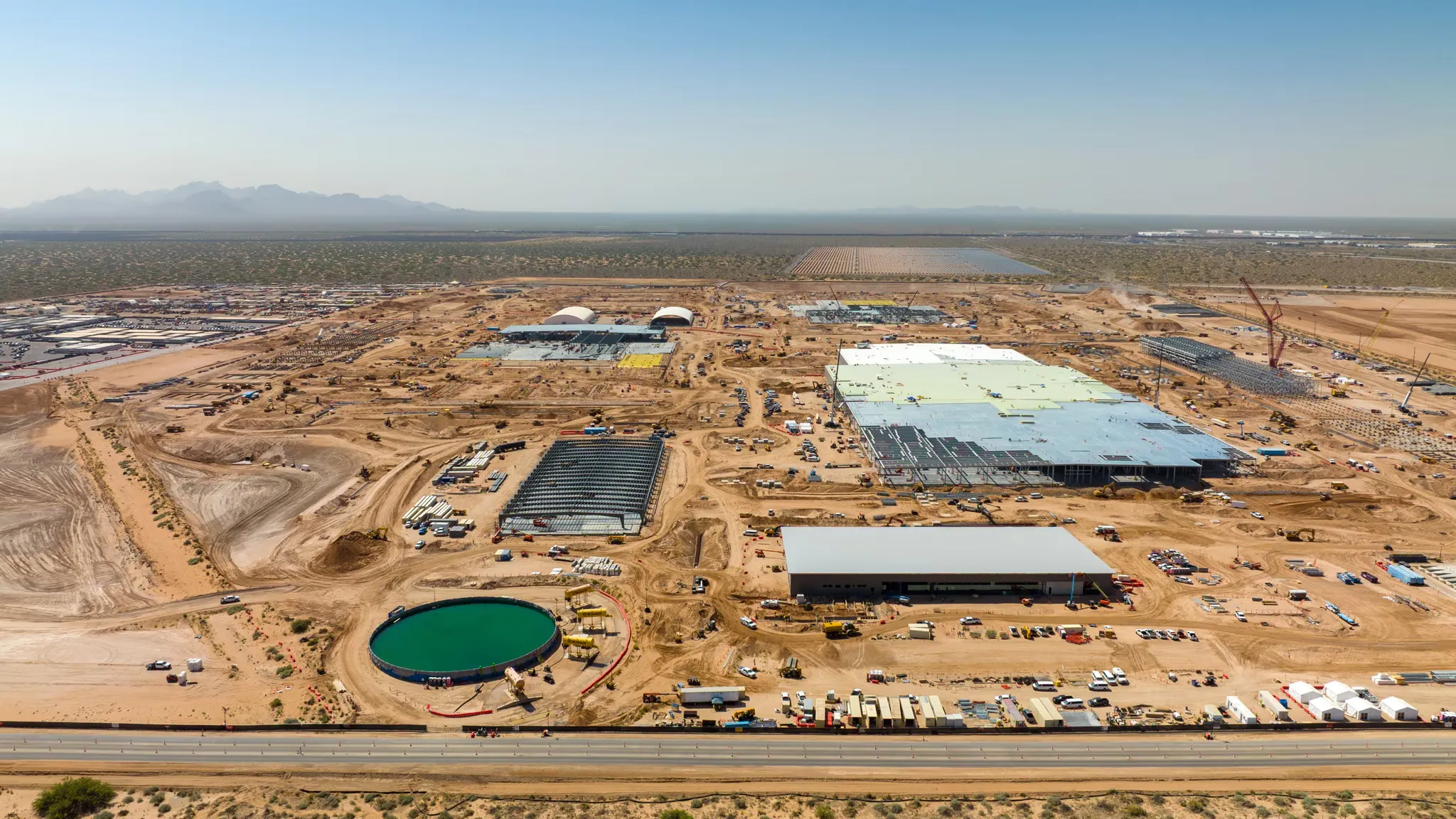
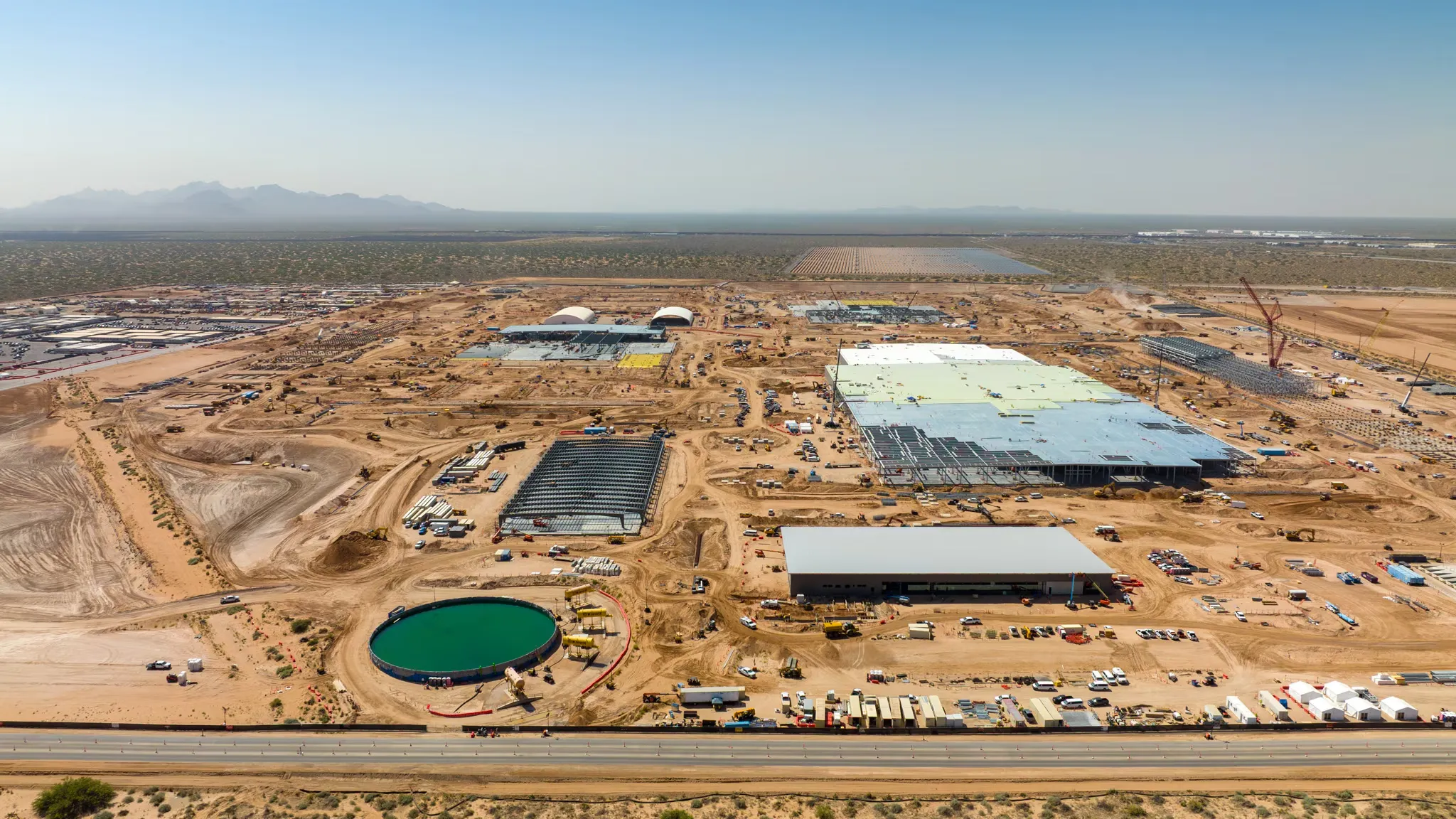
After successfully disrupting Oracle Corp.’s data center plans in New Mexico, environmental activists say they’ve now got a blueprint for waging similar campaigns against hyperscalers across the US.
Mariel Nanasi, executive director of New Energy Economy (NEE), says Oracle’s handling of water and air permits opened the door for environmental nonprofits to challenge the company’s plans in court, and created a template for other activists to replicate.
The battle is far from over. On Oct. 15, 12 Republican state attorneys general asked federal regulators to allow construction of a gas pipeline that Oracle needs to power its data centers. And Oracle has sought to adjust its approach to address environmental concerns. But Nanasi says the activists she represents will keep fighting until Oracle is forced “to walk.”
The company’s setbacks have reverberated through markets. Last month it emerged that Oracle had cited force majeure as it sought to deal with the fallout of permitting hurdles. News that it was trying to shield itself from soaring expenses tied to potential delays then triggered a broad-based slump in the shares of hyperscalers including Oracle, as well as their vendors.
“My husband said to a friend the other day, while pointing to me, ‘This is the force majeure,’” Nanasi says.
A spokesperson for Oracle said the company remains “committed to developing Project Jupiter responsibly and protecting New Mexico’s air and water.” The company respects the public’s “right to raise concerns and we have responded with meaningful improvements to the project’s design.”
Ben Green, assistant professor of Information and Public Policy at the University of Michigan, says the activists fighting data centers “have achieved far more than I ever expected them to.” As a result, it’s now getting “harder and harder for local officials and politicians to just ignore the voices of dissenters.”
Oracle’s force-majeure moment in New Mexico comes after Blackstone Inc. recently abandoned a data center campus in Virginia amid fierce local backlash. Across the US, at least 106 server-farm projects — representing about $198 billion in investments — were blocked or delayed amid local opposition during the first half of this year, according to Data Center Watch, a monitor run by AI intelligence firm 10a Labs.
A September poll by University of Massachusetts Amherst puts US voter opposition to local AI data centers at 65%, compared with just 11% in favor.
Investors say the market implications are now too big to disregard.
It’s “becoming a bigger factor,” says Alex Darden, head of infrastructure for the Americas at private equity firm EQT AB. He says that before EQT makes an investment, it has to look at “how the community views that development.”
Environmental campaigns are adding to the general sense of unease that increasingly hangs over the AI industry. Aside from fears that the nascent technology may kill jobs and disrupt societies, there are regular bouts of market panic over AI’s debt-fueled growth assumptions.

Earlier this month, billionaire Ray Dalio fanned such concerns when he described AI as a “classic bubble” that’s nearing a bursting point.
A Unifying Cause
Gail Evans, a constitutional rights attorney with the Center for Biological Diversity (CBD) — another nonprofit fighting Oracle’s data center plans in New Mexico — says she’s been struck by the amount of support from “people on both sides of the aisle.” She says the nonprofits add legal knowhow to what’s already a powerful grassroots political movement.
Both NEE and CBD, which get their financial backing from charitable organizations and individual donors, have had success in the courts after catching shortcuts they say Oracle took in its approach to environmental permitting.
“We are not going to run out of money to fight Project Jupiter,” says Nanasi. “We intend to see this through.”
Still, taking on deep-pocketed hyperscalers takes some gumption, with Evans describing it as “a David-versus-Goliath kind of battle.”
Megan Mullin, a political scientist at the University of California, Los Angeles, says using the playbook created by NEE and CBD “is costly.”
“It takes a lot of information. It takes a lot of legal expertise. And it takes high capacity for the groups that are opposing the project to see and access all the different decision points,” she says.
The details:In August, the New Mexico Supreme Court put on hold a permit for the gas-powered electricity needed for Oracle’s planned Jupiter data base campus. It also blocked — albeit temporarily — the use of a freshwater well after activists raised concerns about inadequate public scrutiny. Separately, the state’s land office denied access to public lands for a planned gas pipeline.Project Jupiter then won a court ruling allowing the permitting process to resume. And on Oct. 15, a coalition of 12 AGs from 12 Republican states led by West Virginia asked the Federal Energy Regulation Commission to authorize construction of the pipeline, arguing that a broader environmental review would complicate similar projects across the country.On Oct. 16, Oracle put forward an alteration to its proposal for a fuel cell microgrid it says will cut emissions. The move was in response to a request from the New Mexico Environment Department’s Air Quality Bureau.For now, Oracle still doesn’t have an air-quality permit for its plan to use gas-powered electricity. And the gas pipeline is awaiting a decision by FERC, which is expected by early December.
Colin Cox, a senior attorney at CBD, says Oracle’s focus on so-called speed to power — or how quickly a data center developer can secure enough electricity to get a facility up and running — has led it to rush some procedural steps in a way that’s opened it up to legal challenges.
“It’s not that our goal was to slow this down necessarily; our goal is to protect the environment,” Cox said. “But they’ve done such a bad job complying with our environmental laws, whether that’s intentional or not.”
He says Oracle has tended to start construction on parts of the campus without all the necessary permits. “One of the defining features of the Project Jupiter has been the speed with which they’re trying to ram this through,” he says. “It’s sloppy.”
As part of a detailed list of responses to questions that included references to previously announced measures, Oracle said by email that it “will continue listening, sharing information and working with the community to deliver a responsible project for southern New Mexico.”
The environmental campaigns rely heavily on state laws. At the federal level, meanwhile, President Donald Trump has described data centers as a source of jobs, investment, economic growth and tax revenue. He also says the US needs to win the AI race against China.
And according to Trump, the companies behind AI data centers have committed to covering the costs of electricity and related infrastructure needed to power their facilities, to protect consumers from rising utility bills. Critics have pointed out that the commitment touted by Trump is non-binding.

For environmental activists, the list of planned AI data center campuses being targeted is long and growing.
In Pennsylvania, Amazon.com Inc.’s AWS faces pushback from environmental groups including Sierra Club and Clean Air Council as the company expands its data center footprint there.
In Mississippi, the Colossus 2 site planned by Elon Musk’s xAI faces opposition from Earthjustice, Southern Environmental Law Center and the National Association for the Advancement of Colored People. Efforts by Alphabet Inc.’s Google to build data centers in Minnesota are in the crosshairs of local environmental activists.
A spokesperson for Google declined to comment. Spokespeople at Amazon and xAI didn’t respond to requests for comment.
Natural Gas
Most US data centers in the development pipeline rely on natural gas for power, with BloombergNEF warning that the sector has the potential “to derail climate progress in the US.” A June analysis by BNEF showed that US data center developers had already announced as much as 124 gigawatts of on-site gas capacity.
Read More: Data Center Gas Plants to Boost US Power Emissions by 20%
Evans from CBD says much of the early enthusiasm associated with AI has been tied to an assumption that it would help drive demand for renewables. But “when you look at the type of development that’s happening in this country, and right now, it’s data centers and it’s fossil-fuel-powered data centers,” she says.
Green at the University of Michigan says those concerns are now morphing into a nationwide headache for hyperscalers.
It’s become a “larger political movement.”

 点赞
 收藏
 点踩
 分享