DHS Claimed It Searched GrapheneOS Phone Wiper for Child Abuse Material. It Lied

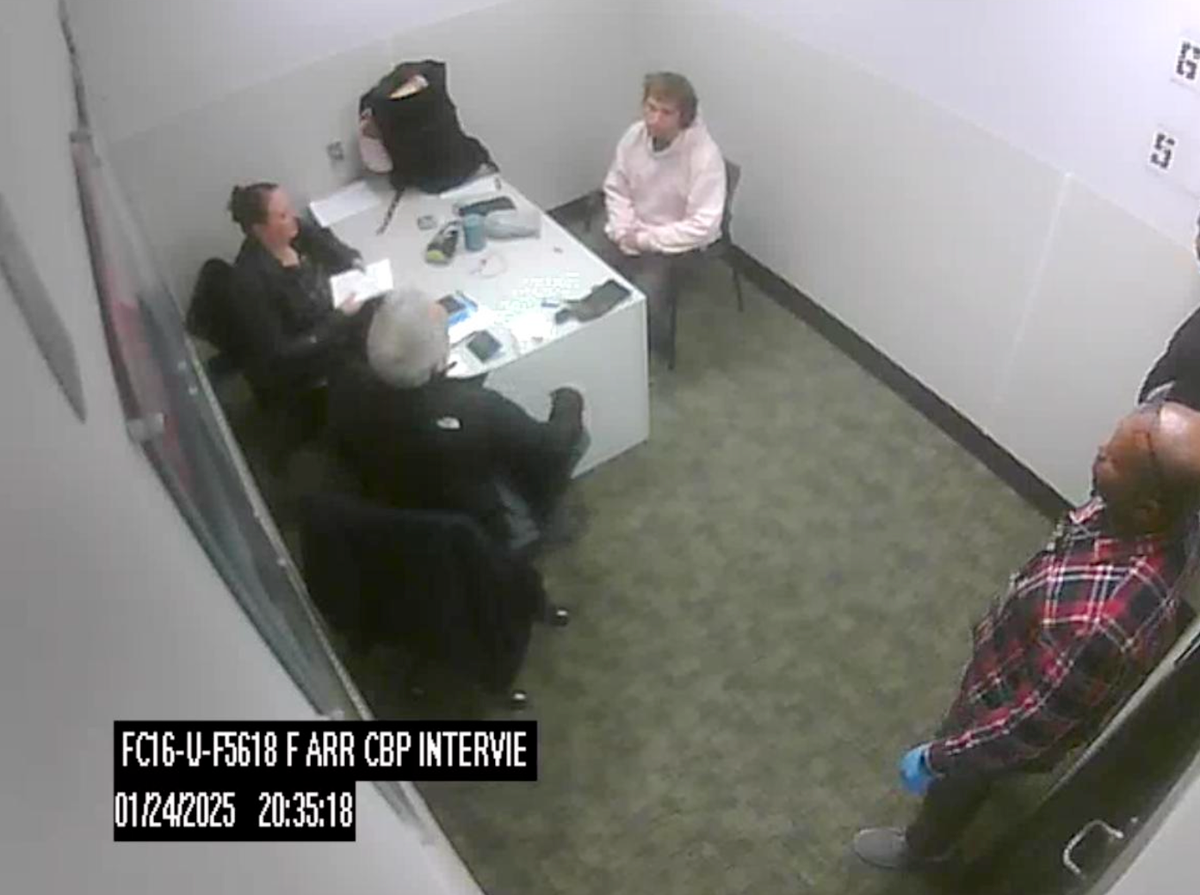
When a Department of Homeland Security official sent out an alert to stop Samuel Tunick, a Stop Cop City activist, at an airport in January 2025, they said the reason was because he was suspected of “terrorist activities,” according to new filed court records which include a screenshot of the alert and photos of Tunick’s interrogation.
Tunick ultimately provided Customs and Border Protection (CBP) officials with a code that, when entered, wiped his security- and privacy-focused GrapheneOS phone. Tunick is now being criminally charged for that alleged act, in one of the most high profile technology civil rights cases in recent memory.
The court records also showed that CBP officials lied to Tunick during his interrogation. Instead of saying he was being targeted for suspected terrorism — although this search happened just at the start of the second Trump administration, it has dramatically broadened what organizations or people may be considered such — they said they needed his phone to look for “kiddie porn.”
“Good afternoon,” an email sent from a Homeland Security Investigations (HSI) official, part of Immigration and Customs Enforcement (ICE), to CBP and other officials reads. “The following subject is scheduled to arrive in ATL [Hartsfield-Jackson Atlanta International Airport] today via DL 1778 @ 1930 Hours. TUNICK is under investigation by HSI/JTTF for suspected terrorist activities.” The email includes a photo of Tunick, and asks the officials to direct him to secondary inspection, retain all of his electronics, and collect their passcodes.
As 404 Media first revealed in December, Tunick was charged because he allegedly “did knowingly destroy, damage, waste, dispose of, and otherwise take any action to delete the digital contents of a Google Pixel cellular phone, for the purpose of preventing and impairing the Government’s lawful authority to take said property into its custody and control.” Matthew Dodge, one of Tunick’s lawyers, previously told 404 Media he only found one other case using the same obscure law, a drug trafficking case. “This is extraordinarily rare,” Dodge said.
Tunick was part of the Stop Cop City movement in Atlanta, which broadly protested the building of a large police training center, and which authorities investigated for arson, vandalism, and doxing. Tunick is not suspected of any crime beyond the alleged wiping of the phone, and has previously put his current prosecution in the context of the wide spanning cases against other Stop Cop City protesters.
The newly filed court record, in which Tunick’s lawyers argue that evidence should be thrown out, include new photos and descriptions of the airport encounter. The CBP officials asked Tunick if they were going to find “kiddie porn” on his phone, which Tunick immediately denied. “As the evidentiary hearing made clear, these unfounded accusations were nothing more than pretext for a fishing expedition into the depths of Mr. Tunick’s devices,” the lawyers wrote. They added, “Officer Findley acknowledged that officers had no reason whatsoever to believe Mr. Tunick possessed child pornography,” referring to one of the officials.
Tunick faces a maximum of five years in federal prison for allegedly wiping the phone.
“I hope people understand that the charges against me are meant to intimidate people against protecting their data and their privacy, and the government hopes to set a precedent that no one has the right to privacy,” Tunick previously told 404 Media.

 点赞
 收藏
 点踩
 分享