Europe Fiscal Challenges Laid Bare as Protests Turn Violent

Welcome to the Brussels Edition. I’m Suzanne Lynch, Bloomberg’s Brussels bureau chief, bringing you the latest from the EU each weekday. Make sure you’re signed up.
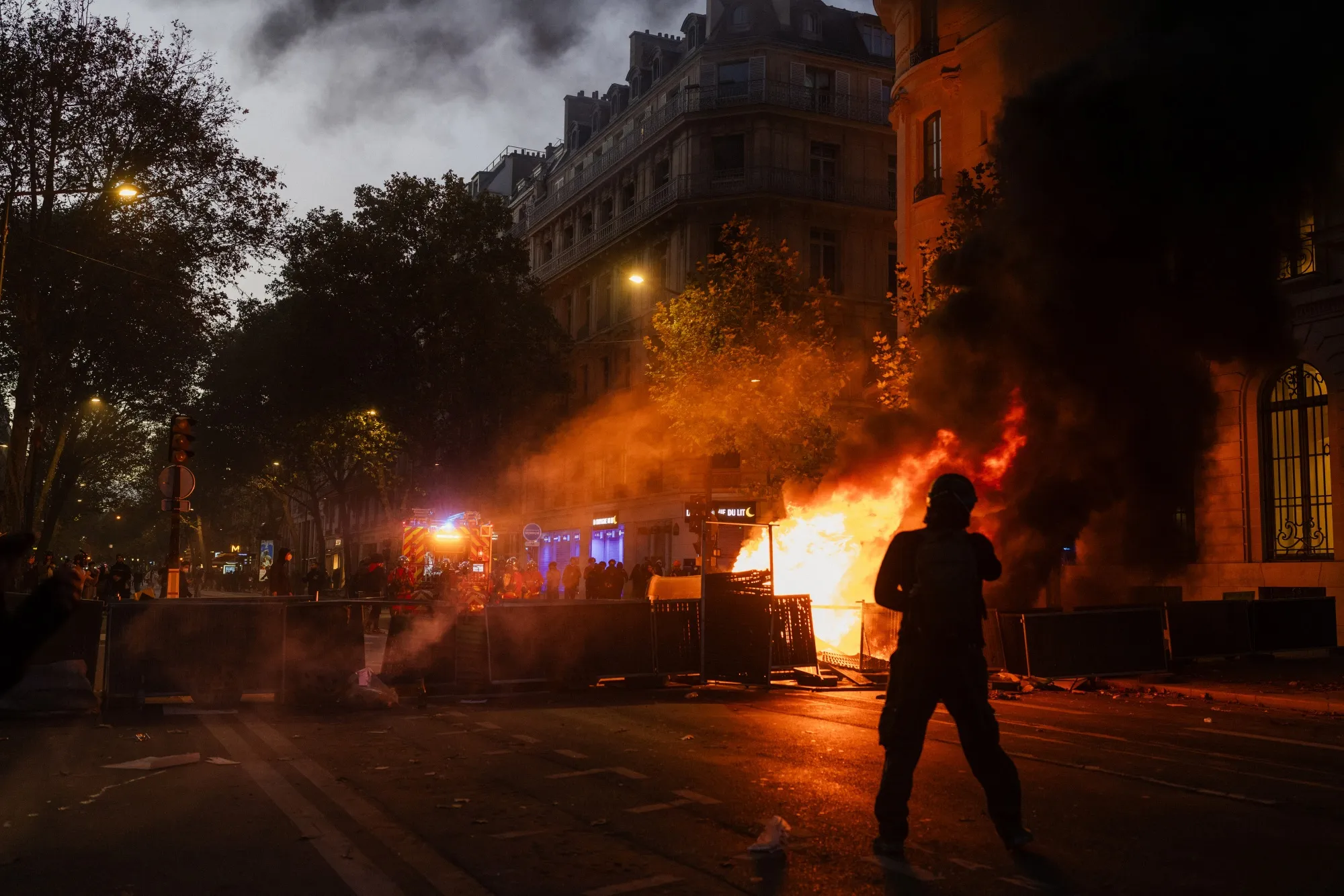
The weekend’s violent scenes in France and wider protests across Europe have unsettled markets and the political environment ahead of key elections next year. The unrest is not limited to France.
Thousands took to the streets in Milan, Turin and Bologna on Saturday, hundreds flocked to tent encampments in Portugal while arrests were made in Belgium following weeks of strikes and sporadic flare-ups. In Ireland, one of the few European countries with a healthy budget surplus, public sector workers held the biggest strike in almost 20 years last week, to call for pay rises, following rallies around fuel costs earlier in the year.Though the dynamics driving the demonstrations are not uniform – those protests in Portugal focused on housing, while concerns over France’s schools prompted the French action – the common theme is growing public anger about the cost of living.
Fiscal challenges like higher defense spending and energy prices, compounded by rising interest rates, are putting pressure on governments across Europe as they finalize their budgets for next year.
That’s a problem for markets. French bond yields climbed again this morning, while the euro has hit the lowest level against the pound since May 2025.
Deepening concern over public finances has sent France’s borrowing costs soaring. One of the challenges for France is that there’s no sign of a resolution to the troubles that are unnerving investors so much. With presidential polls six months away there is little incentive for any of the parties to commit to the tough decisions that many believe are needed.
The political ramifications of the violence that erupted over the weekend are yet to play out, but could benefit far-right leader Marine Le Pen who has long campaigned on a law-and-order platform. Before President Emmanuel Macron addressed the nation from the Elysee Palace last night, Le Pen spoke to citizens through a YouTube address from her office against the background of a tricolor. Today, Macron is out of the country, visiting the United Arab Emirates.
Meanwhile in Italy, Giorgia Meloni is convening an emergency meeting with security officials today, following the violent scenes in Milan. With much of Europe gearing up for elections, how leaders handle the escalating protests could have a profound impact on electoral outcomes in the coming months.
The Latest
The EU will launch an Arctic surveillance program in 2027, part of a broader push to improve regional ties and counter growing US and Russian ambitions, according to a draft strategy to be unveiled tomorrow.Some of Europe’s biggest mobile operators agreed to create a consortium that will bid on satellite spectrum and offer direct-to-mobile service as they try to stave off competition from Elon Musk’s Starlink. Ukrainian President Volodymyr Zelenskyy accused Donald Trump of trying to pressure Kyiv into surrendering to Russia, escalating a week-long row with the US president, in an interview with Bloomberg. German inflation probably won’t be as bad as after the pandemic, but a long list of threats could push prices up more than currently expected, the Bundesbank said.The European Union is considering strengthening the rules around a riskier form of insurance provided to the banking sector, as part of an upcoming package to broadly ease access to securitized finance.
Market SnapshotDHL AG€57.14-2.3%Market data as of 08:53 AM ET. Data is subject to provider delays.
DHL posted better-than-expected third-quarter results on Friday, with full-year EBIT guidance raised to more than €7 billion. Morgan Stanley warned that the results may pave the way for more muted growth in the future.
Chart of the Day
Much of the world is struggling with a boom in plastic waste and Turkey receives more of the UK and EU’s scrap than anywhere else. The country, which hosts the COP31 climate summit next month, imports hundreds of thousands of tons a year, which can poison marine life, contaminate farmland and enter the human food chain. Turkey’s waste imports surged after 2018, when China shut its doors to foreign plastic scrap. The issue threatens to overshadow this year’s UN climate negotiations.
Coming up
French President Emmanuel Macron arrives in the United Arab Emirates this eveningEU College of Commissioners meets tomorrow in StrasbourgInvest in Germany summit in Berlin tomorrow
Final Thought

As wealthy customers cut back on spending, some parts of the luxury market are facing challenges. High-end fashion and leather goods makers often try to avoid slashing prices or selling off excess stock to preserve an air of exclusivity. At times, they’ve preferred to burn or shred their unsold goods: a controversial policy that is now banned in the European Union. From next March, the bloc will require them to report how many unsold products they’ve destroyed, and why, as part of the EU’s drive for greater sustainability.

 点赞
 收藏
 点踩
 分享