Short of Time and Influence, Macron Fights to Remain Relevant

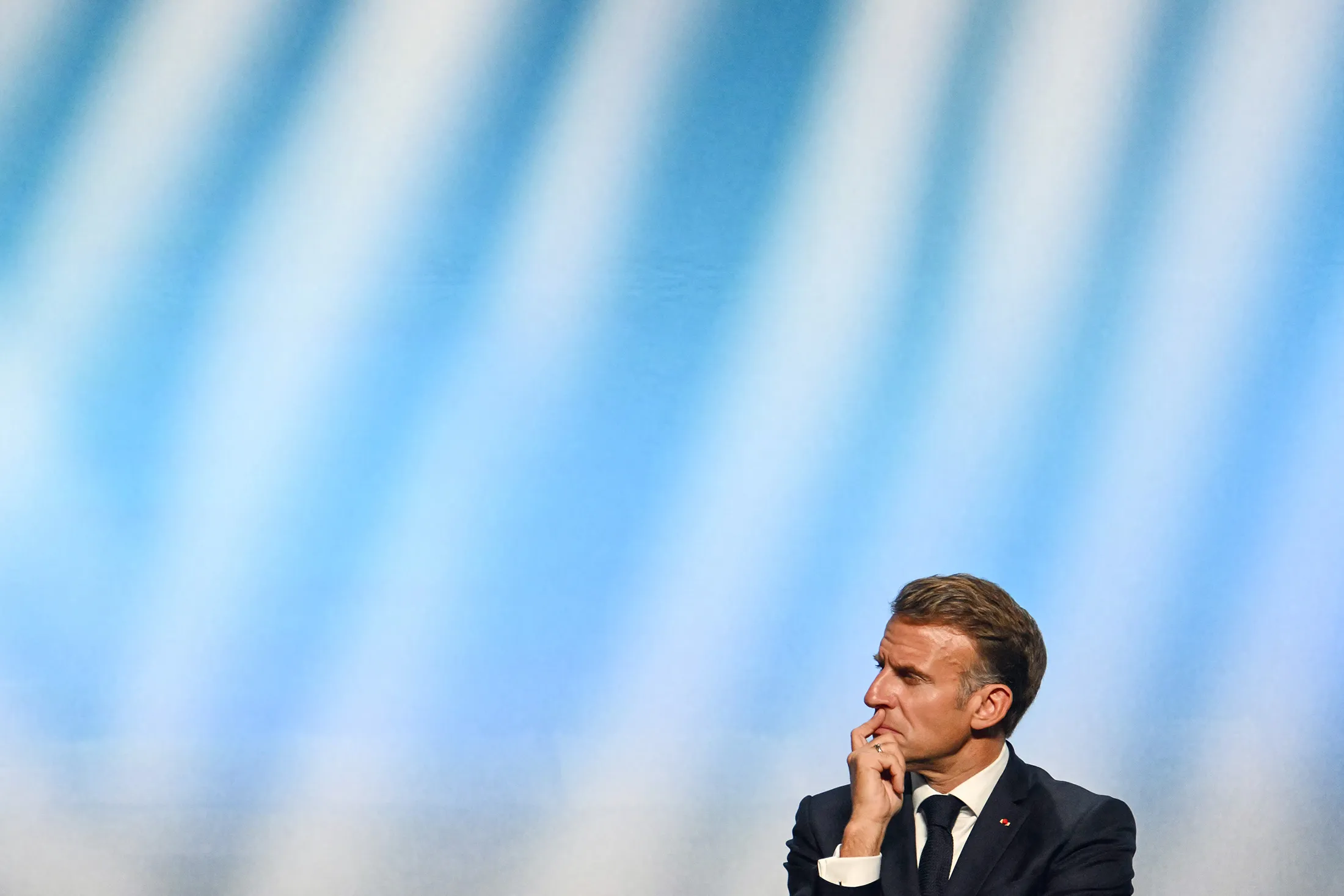
Emmanuel Macron still has plenty of ideas, but in the home stretch of his presidency he’s lost much of the power to turn them into reality.
As the French president returned from one of his last European Union summits to a nation racked by unrest, his proclamations on issues such as artificial-intelligence guardrails, climate change and the faltering international order are influencing few these days, people from his party say.
The gap between his ambitions and results was on full display in Brussels, where Macron was urging other leaders behind closed doors to lock in the EU’s seven-year budget starting in 2028, according to a person familiar with the exchanges. That would carry the bloc into France’s 2032 election cycle, when he will still be just 54 and, in theory at least, eligible to run again — which he is legally barred from doing next year.
Adopting an EU budget “is possible by the end of the year, that’s the goal the council presidency has set,” Macron told reporters after the summit. “We have plenty of time in the coming weeks. This is a matter of democratic common sense that I’m reiterating.”
The significance of his budget push was made clear the previous day, when the far-right frontrunner to succeed him, Marine Le Pen, vowed to slash her country’s contribution to the EU, potentially paralyzing the bloc. Macron’s appeal has so far failed to break the impasse in Brussels where leaders have radically different views on EU spending.
“Emmanuel Macron is nearing the end of his political cycle, and is even running out of steam,” said Yves Bertoncini, a Paris-based consultant in European affairs who teaches at ESCP business school. Though he can project toughness, “that is undermining his credibility at the European level.”
Even the pivot to tougher trade policy on China risks falling short of what the French were aiming for if the EU doesn’t act faster, said the people, who asked not to be named discussing Macron’s last few months in power.
In Brussels, Macron could claim some agency: Leaders agreed on a new push to cut the bloc’s trade deficit with China. This came after France and Germany signed a joint paper urging the EU to make greater use of its trade instruments. An EU consensus has also emerged to limit Chinese car imports.
French officials welcomed the European Commission’s plan to put forward proposals by the end of the year, including a tool that could shut China out of the European market — a measure they have described as a form of “deterrence.”
Read More: How Macron’s Decade in Power Left France Europe’s Weakest Link
But the clock is ticking. Any delay could play into Beijing’s hands, one French official cautioned, and many governments are still wary of jeopardizing their economic ties with the world’s second-biggest economy.
The French official pointed to the solar-panel industry in the 2010s as a cautionary tale. The EU, they said, took too long to respond to cheaper Chinese products flooding the market, contributing to the demise of European manufacturers.
Macron also struck a deal with German Chancellor Friedrich Merz on Friday aimed at protecting the two countries’ struggling car industries. The accord came at the expense of one of the EU’s most symbolic green ambitions — and stands in contrast with Macron’s earlier pledge to “Make The Planet Great Again”: The two leaders agreed to significantly water down rules designed to curb car emissions.
In exchange, France secured a “made in Europe” preference for the auto sector, though it failed to win similar concessions for other industries.
An official in Macron’s office said France’s goal is now to extend rules favoring European production to other parts of the economy.
It’s not a done deal, either: Changes to EU car-emissions rules and made-in-Europe preferences still require agreement among member states and the European Parliament.
“The president is hard at work and will remain active until the very last minute to defend his ideas,” a spokesman for Macron’s office said.
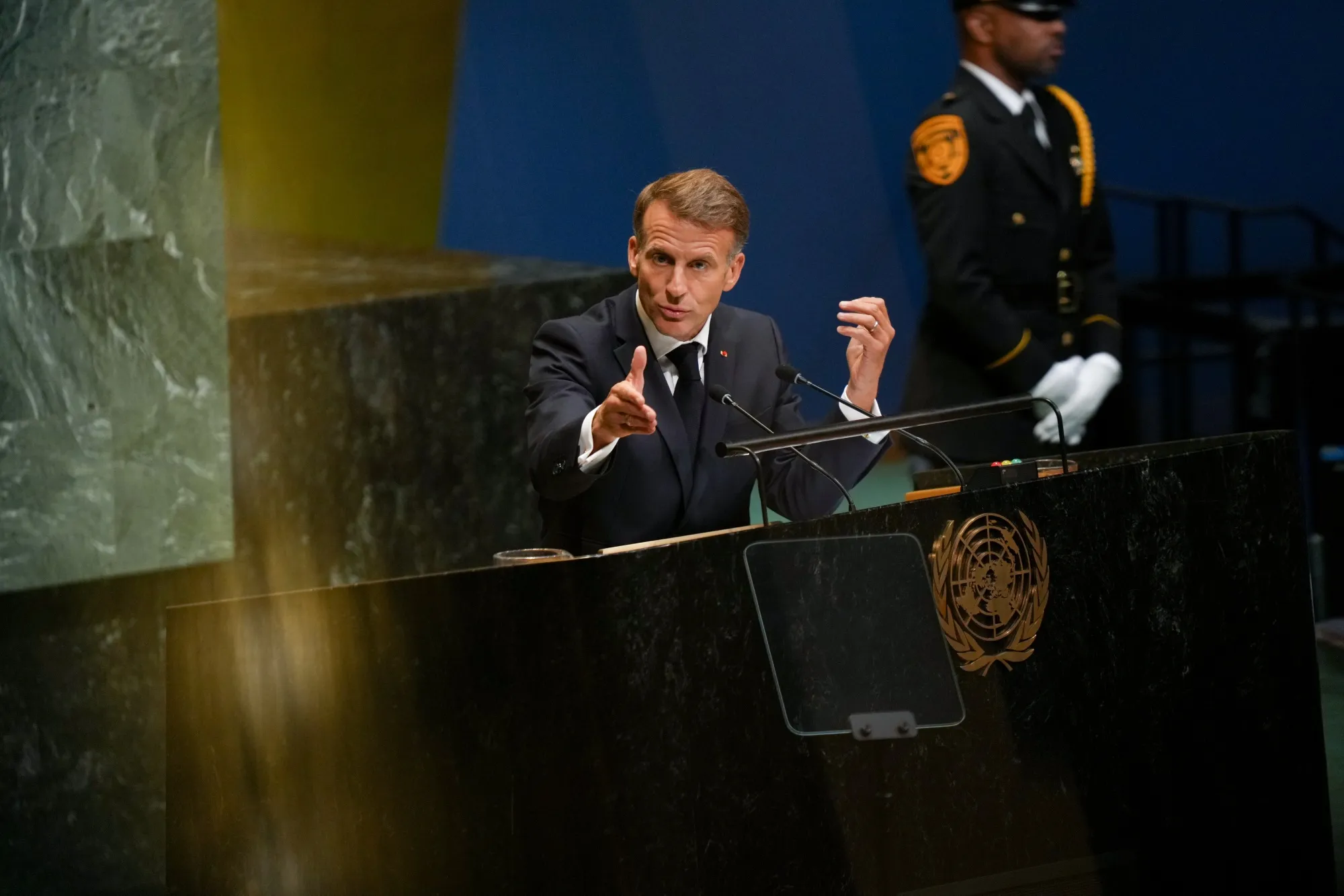
That determination was on display at the United Nations General Assembly last month where he worked the crowd like a politician at a convention: shaking hands, switching into English, hugging foreign leaders, hosting bankers and economists for breakfast. But he increasingly looks like an elder statesman before his time.
Perhaps that is partly the point. When Macron shared breakfast in New York with Goldman Sachs Group Inc. Chief Executive Officer David Solomon, BlackRock CEO Larry Fink and other Wall Street heavyweights, he appeared at ease in a familiar world: investment banking, where he made his name at Rothschild.
He can’t run for a third consecutive term, but mischievous speculators note the constitutional limit doesn’t prevent him from seeking the presidency again in 2032.
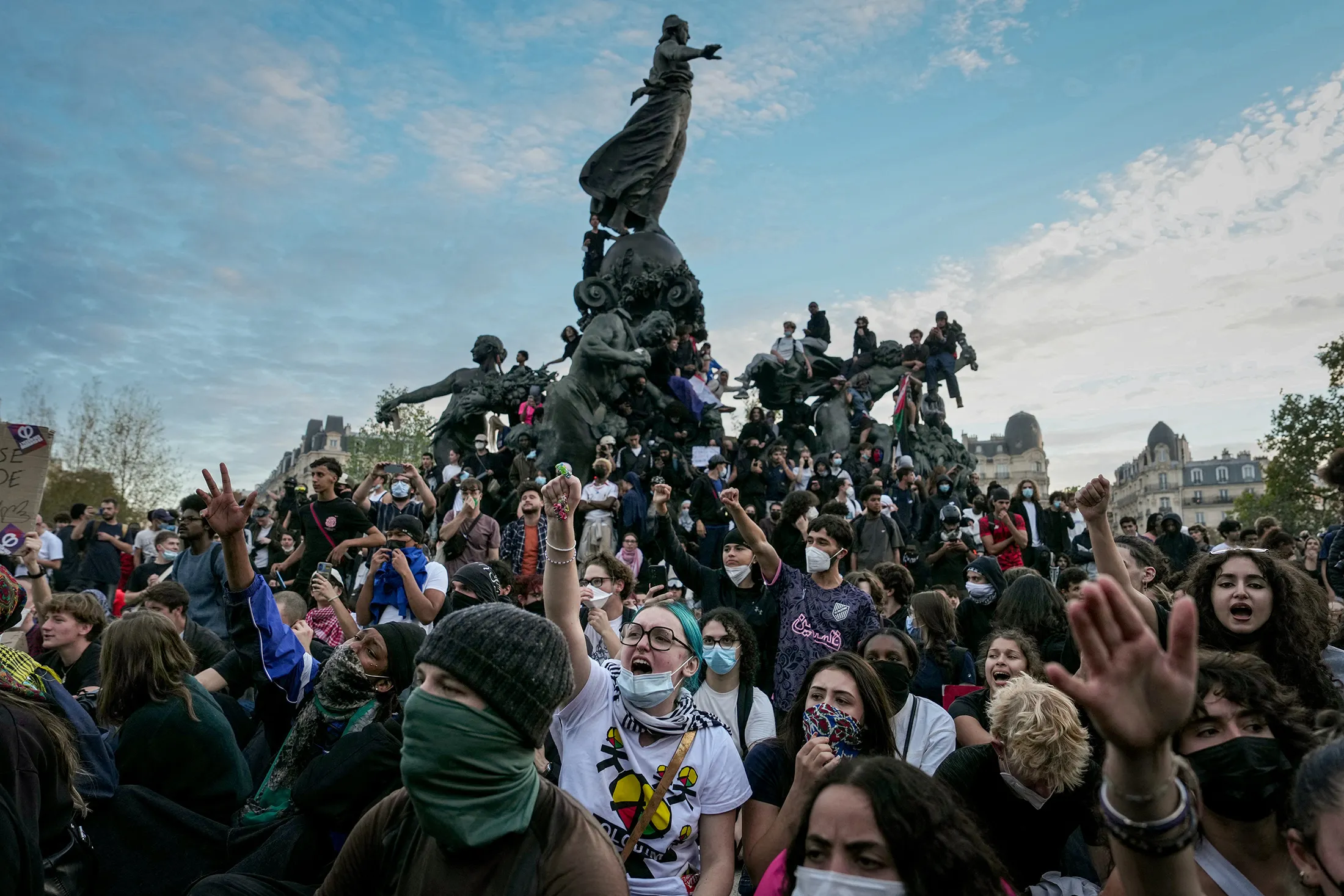
By then, nostalgia will have to have crept in for him to have a second political life. After almost a decade in office, Macron struggles to find a friendly audience in France. This weekend, student protests over poor learning conditions exploded nationwide.
Rioters attacked French public buildings and looted stores in cities including Paris in protests against the high cost of living. Some 550,000 demonstrators took part in marches Saturday, including 110,000 in Paris, Interior Minister Laurent Nunez said. On the fringes, roving groups of “extreme left” activists attacked police stations and other public buildings, joined by “opportunistic” looters, he said. About 400 people were taken into custody.
While a senior lawmaker of Macron’s party who requested anonymity said many on his side were rooting for Macron not to speak publicly as they feel that would only antagonize protesters, he has no intention of disappearing.
There’s “no place for violence in our Republic,” Macron posted on X. “Those who vandalized and attacked prefectures and businesses, and looted even our town halls, will be prosecuted and punished.”
His long goodbye is playing out on the international stage: France holds the rotating presidency of Group of Seven until the end of the year, and Macron is the one who announced the G7 decision to release strategic oil reserves to the world. He is also readying a string of peace-related events in Paris for November. Then comes the G20 meeting in December.
In January, he’ll host a final “Choose France” conference for international investors. Whoever the next French leader is, says a senior official in Paris, Macron still wants to close the deals. And matter, while he can.
It’s a point he made to Le Pen and her rivals while addressing reporters in Brussels. “Stay humble,” he said. “Someone will be chosen to have this responsibility. For now, this responsibility is being carried out, in accordance with the Constitution, by yours truly, who was elected.”

 点赞
 收藏
 点踩
 分享