Europe Is Racing China to Dominate Industrial AI

At first glance, China appears well placed to dominate the deployment of artificial intelligence on the factory floor. The country is the world’s manufacturing powerhouse. Its AI systems are close to matching the performance of leading US rivals. And the leadership in Beijing has made industrial AI a national priority to boost economic growth.
Europe has other ideas. The continent’s old industrial conglomerates are also trying to harness AI so they can dominate the next phase of factory automation. With an ocean of production data to draw upon, companies such as Siemens, ABB and Schneider Electric are hoping the continent can corner this lucrative area of AI development after failing to produce world-leading chatbots like DeepSeek or Claude.
Success would allow those venerable companies to supply the next generation of data-driven factories and make it harder for upstart, tech-focused rivals to steal their customers. It would also help to limit Europe’s technological and economic dependence on the US and China.
What’s at stake?
Applying AI to how goods are designed, made and moved means more can be produced with fewer workers, less downtime and less waste. Governments see it as a way to deal with labor shortages, boost economic growth and keep more production of goods at home.
The new generation of AI platforms, known as large language models, were developed mostly by US and Chinese startups such as OpenAI, Anthropic and DeepSeek. But many of the companies best placed to embed AI in the world’s production machinery are the companies that make and maintain that equipment — established, older players.
Industrial groups have spent more than $110 billion since 2020 to acquire software businesses to bolster their AI capabilities, according to Goldman Sachs. The bet is that early movers can embed the technology in manufacturing systems that are difficult to replace. Switching factory software is not like canceling a chatbot subscription. It can require new equipment, retraining and redesigning processes. Such commitments can tie a factory to the same technology for years.
How is the competition shaping up?
China produces around 30% of the world’s goods, worth $4.7 trillion a year, and Beijing has vowed to use AI to modernize the country’s manufacturing base. Chinese companies installed almost 60% of the world’s new industrial robots last year, according to the International Federation of Robotics, and the government is prioritizing the wide-scale deployment of AI with its “AI + manufacturing” program.
But China’s role as the world’s workshop is a relatively recent phenomenon, the quality of its factories varies widely and many facilities still rely heavily on manual labor. Europe has been installing robots and digitizing manufacturing for longer because it was a way to address the region’s relatively high labor costs. And a lot of the equipment installed in factories worldwide was made in Europe. Germany’s Siemens, for example, says it supplied one in every three factory controls deployed across the globe.
This means European companies have a lot of the data that’s needed to build the best AI-driven industrial systems. They are particularly adept at using it to predict equipment failures, improve product quality and make existing machinery more efficient, according to Antonia Hmaidi of the Mercator Institute for China Studies.
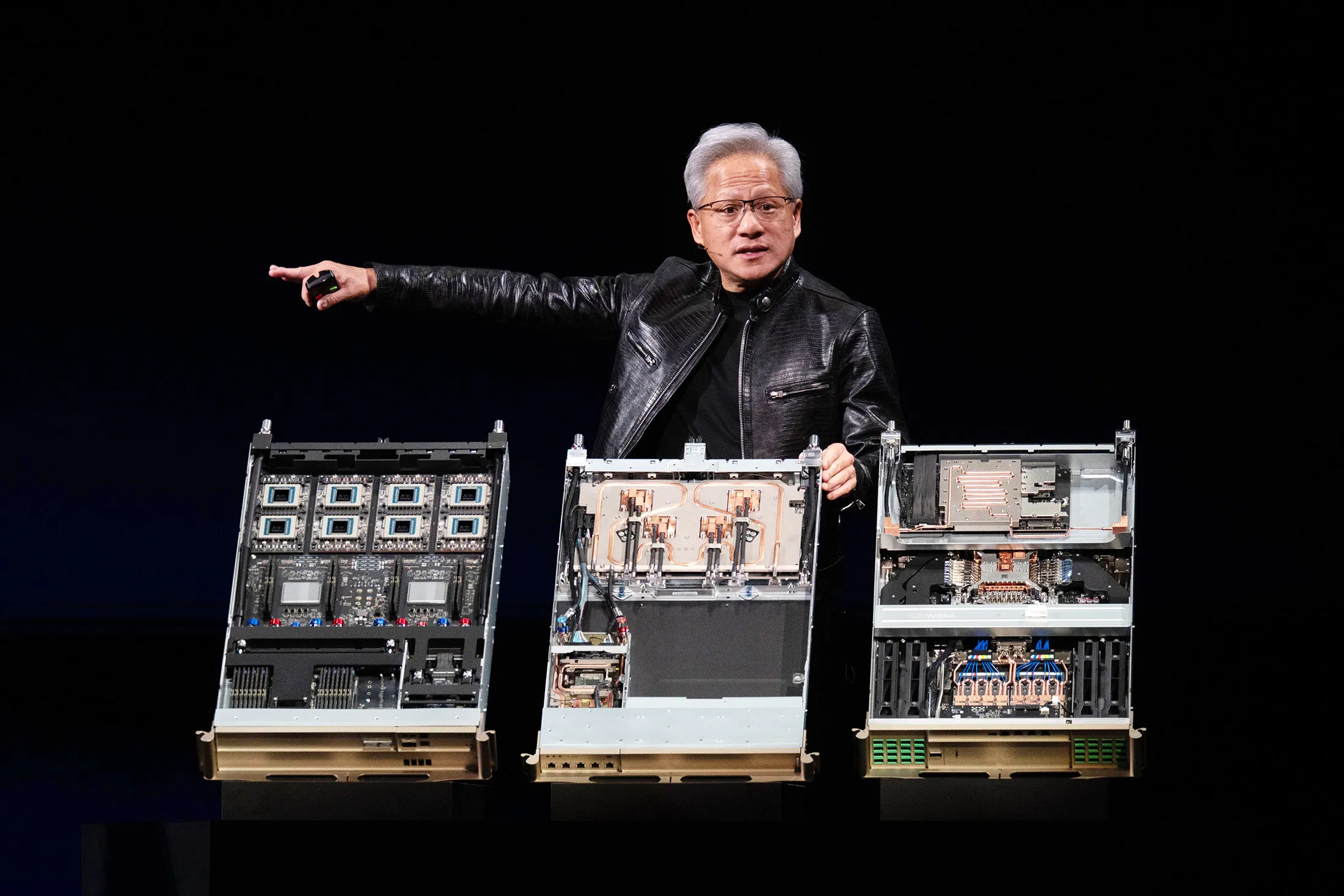
While European industrial groups are deeply embedded in the world’s factories, US companies have the most advanced AI systems and are working hard to bring their capabilities to the physical world. Santa Clara, California-based Nvidia has an overwhelming lead in AI chips, and almost all manufacturers developing industrial AI are using its equipment to train robots and speed up simulations. Some American industrial AI startups are attracting hefty valuations. Prometheus, co-founded by Jeff Bezos and Vik Bajaj, raised $12 billion in June to develop what it calls an “artificial general engineer.”
What are the challenges?
Designing an AI chatbot is relatively easy if you can afford to employ the word’s best software engineers. In fact, some LLMs are now producing better versions of themselves — a process known as recursive self-improvement.
Trying to harness AI’s capabilities in the physical world is a messier affair. An AI system designing a chip, changing a machine setting or moving a robot has to obey the rules of physics and stay within the limits of the equipment it controls. A wrong instruction on a production line can damage equipment, ruin thousands of products or, in the worst case, hurt workers.
Chatbots were trained on vast collections of text, images and code available online. Factory AI needs more specialized information such as sensor readings from machines, engineering drawings, production records, videos of workers and data showing how equipment behaves when something goes wrong. Much of it has never been collected, some is still only on paper and large parts are proprietary.
Germany, Europe’s dominant exporting nation, has spent more than a decade pushing companies to digitize and connect factories under its Industrie 4.0 program, yet many still struggle with the basics. According to a Bitkom study, almost half of German industrial companies say they lack the adequate IT infrastructure to use “digital twins” for testing new machines or simulating entire production lines virtually before making and installing the equipment. Many produce specialist goods in relatively low-volume, limiting the potential benefits from AI-driven automation.
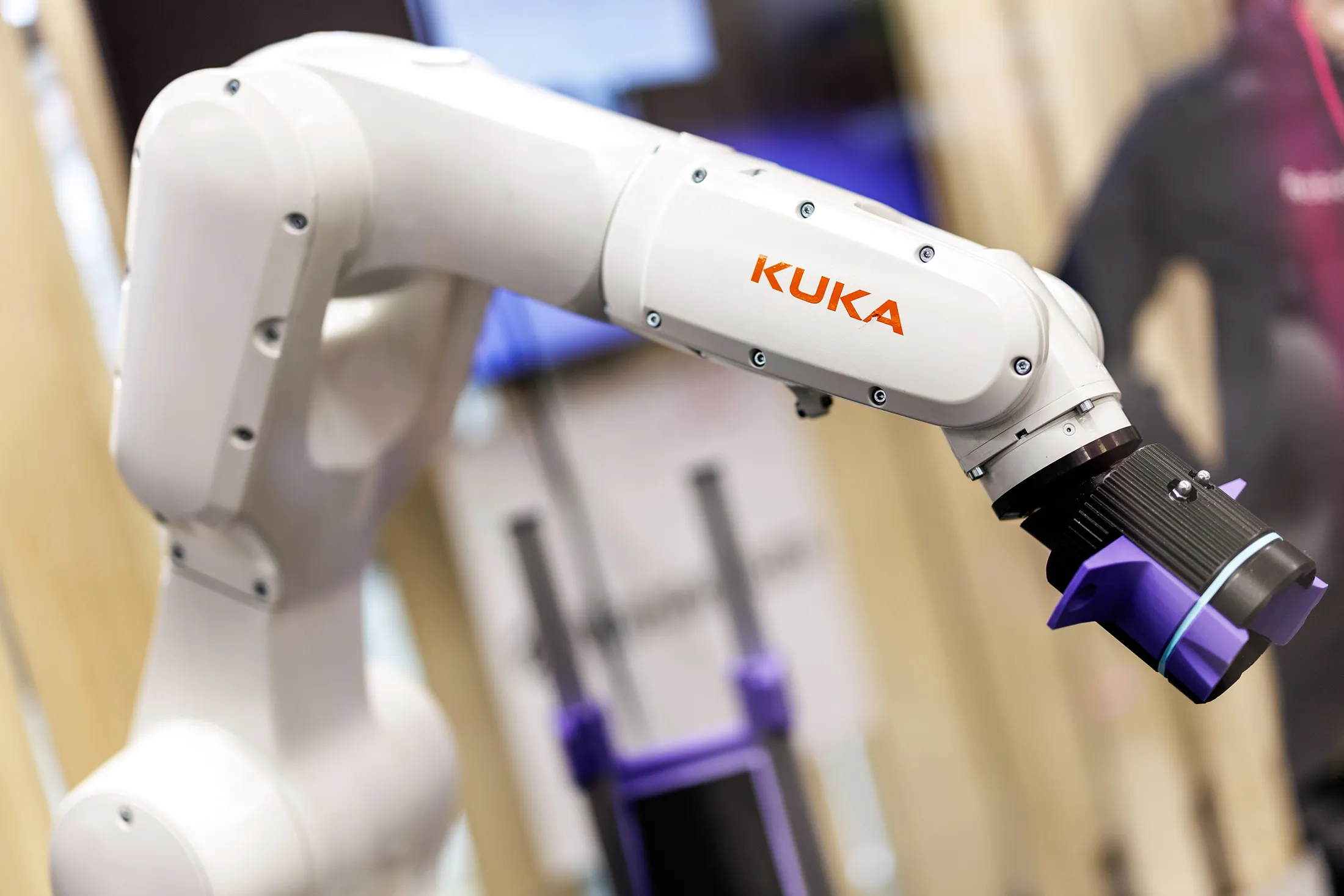
It’s rarely possible for a machinery maker to upgrade its systems with the latest AI at the push of a button, as no two factories are alike. A company may have 30-year-old Siemens controls beside a new Kuka robot, while another plant might use Rockwell Automation controllers and ABB equipment. Connecting multiple elements so they work seamlessly as part of an AI-enhanced ecosystem — often across several factory sites — can be a major challenge.
Ultimately, the technology needs to pay for itself, and sometimes the most cost-effective productivity enhancements don’t require AI at all. Predictive maintenance is one example. A manufacturer could build an AI model to predict when an expensive machine part will fail, but decades of purchasing records may already show that the part needs replacing every three years, in any case.
“AI may come to the same conclusion, but there might have been a faster, cheaper and more robust way to get there,” said Sabine Pfeiffer, director of the Bavarian Research Institute for Digital Transformation, who has for years studied automation at companies including Volkswagen and BMW.
So what can industrial AI do, exactly?
Industrial AI is an umbrella term for AI used for producing goods. A manufacturing engineer using a chatbot to draft an email does not count, but using it to design a car or control the machine that builds it does.
Design
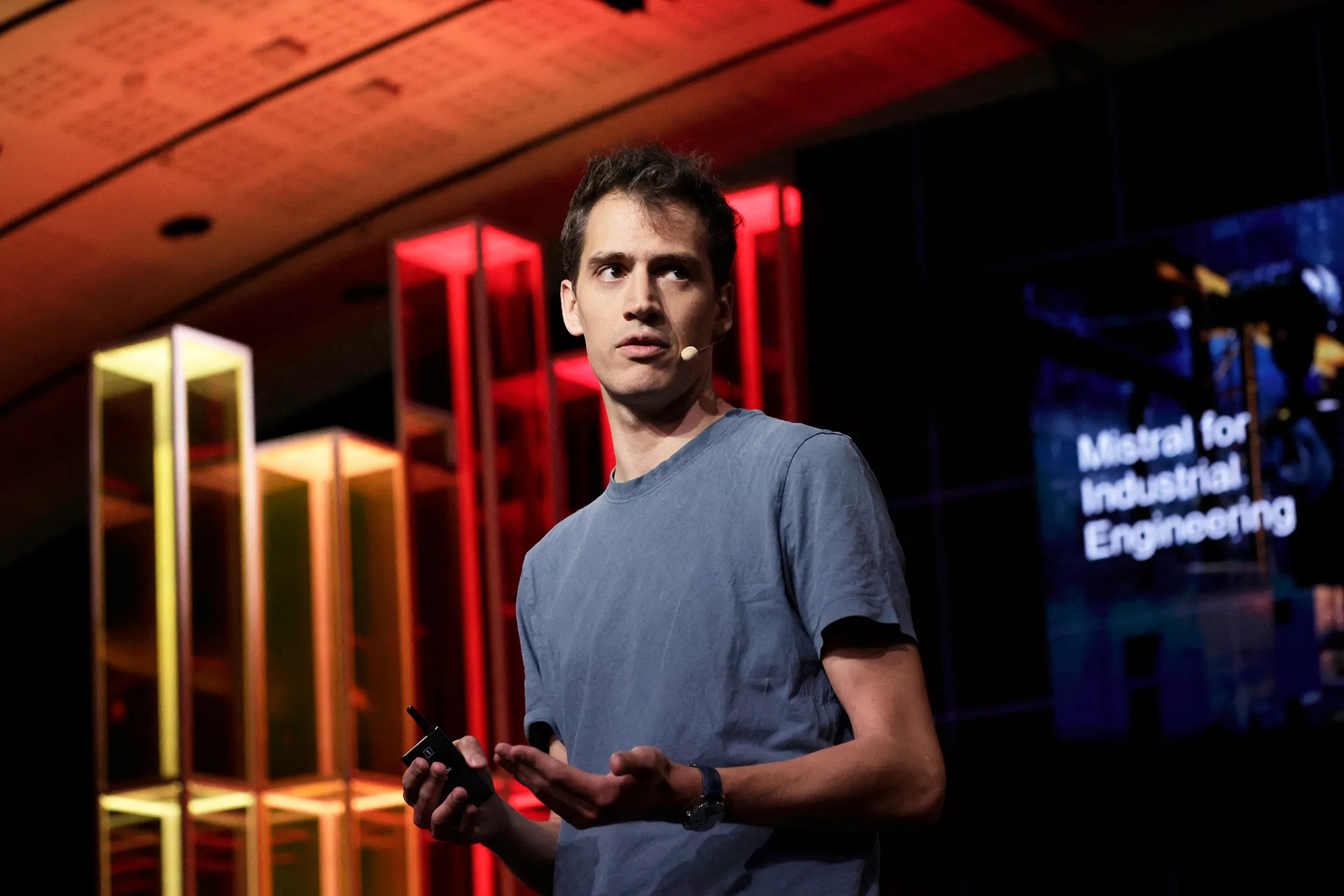
Digital twins traditionally rely on known rules: Change the weight or shape of a component and the software calculates how that affects the behavior of the final product. AI can analyze far larger volumes of simulation data and test more combinations, helping engineers to find better designs faster. BMW runs thousands of virtual car crashes during the development process before wrecking physical prototypes. It’s begun to work with France’s Mistral AI to speed up the process, analyzing more than one petabyte of crash-simulation data.
Production
Factory lines use lots of sensors to monitor temperature, vibration and pressure. AI can look at many signals in conjunction and detect patterns that would be harder to spot individually. German chemicals maker Lanxess uses the technology to analyze vibration and temperature data together with other process variables to identify when equipment is behaving abnormally, allowing engineers to spot potential costly failures hours or even weeks in advance. AI can also configure a machine’s control software far quicker than a human. Engineers at Siemens describe a task to its Eigen Engineering Agent in plain language and it will generate and check a new automation code. The machine operator then runs the code on the machine. Chinese automation-equipment maker CASMT used this to speed up the building of a prototype electric-car brake production line as it enabled workers to complete tasks two to five times faster, according to the company.
Logistics
Factories and warehouses have long used robots for repetitive jobs but they struggle when the parameters keep changing. For example, parcels can come in different shapes, sizes, weights and materials. AI models are being trained to recognize what is in front of a robot and decide how to handle it in the moment instead of programming every possible movement in advance. Amazon said its Sparrow robot can handle more than 200 million different products that enter its warehouses.
What’s the endgame here?
Industrial AI developers see a future where you could give an AI model a product design and it will help determine how to make it, design the necessary tools, plan the factory layout, direct machines and coordinate robots that assemble and package the finished goods.
That vision is attracting intense interest. Since OpenAI launched ChatGPT in 2022, mentions of industrial AI in company reports have increased more than eightfold. But the technology will matter only if it moves from demonstrations into factories — and saves more money than it costs to install.
China shows how far automation can go. Its factories operate more than 2 million industrial robots, about 4.5 times as many as Japan, the next-largest user. Companies such as automaker BYD and phone manufacturer TCL are working toward so-called dark factories that can operate without people on the production line.
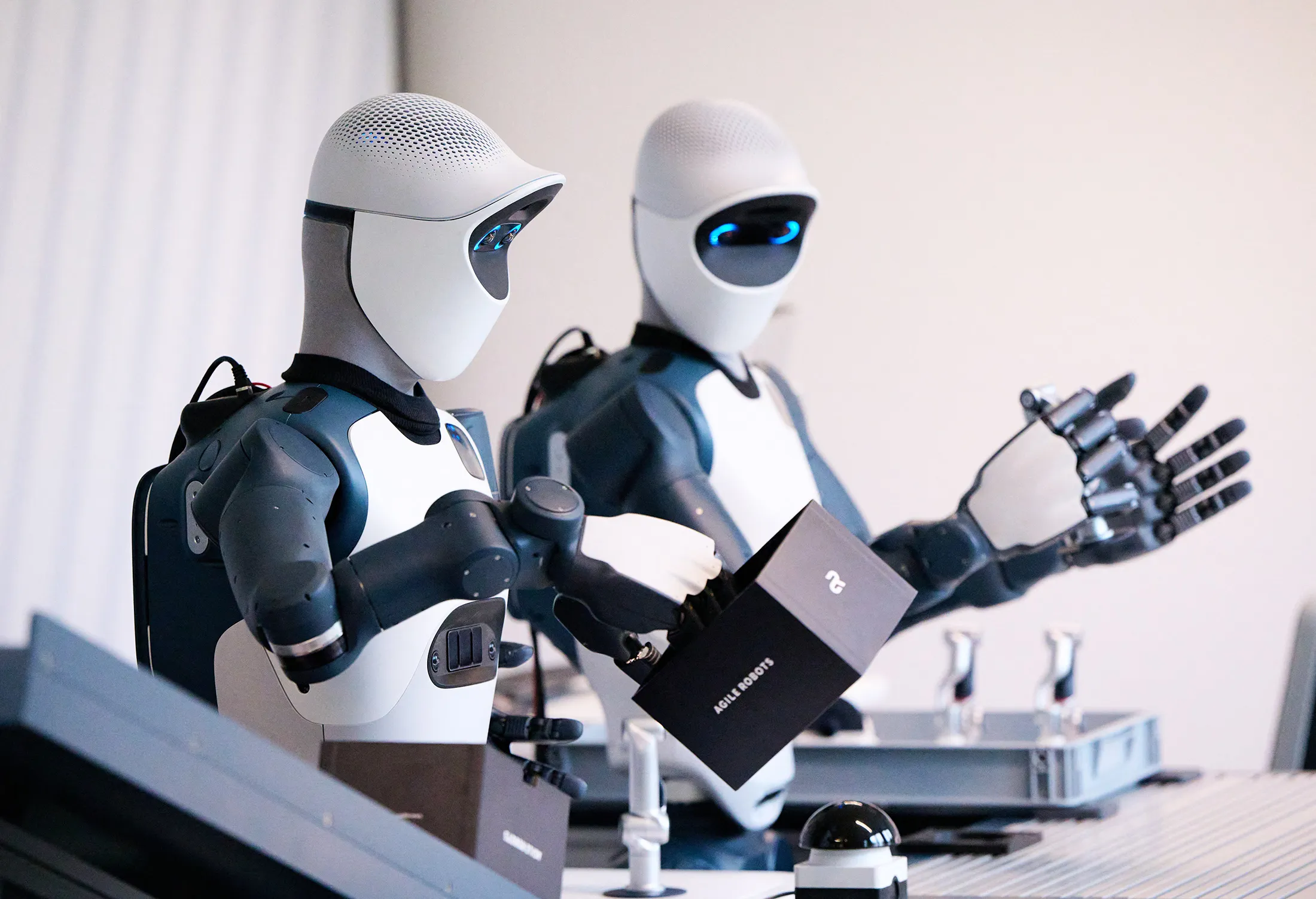
Where real-world data for training an AI-driven robot are scarce, companies are creating their own. At Agile Robots’ lab in Munich, dozens of workers spend their days showing the company’s humanoids how to pick up and assemble objects, while others film themselves performing the same tasks. Those demonstrations become training material for the company’s AI models.
Read More: Workers Are Teaching AI-Powered Robots to Take Over Their Jobs
Simulation can multiply that data cheaply, as a virtual robot can repeat a task thousands of times with different objects and conditions. But developers still need real-world examples to check that what works in a simulation also works on a factory floor. The challenge is finding how much of each is needed to build reliable models without making training prohibitively expensive.

 点赞
点赞 收藏
收藏 点踩
点踩 分享
分享