Nvidia CEO Says There’s No Need to Backstop Troubled CoreWeave

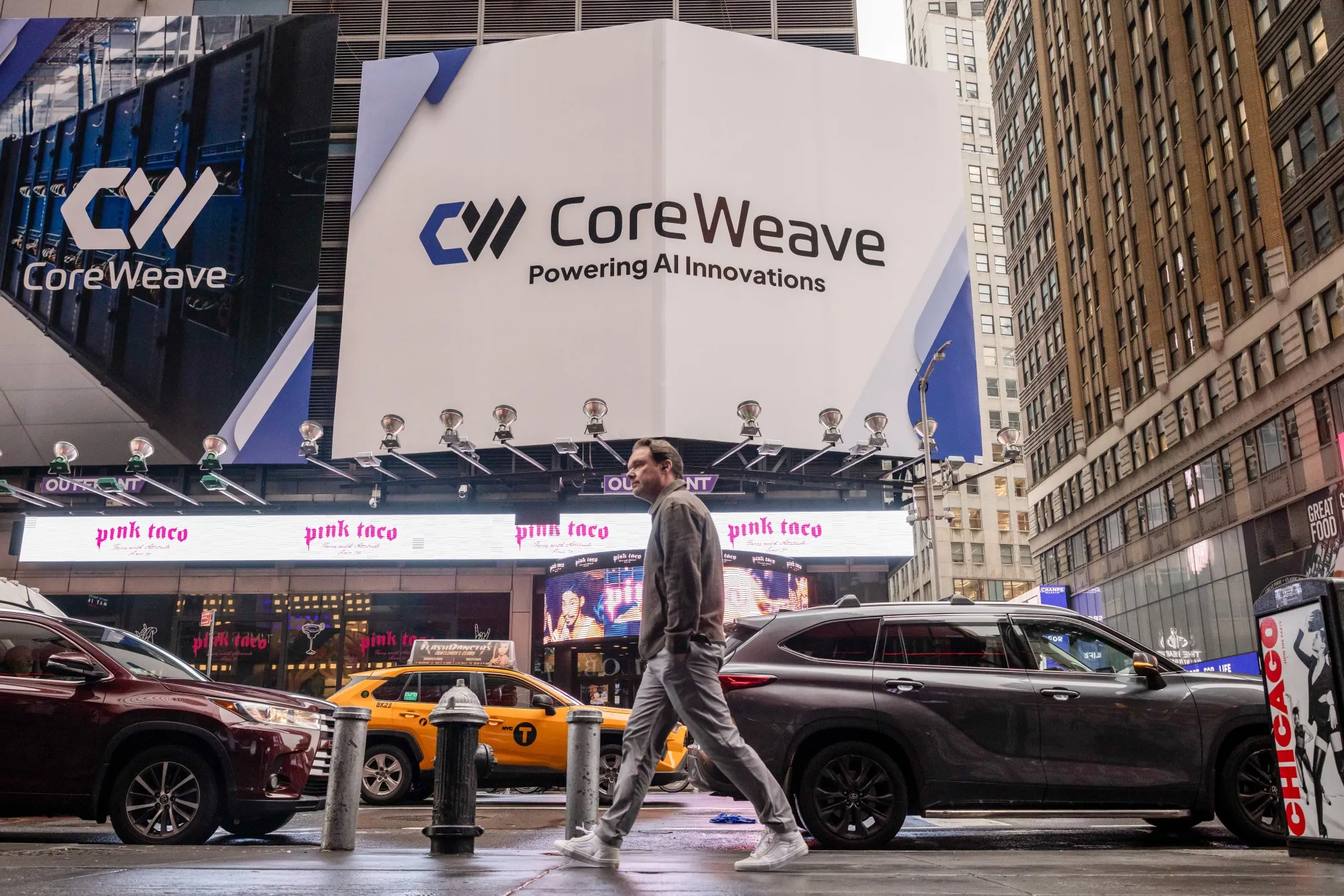
Nvidia Corp. Chief Executive Officer Jensen Huang pushed back on financial concerns about troubled CoreWeave Inc., one of his key customers, and said he doesn’t think the AI data center operator will need a bailout from his company.
“CoreWeave’s strength is improving every day,” Huang told Bloomberg at an event in Stockholm. “I’m optimistic. Their cost of capital is actually decreasing.”
Huang weighed in with reassurances as credit investors grow concerned about CoreWeave’s risk of failure. The company is an important test case for the viability of new firms springing up to meet surging demand for artificial intelligence computing. Companies like CoreWeave have borrowed heavily with help from suppliers — including Nvidia — fueling concerns that circular financing is creating false demand.
Nvidia is CoreWeave’s second-largest shareholder, with about a 10% stake.
Read More: CoreWeave Risk Gauge Hits Record, Pricing 60% Odds of Default
CoreWeave’s shares tumbled 15% on Wednesday and traded down as much as 9.5% Thursday. Shares recovered some of those losses after Huang’s comments.
The company’s debt is sliding too. Its debt due in 2032, which investors bought at par four months ago, was quoted at about 78 cents on the dollar Wednesday — prompting a “yikes” from Elon Musk on his social media platform.
The cost of protecting CoreWeave’s debt against default for five years rose by as much as 74.5 basis points to 1,194.5 basis points, according to ICE Data Services. That’s the highest intraday level on record, with swaps pricing in a more than 60% chance of default within the next five years.
CoreWeave’s growth is accelerating but its scale is still dwarfed by the giant debt load it’s taken on. According to Wall Street estimates, it’ll end the year with $12.9 billion of sales and more than double again next year. It has more than $40 billion of debt with much coming due for repayment in the next five years.
Servicing that debt load is causing it to burn through cash and its free cash flow has turned increasingly negative. Losses are set to widen to more than $2.5 billion this year, according to estimates.
Concerns about CoreWeave’s viability have contributed to a sell off in stocks across the globe this week on fears that the massive build out of AI infrastructure has outrun the ability of companies to get a return on their investments and that a pull back is on the way. The Philadelphia Stock Exchange Semiconductor Index has shed more than 9% of its value this week.

 点赞
点赞 收藏
收藏 点踩
点踩 分享
分享