Houthi Attacks on Saudi Arabia Defy Difference in Military Power

The Houthi attacks on Saudi Arabia are demonstrating the limits of the kingdom’s military prowess — despite defense spending that far outstrips that of its regional neighbors.
Missiles and drones fired by the Iran-backed group from Yemen have wreaked havoc in Saudi Arabia in recent days, killing at least 18 people and forcing the closure of the country’s main international airport in Riyadh. The Houthis are showing no sign of scaling back their campaign, targeting several Saudi Arabian cities in an assault this week that’s continued into Thursday.
Saudi Arabia allocated between $64 billion and $96 billion this year for defense, according to data compiled by Bloomberg Economics. The upper end is more than twice as much as Israel, the next biggest Middle East spender.
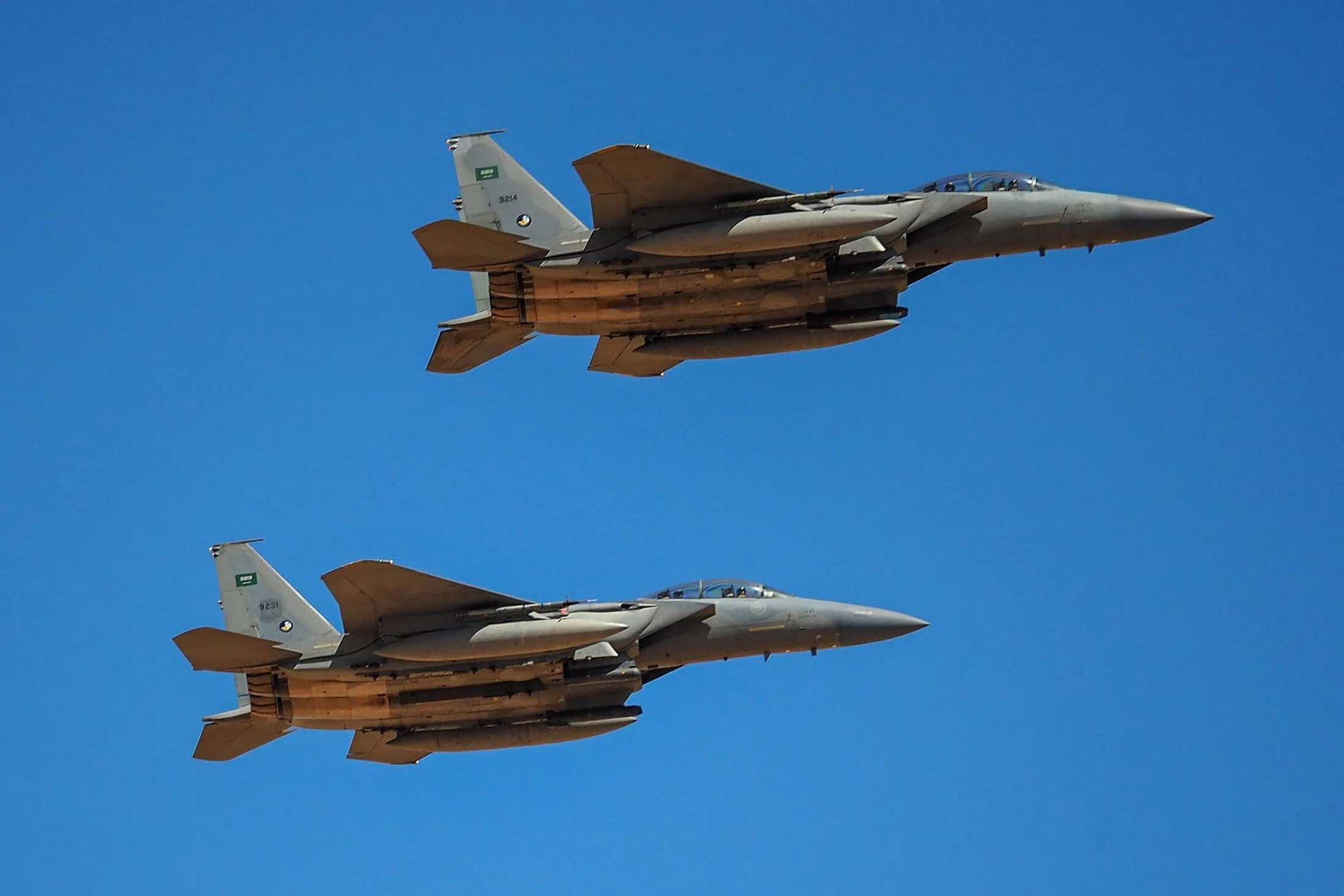
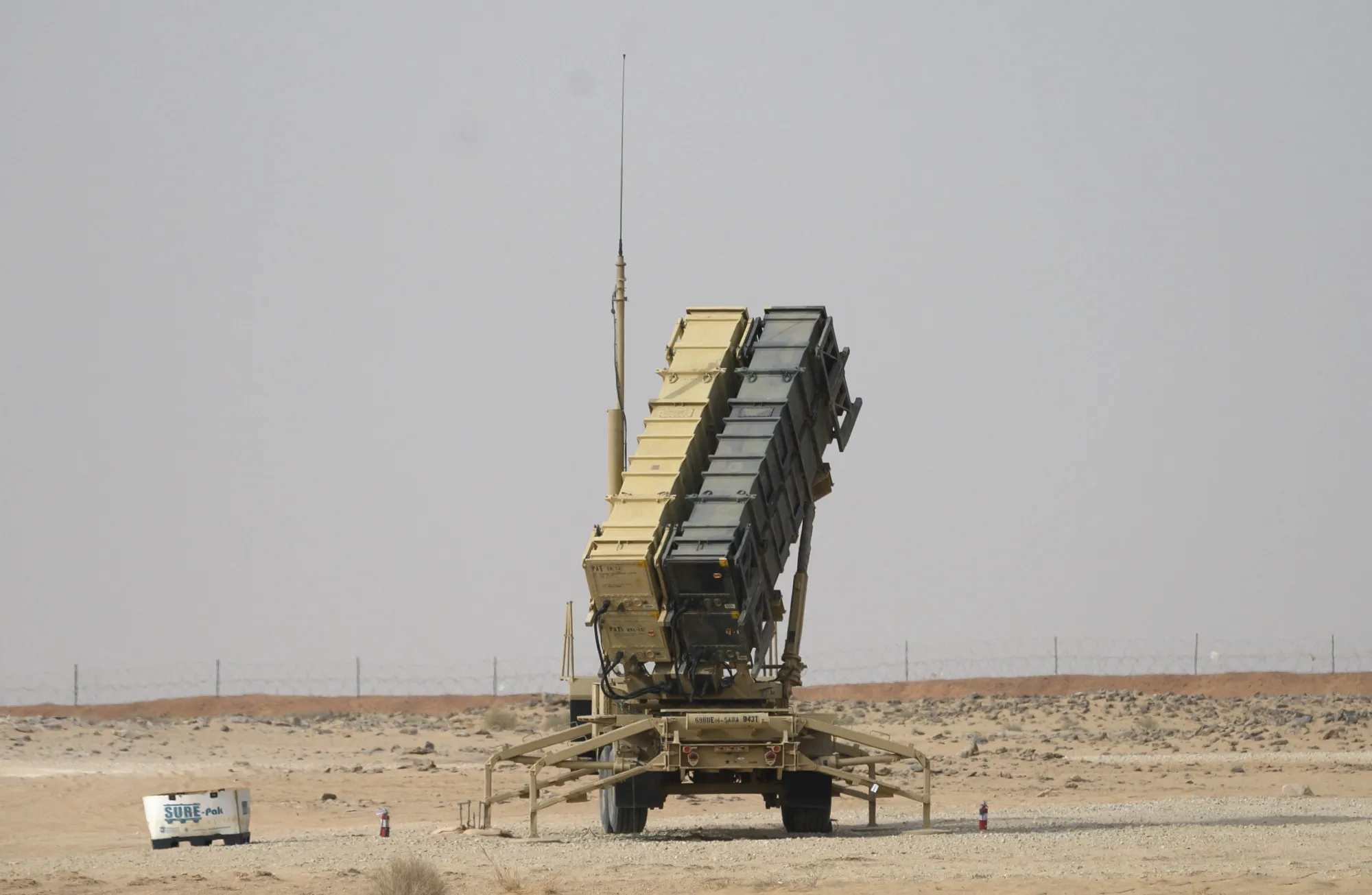
The kingdom operates Raytheon Co. Patriot missile batteries with the latest Lockheed Martin Corp. PAC-3 interceptors, flies hundreds of Boeing Co. F-15 fighters customized for its air force, and is the only Gulf country with mid-air refueling aircraft.
One reason the Houthis have been able to cause such destruction with less advanced equipment is Saudi Arabia’s size, which complicates defense efforts. The kingdom covers more than 2.1 million square kilometers (830,000 square miles), with many strategic targets to protect, from oil infrastructure to air bases to several large cities.
Defending against ballistic missiles is complex when protecting a single target, let alone sites sprinkled across a vast country. Thousands of Iranian strikes across the Arabian peninsula during the initial phase of the US and Israeli war on the Islamic Republic were largely thwarted by missile defenses, but even a 90% success rate can mean massive damage on the ground.
Saudi Arabia’s military is also still in the process of modernizing and remains heavily reliant on the US for military intelligence.
The Saudi government did not respond to a request for comment.
Read More: MBS Faces Houthi Menace in One of Saudi Prince’s Biggest Crises
The most recent rounds of Houthi strikes on Saudi Arabia have tended to involve a mix of weapons that further complicate defensive efforts: small drones, low-flying, cheap cruise missiles and ballistic missiles.
In addition, the Houthis are a nimble, rapidly evolving opponent backed by Iran, capable of building and deploying missiles and drones that can challenge even advanced defense systems. Years of fighting in Yemen mean the group is battle hardened, resisting protracted military efforts to dislodge or contain them.
“The Houthis are partly beneficiaries of good fortune, but they seem remarkably adaptive,” said Ankit Panda, Stanton Senior Fellow in the Nuclear Policy Program at the Carnegie Endowment for International Peace. “A determined attacker armed with missiles is still difficult to deal with.”
Read More: Why the Houthis Are So Hard to Defeat: Explainer
The Houthi arsenal has now evolved to the point where the group can manufacture relatively precise drones and ballistic missiles — some of which rely on parts from Chinese companies. Those munitions might cost thousands, or hundreds of thousands of dollars, far cheaper than the multimillion-dollar air defense interceptors used to stop them.
That means even a successfully intercepted attack imposes further costs on Saudi Arabia, and makes it more vulnerable to future strikes.
Defensive weapons such as the Iranian-made 358 surface-to-air missiles — which can loiter at high altitudes and strike subsonic aircraft — make the skies over Yemen dangerous too.
Another issue, said Bloomberg Economics defense lead Becca Wasser, is that Patriot air defense batteries are directional. They do not cover a 360-degree area, so if radars and launchers were positioned to intercept Iranian fire, they may not have been able to easily shoot down Houthi missiles, she said.
Air and missile capabilities have improved as part of Saudi Arabia’s modernization efforts, Wasser said. Although pilots learned considerably from the long Yemen air war, their aircraft remain largely reliant on the US for targeting data, in particular.
The situation has improved since Saudi Crown Prince Mohammed Bin Salman began a reform agenda, alongside “real-life experience in its first war against Yemen,” Wasser said. “But modernization is slow and confined to pockets of bright spots rather than upskilling across the force.”
Although Riyadh has a fleet of more than 200 F-15 jets — almost as many as the US Air Force — it was unable to use them decisively in more than a decade of bombing the Houthis. Saudi Arabia went to war with the militant group in 2015 after it took control of the Yemeni capital, Saana, though fighting receded between a 2022 truce and the recent flare up.
“Equipment and funding do not win wars,” said Wolf-Christian Paes, a senior fellow for armed conflict at the International Institute for Strategic Studies. “Training, motivation and leadership do.”
US influence in the Middle East after 1990 — when Washington intervened after Iraq invaded Kuwait — prompted many countries in the region to rely on US firepower rather than fully develop their own capabilities.
Saudi Arabia was not immune to this “protection curse,” said David Roberts, a reader in international security and Middle East studies at King’s College London.
US struggles in Afghanistan, and incidents like the 2019 Houthi drone attack against oil facilities in Abqaiq, in the east of Saudi Arabia, punctured the image that “Uncle Sam would basically detect and protect,” Roberts said.
US President Donald Trump has so far opted against intervening directly in the current conflict. In a post on Truth Social on Tuesday he said the Houthis were “behaving very badly,” without specifying what action the US could take.

Saudi Oil Minister Prince Abdul Aziz Bin Salman said this week that “the events of recent weeks are serious,” adding that the kingdom’s response “must be equally serious, while remaining focused on the decades ahead.”
The Houthis began threatening shipping in the Red Sea after the start of the war in Gaza, which prompted the US to briefly intervene, launching more than 1,000 strikes over three months. But hunting down hidden, mobile launchers and shutting down buried production facilities is difficult, especially in the rugged terrain in which the Houthis operate. The operation ended with a ceasefire.
The Houthis show “there are very clear limits what an air campaign can do,” said April Longley Alley, a senior fellow at the Washington Institute for Near East Policy.
Read More: The Reclusive Houthi Leader Disrupting Trade and Energy Markets
Former US Defense Secretary Lloyd Austin, speaking at the Warsaw Defense Forum on Monday, said Saudi Arabia would most likely need help from friendly nations to counter the Houthi threat.
“There will be a concerted effort to get the Houthi thing under control,” he said. “But it won’t be easy. They are much more resilient than most people recognize.”
The conflicts in Iran and Ukraine have shown how the power of ballistic missiles, particularly those with a range of 1,000 kilometers or more, mean even countries whose millitaries are relatively weak can cause problems for more powerful adversaries.
The Houthis’ strike arsenal includes indigenously produced Quds-1 cruise missiles, which have a reach of about 750 kilometers, according to the Center for Strategic and International Studies.
Its homegrown ballistic arsenal is larger, with Burkan-1, -2, and -3 designs, which can fly 600 kilometers, 850 kilometers and 1,200 kilometers, respectively, giving the militants the range to hit nearly any site in Saudi Arabia.
Riyadh’s struggles to extinguish the Houthi threat and defend against counterattacks reflects the difficulty of a task many others have failed at too.
“Yemen is a hard nut to crack. The US couldn’t do it,” Longley Alley said. “This is something that can’t be solved with a military tool only.”

 点赞
点赞 收藏
收藏 点踩
点踩 分享
分享