UK’s Miliband Calls for Brexit Reform and Better EU Relations

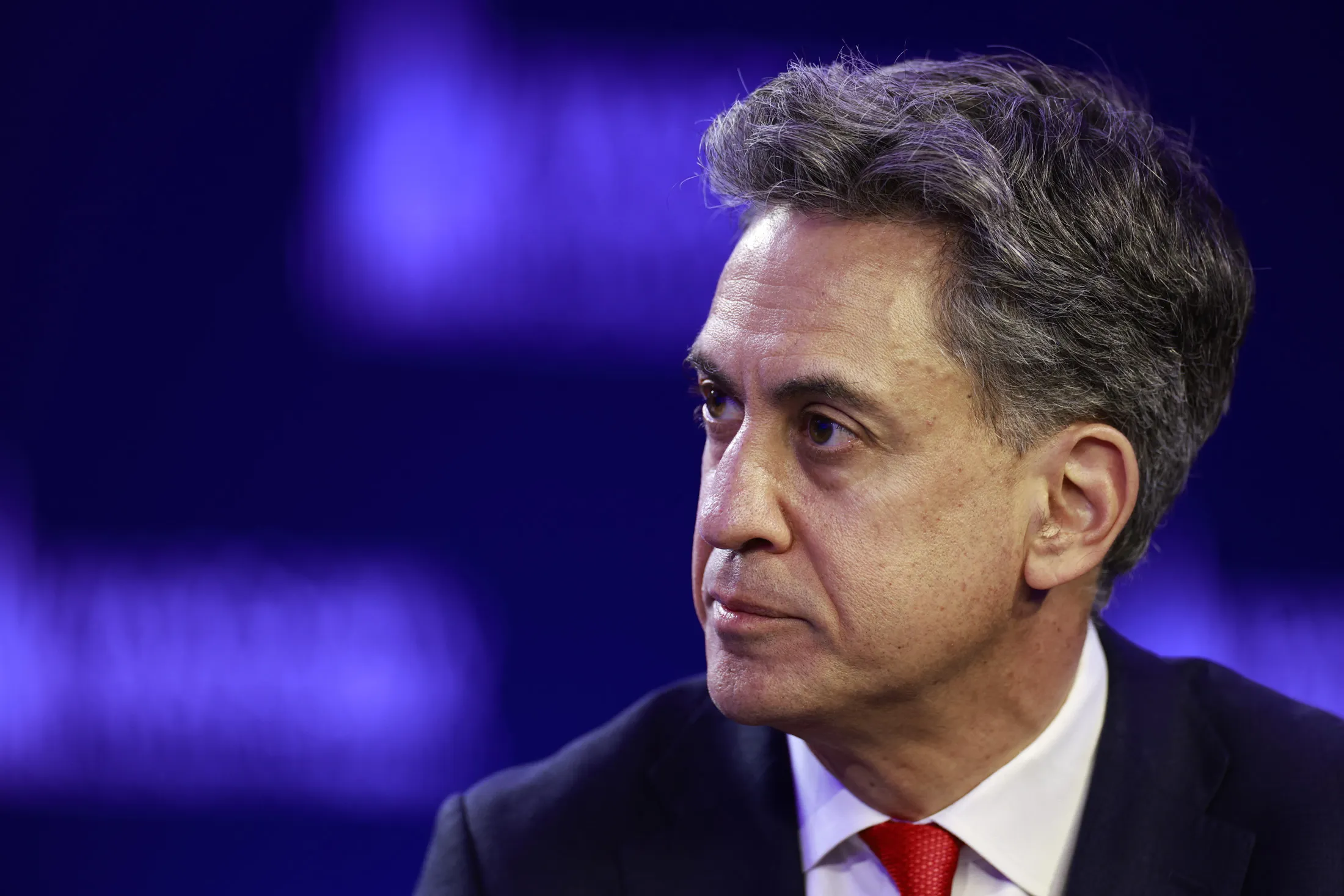
Britain needs a “deeper and stronger” relationship with the European Union, Foreign Secretary Ed Miliband said at sidelines of the International Monetary Fund’s annual meeting in Bangkok.
Miliband, one of the most powerful ministers in the UK government, added his support to a reopening of the EU debate after Prime Minister Andy Burnham last month called for a new deal with Brussels and even raised the possibility of rejoining.
It’s 10 years since a referendum triggered the UK’s departure from the bloc. Bloomberg Economics estimates it has cost the UK 2.5% in lost GDP and about £30 billion ($39.7 billion) a year in forgone tax revenue. Polling shows the public would vote in favor of being in the EU were the Brexit referendum rerun now, even though many would be fiercely opposed.
Speaking to Sky News, Miliband said: “When I think about our security, when I think about our trade, when I think about our values, I think we do need a deeper and stronger relationship with the European Union.”
“I think it’s really good that the Prime Minister has opened up that debate. And I suppose what I would say to people who are skeptical about this is, do we think the status quo, what we have at the moment, is serving our country well, or do we think we can do better?” He said: “We can do better.”
The Labour government has been strengthening ties with Europe while also striking trade deals with India and the Gulf Cooperation Council of Bahrain, Kuwait, Oman, Qatar, Saudi Arabia and the United Arab Emirates.
Burnham recently raised the prospect of rejoining the EU, saying Britain could “go all the way” because he believes Brexit has caused more harm than good. That would require Labour to abandon its current promise that it will not seek to rejoin the single market or customs union, or to accept freedom of movement from the bloc.
Climate Envoy
Earlier Wednesday, Miliband said he would shortly appoint a climate envoy “from a security background” as climate change posed a national security risk to the UK.
At a Rockefeller Foundation event on foreign aid, he called for a “new deal” for developing countries. Their debt problem today is worse than 25 years ago despite the 2005 debt jubilee which saw $100 billion canceled.
Britain has cut aid funding from 0.7% of GDP to just 0.3% of GDP since 2021, with 0.2 percentage points of the reduction agreed under the previous Labour government in which Miliband served. He said the cut was a recognition of “the fiscal constraints we face,” with UK debt at a 60-year high and borrowing costs recently hitting levels not seen since 1998.
“Part of the job of us as politicians is to recognize the world we’re in, including fiscal constraints, including the reductions we’ve seen in aid spending, and then think how do we make a difference,” said Miliband, who is the first foreign secretary to serve as a UK governor at the World Bank.
To counter the cuts to aid spending, he said the private sector needs to be far more involved in future and the World Bank should take on more debt. He also criticized private sector lenders to developing nation governments for holding up debt restructurings.
“We’ve got to improve the debt architecture in the longer term, so we don’t find ourselves in this position again, including ensuring that debt restructuring can’t be blocked by a single private lender,” he said.

 点赞
点赞 收藏
收藏 点踩
点踩 分享
分享