Céline Dion, Harry Styles Concerts Get an AI Sound Upgrade

Céline Dion’s voice soared through the Plenitude Arena on the outskirts of Paris, bringing her Titanic theme song to fans in the far reaches of the vast entertainment venue almost as clearly as if they were next to her on stage.
Most of the 35,000 fans in the stands on a recent night were more focused on the pop diva’s outfits, and ability to perform while recovering from a rare neurological disorder, than the constellation of speakers surrounding the stage. But those black boxes are part of a sound system developed by French company L-Acoustics, which is using artificial intelligence to transform the audio experience at live events.
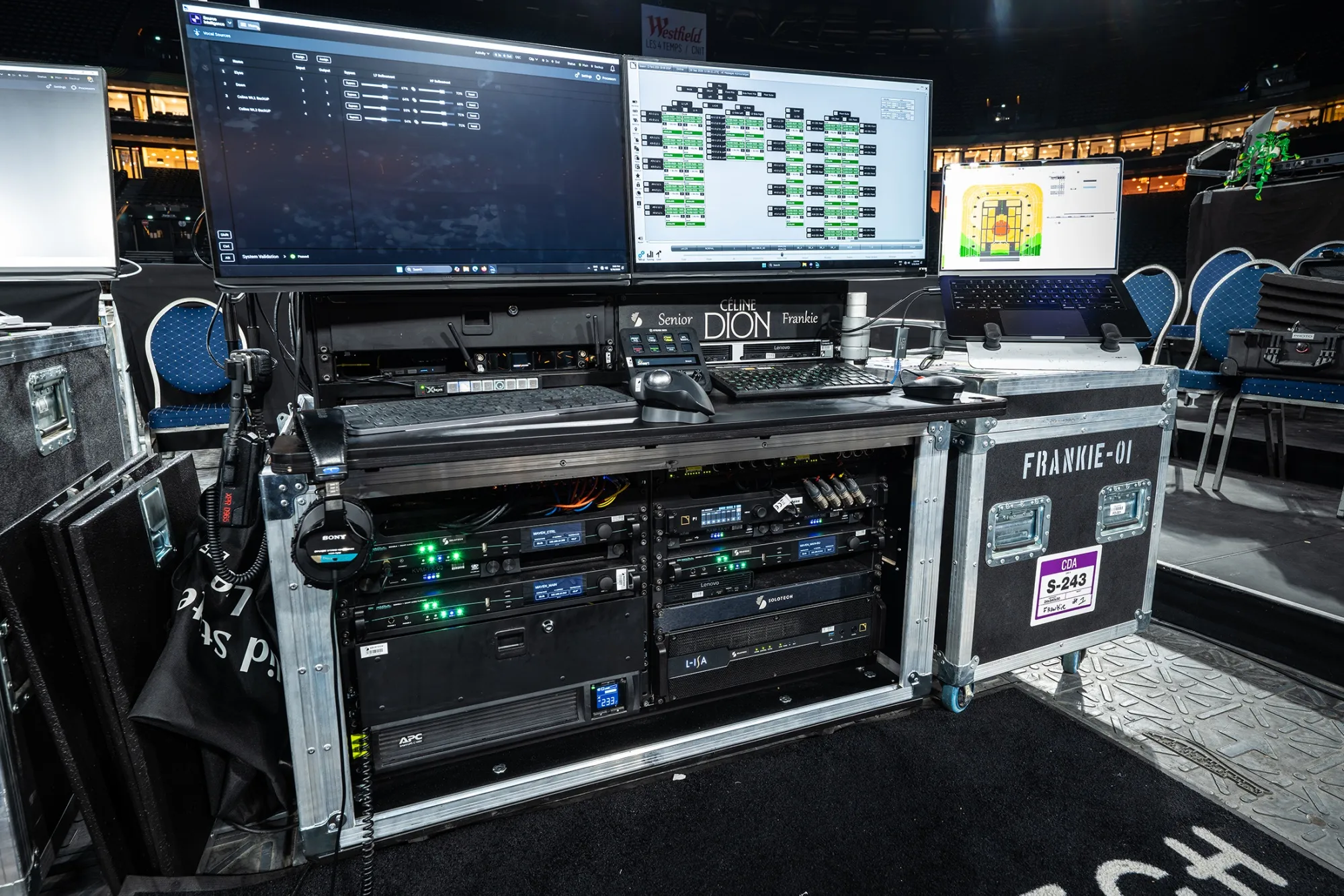
Earlier this year, L-Acoustics, a well-known name in the niche world of high-end audio, launched a new software platform called Source Intelligence that uses machine learning to isolate a singer’s voice from distracting background sounds in real time. The technology filters out noise from other instruments, backup singing, crowds and general sound reverberating around the venue, producing clear vocals and reducing feedback that can ruin a show. Source Intelligence can eliminate as much as 40 decibels of non-vocal sound, according to the company, an advance that has impressed audio engineers.
“It’s like voodoo practically,” said Denis Savage, the front-of-house engineer for Dion, who has worked with the artist for 38 years.
“When you mix a Céline Dion show, people want to hear Céline Dion. You just need to keep her on top of the mix at all times,” said Savage, who uses Source Intelligence to produce the Canadian singer’s performances. L-Acoustics “just makes that task easier,” he said.
At a time when live events are more popular and more high-tech than ever, several audio companies are working to develop technology to improve sound quality. It’s a key component of concerts but often gets overwhelmed by chaotic crowds and visual displays. Technology separating vocals from other noise has been around for years, pioneered by DJs working in clubs. Other audio companies have also been using machine learning and neural networks in their software, such as Alpha Labs and Cedar Audio Ltd. German rival D&B Audiotechnik last month unveiled a system that allows sound engineers to virtually hear what a concert will sound like from every seat in the house.
While other systems, such as Alpha Labs’ De-Feedback, can operate on equipment from various manufacturers, L-Acoustics is taking a page from Apple Inc.’s playbook in creating a walled garden. Source Intelligence works exclusively with L-Acoustics sound systems and requires the company’s L-ISA Processor II, tying customers to its broader hardware and software ecosystem.
Founded in 1984 by Christian Heil, a physicist with a passion for acoustics who was inspired by a Pink Floyd concert, the company is seeing a surge in demand, buoyed by the boom in the live music industry. L-Acoustics recently wrapped up a complete overhaul of the Hollywood Bowl, and its Source Intelligence platform is behind the sound of blockbuster tours by singers Harry Styles, Bruno Mars, The Weeknd and Rosalìa.
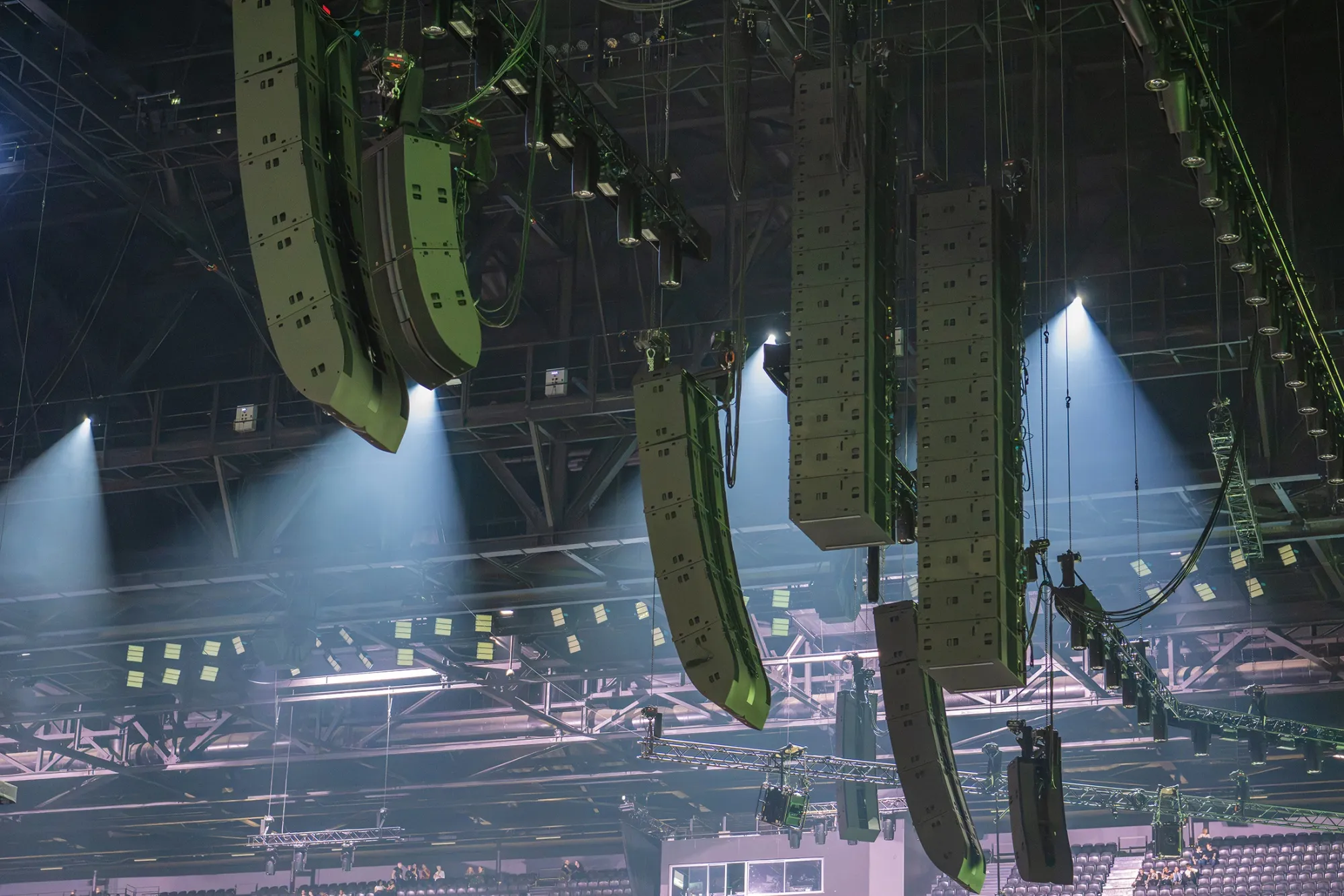
For L-Acoustics, which has historically focused on hardware — the company helped popularize the “line array” technology of stacking speakers in the 1990s — the expansion into AI software allows it to offer a full system approach. “Having great loudspeakers is not enough,” you also need to have great content and audio, co-Chief Executive Officer Laurent Vaissié said, speaking from his office in Nashville.
L-Acoustics expects revenue to reach €400 million next year, according to Vaissié, a double-digit increase from 2026. The closely held company gets most of its business from large live shows but is expanding in theaters, sports venues, nightclubs and some high-end retail.
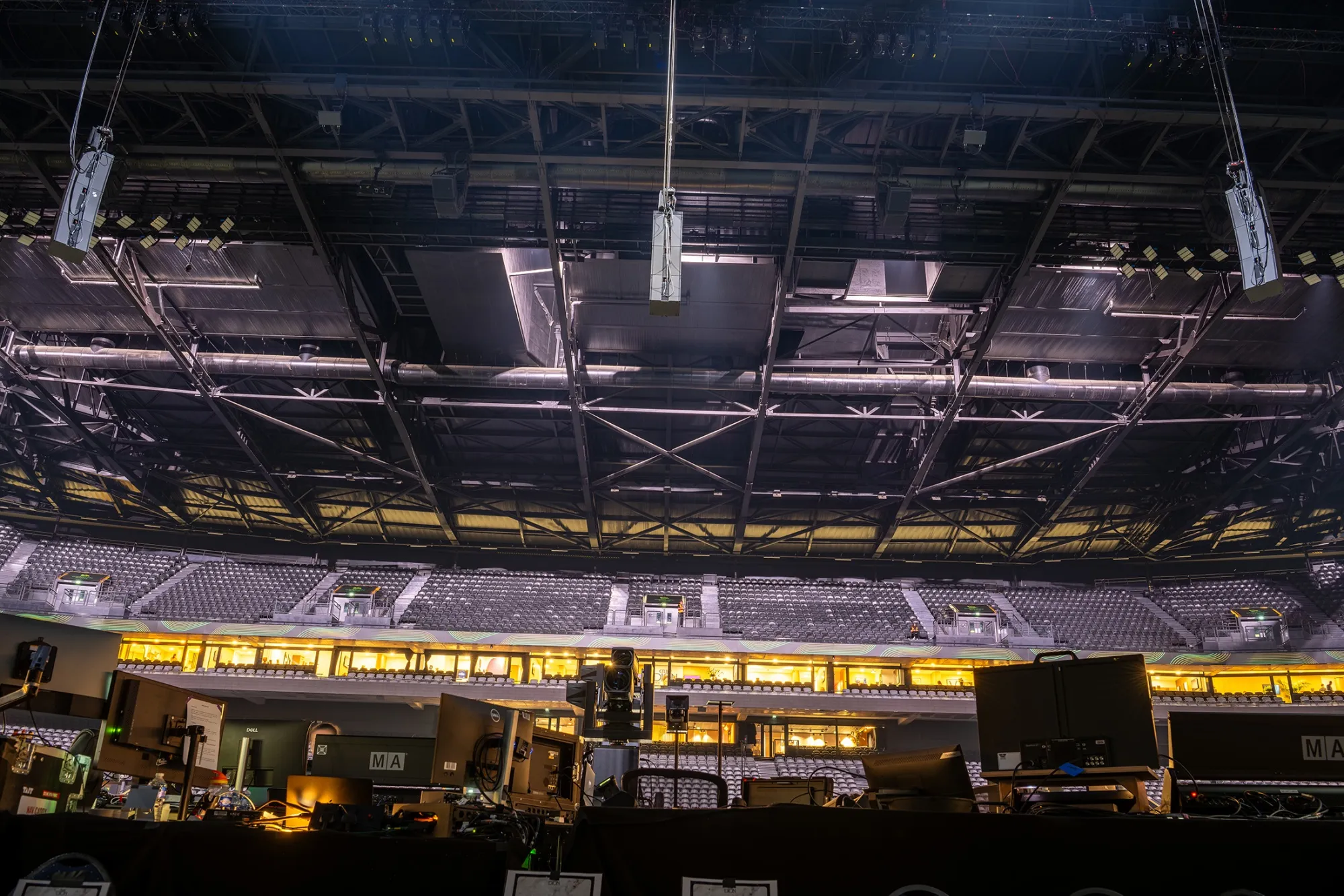
Creating the sound design at the Plenitude Arena presented a unique set of challenges. With capacity for as many as 45,000 people across 13 kilometers of stands, the place was built to host rugby matches and was even used as a swimming pool during the Paris Olympics.
For Dion’s 26-concert residency at Plenitude, L-Acoustics’ latest generation L1 speakers were hung over the left, center and right side of the stage. The L1 are smaller and lighter than previous generations, allowing for better control of the sound direction and coverage. This means Dion’s voice and the bass is coming from the center cluster of speakers only, giving a more even source of sound for the whole floor.
“With just one source, you get something consistent, and avoid all sorts of problems” such as noise spill and echoes, said François Desjardins, Dion’s systems engineer for the show, speaking from the arena’s central console after the Sept. 26 concert.
The speakers also leave the stage up to 26 decibels quieter than where the audience sits. “There is no sound on stage practically,” Savage said. This makes it easier for Dion to hear the actual music and indications pushed in her in-ear devices, rather than her own voice bouncing back. “It’s much cleaner.”
The whole audiovisual and acoustic system used at Dion’s Plenitude concert costs north of €1 million, Vaissié said. Sound typically takes 10% of a production budget, behind lighting (20%) and video (40%). The technical gear for Dion’s residency was bought by Solotech, a Montreal-based production company that provides it to AEG Worldwide, the show’s producer. Solotech will use L-Acoustic’s speakers on different gigs over the coming months, and they’ll return to Paris next year when Dion is back for a new series of 10 shows.
The L1 speakers are assembled in Marcoussis, south of Paris, where L-Acoustics keeps its factory, headquarters and French DNA. The bulk of the acoustics core technology — including some speaker components — are made in Germany and assembled in France. The firm has 1,100 employees, about 20% of whom work on research and development, and it has seen consistent growth over the past two decades, Vaissié said.
Despite concerns within the music industry about AI, Vaissié believes L-Acoustics’ software isn’t going to automate the work of sound experts. “It’s not taking the job of the mixing engineer: it is replacing other techniques that they used,” he said.

 点赞
点赞 收藏
收藏 点踩
点踩 分享
分享