How Big Tech’s AI Race Fueled a Borrowing Boom

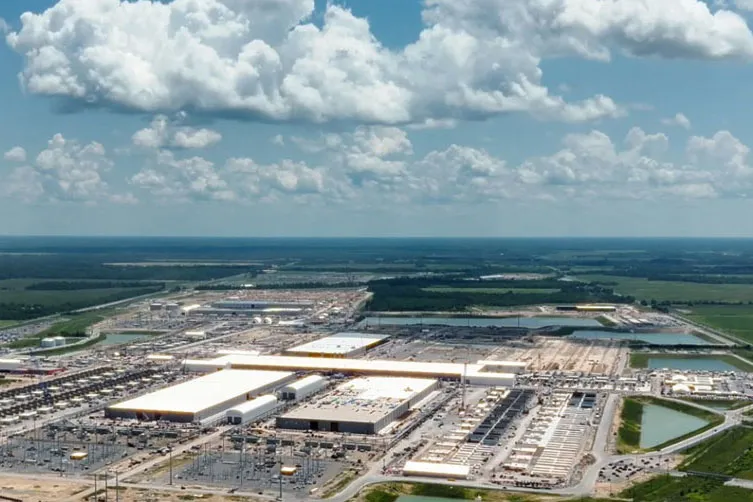
For the past few years, the largest US technology companies have been in a costly race to develop advanced artificial intelligence systems while at the same time providing computing power to a burgeoning field of startups. To chase these goals, they have radically changed how they finance their growth. Long reliant on rich revenues and share price increases, Alphabet Inc.’s Google, Meta Platforms Inc. and other tech giants now are borrowing heavily to build the technology that makes chatbots run.
One of the latest potential deals involves Elon Musk’s SpaceX, which increasingly has focused on the AI segments of its business. In early October, Bloomberg News reported that SpaceX, which owns xAI, operator of the Grok chatbot and the social platform X, was in talks with banks and investors to borrow $40 billion to buy chips from Nvidia Corp. News of the discussions came days after Bloomberg reported that financial firms organized by Broadcom Inc. were seeking to bring together $60 billion in financing for AI chips for Anthropic PBC, maker of the Claude AI assistant, and other companies.
The latest wave of borrowing interest follows a rush of debt offerings earlier this year. In March, Amazon.com Inc. sold bonds in Europe for the first time, raising €14.5 billion ($16.2 billion). The retail giant also borrowed more than $60 billion in the US bond market, and in September, £4.25 billion ($5.62 billion) in the UK. And Facebook parent Meta sold $25 billion of investment-grade bonds on April 30 to finance its AI buildout.
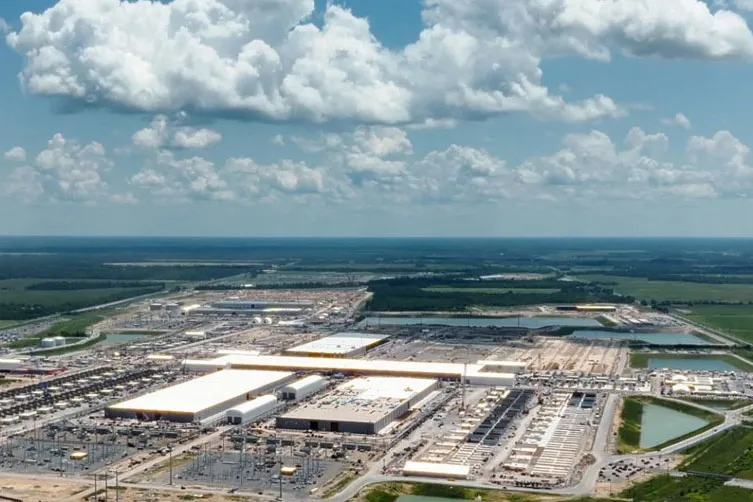
How has the growth of AI changed tech companies’ financial practices?
For many years, tech companies that emerged from the internet boom grew by reinvesting their immense profits back into their businesses. They also sold bonds, but that played a smaller role in raising and spending capital. But beginning in late 2025, big tech firms began issuing tens of billions of dollars in debt as they scrambled to ramp up investing in AI capacity. New businesses such as OpenAI and Anthropic, meanwhile, have each raised billions of dollars in funding from venture capital investors.
Four of the biggest US tech companies have said that just this year, they need to spend around $745 billion collectively on data centers, networking equipment and other AI infrastructure needed to achieve their AI ambitions.
How are tech companies planning to spend the money?
Most of the money these tech companies are deploying — be it through debt or equity — is being invested in AI-related equipment, services and real estate. Alphabet has said its technical infrastructure spending for 2026 would total between $180 billion and $190 billion, double the amount the previous year. The company expects that figure to increase in 2027.
Oracle Corp. is a prime example of the data center expense. The database giant has been raising both corporate debt and loans for specific projects to finance the development of data centers across the US.
In addition to snatching up real estate and building data centers, these firms need to stock the facilities with expensive chips to train and run AI models. Often, companies create special purpose vehicles — essentially, separate businesses launched for specific financial goals including acquiring tech gear. With an SPV, the debt is kept off the company’s balance sheet, protecting the business from potential downgrades. In late 2025, Musk’s xAI was in talks to raise as much as $20 billion via off-balance-sheet vehicles that buy chips and lease them back to xAI. It struck deals with Apollo and others, including a $7 billion financing for xAI for access to Nvidia.
Two other expenses compound the race to be first: power costs and AI talent. In late 2025, Alphabet purchased a clean energy developer to power its data centers as the US electricity grid struggles to meet the projects’ demands. Meta also has been spending millions of dollars to hire skilled engineers.
Why are companies borrowing instead of using cash or issuing shares?
The pressure on big tech companies to build out data centers to power AI functions is immense. Meta, Alphabet and the other tech heavyweights can use the existing cash in their coffers for their data center buildouts. Their advertising businesses give them enough cash that they can borrow comfortably and also reinvest some of that revenue into AI. Google, for instance, took in more than $119 billion in revenue in the second quarter of 2026.
But borrowing can still be attractive, especially at a time when Wall Street firms are eager to lend them money. The special-purpose entities that enable companies to keep debt off their balance sheets add to the appeal.
Instead of borrowing, privately held firms such as OpenAI and xAI have raised billions of dollars by selling stakes in their companies and using that cash for their AI needs. But they can only do that so many times, as equity holders see their stakes diluted.
Still, Anthropic this year has expanded an existing revolving credit facility, a type of loan, to $15 billion ahead of its planned initial public offering. OpenAI has also increased an existing revolving loan to more than $5 billion, Bloomberg News has reported.
How unusual is this level of borrowing — and what’s different about this moment?
The wave of AI-related borrowing spooked investors in late 2025, when large technology companies raised nearly $100 billion within a few weeks to expand cloud and data-center capacity.
The surge came on the heels of a roughly $30 billion financing tied to the construction of a Meta data center in Louisiana, a transaction that underscored both the scale of capital required for AI infrastructure and the increasingly varied ways companies are structuring the funding. That deal was raised by a special purpose vehicle but will pay back lenders through a long-term lease with Meta.
The structure showed how data center operators can issue traditional bonds while also raising large sums from lenders without adding too much debt to their balance sheets and jeopardizing their credit ratings.
Since then, debt issuance has exploded, with global AI infrastructure debt sales amounting to about $450 billion so far in 2026, according to data compiled by Bloomberg. That includes bond sales for data centers, computer chips and corporate bond sales by the biggest tech companies.The supply of new debt, and the prospect of rising funding needs next year, has made investors more cautious about participating in some of these deals.
Underscoring the thirst for capital, Alphabet sold a rare 100-year bond in early 2026, a type of deal that no tech company had done since the late 1990s and that tapped demand from long-term investors such as insurance and pension funds.
The AI borrowing wave also stands out for its speed, size and for the type of borrowers involved. Surges in corporate debt have historically been associated with speculative bubbles, such as during the 1980s leveraged buyout boom, when high-risk bonds were issued to finance a wave of aggressive corporate acquisitions. By contrast, the recent issuance has come from some of the most cash-rich and highly rated companies in the world.
How does taking on this much debt change the risk profile of these companies?
Hundreds of billions of dollars have been raised in compressed time frames, and the AI buildout is proceeding despite elevated interest rates, reflecting the competitive urgency of generative AI. Some market participants have drawn parallels to earlier infrastructure booms, such as the fiber-optic buildout during the dot-com era, when telecom companies borrowed heavily to lay network capacity.
But there are key differences. Today’s largest issuers are far more profitable and diversified than many telecom operators were in the late 1990s.
Despite the recent surge, debt financing is projected to remain a relatively small share of total AI spending for most large technology companies. Analysts have estimated that approximately 80% to 90% of their planned capital expenditures are expected to be funded through operating cash flows. And despite the recent uptick in borrowing, major data center operators are anticipated to maintain low levels of total debt compared with their annual earnings.
Still, the sheer magnitude of the financing has implications. Higher borrowing could alter companies’ financial profiles, influencing their credit ratings and their ability to borrow cheaply. Oracle, for example, was downgraded by S&P Global Ratings in July. The agency cut the rating by one notch, citing the company’s growing spending on AI.
Beyond the tech sector, heavy debt issuance also might reshape credit markets by absorbing investor demand that otherwise might have flowed to other industries. This could raise borrowing costs for other companies, too, while increasing lenders’ exposure to an industry whose long-term returns on AI investments are still being proven.
What could go wrong if the AI boom doesn’t meet expectations?
If the AI boom doesn’t live up to expectations, big tech companies that have been spending heavily on data centers, chips and power to support AI could end up with too much capacity and equipment that becomes outdated quickly. That would be similar to what happened during the dot-com bubble, when telecom firms built more network capacity than customers needed.
Lower-than-expected profits would squeeze companies’ cash flows, potentially forcing businesses to cut investments or borrow more, eventually weakening their financial profiles.
There are also broader market risks. Investors have poured money into tech debt and shares, betting on AI-driven growth. If that optimism fades, stock prices could fall and lenders would take a big hit.

 点赞
点赞 收藏
收藏 点踩
点踩 分享
分享