Europe’s Carmakers Gain Reprieve but Chinese Threat Remains

Welcome to the Brussels Edition. I’m Suzanne Lynch, Bloomberg’s Brussels bureau chief, bringing you the latest from the EU each weekday. Make sure you’re signed up.
European car stocks are trading higher today after the European Union and China struck a deal to curb the import of Chinese hybrid vehicles into the bloc.
EU ambassadors meeting yesterday agreed to cap the import of Chinese hybrid vehicles at 350,000 cars per year, compared to around 800,000 a year, with the safeguard measure taking effect as soon as Dec. 1. It follows meetings between EU trade chief Maros Sefcovic and Chinese Commerce Minister Wang Wentao in Beijing last week.
The 350,000 car limit will apply for the first year of the cap, then will increase by 6% annually from the second year of application, according to a document seen by Bloomberg. The measures will apply for four years.
The development is a win for the EU’s domestic car industry which has been struggling in the face of Chinese imports and falling demand in China for its own cars.
Automakers gathering at the Paris Auto Show welcomed news of the curbs, with Renault CEO Francois Provost telling Bloomberg that the deal will ensure “fair competition.”
China’s Ministry of Commerce said the agreement avoided “an escalation in trade tensions.”
But, as our team reports, China is betting it can sidestep harsher restrictions from the 27-member bloc with a gesture that has little immediate prospect of reshaping the overall trade relationship.
The structural factors driving the EU’s €1 billion ($1.12 billion) a day trade deficit with China remain, with Beijing eyeing expansion into higher-value, high-tech sectors in the coming years. Chinese carmakers will also continue to pursue tie-ups within Europe – for example in Spain, which has encouraged Chinese auto investment – and the 350,000 cap will only apply to cars originating in China (even if produced by European companies)
BYD told Bloomberg today that it plans to boost its workforce in Europe from 10,000 to 40,000 by the end of the decade, as it seeks to evolve from a simple exporter to a major car producer in the region.
Nonetheless, news of the deal has already had some impact on the downside for Beijing. Lithium futures in China slumped today as the agreement weighed on demand prospects for the battery material.
Meanwhile, French President Emmanuel Macron said that France is nearing an agreement with Germany about protecting the European car industry as discussions heat up in Brussels about the EU’s proposed Industrial Accelerator Act.
The Latest
Banca Monte dei Paschi di Siena has called an extraordinary board meeting for later today at 6 p.m. to review the M&A situation following Intesa Sanpaolo’s increased offer.Ukraine will continue to respond with long-range strikes against Russia unless Moscow agrees to an energy ceasefire that still hasn’t happened, President Volodymyr Zelenskyy said today.EU leaders will discuss a scaled back long-term budget when they meet in Brussels later this week after Irish negotiators reduced the initial €2 trillion proposal by €160 billion in response to pressure from some countries.Germany’s fragile government was plunged deeper into turmoil today after the labor minister and co-chair of the SPD, Baerbel Bas, abruptly resigned from both her posts.Poland’s security services are investigating a plot to assassinate Prime Minister Donald Tusk and Defense Minister Władysław Kosiniak-Kamysz after receiving credible intelligence, including an emailed tip.
Seen and Heard on Bloomberg
NATO Supreme Allied Commander Europe (SACEUR) General Alexus G. Grynkewich says the alliance should increase support to Ukraine when they’re hit by Russian hybrid attacks. On the “brutal” war, he said there are “windows of opportunity” to bring the conflict to an end and that the alliance should seize them where possible to bring both sides to the table. The alliance’s top military commander made the comments in an interview with Bloomberg TV’s Oliver Crook in Warsaw.
Chart of the Day
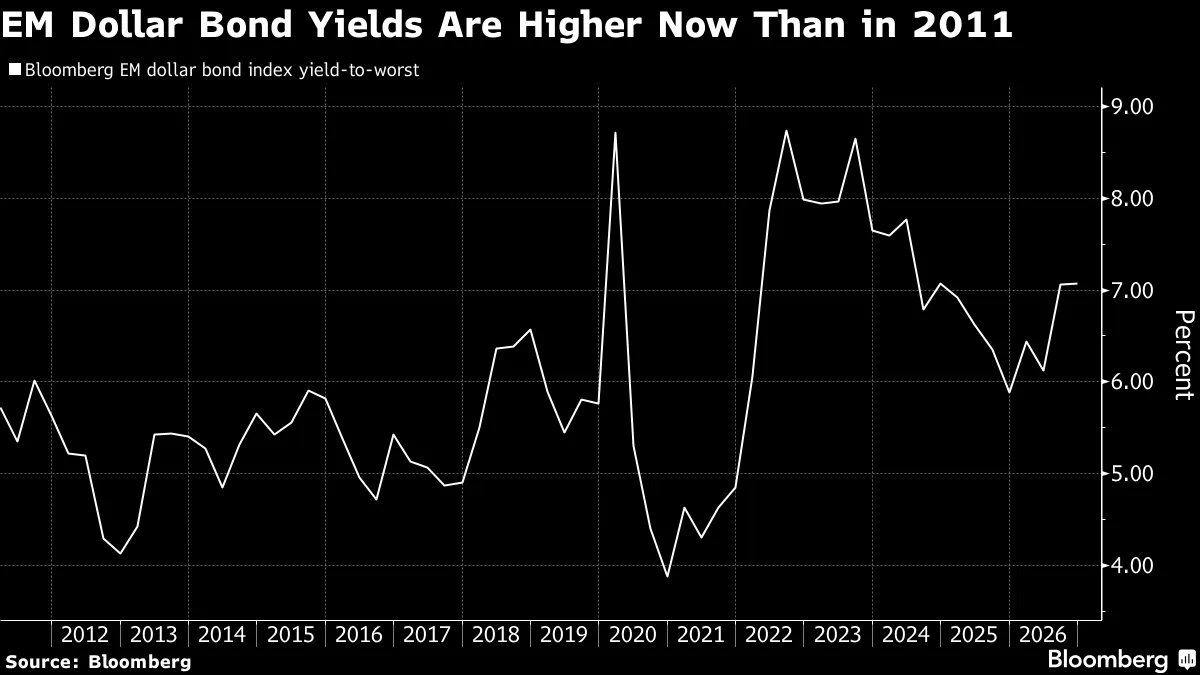
Emerging-market bonds and currencies were whipsawed by the eurozone debt crisis 15 years ago, but they are now better equipped to withstand any repeat of that turmoil, analysts say. Developing nations have improved their fiscal positions in recent years, while their relatively high bond yields offer greater protection. Concern over potential contagion from the European bond woes has intensified in recent weeks as the extra yield investors demand to hold French bonds over their German peers climbed to the highest level since the regional debt crisis in 2011.
Coming up
Press conference following meeting of EU environment ministers later today Banca Monte dei Paschi di Siena board meeting this eveningEU Affairs ministers meet tomorrow in Luxembourg
Final Thought
Support for ANO, the party of billionaire Prime Minister Andrej Babis, weakened in regional elections held across the Czech Republic, mainly in larger cities. Babis’s party got 13.3% of votes in the municipal ballot held Friday and Saturday, less that the 16.6% it received four years ago, according to final results released yesterday. ANO is the dominant member of Babis’s three-party coalition.


 点赞
点赞 收藏
收藏 点踩
点踩 分享
分享